
Benefits, Negotiation Process, and Obstacles of a Data Center Community Benefit Agreement
Discover more about what a data center community benefit agreement is, its benefits, the negotiation process, and the potential obstacles that may arise.

At A Glance 🔽
- A data center community benefit agreement (CBA) is a legally binding contract negotiated and discussed between a data center project developer and the community where the project will be constructed.
- Data center community agreements provide various benefits to communities affected by data center projects, such as local hiring and wages, community funds and fiscal accountability, water and energy capacity, and transparency and reporting.
- Some steps in negotiating a data center community agreement include establishing a community coalition, coordinating with local government, negotiating prior to approvals, defining terms and remedies, and establishing ongoing oversight.
- Common obstacles that developers and communities face in data center agreements include vague commitments, limited negotiating power, redacted contracts, and cost of enforcement.
Definition
A data center community benefit agreement (CBA) is a legally binding contract negotiated and discussed between a data center project developer and the community where the project will be constructed. The developer agrees to provide specific benefits, and in exchange, the community signatories usually agree to support the project, or at least not oppose it. Traditionally, the community side is a coalition of local groups. More recently, some local governments have negotiated CBAs directly with developers. Once signed, a CBA requires the developer to deliver their commitments. These are usually monetary payments, workforce investments, environmental mitigation measures, and operating limits.
✅Benefits
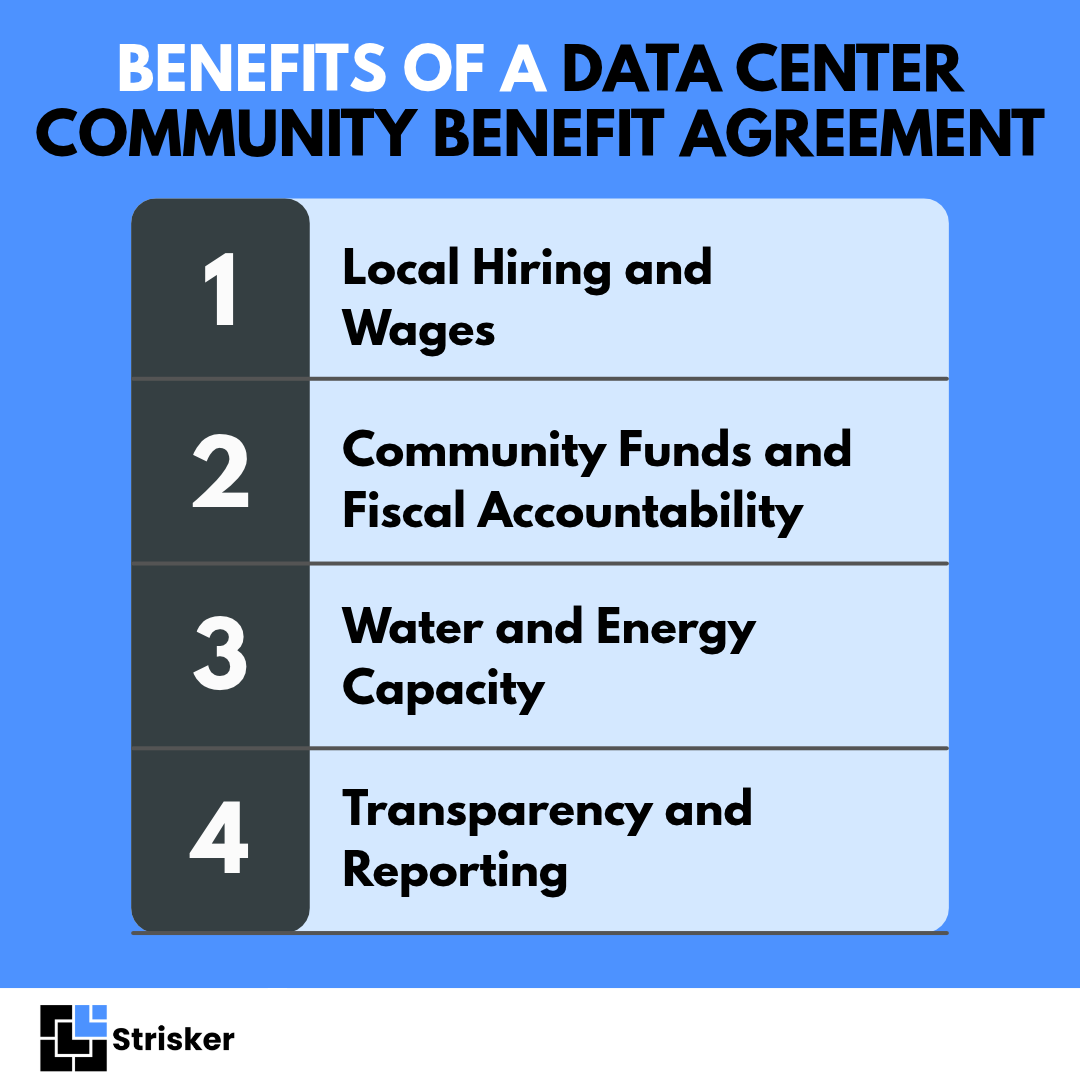
A data center community benefit agreement is a set of obligations that a developer must meet in exchange for locating the data center in the community. It provides residents affected by data center development with a way to negotiate specific, enforceable commitments tied to a particular project. The benefits included in each agreement may differ depending on the needs of the host community, but they usually include:
Local Hiring and Wages
Data center developments create numerous construction jobs, but offer far fewer permanent positions once they begin operating. For example, Meta reported that its Kansas City, Missouri, data center, an investment of more than $1 billion, had an average of 1,500 skilled trade workers on site at the peak of construction but will support more than 100 jobs once fully operational. Implementing a community benefit agreement can help by ensuring local hiring practices and providing minimum wages to applicants.
Community Funds and Fiscal Accountability
Certain community agreements may require developers to contribute to local funding for schools, emergency services, job training, or environmental programs. These commitments sometimes appear in development agreements between a city and a developer rather than in a CBA, but they show what communities can negotiate for. For instance, in Cedar Rapids, Iowa, Google agreed to make community betterment payments of $400,000 per data center each year for 15 years (up to $36 million in total), while QTS agreed to contribute up to $18 million over 20 years to the city’s Community Betterment Fund. These funds can provide the host community with additional revenue beyond property taxes.
Water and Energy Capacity
Residents living near proposed data centers frequently express concerns about the impacts of water and energy consumption. A community benefit agreement can set limits on these resources within the contracts. For example, the City of Lancaster, Pennsylvania, signed a community benefits agreement with Chirisa Technology Parks that caps water use at 20,000 gallons per day per campus. The agreement also requires the data center buildings to use 100% clean-energy electricity and bars operations from exceeding existing ambient noise levels at nearby homes and parks. If the owners sign long-term energy contracts that fall below 100% clean energy, they must make significant contributions to the city’s Sustainable Development and Clean Energy Fund.
Transparency and Reporting
With regular reporting, the residents can check whether a developer is following their key commitments. In addition, some agreements may require periodic disclosures regarding energy use, water use, emissions, and related metrics. They may also request ongoing communication with community stakeholders.
🤝Negotiation Process
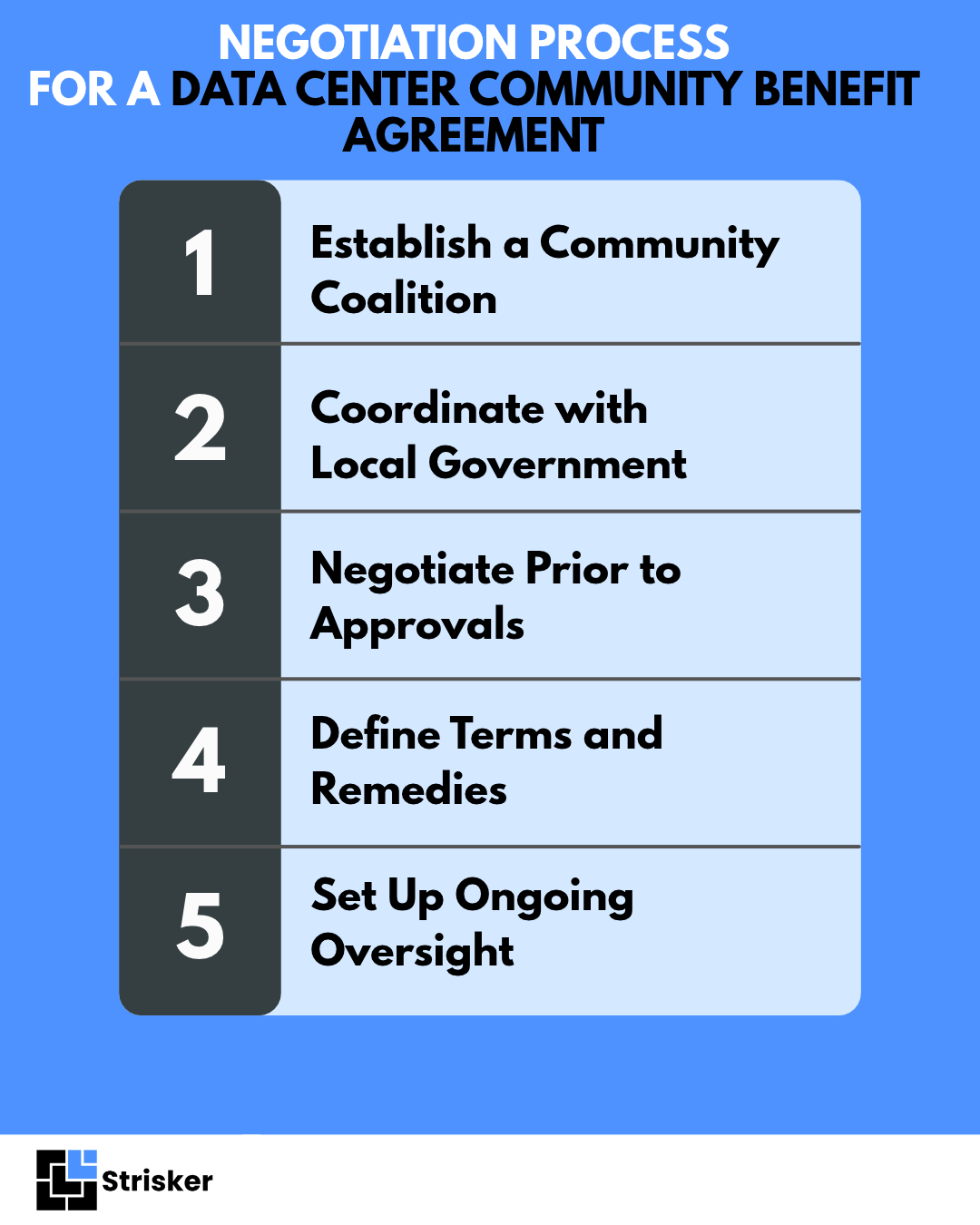
Negotiating a data center community benefit agreement is most beneficial when approached as a step-by-step process. Each step supports the community in ensuring commitments that are measurable and enforceable. Here are some of the steps for negotiating:
Step 1: Establish a Community Coalition
Community benefit agreements are usually negotiated by a coalition rather than a single organization. They are usually made up of neighborhood associations, labor unions, environmental groups, and civil rights organizations. A large coalition can empower the community by increasing its bargaining power in discussions.
Step 2: Coordinate with Local Government
Local governments often negotiate a separate host community agreement or development agreement with developers. These agreements are typically linked to zoning, permits, or incentive packages. Coordinating with local officials helps to ensure that these two agreements do not contradict one another.
Step 3: Negotiate Prior to Approvals
Communities have the most significant influence in negotiating data center projects before they receive rezoning, permits, or tax abatements. Residents and coalitions can express their concerns at public hearings, where developers may also make commitments on the record. Certain agreements signed after receiving approvals can leave a negative impression on residents.
Step 4: Define Terms and Remedies
To establish a solid agreement, it is essential to clearly define key terms such as "job," "local," and "clean energy." Furthermore, each commitment should be tied to a specific deadline or project phase. Additionally, the agreement should include remedies, such as contributions to a community fund, if the developers do not fulfill their obligations.
Step 5: Set Up Ongoing Oversight
Many commitments in a community benefit agreement can last for decades. Brookings recommends public dashboards that track key metrics, and some agreements also set up a community advisory board to monitor progress. These tools allow residents to track the agreement even after construction is complete.
⚠️ Obstacles
Community benefit agreements for data centers often fail to meet expectations. Here are some common obstacles that communities may encounter:
Vague Commitments
Some agreements include general promises without specific numbers or deadlines, making them difficult to implement and monitor. Furthermore, voluntary pledges that are not incorporated into permits or approvals can reduce their legal significance.
Limited Negotiating Power
Host communities and developers do not always bargain on equal terms. Developers typically possess more resources, legal support, and expertise regarding these agreements. Consequently, host communities may agree to less favorable commitments or benefits than those they initially requested.
Redacted Contracts
Some agreements keep important details about energy requirements, water use, and costs hidden from the public. Furthermore, non-disclosure agreements can prevent residents from accessing key terms. As a result, this lack of transparency makes it difficult for residents and the community to evaluate the fairness of the deal.
Cost of Enforcement
Generally, only the parties that sign a community benefit agreement can enforce it in court. When the agreement is between a local government and a developer, residents may have no legal standing to pursue legal action against developers if commitments are not met. Additionally, even the signatories face costly, slow lawsuits that often favor the party with greater resources.
Conclusion
A community benefit agreement for data centers, when properly enforced and implemented, can help developers address the negative impacts that data centers can have on local communities. Such agreements offer communities benefits that developers must provide to reduce opposition and increase support.
It is essential to approach the negotiation of a data center community benefit agreement using a step-by-step process. This method can help prevent obstacles in meeting community expectations. Strisker offers tools, features, and newsletters to keep you informed about the community benefits and agreements provided by data center developers in your area.
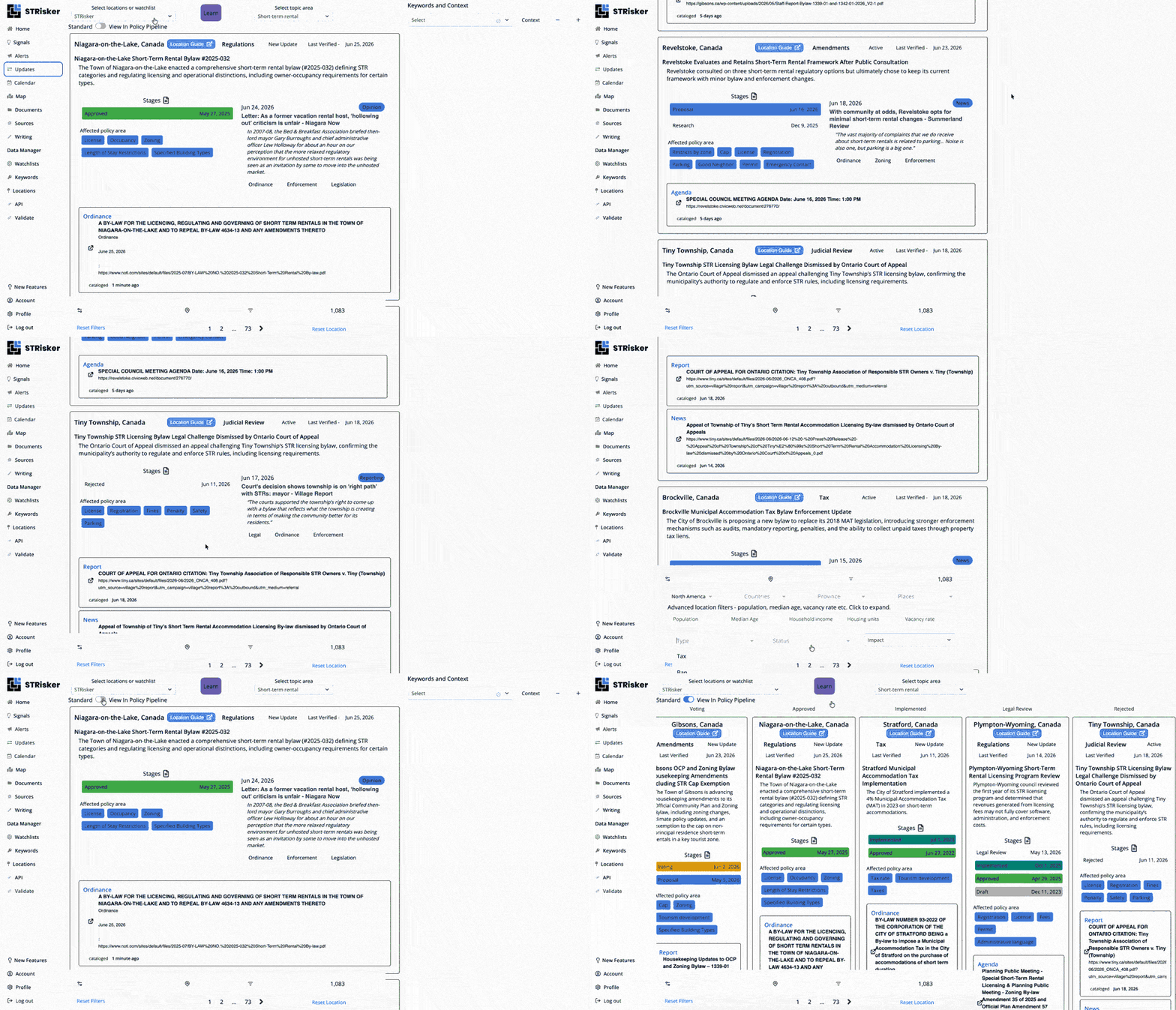
Strisker Updates Tracker
How do you keep up with the regulatory rollercoaster in your market? Strisker's Updates Tracker can be your guide - start tracking latest events as they happen and get access to essential documents as they come in. We know the struggle, which is why we built this product to capture every twist and turn in the regulatory saga so you never miss a beat.
FAQs
Are data center community benefit agreements legally enforceable?
Yes, generally speaking, a signed community benefit agreement functions as a contract, meaning the parties involved can take legal action to enforce it. However, its enforceability in practice largely depends on the way it is written. Agreements that include specific, measurable commitments and clear remedies, such as penalties or letters of credit, are the easiest to enforce. In contrast, vague promises are often difficult to enforce.
What community benefits can residents request from a data center developer?
Residents can request the following community benefits from data center developers:
- Local hiring targets and wage floors
- Apprenticeship programs
- Clean energy commitments
- Noise limits
- Regular public reporting on energy and water consumption
- Grid or broadband upgrades
What happens when a data center developer breaks a community benefit agreement?
When a data center violates a community benefit agreement, the consequences will depend on the specific enforcement mechanisms outlined in the contract. Here are some potential consequences:
- Lawsuits and civil actions
- Financial penalties and liquidated damages
- Permit revocation or zoning sanctions
- Loss of reputation and trust
Stay Updated with Strisker!
Strisker offers tools and features to keep you updated with the Short Term Rental movement (and now Data Centers!) movement across the world.
👍 We’d love your feedback.
We're always looking for ways to improve our content.
Was this one useful to you? Other topics you'd like to see get covered?
✉️ Just reply directly to this email. We read and respond to every message!
-Will McClure
🙋 P.S.
Know someone else who might be interested in this content? Feel free to forward this along.