
Daily Regulatory Notes 01/19/2026
Cities address STRs. Buena Vista, CO approves moratorium; Newtown, CT schedules meeting; Kane County, IL approves rules; Iowa City, IO discusses enforcement; Stowe, VT proposes cap; Dearborn, MI files lawsuit; Columbia, SC; Chicago, IL. READ MORE.

BV trustees unanimously approved a temporary moratorium on new short-term rentals, framing it as a pause to review policy rather than a move toward a permanent ban.
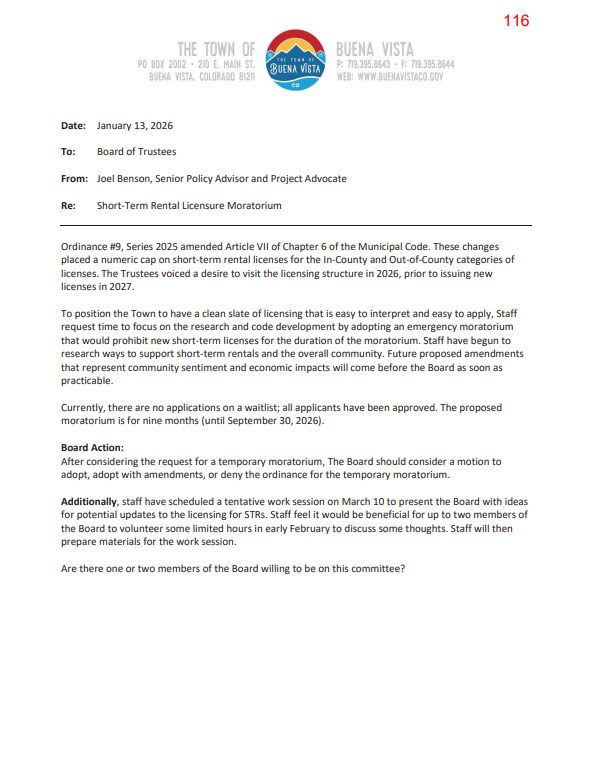
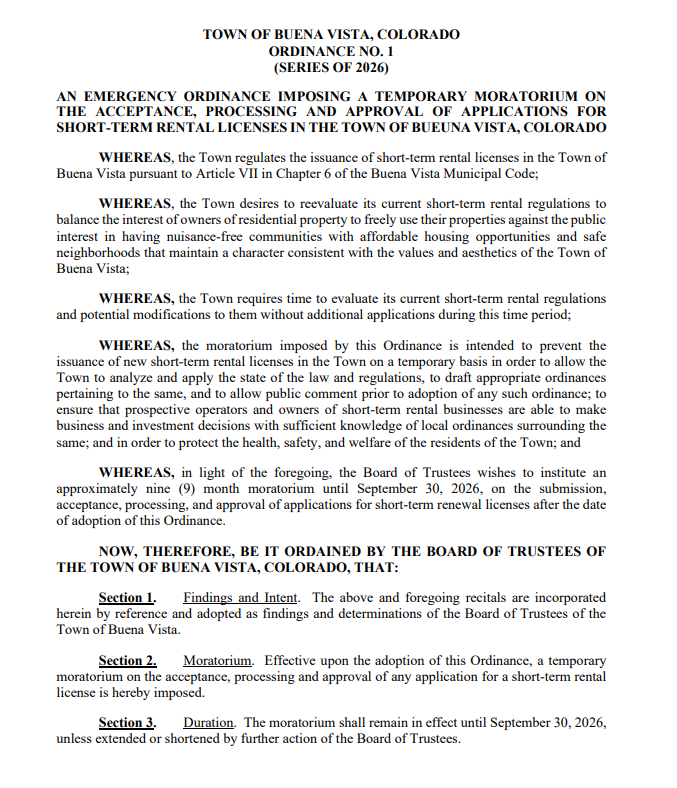
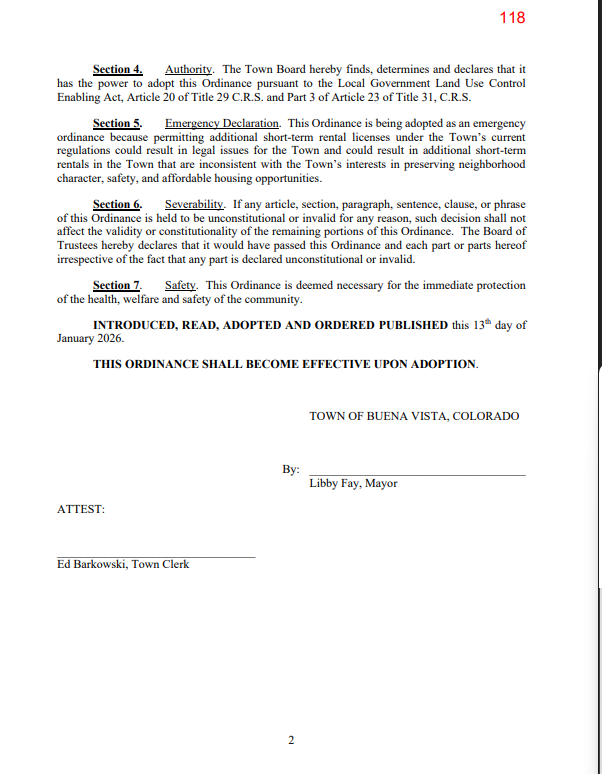
Several trustees emphasized that there is no clear data showing stricter STR rules improve housing affordability and warned against unintended impacts on downtown vibrancy. Town officials said the moratorium allows time for stakeholder input, data review, and policy refinement, with an initial work session tentatively scheduled for March 10. The moratorium runs through September 2026 but may be lifted earlier.
The Newtown Legislative Council will meet on Jan. 21 to consider several policy items, including a proposed ordinance that would prohibit short-term rentals of fewer than 30 days.
The agenda also includes a 6 percent increase to the Fairfield Hills water usage rate effective in 2026, along with multiple grant impact and financial review items. The meeting begins at 7:30 p.m. at the Municipal Building.
The Kane County Board approved new licensing and operating rules for short-term rentals in unincorporated areas following months of resident complaints about noise, parking, and safety.
The ordinance requires county licensing, limits occupancy and rental frequency, mandates safety inspections and neighbor notification, and allows fines up to $1,000 or license revocation for violations. The measure passed 12–9, though several board members said it may be a first step toward a future ban on new short-term rentals.
Kane County Board OKs rules on short-term home rentals, but some members eye total ban https://t.co/dtluxQnTS5
— The Courier-News (@couriernews) January 17, 2026
Iowa City is grappling with short-term rental oversight challenges as 74 single-family homes operate as Airbnb properties following the state's 2018 decision to eliminate residential STR regulations that previously required owner-occupancy.
The city's housing inspector emphasizes that the biggest regulatory challenge isn't corporate ownership but ensuring existing short-term rentals follow local rules such as bi-annual inspections and city code adherence.
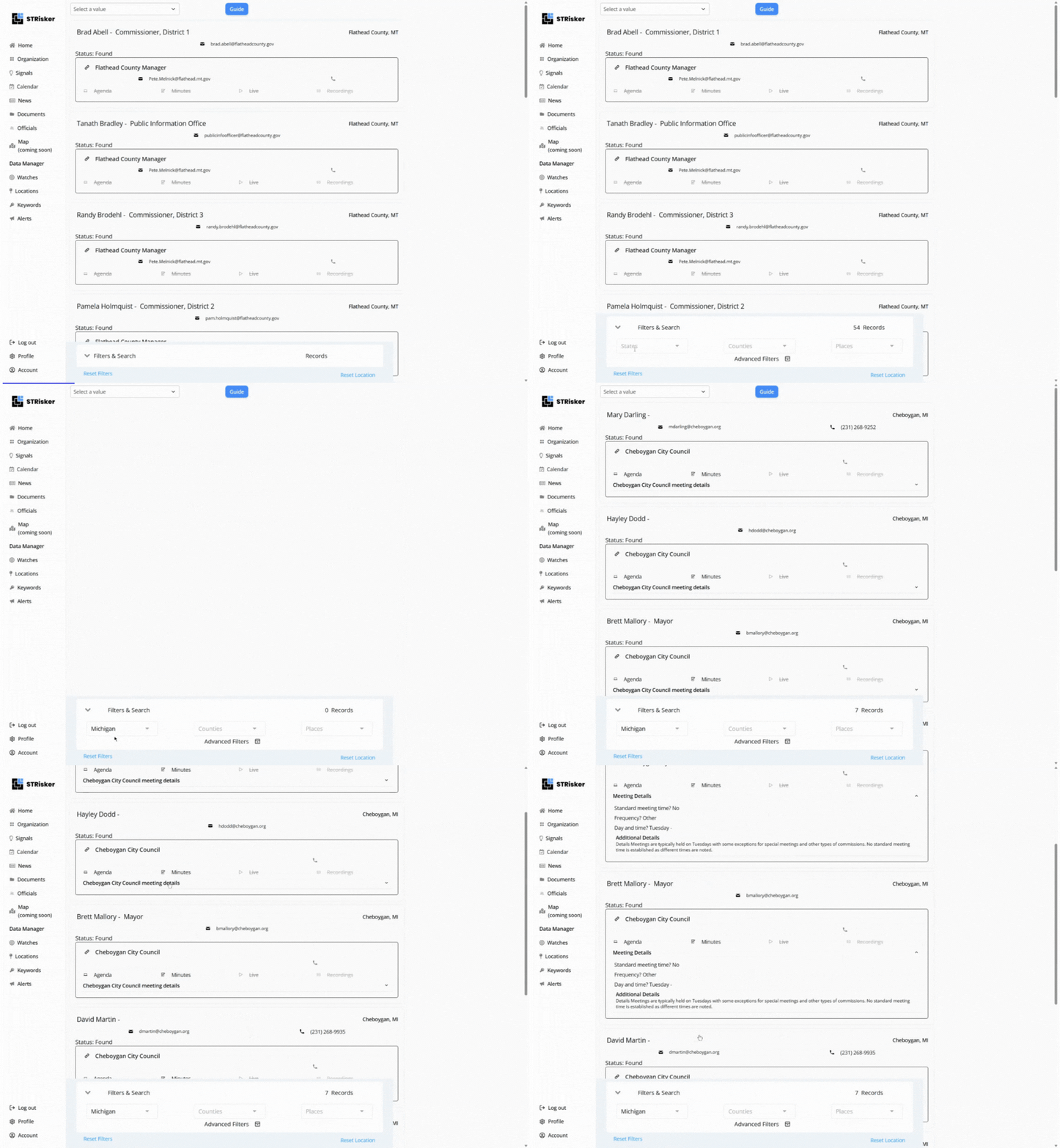
STRisker Government Office Dashboard
Trying to keep up with the main players in the STR game? Know your councilmembers, commissioners, committee chairs, and key staff that are part of the process.
Stowe officials are continuing discussions on a potential cap on short-term rentals, with major resort operators urging exemption from any limits.
Town data shows roughly one-third of registered short-term rentals are located in resort- and ski-lodging zoning districts, which the planning commission argues were never intended to supply long-term housing. The selectboard is weighing how to distinguish between resort lodging and residential short-term rentals ahead of a Feb. 11 public hearing.
Short-term rental owners in Dearborn file a federal lawsuit challenging zoning changes that ban short-term rentals in residential areas and single-family homes.
They argue that the ordinance violates due process, state zoning law, and the Fifth Amendment’s takings clause. The ban, which takes effect Jan. 1, restricts STRs to downtown, community business, and general business districts, with city officials citing nuisance concerns and housing affordability impacts.
Short-term property owners sue over Dearborn's new restrictions https://t.co/pK1PuifWVM
— The Detroit News (@detroitnews) January 17, 2026
Columbia’s Planning Commission recommends loosening short-term rental restrictions for owner-occupied homes, allowing residents to rent out rooms while living on-site in all residential areas.


The proposal would carve out an exception to a January 6 ordinance that limits STRs to mixed-use, commercial zones, and the edges of residential neighborhoods. The recommendation now moves to City Council for final consideration.
Chicago City Council is considering a new 1.5% hotel assessment that supporters say would raise about $40 million annually through a tourism improvement district covering large downtown hotels.
If approved, total hotel taxes and fees in central Chicago would rise to nearly 19%, among the highest in the country. A public hearing on the proposal is scheduled for Feb. 27.
📱 Social Buzz
Episode Title: 01/17/26 | Erin Wong | Property Manager
Episode: The Kupunawiki's Podcast
Vacation towns across the U.S. are tightening short-term rental rules to curb rising home prices and protect local housing, prompting pushback from property owners who warn of economic harm.
— Realtor.com (@realtordotcom) January 17, 2026
After similar battles in New York City and Nantucket, Tybee Island, GA, is now facing… pic.twitter.com/R3B2cewQkU
"The League of Arizona Cities and Towns is hoping to build bipartisan support for a package of short-term rental reforms targeting bad-acting hosts and overrun tourism hot spots." @axios https://t.co/G2NRUG5onA pic.twitter.com/68gwN6w2DU
— Arizona League (@AzCities) January 16, 2026
Johnson County proposes short-term rental regulations for unincorporated areas before the 2026 World Cup. https://t.co/6JgrAnYHwd
— Kansas City Business Journal (@KCBizJournal) January 16, 2026
In case you missed it:
 Genelaine Urbano
Stay Updated with STRisker
STRisker offers tools and features to keep you updated with the Short-Term Rental movement across the U.S.
👍 We’d love your feedback.
Which stories hit? Which ones missed?
We're constantly refining Daily Notes to make it even more useful for you.
✉️ Just reply directly to this email. We read and respond to every message!
-Will McClure
🙋 P.S.
Know someone else who should be reading Daily Notes? Feel free to forward this along. We’re opening a few more spots.