
Daily Regulatory Notes 01/26/2026
Cities address STRs. District of Columbia handles lawsuit; San Diego, CA considers new tax; New York City, NY adopts rule ahead of World Cup 2026; Clark County, NV reviews enforcement; Summit County, UT strengthens enforcement; Lead, SD rejects penalties; Marshall, TX opens applications. READ MORE.

District of Columbia
A D.C. homeowner won a rare court victory after a judge ruled that an Airbnb guest who stayed 32 days had no tenant rights and could be removed immediately.
 Short-Term Rental Regulation Act of 2018 (14 DCMR Section 9901.6)
The case exposed how guests in some jurisdictions can attempt to claim tenancy after crossing a 30-day threshold, even without a lease. The ruling comes amid growing national backlash against so-called “squatter loopholes,” with multiple states passing laws to strengthen property owner protections. The case is now prompting renewed scrutiny of D.C.’s tenant laws.
San Diego’s long-running fight over short-term rentals is resurfacing as councilmembers consider an “Empty Second Homes and Vacation Rental Tax” targeting thousands of whole-home STRs.
The revised plan would impose an $8,000 annual tax per property, plus a $4,000 surcharge on corporate-owned rentals, aiming to discourage homes from being used as “mini-hotels” rather than housing.
https://t.co/jgX8YmQoIe
— San Diego Live Data (@619SDLD) January 25, 2026
San Diego Councilmember Sean Elo-Rivera's revised rental tax would charge $8,000 per vacation rental or empty home, plus a $4,000 corporate surcharge, targeting properties—not individual bedrooms. It aims to reduce 'mini-hotels' and raise up to $90 mill…
New York City has adopted a rule banning hidden hotel fees ahead of the World Cup, requiring all mandatory charges to be included in advertised room prices.


Hotels must also disclose credit card holds and deposits upfront. The rule targets “drip pricing” practices and allows the city to penalize hotels and booking platforms that fail to comply. It applies to any hotel advertising to New York City consumers, even if the property is located elsewhere.
A southeast Las Vegas neighborhood is grappling with ongoing disturbances from a short-term rental while Clark County’s STR enforcement is partially frozen by a federal court injunction.
Although the county cannot currently enforce licensing or issue fines tied to STR status, officials say nuisance complaints can still be addressed through code enforcement and police. The county has filed an appeal, but no new court date has been set.
Clark County Takes Proactive Steps on Short-Term Rentalshttps://t.co/rymh9C4JRh
— Alan J Dolce (@Alan_Dolce_Real) January 24, 2026
Should short-term rentals face stricter fines? 🏠 Clark County is appealing a court order that ...
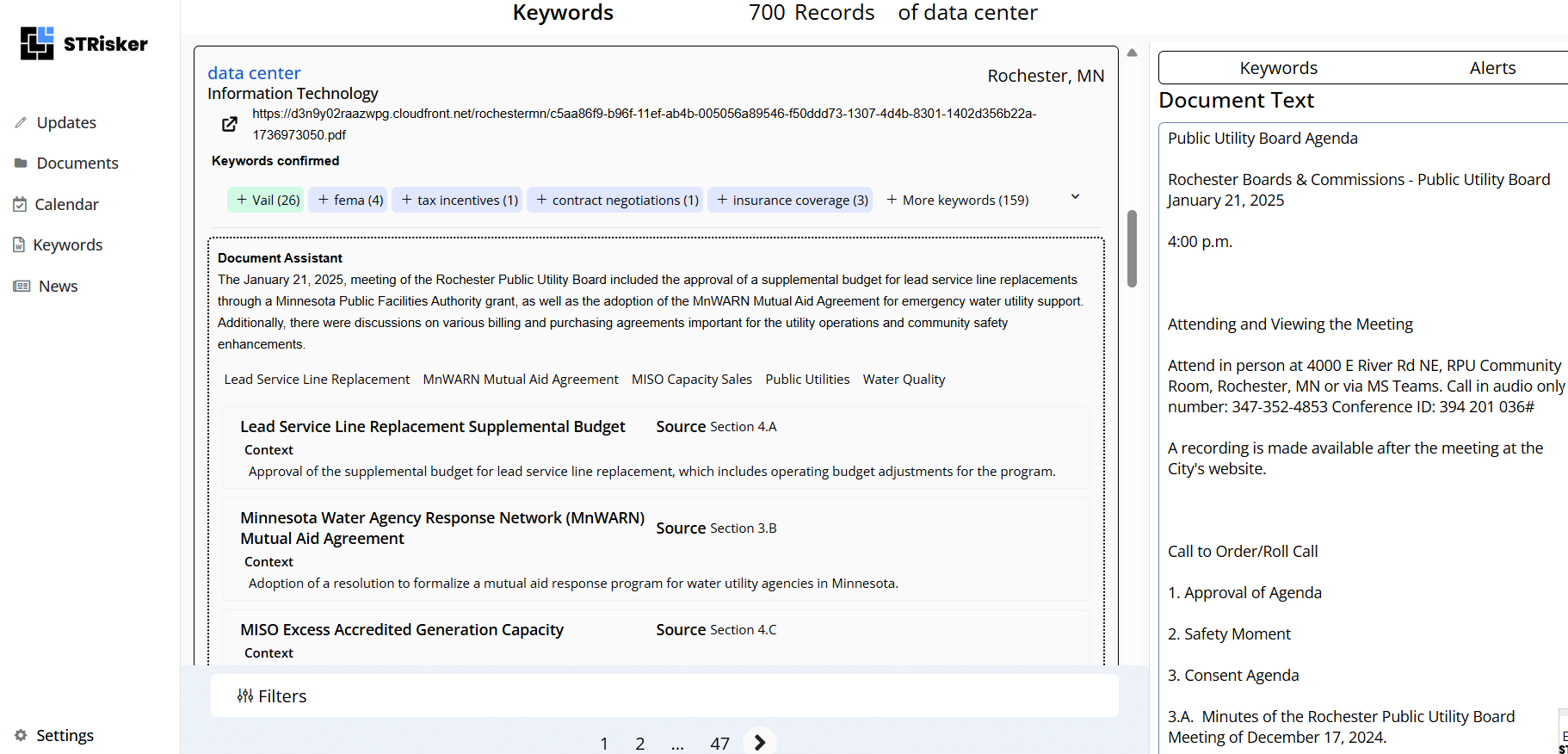
STRisker Keyword Searching
Finding the right keywords shouldn’t feel like digging through endless text—STRisker’s Keywords Searching tool cuts through the clutter for you. It tracks the essential keywords and terms across thousands of documents, highlighting information that matter most to you at a glance.
Summit County is strengthening its short-term rental enforcement program by deploying new listing-tracking software and introducing a 24-hour hotline to manage complaints and ensure regulatory compliance.
The county’s enforcement team is using technology to identify all STR listings operating within county limits, verify licensing status, and contact owners who are not in compliance, with civil enforcement actions planned for those who fail to respond
Lead city commissioners are holding off on supporting an amendment to the city’s short-term rental ordinance that would establish penalties for violations tied to complaints.
The proposal would allow licensed STR owners to lose their permit after three substantiated complaints within a 12-month period, following investigation by the Lead Police Department. Depending on the severity, licenses could be temporarily suspended or revoked, with final decisions made by the City Commission.
Visit Marshall has opened applications for its Hotel Occupancy Tax Fund Grant. The grant reimburses approved expenses after activities are completed and proper documentation is submitted.
Eligible applicants include nonprofits, tourism businesses, and civic organizations whose projects align with state-approved HOT fund uses. The application deadline is Feb. 27, with final approval handled by the City Council.
📱 Social Buzz
Episode Title: Weekend Breakfast with Darren James - Sat 24 Jan, 2026 - Full Show
Episode: Weekend Breakfast with Darren James
The Denton Township Board approved a short-term rental ordinance Jan. 7.
— HL Resorter (@HLResorter) January 25, 2026
Short-term Rental Ordinance 2026-01-07 will become effective in the township 30 days after the first publication.https://t.co/qzZry51jNJ pic.twitter.com/P5TUkCIFGL
Ice storm coming - guide to getting through it; Chapel Hill settles short-term rental lawsuit; Carrboro council discusses traffic changes. #LocalNewsMatters https://t.co/MMQSRRCUWZ
— The Local Reporter (@LocalReporterOC) January 24, 2026
Stay Updated with STRisker
STRisker offers tools and features to keep you updated with the Short-Term Rental movement across the globe.
👍 We’d love your feedback.
Which stories hit? Which ones missed?
We're constantly refining Daily Notes to make it even more useful for you.
✉️ Just reply directly to this email. We read and respond to every message!
-Will McClure
🙋 P.S.
Know someone else who should be reading Daily Notes? Feel free to forward this along. We’re opening a few more spots.