
Daily Regulatory Notes 02/16/2026
Cities address STRs. Idaho approves bill; Evanston, IL delays vote; Cape Coral, FL proposes stricter enforcement; Kingston, NY advances proposal; Hernando County, FL plans to revise ordinance; Newport Beach, CA; Columbia Falls, MT; Coeur D Alene, ID; Tisbury, MA. READ MORE.

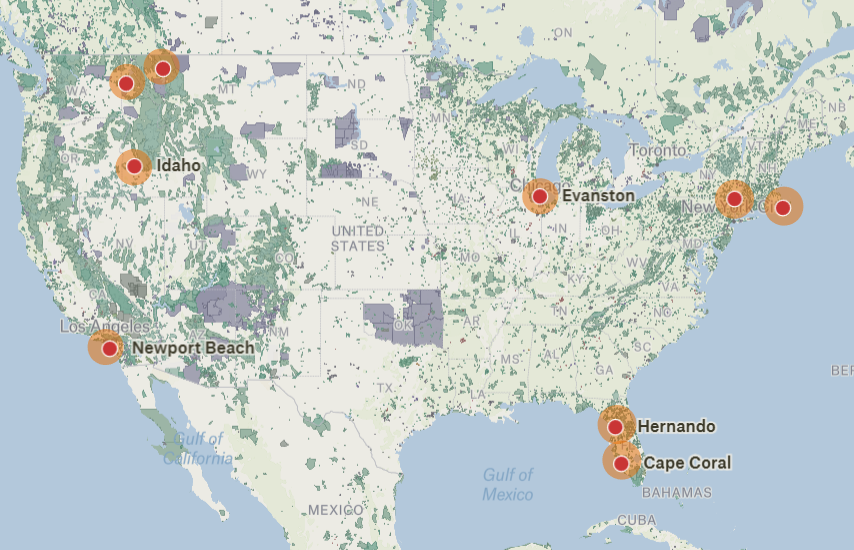
Idaho
Idaho short-term rental owners moved closer to statewide regulatory relief as the House approved House Bill 583, limiting local governments’ authority over STRs and allowing only minimal safety and occupancy rules while prohibiting licensing, registration, or STR-specific fees.
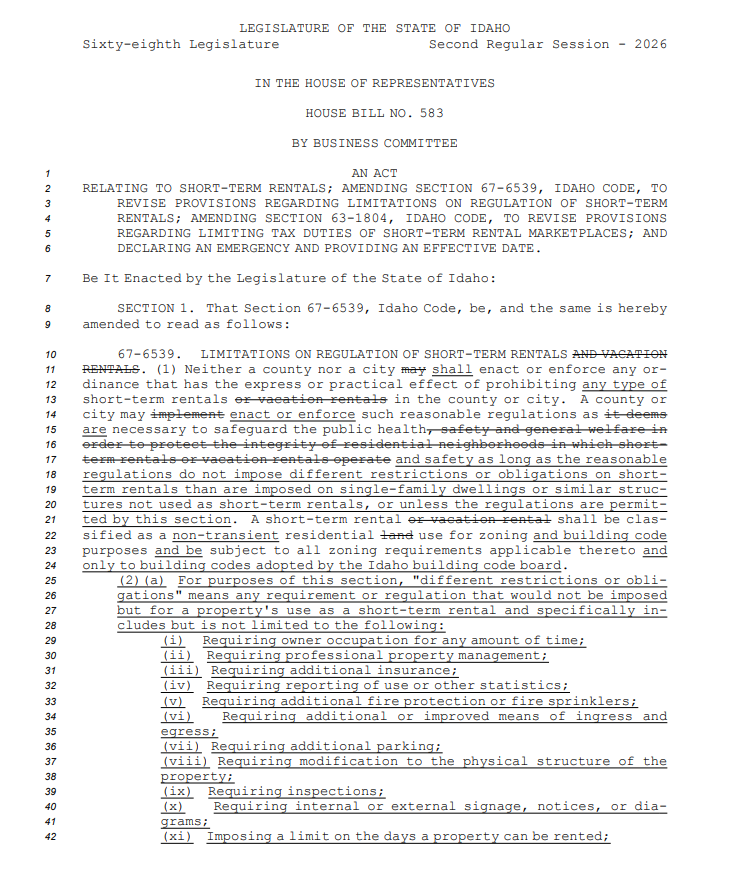
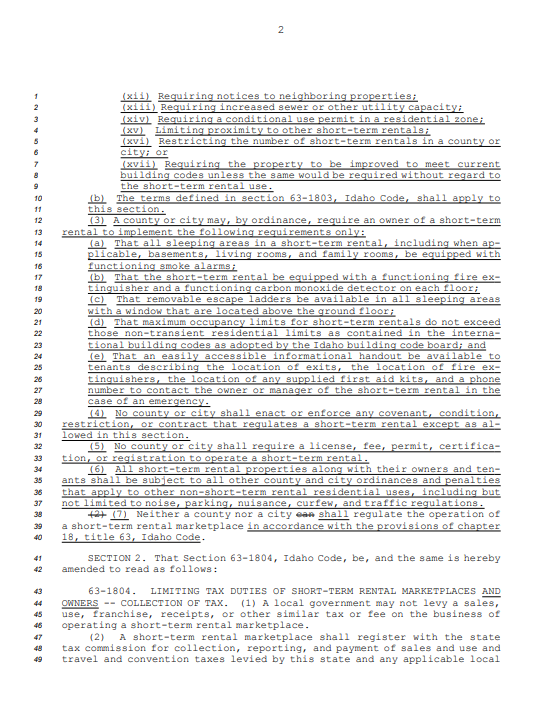
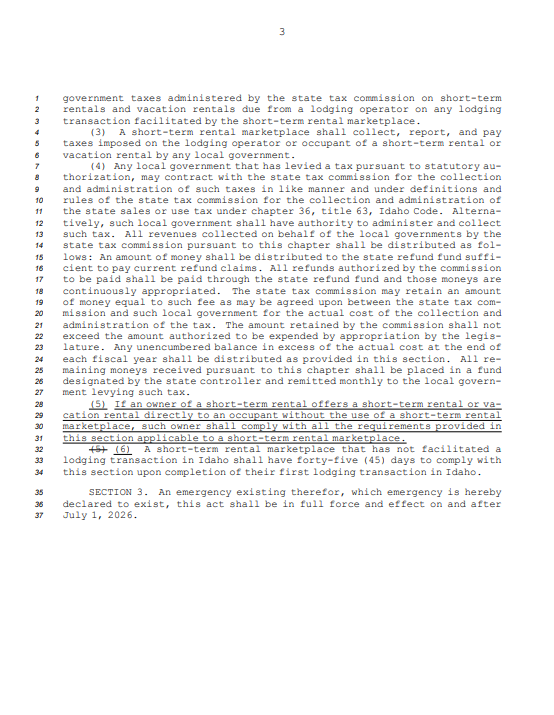
With a 54-16 House vote, HB 583 now advances to the Senate, while parallel discussions continue on Senate Bill 1263, which aims to balance statewide rules with some retained local control.
The Evanston City Council has delayed for a second straight meeting a vote on a proposed short-term rental ordinance that would cap licenses at one per 100 long-term rental units, require 600 feet between rentals, mandate that property managers live in Evanston or within three miles, and force platforms like Airbnb and Vrbo to obtain a city license to operate.
Vacation Rental License
The ordinance is expected to be revisited at the council’s Feb. 23 meeting. The move follows nearby Skokie’s newly approved 18-month pilot program banning new investor-owned short-term rentals, requiring annual host training, and setting a five-night minimum stay through August 2027.
Cape Coral officials are laying the groundwork for a more aggressive short-term rental enforcement program by directing staff to establish a restricted fund that will capture revenue from newly increased registration fees and dedicate it solely to compliance efforts.


Under the updated ordinance effective Jan. 1, short-term rentals must pay a $350 annual fee, compared to $35 for long-term units, along with potential late penalties. City leaders acknowledged the prior system lacked full compliance and minimal enforcement, but say the revamped structure will support additional personnel, enhanced monitoring software, and stronger oversight.
The Kingston Common Council is advancing a proposal to raise the city’s lodging tax from the 3% originally proposed by Mayor Steve Noble to 5%, applying the increase to hotels, motels, and short-term rentals, with a public hearing scheduled for March 2 and an initial council vote set for March 3.
The measure would still require approval from the state Legislature and Gov. Kathy Hochul under a home rule request before taking effect, potentially later this year. While some lawmakers floated a 4% compromise amid concerns from short-term rental operators, backers of the 5% rate said they do not expect the increase to meaningfully impact tourism demand.
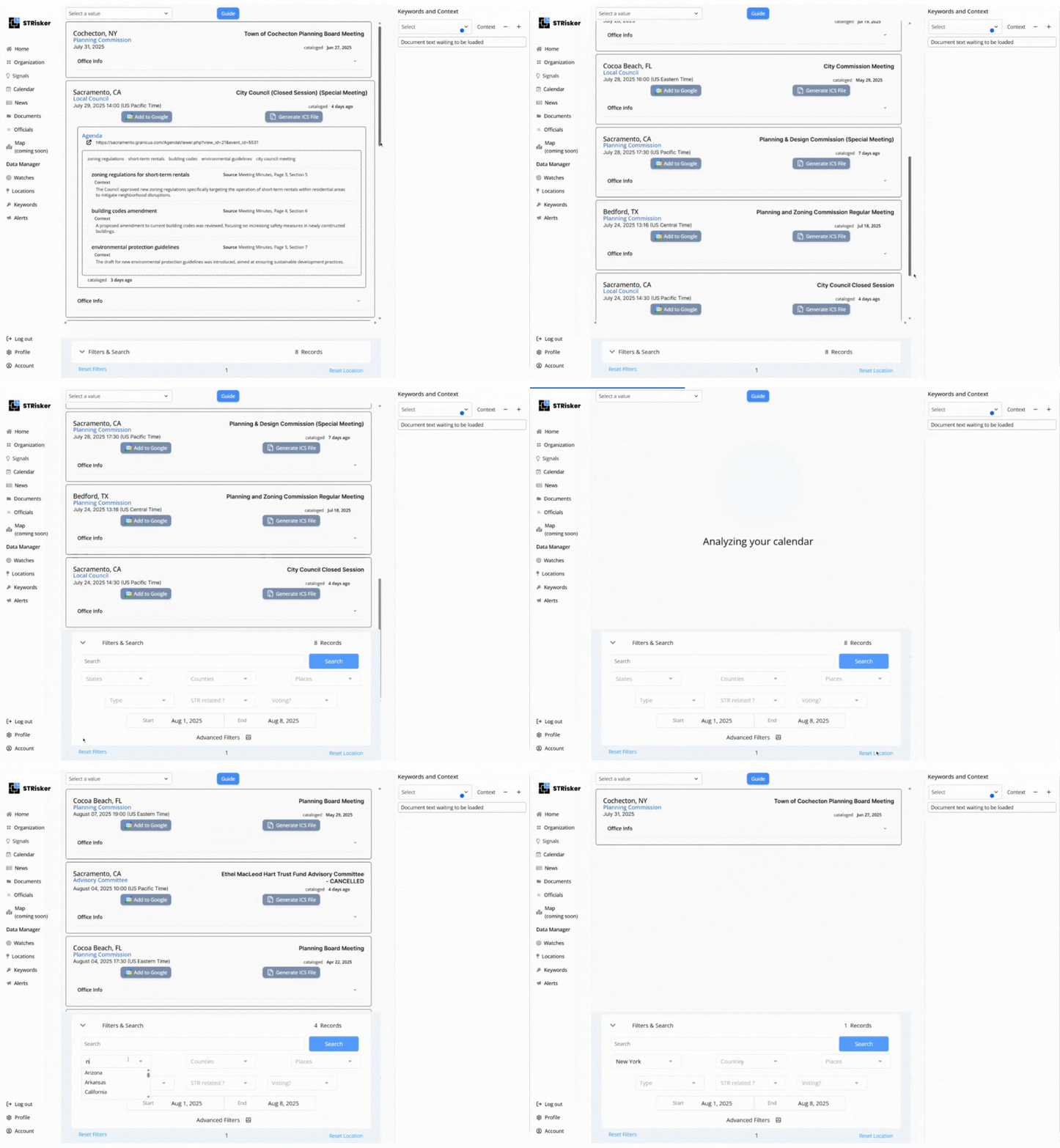
STRisker Calendar Tracker
Staying ahead of STR regulations isn’t just about deadlines—it’s about knowing what’s coming. Our Calendar Tracker keeps you informed on upcoming meetings, key votes, and policy changes, so you never miss a critical update.
Officials in Hernando County plan to revise a short-term rental ordinance to adopt state lodging rules while adding local capacity and parking limits.
The proposal would require Certificates of Use and allow the county to enforce fire, safety, and sanitation standards currently governed by state law. A second draft is expected for board review in April
City officials in Newport Beach approved expanded Safety Enhancement Zones covering spring break and major summer holidays


Councilmember Robyn Grant voiced confidence that staff would apply the rules with sound judgment while addressing recurring safety concerns tied to peak tourism periods.
City leaders in Columbia Falls are weighing new regulations to address enforcement challenges and housing impacts tied to short-term rentals.
Officials say limited staffing has made compliance difficult, even as rentals generate significant tourism revenue and remain widespread beyond the 121 permitted units. Staff recommended requiring registration numbers in online listings and exploring caps or zoning-based limits, alongside a tiered system distinguishing owner-occupied rentals from investment properties.
The city of Coeur d’Alene is pushing back against Idaho House Bill 583, which would limit how cities regulate short-term rentals by classifying them as a lawful residential use and preventing stricter local rules than those applied to comparable housing.
While the Idaho House has already passed the bill and sent it to the Senate, city officials argue it would strip key tools like permitting and registration requirements that they rely on for safety, accountability, and neighborhood oversight.
Tisbury officials are exploring ways to increase revenue from short-term rentals, including a potential three percent community impact fee and the elimination of the town’s 75-night annual cap on rentals.
Supporters, like board member Roy Cutrer, argue removing the cap would boost earnings, support seasonal workers, protect property values, and help fund major projects like a new town hall and regional school upgrades, while part of the new fee would be earmarked for affordable housing. The proposal will undergo a public hearing and be deliberated at Tisbury’s annual town meeting in April.
📱 Social Buzz
🎤 Episode Title: Oak Bluffs Select Board - Oak Bluffs SB 2.10.26
🎤 Episode: MyTown News
📻 Listen:https://www.buzzsprout.com/2501436/episodes/18673954-oak-bluffs-select-board-oak-bluffs-sb-2-10-26.mp3
Ever stayed in a short-term rental in Boise? A new bill would deregulate those rentals in Idaho. @Dee_Minus#idpol #idleghttps://t.co/csVQ2yZfdU
— Carolyn Komatsoulis (@CKomatsoulis) February 15, 2026
Folly Beach Town Council will take a long look at short-term rental cap this year https://t.co/jhOV0p26hN
— The Post and Courier (@postandcourier) February 15, 2026
MO bills would prevent short-term rentals from paying commercial property taxhttps://t.co/X5ourrbv7r
— Missouri LP (@MissouriLP) February 14, 2026
Washington lawmakers are making another attempt to pass a short-term rental tax after a similar bill failed last year. If approved, House Bill 2559 would add a 4% tax on short-term rentals—translating to $8 on a $200-per-night stay.
— 시원 CPA 톡톡 (@C1cpatalktalk) February 13, 2026
Stay Updated with STRisker
STRisker offers tools and features to keep you updated with the Short-Term Rental movement across the globe.
👍 We’d love your feedback.
Which stories hit? Which ones missed?
We're constantly refining Daily Notes to make it even more useful for you.
✉️ Just reply directly to this email. We read and respond to every message!
-Will McClure
🙋 P.S.
Know someone else who should be reading Daily Notes? Feel free to forward this along. We’re opening a few more spots.