
Daily Regulatory Notes 12/15/2025
Cities address STRs. Folly Beach, SC advances enforcement; Washington, DC reviews laws; Maricopa County, AZ overhauls zoning ordinance; Wellfleet, MA reviews enforcement; Pinehurst, NC; Logan, OH; Sarasota, FL; Pullman, WA; Harris Township, PA; Fayetteville, TX. READ MORE.

D.C. officials are reviewing rental and tenancy laws following a high-profile dispute between a short-term rental owner and an accused squatter who entered the home through Airbnb.
Council leaders say the case exposes potential gaps in how tenant rights apply after short stays, especially when guests claim residency after 30 days. Lawmakers are considering whether emergency legislation may be needed depending on the court’s ruling.
Folly Beach City Council has unanimously advanced technical amendments to its short-term rental ordinance, refining how the island’s voter-approved cap of 800 units is enforced.


The revisions address renovation protections, tax classification errors, military exemptions, and emergency contact posting requirements, without increasing the number of available permits.
Maricopa County has unanimously approved a major overhaul of its zoning ordinance, simplifying decades-old rules to expand housing options and modernize land-use standards.
The updates allow multiple accessory dwelling units, permit short-term rentals under state law with neighborhood protections, and streamline approvals for smaller multifamily projects. The ordinance also clarifies regulations for emerging technologies like data centers and battery storage systems.
Wellfleet is considering its first-ever registration and inspection program for short-term rentals, with rules that could take effect as soon as March 15.
The proposal would require annual registration, safety inspections, and fees ranging from $300 to $700 based on unit size to comply with updated state building codes. A continued public hearing is scheduled for Dec. 16.
The Pinehurst Council is preparing new outreach aimed at short-term rental owners after reviewing noise complaints that largely involve STR guests and routine neighborhood activity.
Officials say violations are rare under the current ordinance, but clearer expectations could help prevent repeat issues before police are called. Planned measures include mailed guidance to STR owners on noise, trash, and parking rules, along with simplified “no overnight street parking” signs in residential areas
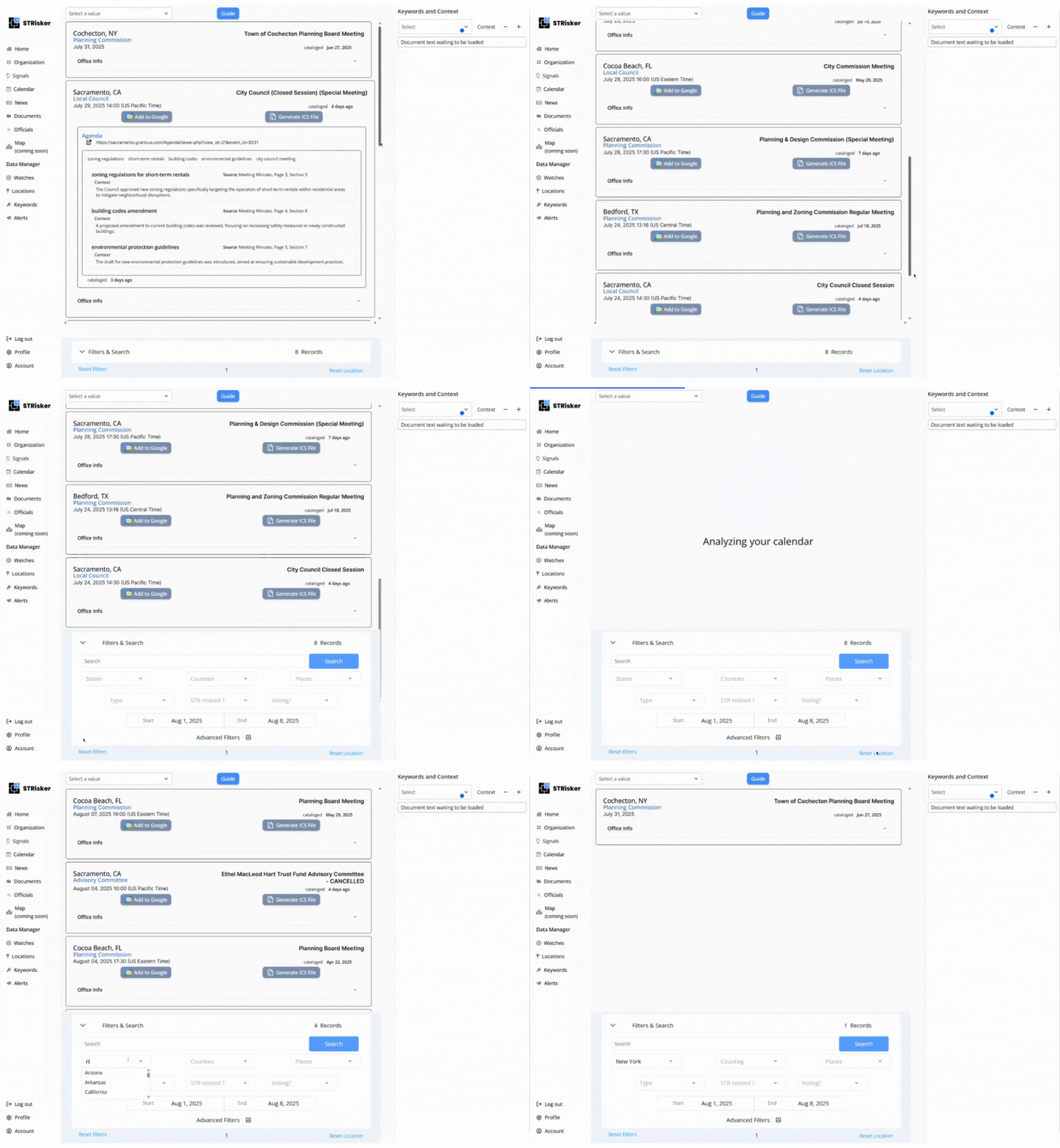
STRisker Calendar Tracker
Staying ahead of STR regulations isn’t just about deadlines—it’s about knowing what’s coming. Our Calendar Tracker keeps you informed on upcoming meetings, key votes, and policy changes, so you never miss a critical update.
A Hocking County judge is being asked to decide whether a high-capacity short-term rental violates subdivision covenants before the case goes to trial.
Neighbors argue the rental functions as a commercial enterprise, citing frequent bookings, large guest counts, and alleged septic system failure linked to overuse. The owner counters that Ohio courts have consistently ruled short-term rentals are a residential use and that nuisance behavior is no different than what permanent residents might cause.
Sarasota city commissioners are weighing whether to expand the city’s vacation rental ordinance to three downtown zoning districts after data showed most citizen complaints involve rentals outside the current program.

Since 2022, only four of 86 complaints targeted rentals in those excluded districts, raising questions about whether expanded regulation is cost-effective. The existing program already costs more than $400,000 annually while generating an estimated $245,000 in revenue.
Pullman’s Planning Commission is reopening debate on the city’s newly adopted short-term rental regulations after concerns emerged over enforcement pressure and regulatory scope.
Commissioners voted to recommend aligning Pullman’s STR definition with Washington state law, which would exempt owner-occupied rentals of one or two rooms from city rules. The board is also considering reclassifying larger STRs to avoid triggering requirements such as sprinkler systems.
While the current inspection, fee, safety, and advertising rules remain in effect, commissioners plan to continue public discussion at a Jan. 28 hearing before submitting recommendations to city council by the end of March.
Harris Township has approved a new ordinance regulating short-term rentals, including homes listed on Airbnb and Vrbo.
Rentals of one to 29 consecutive days will now require a township-issued license, renewable annually, and a Centre Region Code Administration permit. The ordinance limits short-term rentals to 120 days per year and requires owner occupancy for at least eight months, with exemptions for pre-existing non-owner-occupied rentals and temporary absences. Licenses also mandate off-street parking for each bedroom, proof of hotel tax registration, and compliance with safety inspections.
The City of Fayetteville will host a town hall on Tuesday, Dec. 16, from 6–7:15 p.m. at the Fayetteville Community Center and Performance Theater to gather public input on a proposed short-term rental ordinance.
City officials say the open meeting is intended to allow residents and stakeholders to discuss potential rules and impacts before any ordinance is finalized.
In case you missed it:
 Genelaine Urbano
 Genelaine Urbano
Stay Updated with STRisker
STRisker offers tools and features to keep you updated with the Short-Term Rental movement across the U.S.
👍 We’d love your feedback.
Which stories hit? Which ones missed?
We're constantly refining Daily Notes to make it even more useful for you.
✉️ Just reply directly to this email. We read and respond to every message!
-Will McClure
🙋 P.S.
Know someone else who should be reading Daily Notes? Feel free to forward this along. We’re opening a few more spots.