
Data Centers: Daily Notes | April 30, 2026
Oklahoma Senate unanimously passes bill shielding consumers from data center energy costs; Alaska weighs incentives vs. bans with weeks left in session; DTE promises rate freeze if $16B OpenAI campus comes online.


At A Glance 🔽
- Oklahoma Senate unanimously passes HB 2992, requiring large-load customers to cover their own energy costs and give 60 days' notice before buying land.
- Alaska lawmakers face a binary choice: offer data center tax incentives or impose a ban, with three weeks left in session.
- DTE Energy pledges to freeze Michigan customer rates for two years if Oracle's $16B OpenAI data center comes online by late 2027.
- Indiana regulators approve a deal letting Google cut power use during grid strain in exchange for discounted rates in Fort Wayne.
- Google faces growing opposition in Botetourt County, VA over a data center that could need up to 8 million gallons of water per day.
- Lansing, NY planning board reviews TeraWulf's 438-acre Cayuga Data Campus but says the application is incomplete; no public comment accepted yet.
- Chesapeake, VA begins work on making data centers a conditional use; 27,000 residential parcels sit within 500 feet of eligible land.
Oklahoma
The Oklahoma Senate unanimously passed HB 2992, which would require electric suppliers to create separate terms and conditions for large-load customers and direct regulators to ensure residents are not financially affected by data center demand on the grid.
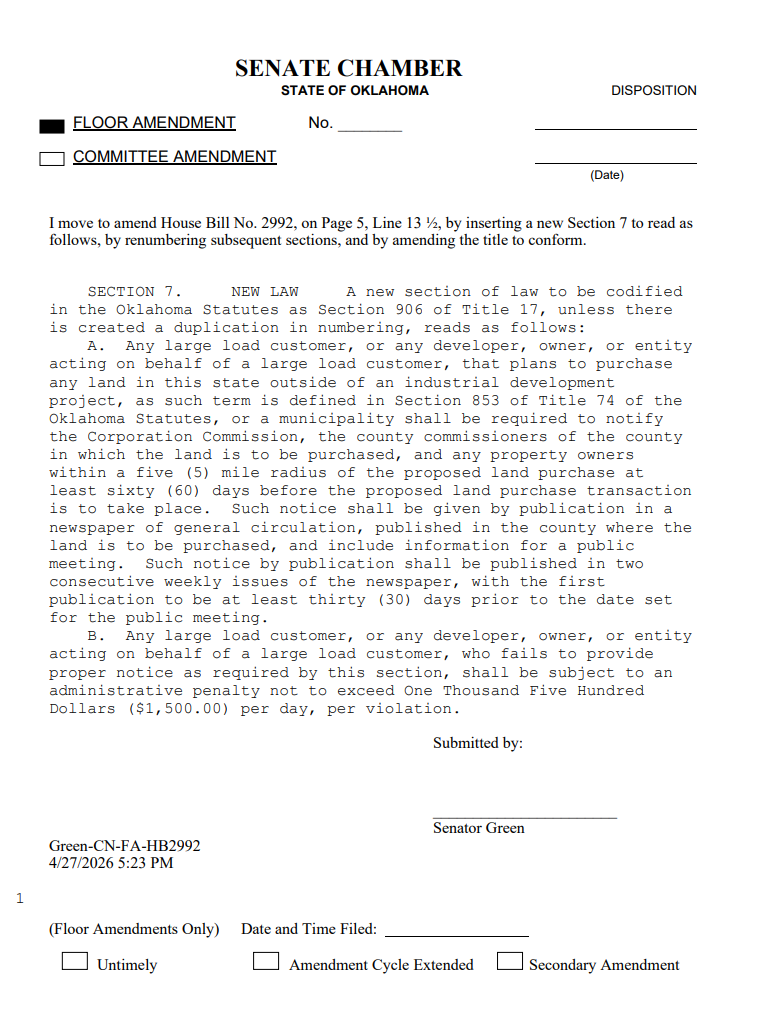
A recent amendment added a requirement that developers provide 60 days' notice and hold a public meeting before buying land for large energy projects.
Alaska
Alaska lawmakers have about three weeks to decide whether to offer tax incentives or ban data centers altogether. Alaska currently has six data centers and is not among the 34 states that offer incentives.
Proponents cite the state's cold climate as a natural fit for cooling, though a University of Alaska Fairbanks analysis found cooling costs typically represent 5% or less of operating expenses, limiting the advantage. The same analysis flagged high electricity costs, reliance on fossil fuels, and the price of delivering data overseas as major obstacles.
Michigan
DTE Energy said it will freeze customer rates for at least two years if Oracle's $16 billion data center campus for OpenAI comes online as scheduled by late 2027. The 1.4-gigawatt facility is part of OpenAI's Stargate project.
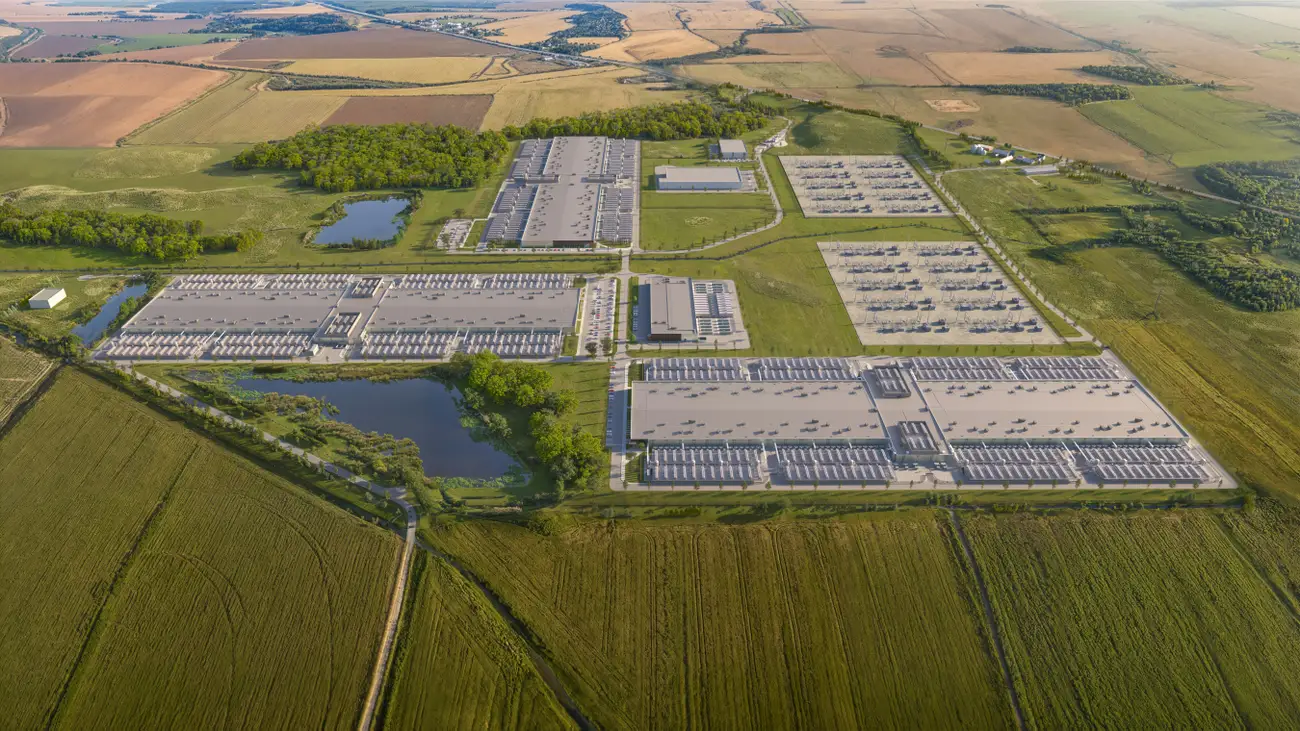
DTE expects the data center to generate $300 million in additional revenue that would offset the need for further rate increases. The utility is also asking state regulators to approve a 9.7% monthly bill increase beginning next year, which it says could be the last if the project proceeds. The site in Saline Township faces local opposition, and Oracle recently finalized financing with Related Digital, Blackstone, and Pimco.


Fort Wayne, Indiana
Indiana's Utility Regulatory Commission approved a deal between Google and Indiana Michigan Power to minimize the impact of Google's Fort Wayne data center on the electric grid.

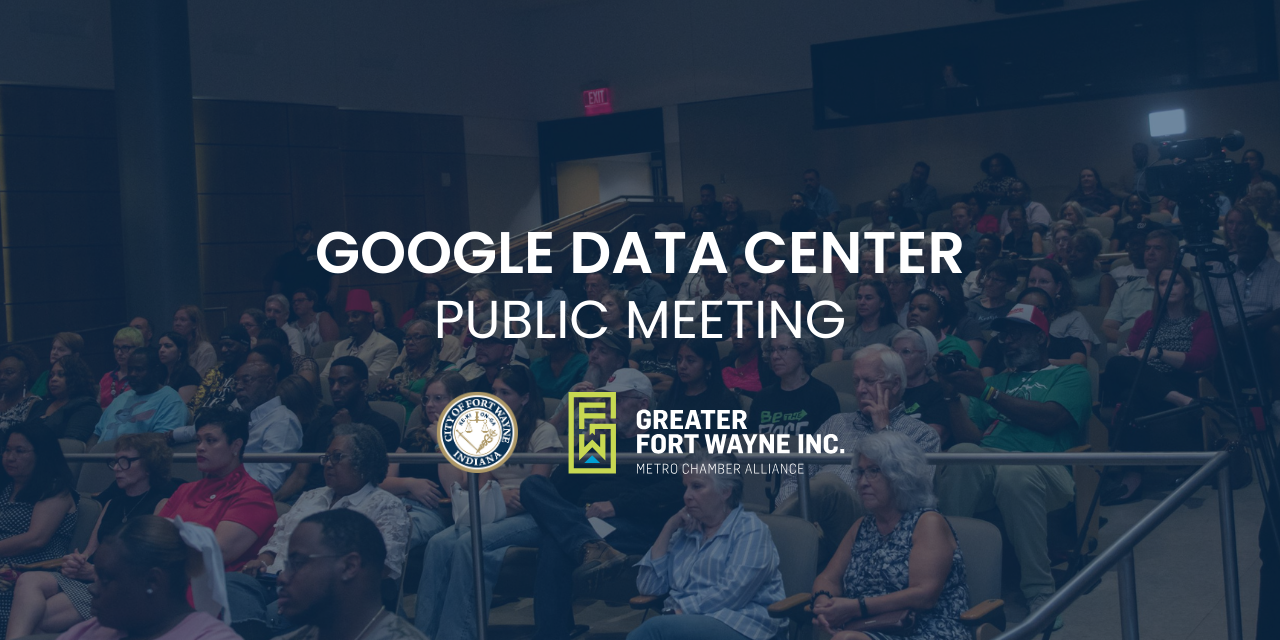
Google agreed to cut back power usage during periods of grid strain and share some clean energy capacity. In exchange, I&M will discount Google's rates during those curtailments. I&M says the arrangement prevents the need for grid upgrades that customers would otherwise have to pay for.


Botetourt County, Virginia
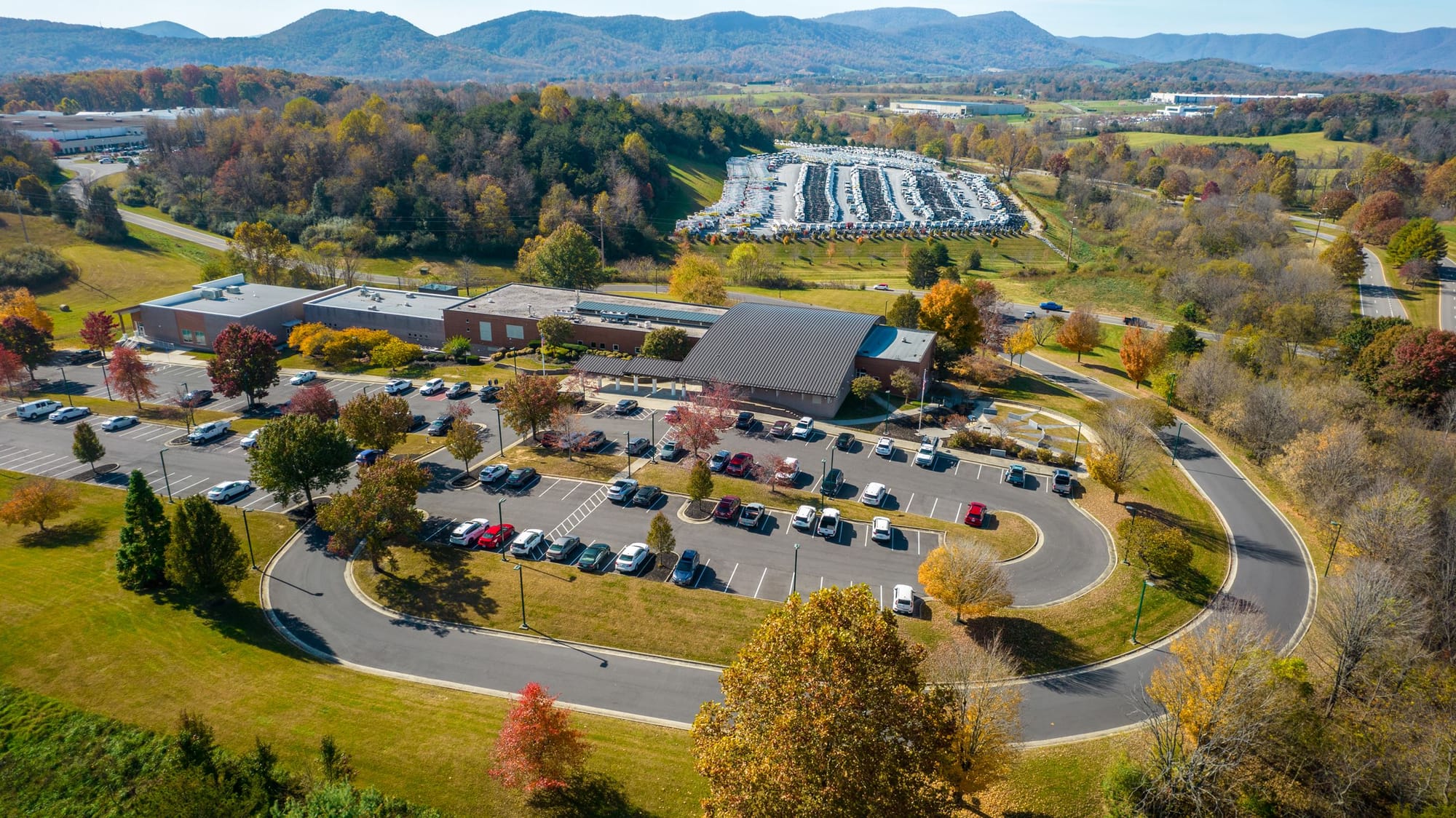
Google faces growing opposition over its planned data center campus on a 312-acre parcel at the Botetourt Center at Greenfield, where the project would initially need 2 million gallons of water per day and could eventually require up to 8 million.
Government Websites by CivicPlus®Google purchased the parcel for $14.1 million and confirmed its plans in a March 26 statement, stressing it will pay for all water infrastructure. The Southwest Virginia Data Center Transparency Alliance, formed in 2025 to oppose the project, said Google's announcement lacked specifics. Google still needs approvals from the U.S. Army Corps of Engineers and the Virginia DEQ before construction can begin.
Lansing, New York
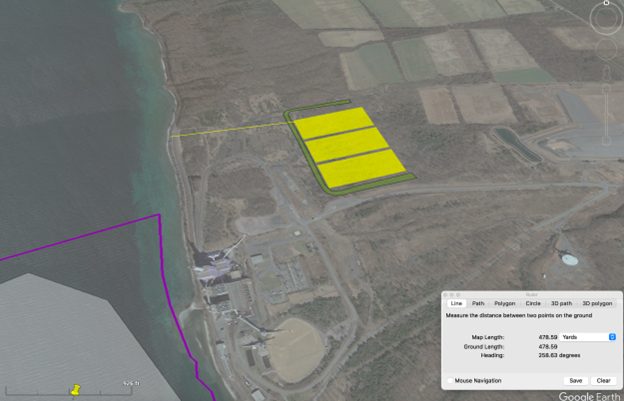
Lansing's Planning Board reviewed TeraWulf's proposed Cayuga Data Campus but concluded there is not enough information to make a formal recommendation. The 438-acre project on the old Milliken Station power plant site would include three data centers in Phase 1.
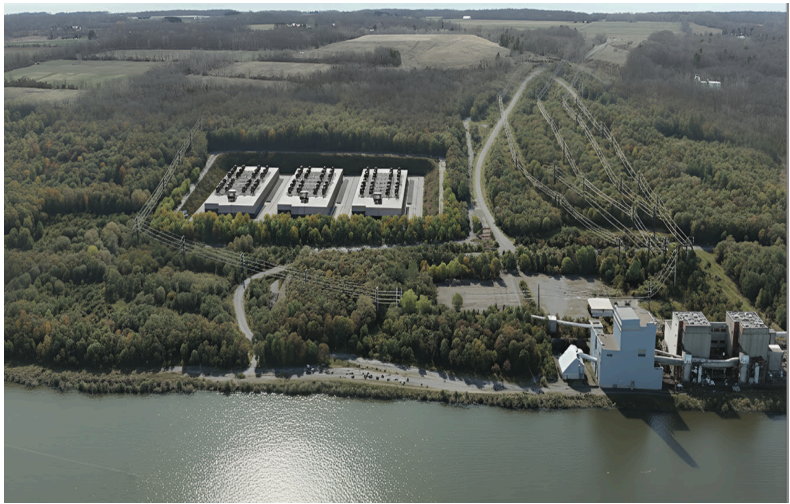
Cayuga Operating Company, the landowner, was approved to draw up to 1 million gallons per day from Cayuga Lake. TeraWulf said that water would only be used for site maintenance, not for the data center itself. Public comments will not be accepted until a completed application is filed.

Chesapeake, Virginia
Chesapeake is exploring zoning amendments that would make data centers a conditional use near residential areas, requiring council approval on a case-by-case basis. Currently, data centers are allowed by-right in industrial, business, office, and institutional zones.
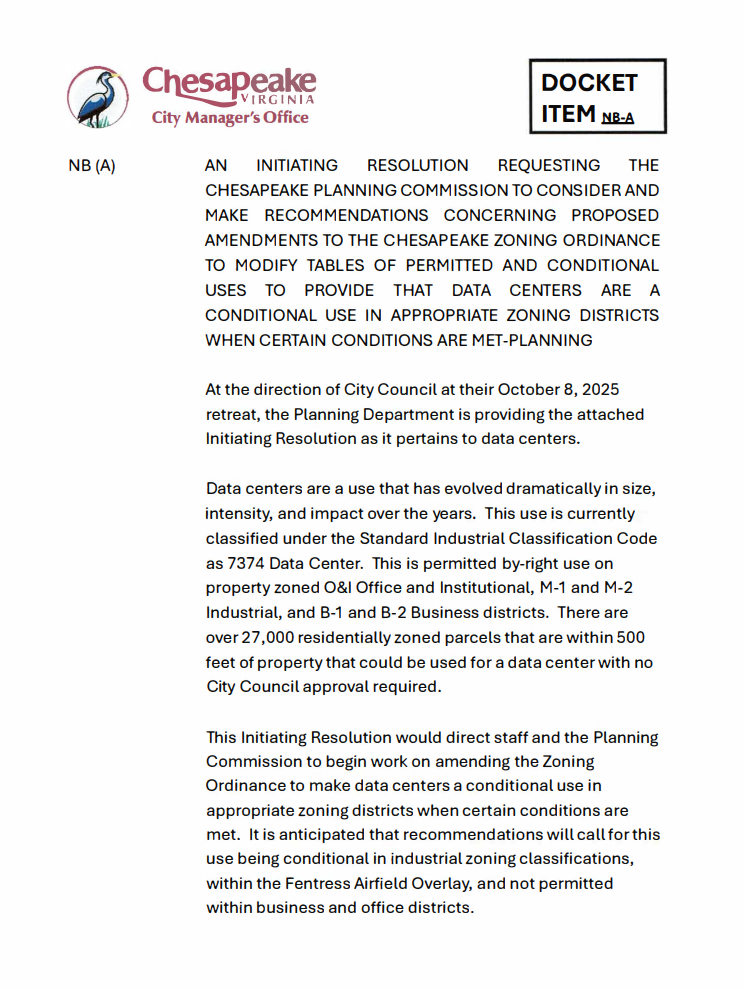
The city says more than 27,000 residential-zoned parcels sit within 500 feet of property eligible for data center development. No timeline for presenting the new ordinance has been set.
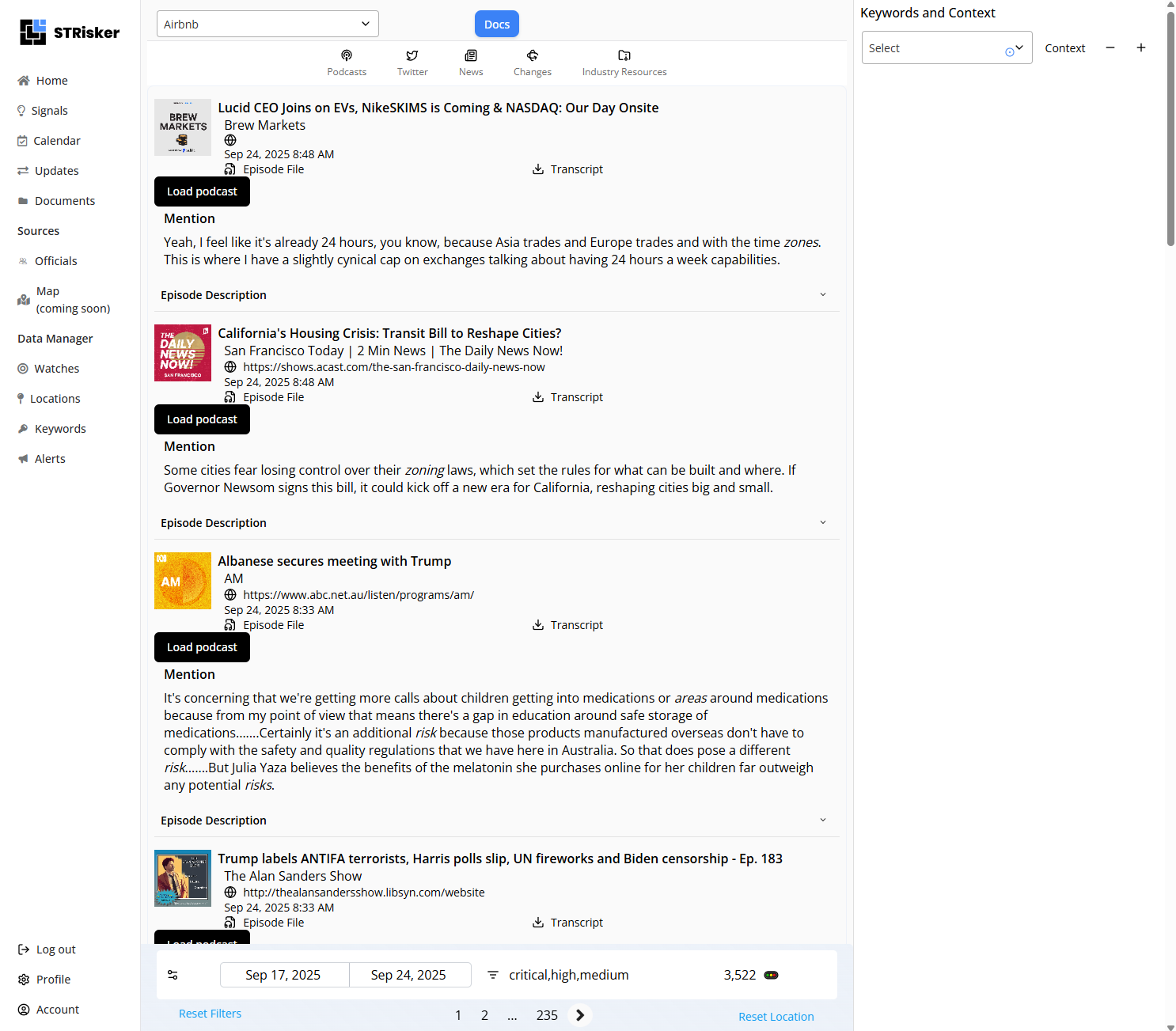
Social Listening 🎧: Podcast
Policy talk doesn’t just happen in the news cycle—it can also live in long-form audio. STRisker’s Podcast Signal turns hours of episodes into actionable insight, indexing transcripts so you can surface key mentions of STRs, ordinances, and local decision-makers in seconds.
Stay Updated with STRisker!
STRisker offers tools and features to keep you updated with the Short Term Rental movement (and now Data Centers!) movement across the world.
👍 We’d love your feedback.
Which stories hit? Which ones missed?
We're exploring a new branch of topics centered around Data Centers and want to make it even more useful for you.
✉️ Just reply directly to this email. We read and respond to every message!
-Will McClure
🙋 P.S.
Know someone else who should be reading Daily Notes? Feel free to forward this along. We’re opening a few more spots.