
Data Centers: Daily Notes | June 23, 2026
Spokane closes a moratorium loophole, Oregon advocates sue over decades-long tax breaks, and an Oklahoma commission stalls a 2,000-acre hyperscale project.


At A Glance 🔽
- Spokane, WA passes a one-year moratorium on large data centers amending the language to close a loophole tied to a 25 MVA threshold.
- Knox County, TN adopts a one-year moratorium on new data centers through June 30, 2027.
- 1000 Friends of Oregon and allies sue Hillsboro and Washington County over tax breaks for 17 data centers.
- Pittsburg County, OK tables two tax incentive districts for IREN's 2,000-acre "Project Emerald" hyperscale campus.
- Inver Grove Heights, MN council abruptly adjourns before a data center vote, rescheduling to Friday at 8 a.m. as residents boo.
- Mankato, MN rushes an interim ordinance, calling a July 13 hearing on a one-year moratorium covering data centers and other resource-heavy users.
- Piedmont, OK residents pack chambers over the Cloverleaf campus; the vote is pushed to late July.
- Adamstown, MD residents appeal after a judge keeps a 2,615-acre data center zone referendum off the November ballot.
- Neptune Township, NJ advances an ordinance banning both data centers and ICE detention centers on first reading.
- Kansas City, MO developer files plans for a 20-story, 384-foot data center tower downtown.
Spokane, Washington
The Spokane City Council approved a one-year emergency moratorium on new large data centers Monday night, blocking any project that would draw more than 25 megavolt-amperes.
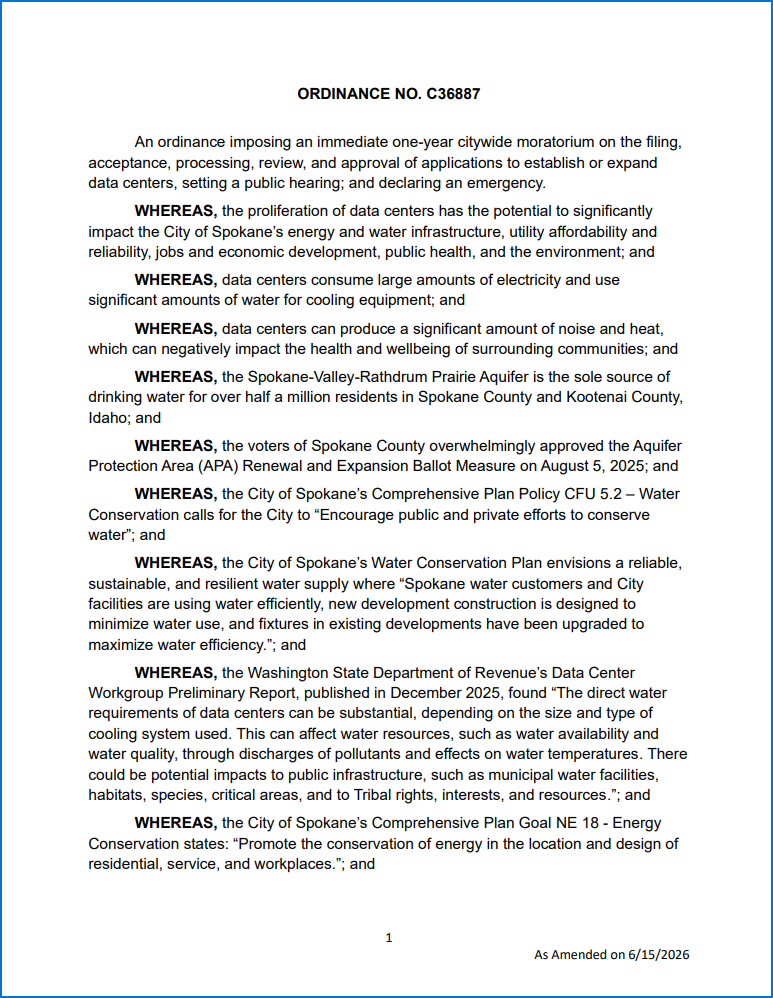
The council amended the measure before the vote to close a loophole in the Seattle ordinance it was modeled on. Councilman Zack Zappone's change refocused the definition on the type of activity rather than the building, which he argued would block a data center sharing a site with other uses. The yearlong window will be used to draft permanent regulations during the city's ongoing code review.
Knox County, Tennessee
The Knox County Commission approved a one-year moratorium on new data center projects while the county writes rules for future proposals.
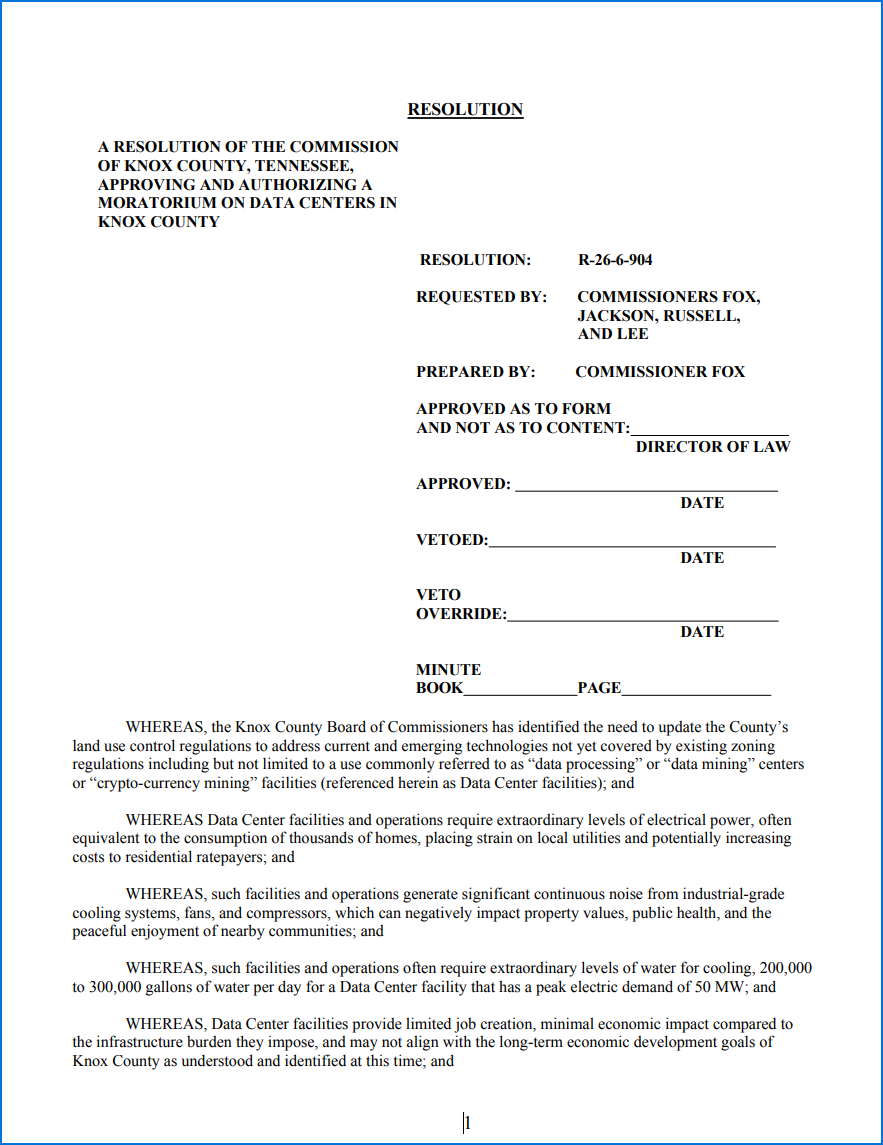
The freeze halts construction, operation, and permitting of new facilities with peak electric demand of 10 megawatts or less until at least June 30, 2027. The resolution defines a data center broadly, including artificial intelligence and cryptocurrency mining or blockchain computing operations. Over the next year, the Knoxville-Knox County Planning Commission will draft guidelines, and commissioners could extend the pause if they need more time.
Hillsboro and Washington County, Oregon
1000 Friends of Oregon and a coalition of allies sued Hillsboro and Washington County on Monday over property tax breaks granted to 17 data centers.


The city rushed to approve a flood of tax break applications this spring, beating a state moratorium on new data center tax breaks that took effect June 6. Hillsboro's enterprise zone breaks are nominally capped at five years, but some companies submitted stacked applications in successive five-year intervals to lock in reduced tax bills for decades. The complaint alleges the approvals let data centers sidestep land use processes, limit public participation, and avoid paying fair taxes.
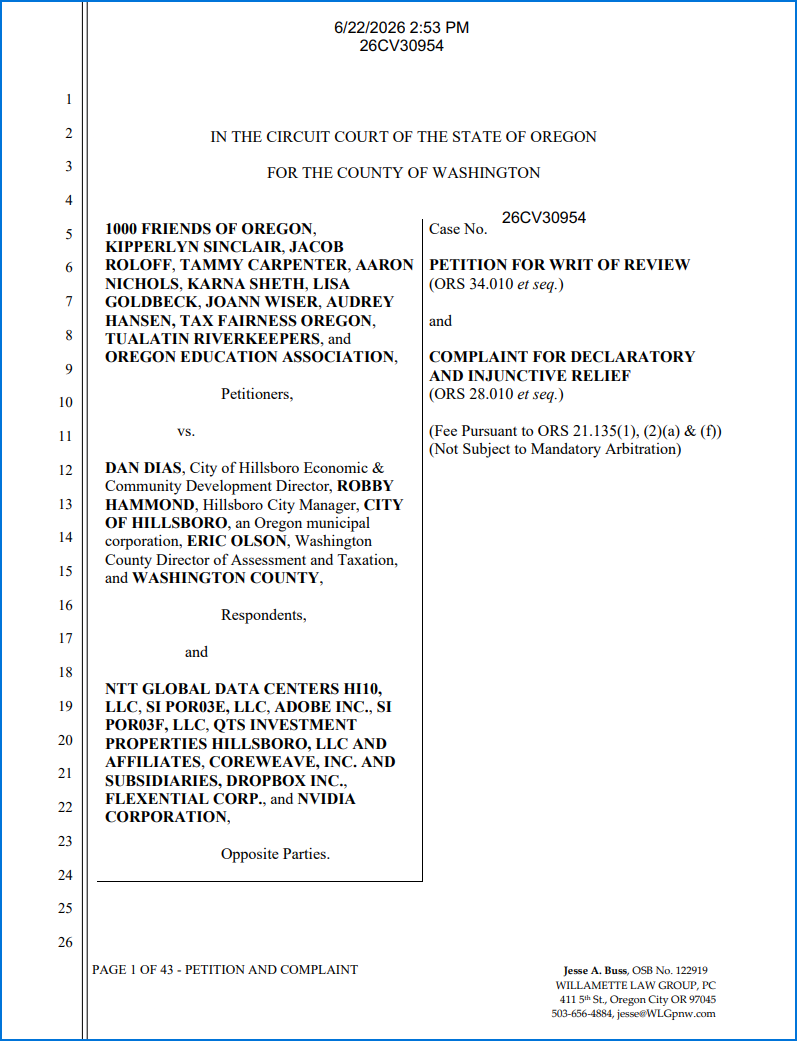
The suit was filed in Washington County Circuit Court by plaintiffs including Hillsboro City Councilor Kipperlyn Sinclair, Tax Fairness Oregon, Tualatin Riverkeepers, and the Oregon Education Association. Representatives for Hillsboro and Washington County did not immediately comment.
Pittsburg County, Oklahoma
Pittsburg County commissioners tabled two tax incentive districts tied to Project Emerald, sending the matter back to a review committee to examine new cost estimates.
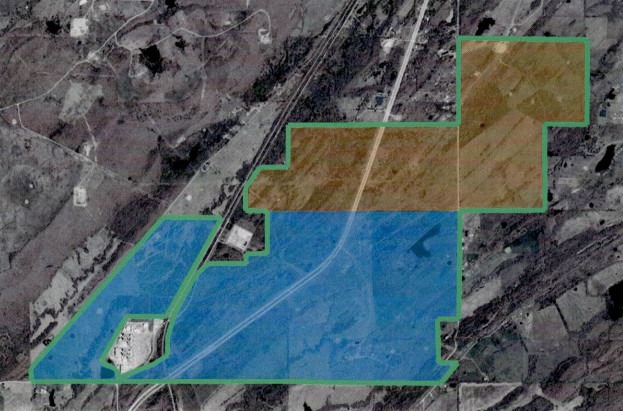
The final public hearing drew a crowd of roughly 200, with a clear majority opposed. IREN, the Australia-based company seeking to build the facility, says the 2,000-acre site on both sides of South Kiowa Lake Road would devote about 10% of the land to buildings and 90% to buffer zones. Public affairs representative Jason Date pegged the project at an estimated $24 million in annual taxes and contributions, with 100 permanent jobs and a minimum water usage rate.
One resident at the podium called the plan "a tax avoidance structure written by the developer's attorneys". IREN submitted a statement responding to the decision, and the proposal remains under review.
Inver Grove Heights, Minnesota
The Inver Grove Heights City Council abruptly adjourned Monday night before a scheduled data center vote, prompting boos and shouting from the crowd.
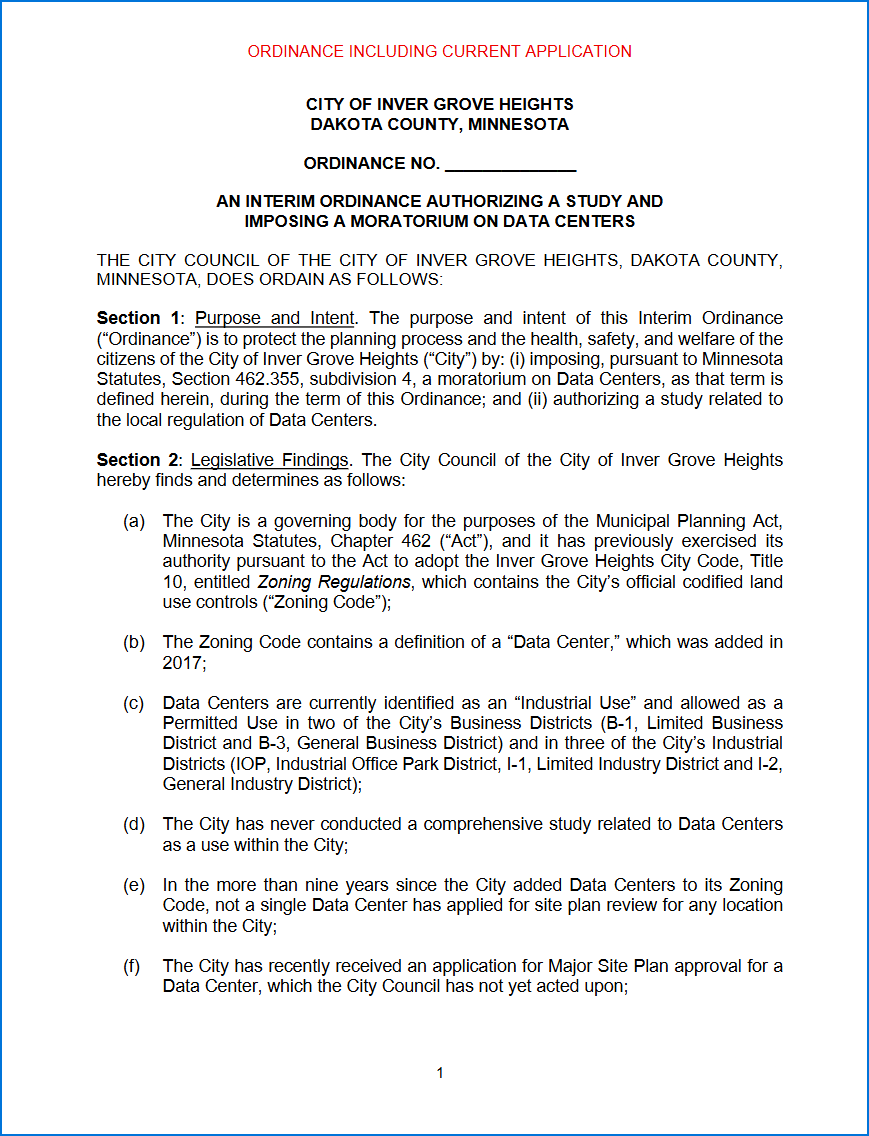
The agenda was set to include a vote on a moratorium on new data centers and a discussion of a proposed 54,000-square-foot facility. Instead, the council voted to adjourn and reschedule for Friday at 8 a.m., a time many residents said would keep working people from attending. Council member Sue Gliva said the council received "confidential" new information at 4 p.m. that day but did not elaborate.
The developer behind the proposal has threatened legal action if the council decides the matter on anything other than zoning law. It remains unclear what the new information was or whether a moratorium would affect the proposed facility.
Mankato, Minnesota
Mankato is rushing an interim ordinance that would impose a one-year moratorium on data center construction and applications, accelerated after an outside inquiry about the city's code.
City Manager Susan Arntz said staff had planned a July work session on a possible moratorium, then moved faster after a party asked late last week about code sections including data centers. The city has no active application. The seven-member council agreed to call a public hearing for July 13, after which the ordinance could be adopted.
The council broadened the language to cover not just data centers but other new industrial users that consume large amounts of resources such as water. During the moratorium, no data center could be built or expanded, and no related permit application would be accepted, while the city studies impacts and weighs zoning changes.
Piedmont, Oklahoma
Piedmont residents packed City Council chambers at the Veterans' Event Center to oppose the proposed Cloverleaf data center campus, which the Planning Commission recommended for denial three weeks ago. The turnout was large enough that the city ran out of parking.
 Louis
Louis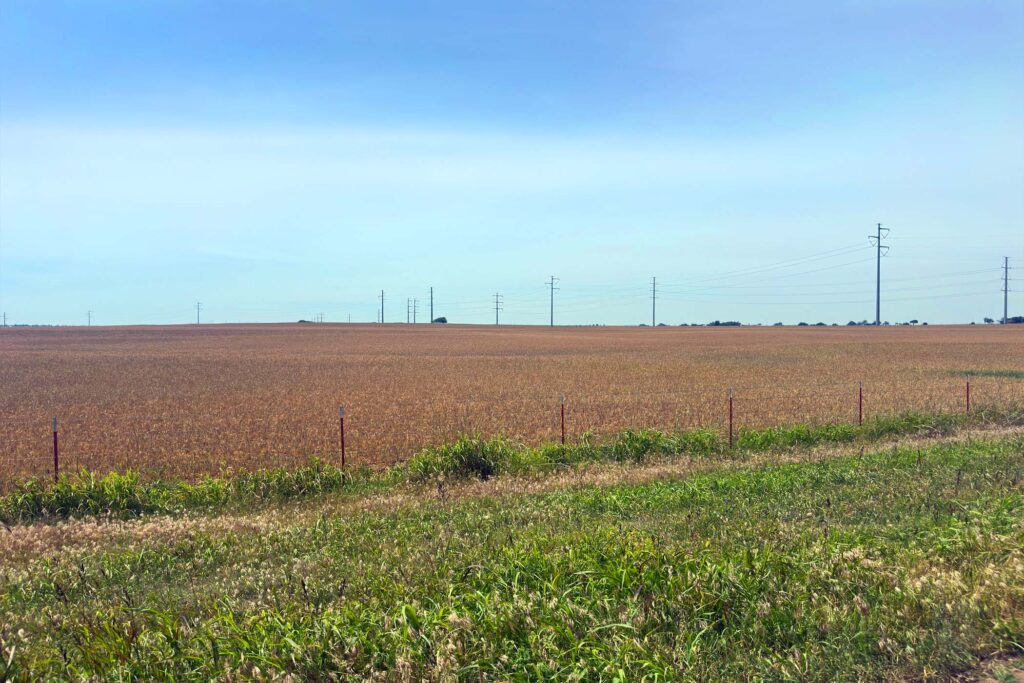
Cloverleaf representative Aaron Bilyeu returned with his team to address what he called misinformation, providing figures for the project. He said the initial phase of the closed-loop cooling system would use 75,000 gallons of water per day for up to four months, the campus would draw up to 1.4 gigawatts of power, and the facility would operate at 60 decibels. Bilyeu also said the town would make $9 million a year through franchise fees and other payments and that the project would supply up to 500 permanent jobs. The data center discussion was pushed to the end of the agenda and ultimately rescheduled for late July.
Adamstown, Maryland
A Frederick County judge kept a data center zone referendum off the November ballot, and residents near the 2,615-acre zone are pushing back as the decision heads to appeal.
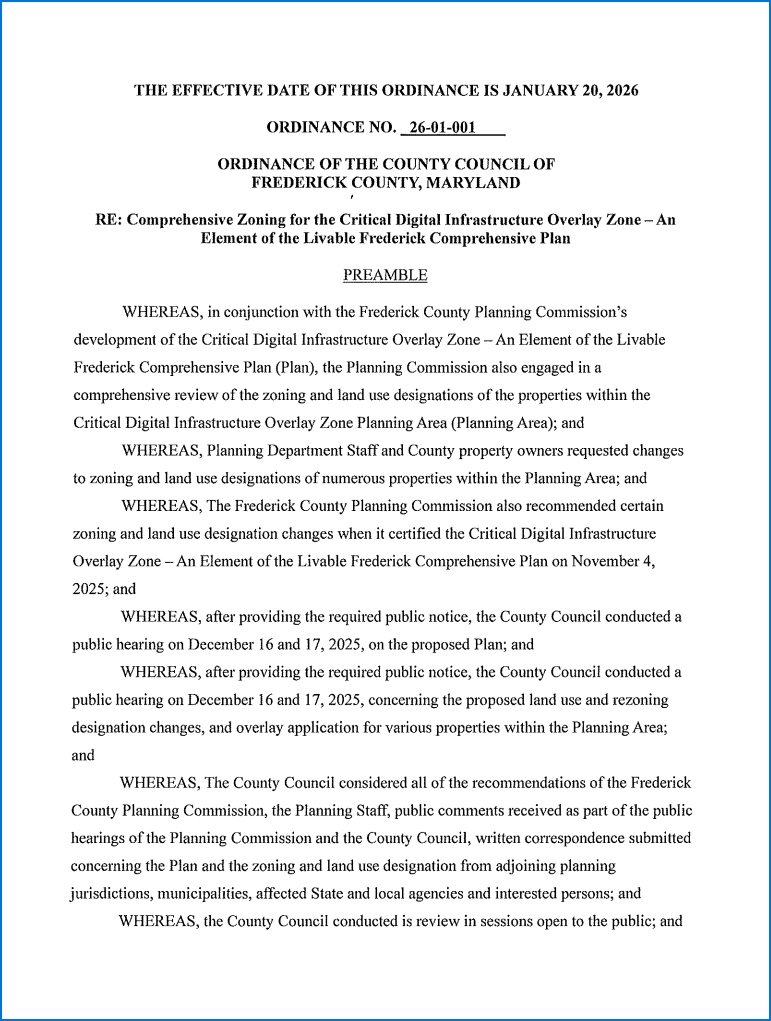
Judge James A. Bonifant vacated the county Board of Elections' approval of the referendum last week. The Frederick County Data Center Referendum Committee, a citizen group that collected over 20,000 signatures, is appealing on an accelerated schedule to the state Supreme Court. Briefs are due Tuesday, with oral arguments set for June 30 at 10 a.m., one day before ballot language for the November election is due to the state.
Neptune Township, New Jersey
Neptune Township advanced an ordinance on first reading that would amend the township's land development rules to prohibit both data centers and ICE detention centers.
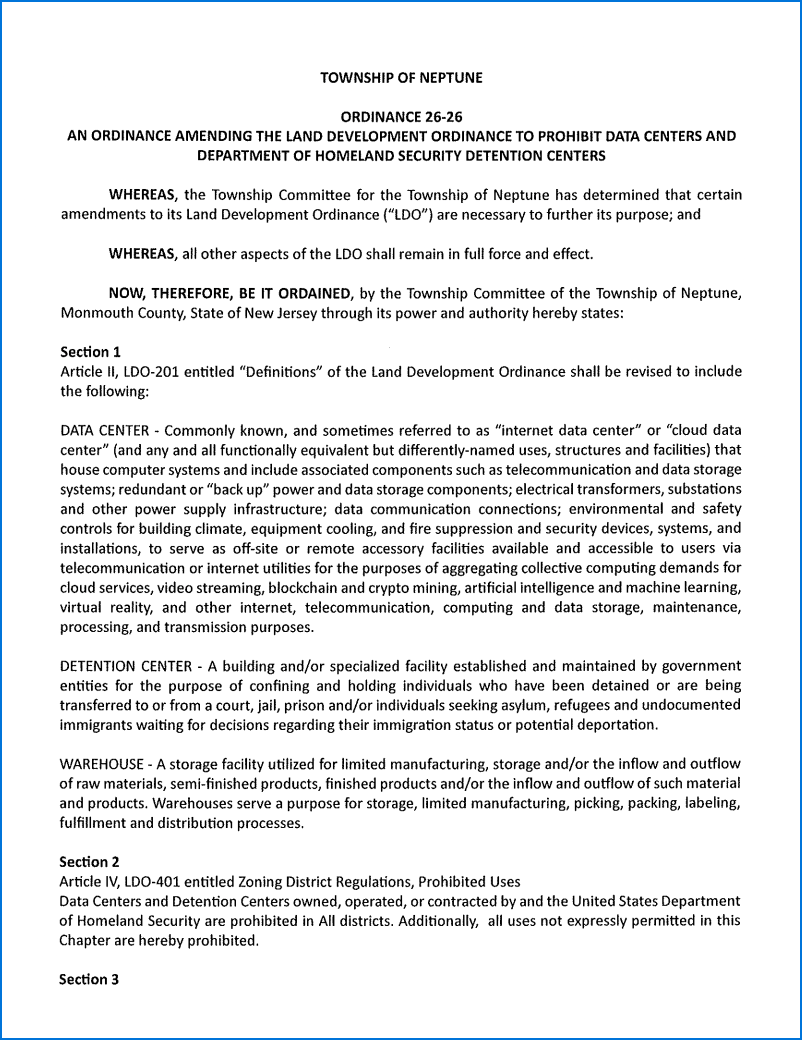
Ordinance 26-26, introduced by Deputy Mayor Derel M. Stroud, would join measures in other Monmouth County towns such as Asbury Park and Red Bank that ban data centers powering AI-generated content. Critics cite increased traffic and infrastructure strain along with electricity use, water consumption, and noise and air pollution. Neptune's ordinance is slated for second reading and a vote at the Committee's July 13 meeting.
Kansas City, Missouri
A Miami developer filed plans for a 20-story, 384-foot data center tower at 934 Central St. in downtown Kansas City.
 January 21, 2026
The proposal from Revitalization Unlimited covers about 140,880 square feet, with most of the building dedicated to data center operations and supporting infrastructure. City filings describe it as a "Communications Service Establishment (Data Center) & Retail". A 4,140-square-foot coffee shop with outdoor seating is planned for the ground floor, while upper floors would house IT racks, electrical systems, generators, and fuel cells.
City records show the proposal is scheduled for a staff review meeting June 30, an applicant meeting with the Development Review Committee on July 14, and a hearing before the City Plan Commission on Aug. 5.
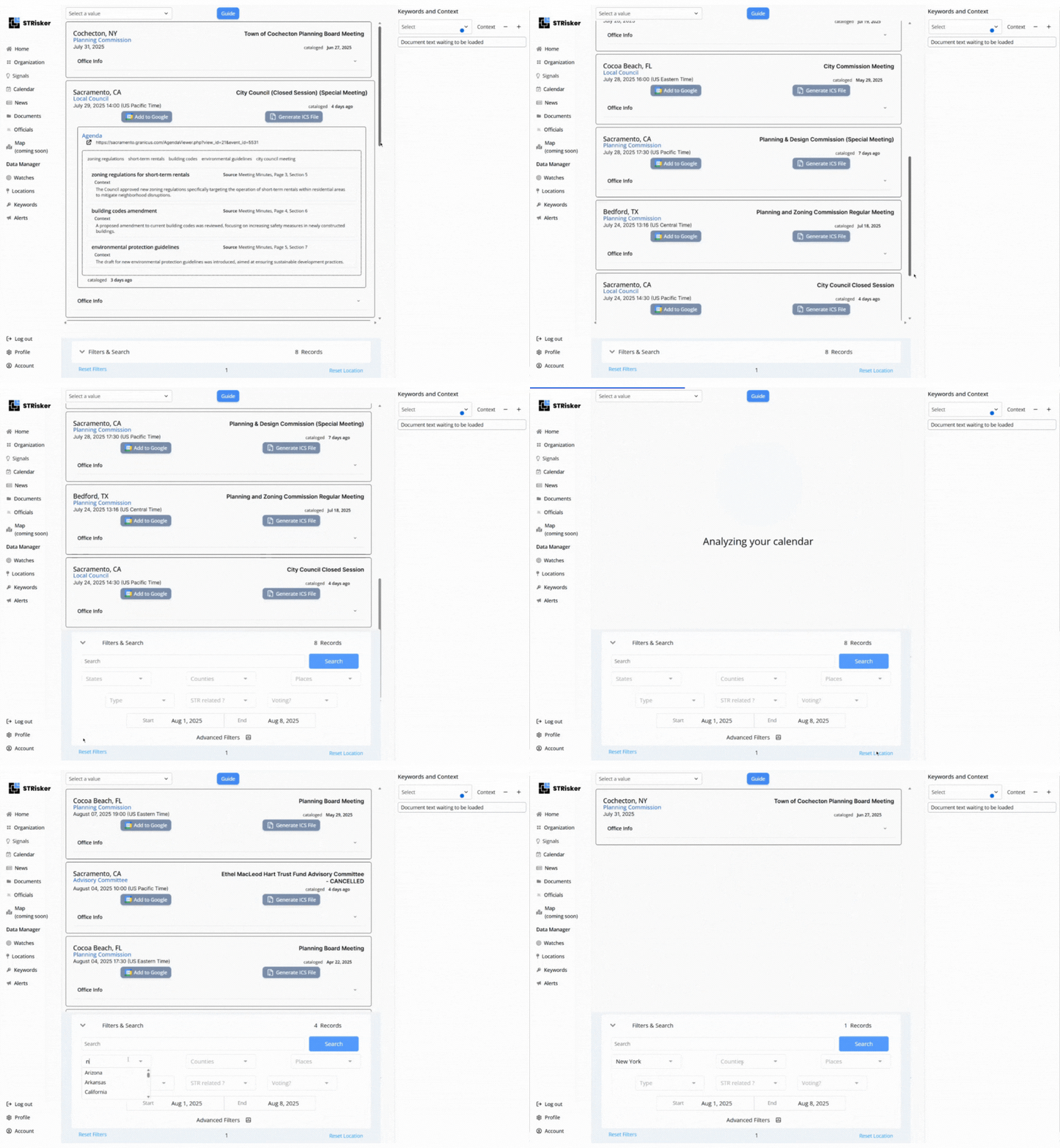
STRisker Calendar Tracker
Staying ahead of STR regulations isn’t just about deadlines—it’s about knowing what’s coming. Our Calendar Tracker keeps you informed on upcoming meetings, key votes, and policy changes, so you never miss a critical update.
Stay Updated with STRisker!
STRisker offers tools and features to keep you updated with the Short Term Rental and Data Centers movement across the world.
👍 We’d love your feedback.
Which stories hit? Which ones missed?
We're exploring a new branch of topics centered around Data Centers and want to make it even more useful for you.
✉️ Just reply directly to this email. We read and respond to every message!
-Will McClure
🙋 P.S.
Know someone else who should be reading Daily Notes? Feel free to forward this along. We’re opening a few more spots.