
Data Centers: Daily Notes | June 24, 2026
A Utah Senate president loses his seat over a data center vote, and a wave of fresh moratoriums lands from Oklahoma to Alabama to North Carolina.


At A Glance 🔽
- Utah Senate President J. Stuart Adams ousted in GOP primary over the Box Elder Stratos data center.
- Norman, OK council approves a moratorium through June 2027 and rejects a Sooner Mall tax rebate after a five-hour meeting.
- Morgan County, AL commission votes for a 12-month moratorium to block a bitcoin mining facility near Somerville.
- Carbondale, IL council adopts a one-year moratorium.
- Cullman, AL council adopts a temporary moratorium and weighs an outright ban.
- Asheville, NC council approves a one-year moratorium.
- New Albany, IN plan commission advances a one-year moratorium over a floodplain site near the Ohio River.
- Jefferson County, AL commission moves toward a moratorium: no data centers until rules are in place.
- Hundreds pack an impromptu Warwood, WV town hall over Silicon Energy's surprise data center.
- Montana regulators draw a crowd of intervenors in NorthWestern Energy's data center tariff case.
Box Elder County, Utah
Utah Senate President J. Stuart Adams lost his GOP primary Tuesday, a stunning end to a 20-year legislative career that his role in approving a Box Elder County data center helped bring down.
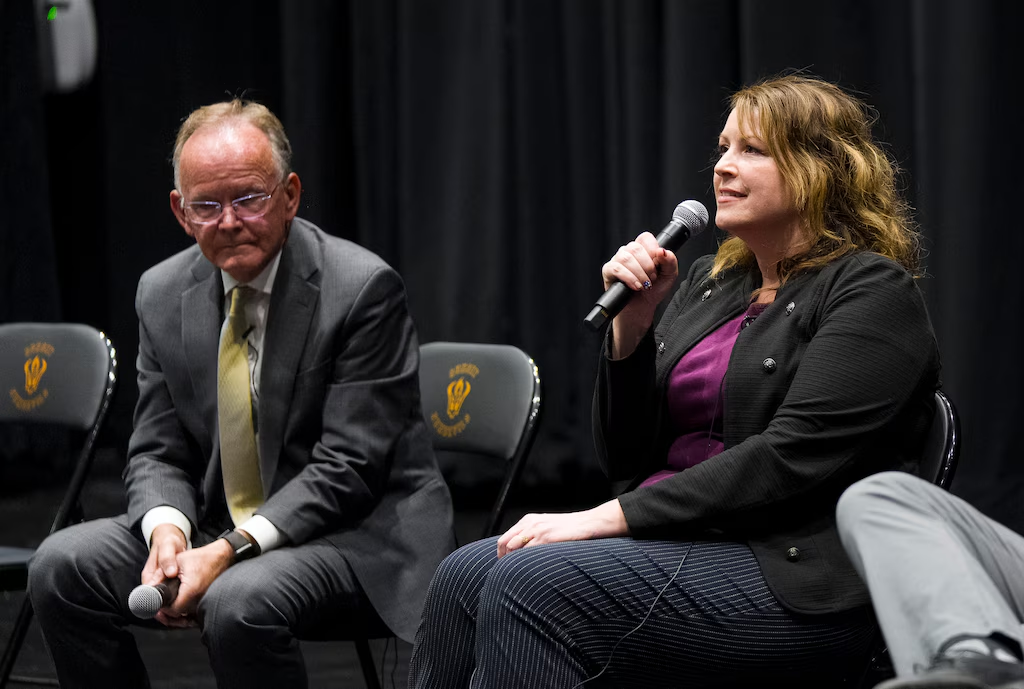
In early returns, Adams trailed challenger Stephanie Hollist 43% to 35%, with a third candidate at 22%. He conceded. The race cracked open after Adams, as chair of the Military Installation Development Authority, helped approve a hyperscale campus backed by celebrity investor Kevin O'Leary. The decision drew backlash over power and water use and a process opponents said shut out public input.
The fallout reached the courthouse too. Both Box Elder County commissioners trailed in their own Republican primaries, with challengers leading incumbents Boyd Bingham and Lee Perry. The commission had cleared the way for the roughly 20,000-acre Stratos Project and let the state authority override county zoning for 50 years. A 180-day moratorium the commissioners passed this month won't touch Stratos, which many residents called too little, too late.
Norman, Oklahoma
Norman's city council approved a one-year data center moratorium during a five-hour Tuesday meeting, suspending new applications until June 9, 2027.
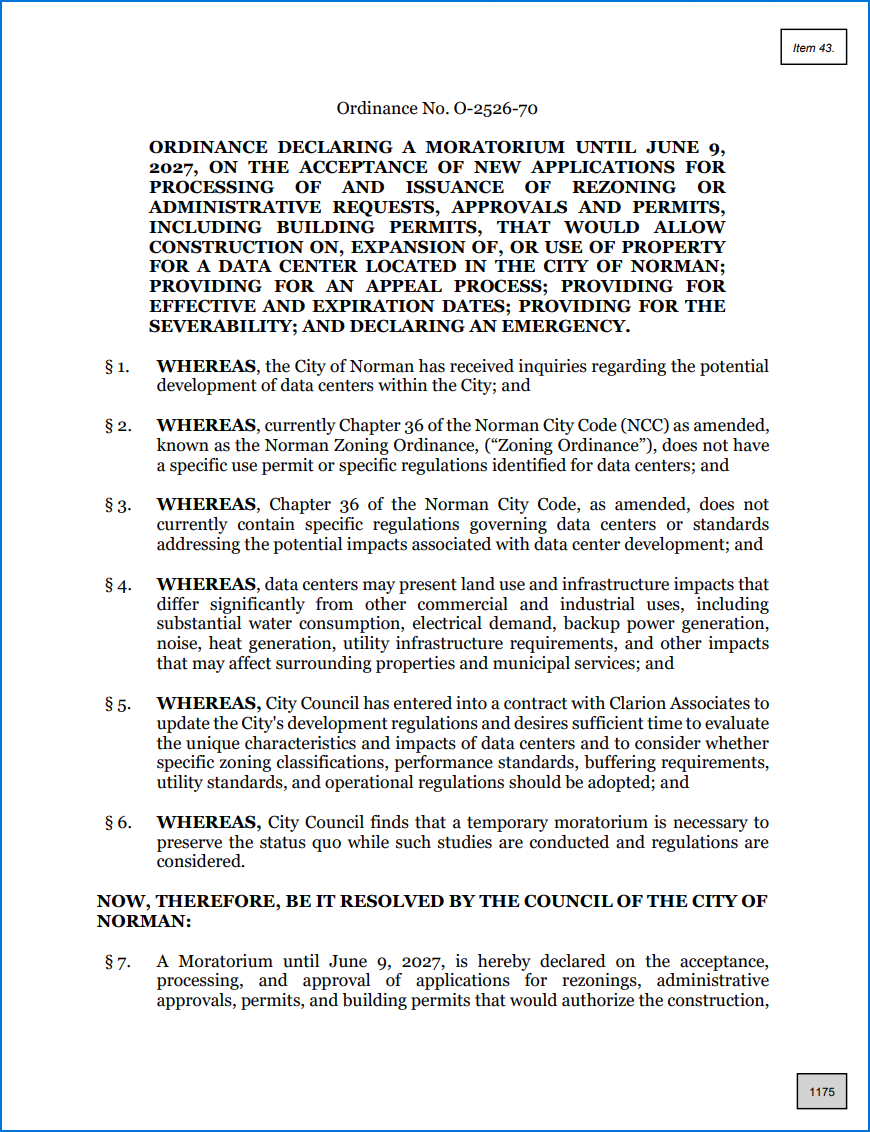
The pause halts rezoning applications and permits for new or expanded data centers while the city studies environmental, utility, and infrastructure impacts and drafts zoning rules. Councilmember Helen Grant said the time would let Norman write policy specific to the city without getting preempted or sued over an illegal taking. No companies are currently building data centers in the city.
In the same meeting, the council rejected a proposed Sooner Mall tax rebate agreement. The deal would have rebated up to about $60,735 in its first year, based on 2025 sales tax collection, over an initial five-year term. The debate turned heated, and one attendee was escorted out by police after a shouting exchange with a councilmember.
Morgan County, Alabama
The Morgan County Commission approved a 12-month moratorium on data centers Tuesday, aiming to block a bitcoin mining facility proposed near Somerville.
Streamed on Facebook: Morgan County Commission meeting June 23, 2026
Commission Chairman Ray Long called the move a pause button to study environmental and neighborhood impacts. The company, Sovereign Gazelle, was incorporated in April and plans a facility on a 15-acre site at 369 Union Road, with the center occupying about 10 acres. The project would need 75-foot utility poles for 50-megawatt power lines, enough electricity for about 42,000 homes, and four residents whose land is needed for the right of way have so far refused to sell.
Long said he'd prefer such facilities in industrial parks rather than residential areas. State Sen. Arthur Orr said he's drafting a local Morgan County bill that could require data centers to locate in industrial parks or give the commission permitting authority.
Carbondale, Illinois
Carbondale's city council adopted a one-year data center moratorium Tuesday. The resolution followed a May community meeting where residents raised concerns about water and land use, noise, and utility costs. It also lands after the Illinois General Assembly failed to pass the Power Act in its spring session; the earliest the state could revisit the bill is October.
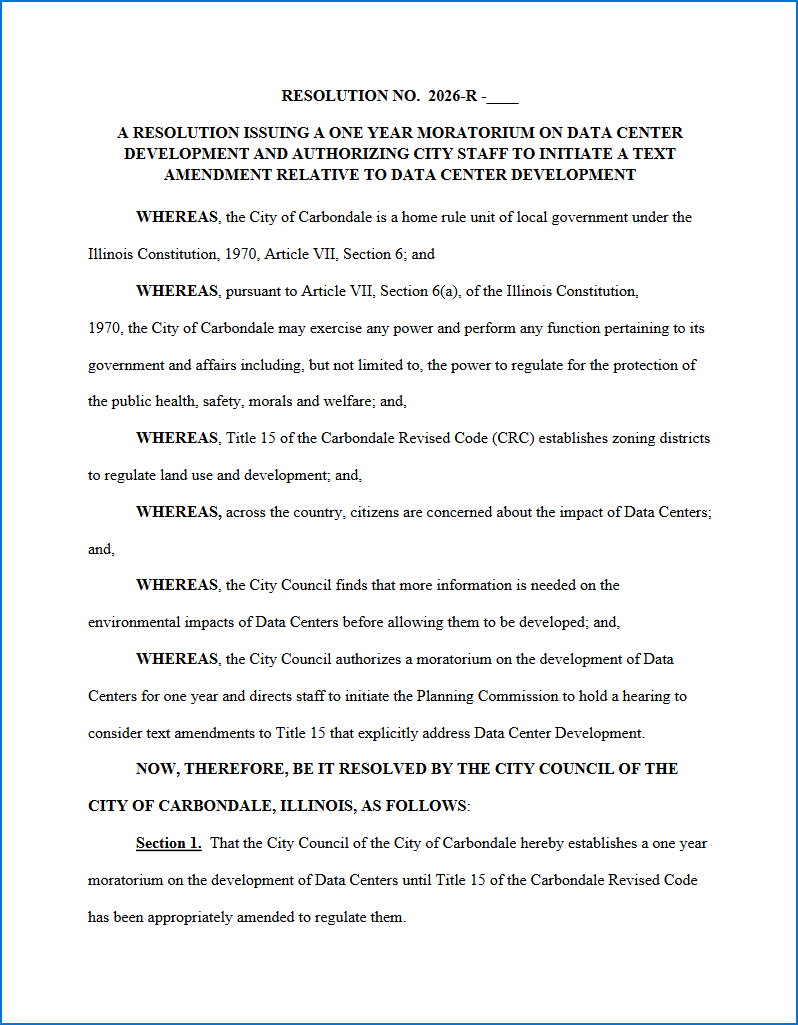
Councilmember Adam Loos argued the moratorium spares the city a contentious hearing over a proposal he doubts would win approval anyway. Councilmember Dawn Roberts said the city should develop local standards before a specific project forces a decision on the fly.
Cullman, Alabama
The Cullman City Council adopted a temporary data center moratorium at its June 22 meeting, pausing new applications while staff and consultants study zoning and infrastructure.
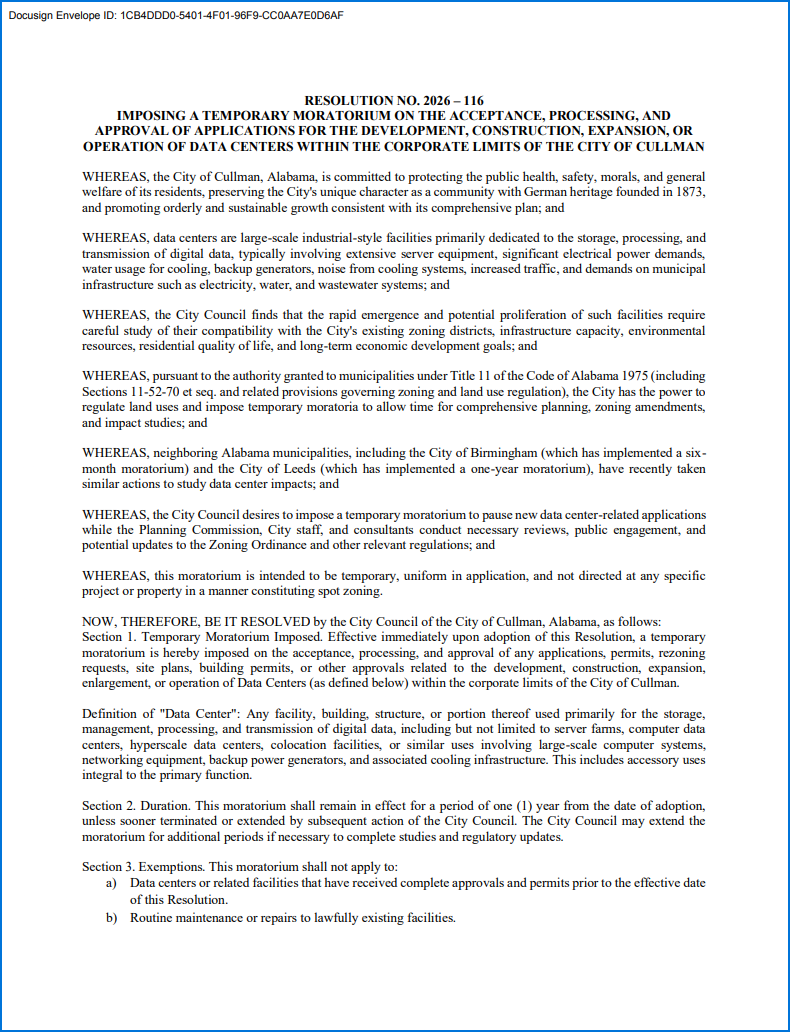
Resolution No. 2026-116 halts the acceptance, processing, and approval of data center applications within city limits. The council pointed to neighboring Alabama cities, Birmingham's six-month moratorium and Leeds' one-year version, as precedent. The council also took up Ordinance No. 2026-42, which would prohibit data centers outright, but took no action because the measure first has to go to the Cullman Planning Commission.
Asheville, North Carolina
On Youtube: City Council Meeting, Jun 23 2026
Asheville's city council approved a one-year data center moratorium Tuesday, pausing new development while the city writes rules for the industry.
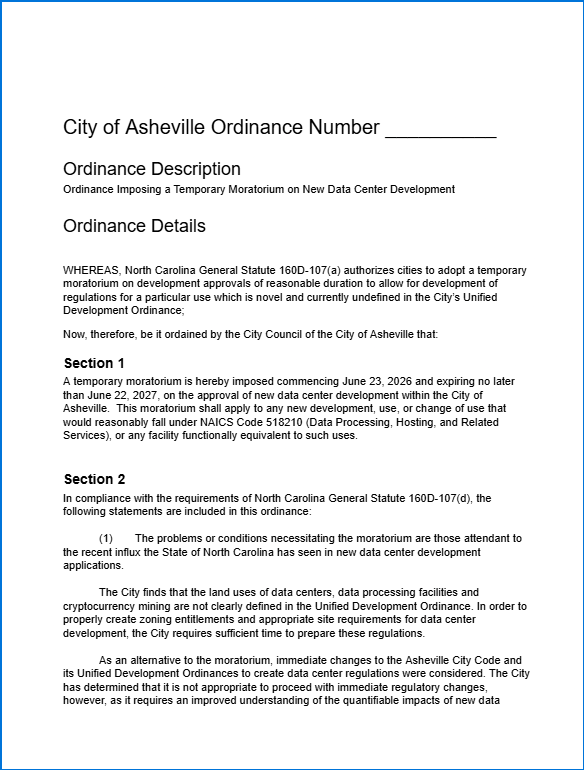
The city has no specific definition or zoning rules for data centers and said it needs time to draft them before weighing any projects. Officials cited heavy power and water demands plus noise and heat concerns for nearby neighborhoods. Residents weighed in at a public hearing, with some questioning how many jobs the facilities actually bring and others arguing the city should regulate and negotiate rather than ban outright.
New Albany, Indiana
New Albany's plan commission recommended a one-year data center moratorium Tuesday, sending the proposal to the city council for a decision expected in July.
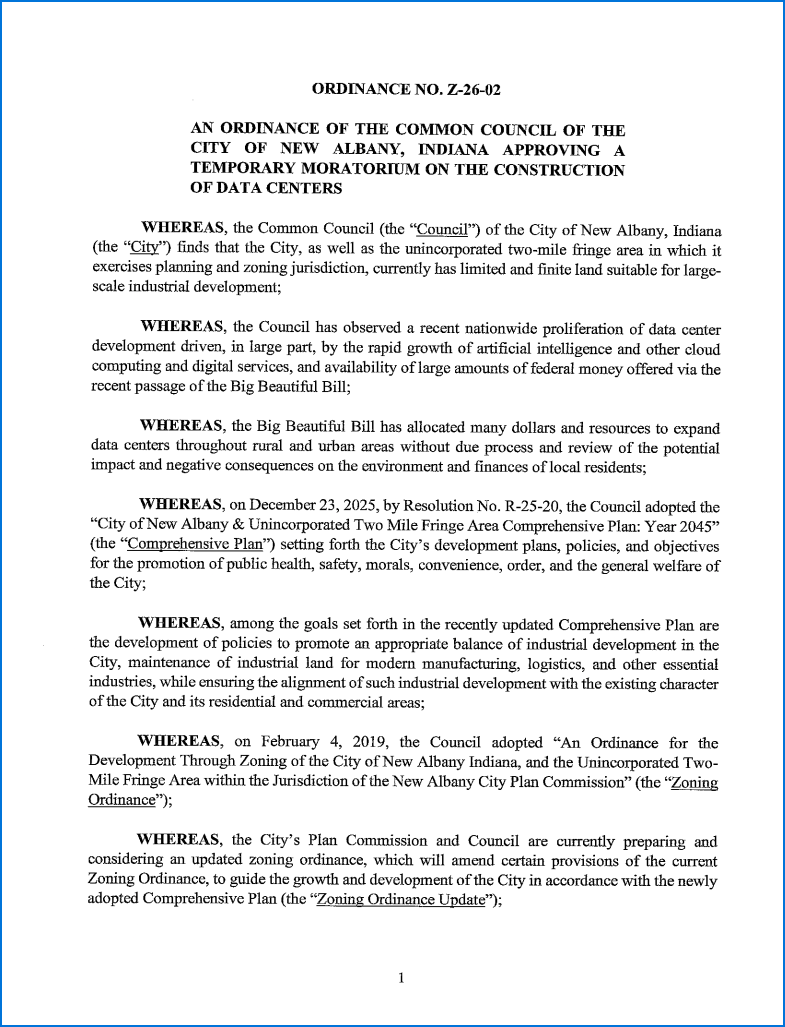
Mayor Jeff Gahan announced the pause June 9, arguing the city's zoning rules weren't written with the industry in mind. So far only one developer has expressed interest, but the proposed location drew immediate concern because it sits in a floodplain near the Ohio River. Planning and Zoning Director Scott Wood said current rules offer little guidance on where data centers should go or what standards they should meet, and the council is weighing smaller facilities and what residents would get in return, including a possible public benefit agreement.
Jefferson County, Alabama
The Jefferson County Commission is moving toward a data center moratorium, with County Attorney Theo Lawson set to bring a measure to Thursday's meeting.
Commission President Jimmie Stephens proposed the moratorium and Commissioner Lashunda Scales seconded it. County Manager Cal Markert said the county already has a de facto moratorium since its land use plan must be updated before any data center could move forward, but Stephens and Scales said they want something firmer. Commissioners Joe Knight and Mike Bolin raised concerns that a broad moratorium could stall development at the JeffMet McCalla industrial park.
Ohio County, West Virginia
Hundreds packed an impromptu town hall in Warwood Tuesday over a data center proposed for the former Centre Foundry & Machine Company site, a meeting organized in under 24 hours.
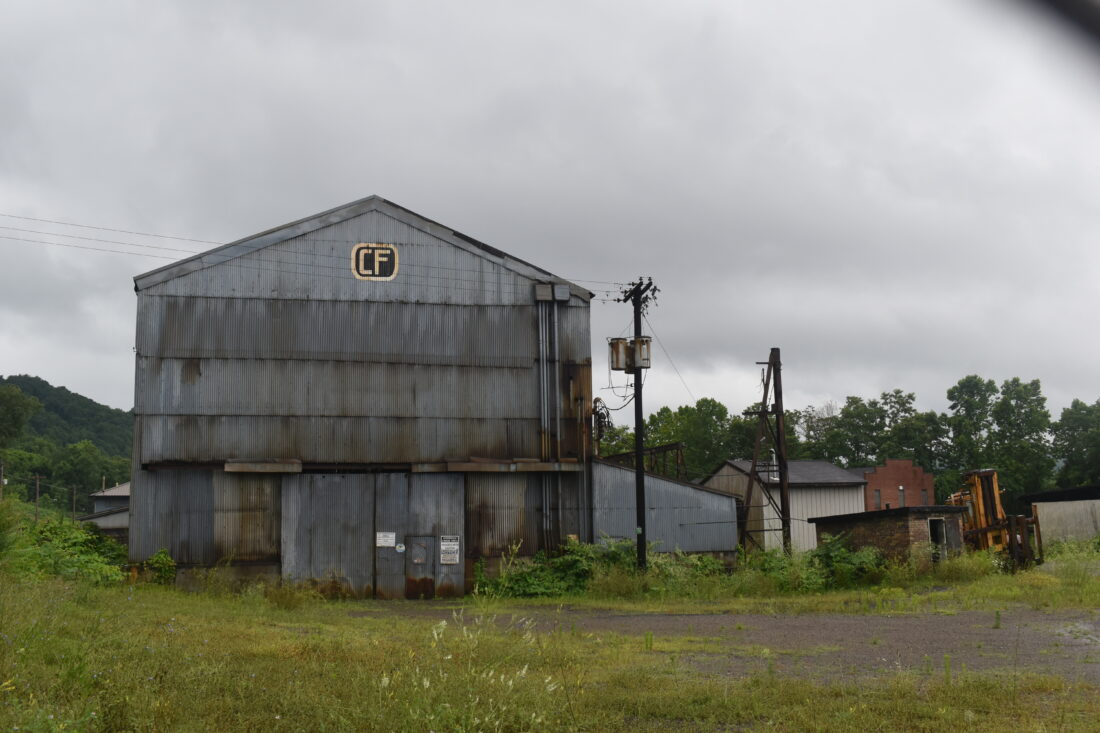
Del. Shawn Fluharty convened the event after Silicon Energy LLC's plans surprised residents and officials. Silicon Energy bought the industrial site along W.Va. 2 earlier this spring for $1.5 million, and the facility would start smaller and expand to 100 megawatts in later phases. Fluharty, who voted against House Bill 2014, said the law strips local control and exempts high-impact data centers from local ordinances, including noise rules. Wheeling officials said they learned of the project through a company's LinkedIn page. Sen. Laura Wakin Chapman, who supported HB 2014 and attended the town hall, proposed a fact-finding task force to press the company for answers.
Montana
A wide range of parties have moved to intervene in NorthWestern Energy's data center tariff case before the Montana Public Service Commission, reflecting broad worry that large new loads will raise costs for everyone else.
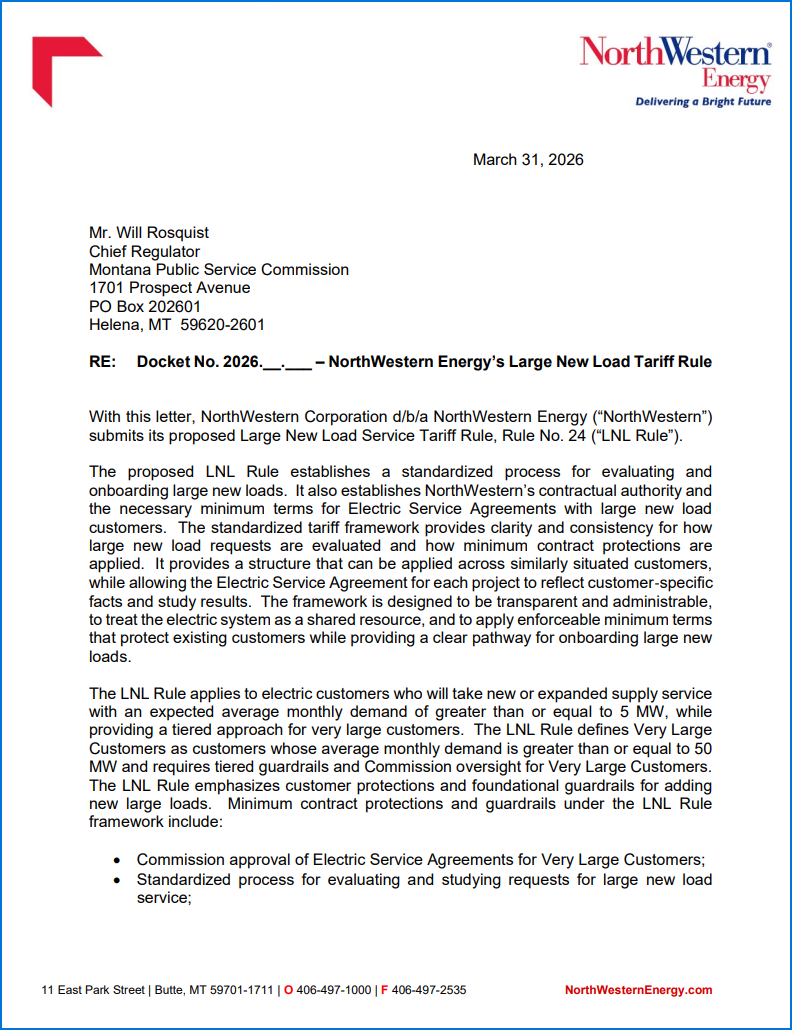
NorthWestern filed the proposal in March to set new terms for data centers. Gov. Greg Gianforte, on behalf of the Department of Environmental Quality, sought to intervene to secure high-paying jobs while shielding families from subsidizing the centers. The City of Missoula petitioned to participate, noting Montana's average household energy burden is among the highest in the West. Butte watchdogs cited heavily redacted project documents, and a conservation group argued the proposal hands the utility too much control over data centers relative to regulators. No hearing date has been set.
Data centers must bring their own power, they must reuse their own water, and they must reduce electricity costs for residential and small business customers.
— Greg Abbott (@GregAbbott_TX) June 23, 2026
We will slash incentives and protect Texas neighborhoods.
Those are bottom line expectations. pic.twitter.com/jjUEciR2pw
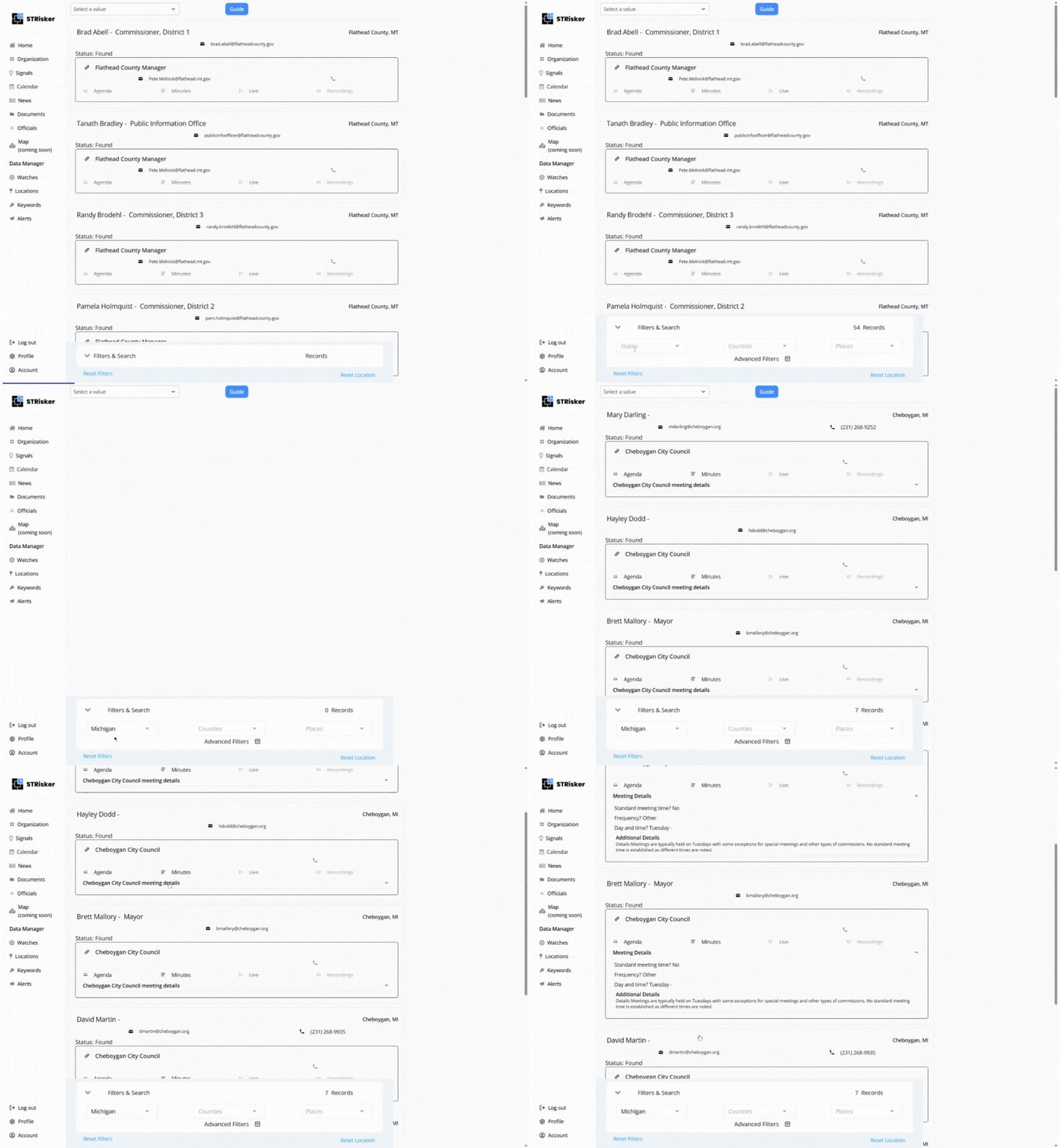
STRisker Government Office Dashboard
Trying to keep up with the main players in the STR game? Know your councilmembers, commissioners, committee chairs, and key staff that are part of the process.
Stay Updated with STRisker!
STRisker offers tools and features to keep you updated with the Short Term Rental and Data Centers movement across the world.
👍 We’d love your feedback.
Which stories hit? Which ones missed?
We're exploring a new branch of topics centered around Data Centers and want to make it even more useful for you.
✉️ Just reply directly to this email. We read and respond to every message!
-Will McClure
🙋 P.S.
Know someone else who should be reading Daily Notes? Feel free to forward this along. We’re opening a few more spots.