
Data Centers: Daily Notes | November 12, 2026
Data center pauses multiply: Potsdam adopts a 12-month moratorium, Beaufort County advances a two-year pause, Rapid City and San Joaquin County weigh holds, Rogersville tightens rules, and Milwaukee’s Potawatomi plan an expansion. READ MORE.


At A Glance 🔽
- Reno, Nevada has adopted a temporary moratorium on new data center approvals, which has raised questions about how much water and power the facilities need and which agencies decide whether more get built.
- Potsdam, New York approved a 12-month moratorium on data centers of at least 20 megawatts or 50,000 square feet and on crypto mining operations of 5 megawatts or more.
- Rapid City, South Dakota Mayor Jason Salamun proposed a six-month permit pause or a stronger interim ordinance on data centers after the city received more than 900 public comments.
- Milwaukee, Wisconsin could see the Forest County Potawatomi tribe expand its data center from 46,000 to 59,000 square feet, since the city’s moratorium doesn’t apply to the property’s negotiated zoning.
- San Joaquin County, California postponed a vote on extending its data center moratorium by 10 months until Nov. 17, because only three of the four supervisors needed were present.
- Beaufort County, South Carolina voted 7-3 to advance a two-year moratorium on data center applications, permits and approvals while the county studies their impacts.
- Chillicothe, Ohio will hold a public open house on Nov. 16 as it considers land use standards for data centers, battery storage and crypto mining.
- Rogersville, Tennessee passed an ordinance on a 4-2 vote with restrictions strict enough to make it very difficult to build a high-density data center in town.
Reno, Nevada
Reno’s temporary moratorium on new data center approvals has sharpened questions about how much water and power the facilities need and which agencies decide whether more can be built.
 Ben Margiott
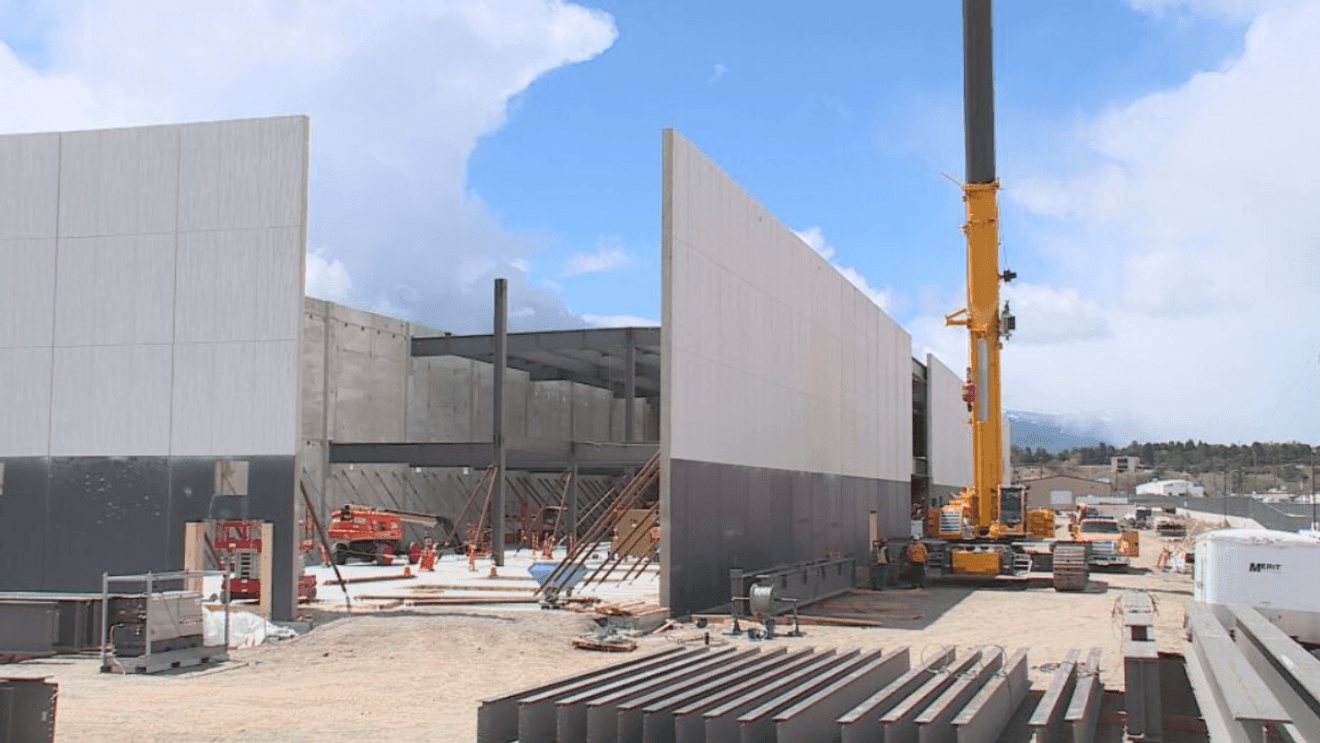
The Truckee Meadows Regional Planning Agency is studying data centers’ regional impacts, but Director of Regional Planning Jeremey Smith said its role is to provide research and recommendations, not approve or deny projects. Final decisions rest with local leaders, who rely on utility planning when weighing projects. Newly elected Mayor Kate Marshall said data centers don’t belong in Reno neighborhoods, including the Keystone Avenue area, where Centra is building a data center.
Chillicothe, Ohio
Chillicothe will hold a public open house Nov. 16 as the city considers new land use standards for data centers, battery energy storage systems, and cryptocurrency mining operations.
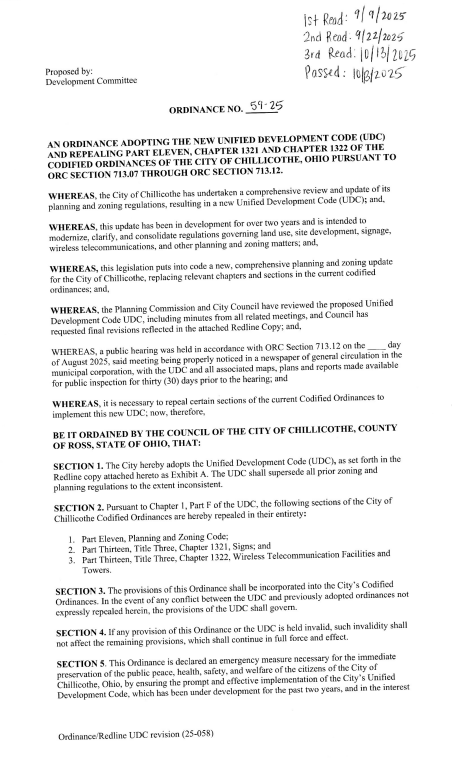
The city’s Unified Development Code, adopted in October 2025, doesn’t specifically define data centers, leaving them open to interpretation. The Department of Planning and Development is working with American Structurepoint, the firm that helped write the code, to decide whether the facilities should be recognized as distinct land uses with standards addressing their effects on nearby communities.
Potsdam, New York
The Potsdam Town Board approved a 12-month moratorium on large-scale data centers and cryptocurrency mining operations at its Nov. 5 meeting, adopted as Local Law 2026-6.
The moratorium suspends applications, permitting, and construction for qualifying facilities in the town’s unincorporated areas. Data centers are covered if they have an actual or anticipated electrical demand of at least 20 megawatts or occupy at least 50,000 square feet, while crypto mining operations qualify at 5 megawatts or more. Ordinary server rooms serving schools, hospitals, banks, colleges, municipal facilities, and businesses are exempt. The town’s current zoning doesn’t address large-scale computing facilities, and officials will use the year to draft regulations with input from planning, engineering, utility, environmental, and emergency services professionals, along with the public.
Rapid City, South Dakota
More than 900 public comments have pushed Rapid City toward a temporary hold on data centers, with Mayor Jason Salamun proposing either a six-month permit pause or a stronger interim ordinance.
The comments, which raised concerns about water and power use, noise, sewer capacity, and infrastructure, led the Planning Commission to delay permanent data center regulations until Jan. 21, 2027. Both options go before the Planning Commission on Nov. 25.
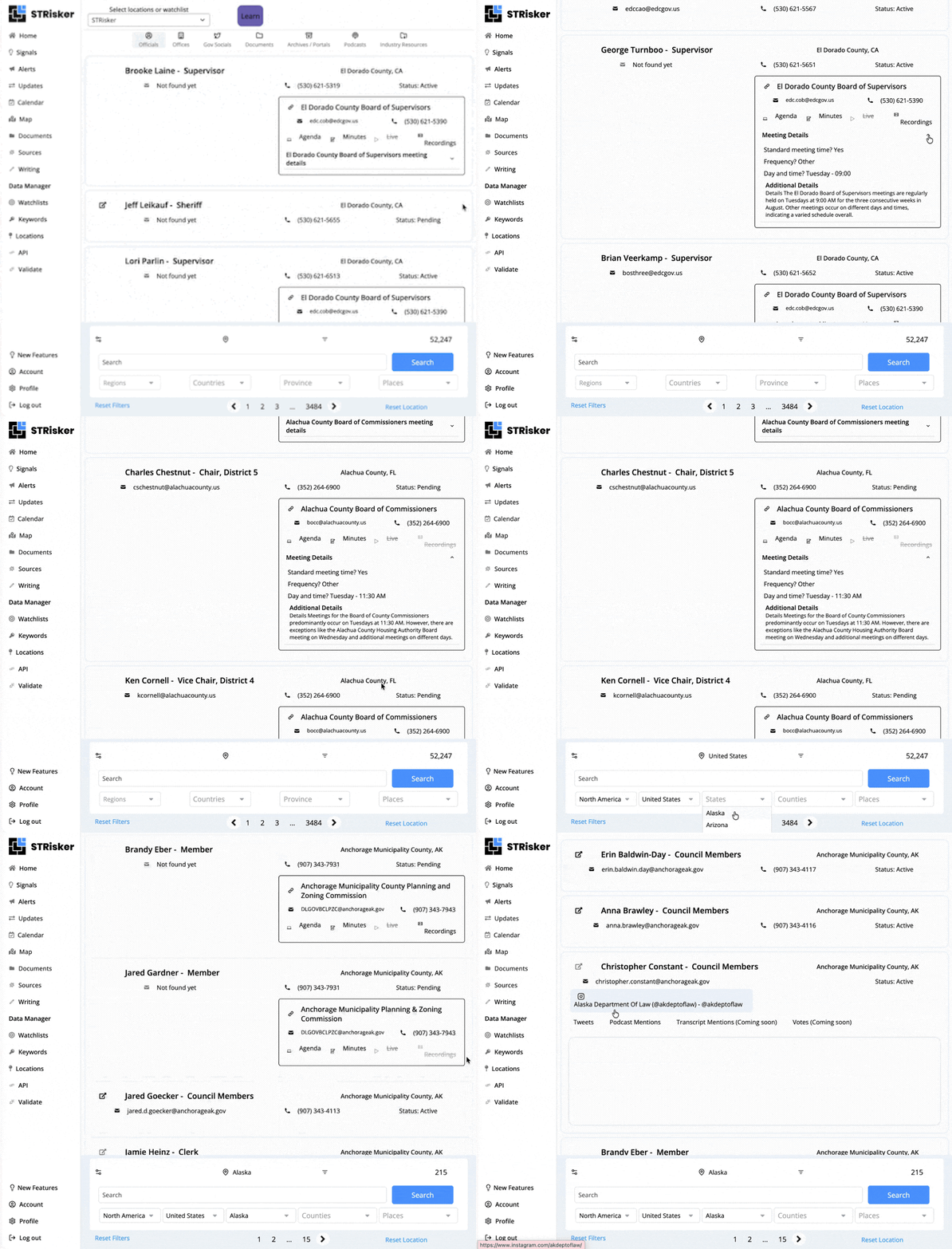
Strisker Government Officials Dashboard
Trying to keep up with the main players in the STR and Data Center game? Know your council members, commissioners, committee chairs, and key staff that are part of the process.
Milwaukee, Wisconsin
The Forest County Potawatomi tribe is planning to expand its data center at 33rd and State streets in Milwaukee from 46,000 to 59,000 square feet, despite the city’s moratorium on new data centers and expansions.
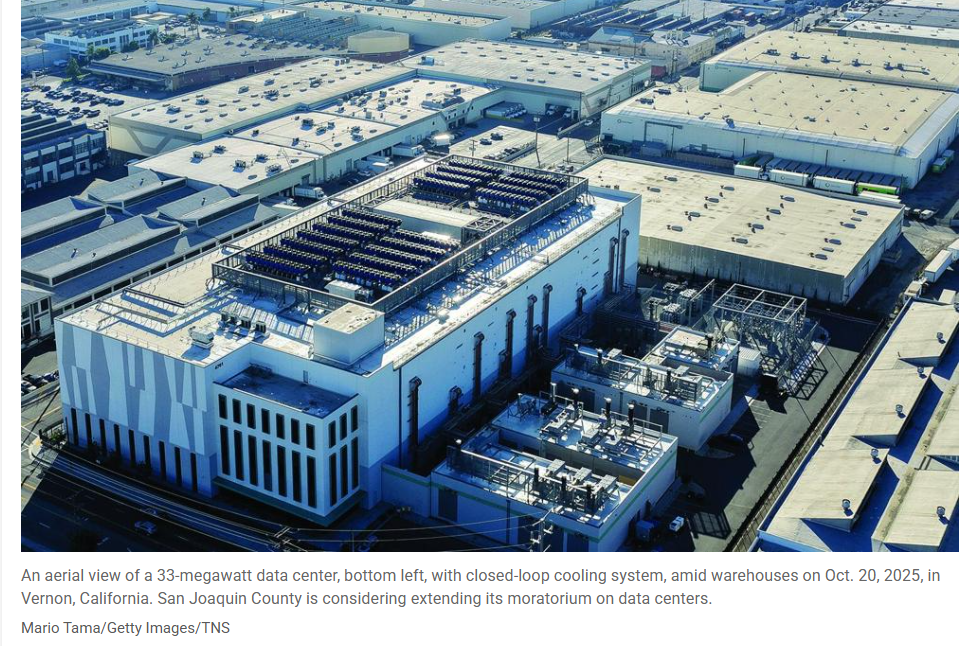
Alderman Robert Bauman said the moratorium doesn’t apply because the property is covered by a detailed plan development, a form of negotiated zoning established years ago with the tribe. The expansion still requires Plan Commission review and Common Council approval, and the tribe said it is still in the planning stages with no specific plans to share.
San Joaquin County, California
The San Joaquin County Board of Supervisors postponed a vote Tuesday on extending its data center moratorium by 10 months, continuing the item to Nov. 17 because only three supervisors were present and the extension needs four votes.
The board approved a 45-day moratorium Oct. 6, and the county’s development code currently has no definition of a data center. The proposed extension would continue to exempt accessory server rooms, telecommunications facilities, government emergency communications, hospitals, schools, and public utility facilities.
Supervisors did vote 3-0 to accept a staff report outlining work underway, including reviewing data center size, power and water use, cooling, backup generation, battery storage, and noise, and studying how other jurisdictions regulate the facilities. Supervisors Paul Canepa and Steve Ding were absent.
Beaufort County, South Carolina
Beaufort County Council voted 7-3 on Nov. 9 to advance a two-year moratorium on data center applications, permits, and approvals while the county studies the facilities’ impacts.
 Mindy Lucas mlucaspostandcourier.com

The ordinance needs two more votes before it takes effect. Council member Logan Cunningham successfully moved to extend the proposed pause from 12 to 24 months, saying it would give staff time to write regulations without rushing and let state and federal lawmakers develop their own rules. Five new members will join the 11-member council in January.
Rogersville, Tennessee
The Rogersville Board of Mayor and Aldermen passed an ordinance on second reading Nov. 10 that places extensive restrictions on high-density data centers, voting 4-2 with Alderman Todd Biggs and Vice Mayor Brady Forgety opposed.
 SARAH MONOSON smonoson@sixriversmedia.com

Drafted in October by the town’s Planning Commission and legal advisors, the ordinance stops short of an outright ban but sets enough requirements that locating a data center in town would be very difficult. It also covers cryptocurrency mining operations. Mayor John Metz supported the measure, saying it would protect the town from impacts like heavy use of town electric and water service and noise, and that the town’s existing zoning offered no way to keep such businesses out.
📱 Social Buzz
The Interior Department is drawing up lists of public land for AI data centers.
— American Conservation Coalition (@ACC_National) November 12, 2026
This is unnecessary, an inappropriate use of our natural heritage, and should be opposed by all conservatives.
BLM state directors got three days in September to name parcels that could host data… pic.twitter.com/nAqOZ8keVX
FRMI: Fermi’s proposed 600 MW Project Matador deployment has a $200 million customer-prepayment agreement attached to it. It does not yet have the definitive long-term lease that would turn that roadmap into contracted rent.
— The Tickerati (@thetickerati) November 12, 2026
That distinction is the entire ledger.
Fermi said…
(9/9) Our full analysis covers SB 293, the House bills, the retroactivity question, & where Gov-Elect Hinojosa, Lt. Gov-Elect Goodwin, & Presumptive #txlege House Speaker Thompson stand:https://t.co/2gpKOTjxl9
— Texas Policy Research (@TXPolResearch) November 12, 2026
🚨 NOW: Rep. Tim Burchett (R-TN) just filed legislation to BLOCK federal funds for building or running a data center until the state and local government APPROVE IT
— charlie ward (@charliewwg1wga) November 12, 2026
"This bill allows local governments to retake control over new data center construction, putting the power back in…
AI is moving to the center of the U.S. economic debate, James Pethokoukis says, citing current evidence and Fed context. Goldman Sachs warns data center moratoriums could hit 45% of planned capacity expansion.
— TU_Crypto_News (@TU_Crypto_News) November 12, 2026
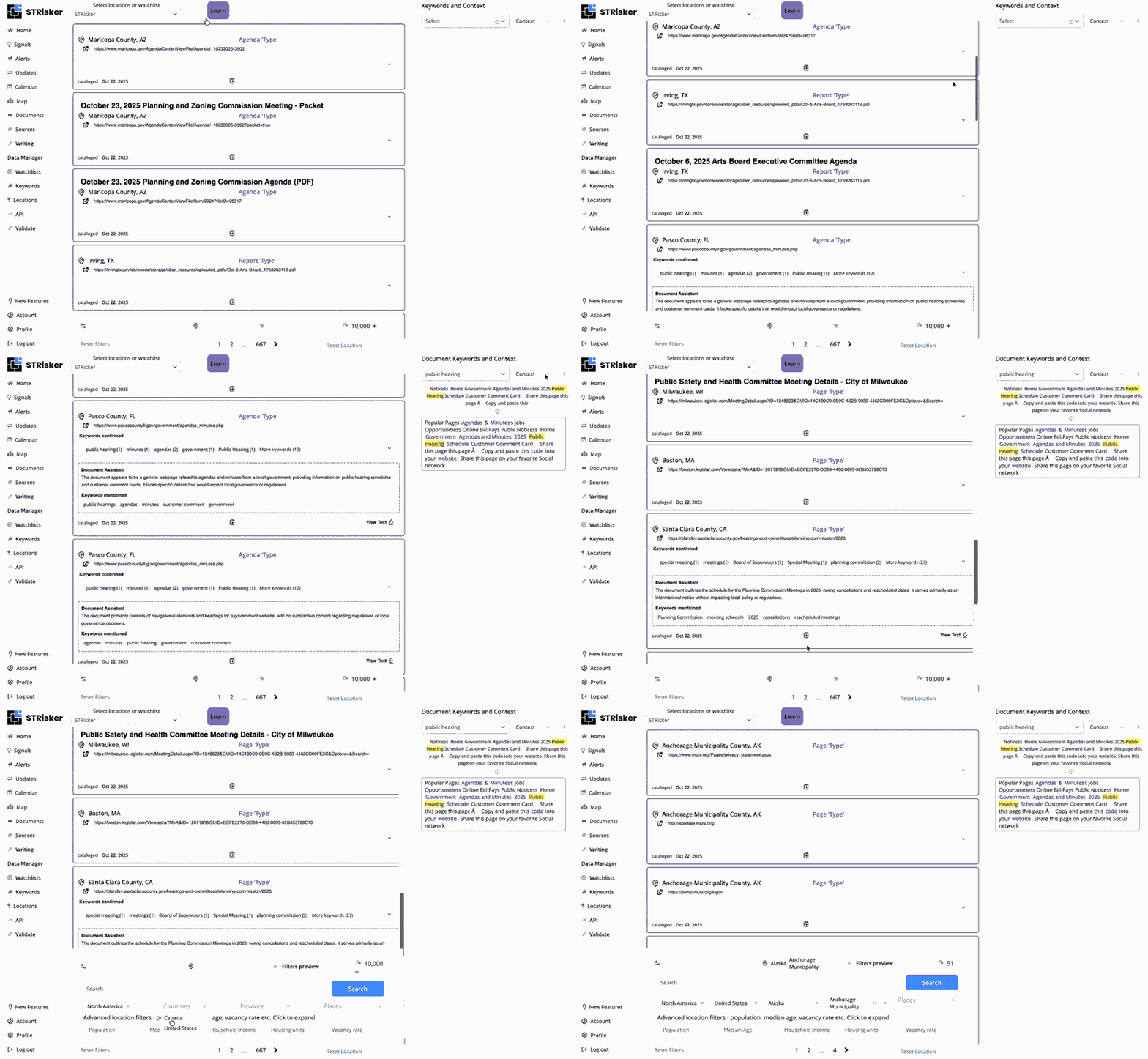
Strisker Document Analysis
Finding the right compliance documents shouldn’t feel like searching for a needle in a haystack - Strisker’s Documents Analysis is built to simplify your life, offering instant access to hundreds of thousands of documents from thousands of cities across the world.
Stay Updated with Strisker!
Strisker offers tools and features to keep you updated with the Short Term Rental and Data Centers movement across the world.
👍 We’d love your feedback.
Which stories hit? Which ones missed?
We're exploring a new branch of topics centered around Data Centers and want to make it even more useful for you.
✉️ Just reply directly to this email. We read and respond to every message!
-Will McClure
🙋 P.S.
Know someone else who should be reading Daily Notes? Feel free to forward this along. We’re opening a few more spots.