
Data Centers: Daily Notes | November 25, 2026
Data center oversight grows: a Pennsylvania senator targets NDAs and calls for more public meetings, Warrick County adopts an overlay district, Pennington County delays a permit, Huron eyes a new site, and Microsoft will pay for Cheyenne grid upgrades. READ MORE.


At A Glance 🔽
- Pennsylvania state Sen. Lisa Baker plans to introduce a bill that would bar public agencies from signing nondisclosure agreements on data center proposals and require at least two public meetings before a municipality approves one.
- Warrick County, Indiana approved an ordinance creating a Floating Data Center Overlay District with a minimum 500-foot setback, the first data center rules adopted among area counties.
- Pennington County, South Dakota planners pushed their review of a permit for a proposed 20-megawatt modular data center to Jan. 25, 2027, so the applicant can submit more documents, including an acoustical study.
- Huron, South Dakota heard an early proposal from Greater Huron Development for a data center at Vantage Business Park, though the land purchase is still pending.
- Cheyenne, Wyoming utility Cheyenne Light, Fuel and Power filed agreements with federal regulators to build grid infrastructure for three Microsoft data centers, with Microsoft paying the cost.
Pennsylvania
Pennsylvania state Sen. Lisa Baker, R-Lehman Township, announced Tuesday that she will introduce legislation to increase transparency and public input on data center proposals.
 Bill O'Boyle
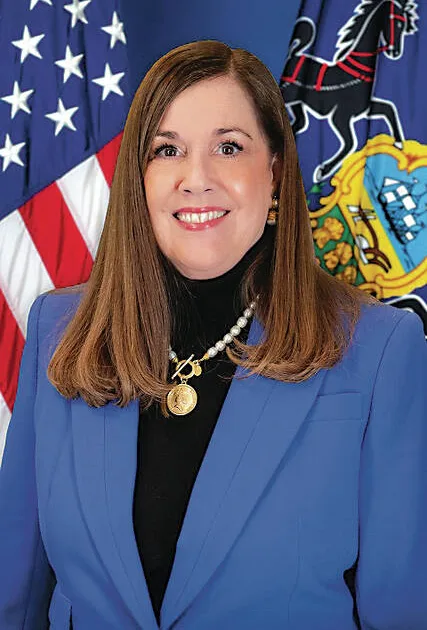
The bill would bar public agencies from signing nondisclosure agreements that keep information about proposed data centers from the public, and would require at least two public meetings before a municipality approves a data center application. Applicants would also have to document that they've applied for electric service and paid the associated fees and costs before those meetings are scheduled.
The legislation would strengthen reporting requirements to keep data center electricity costs from shifting to other customers. Baker said decisions about data centers should stay at the local level and that developers should pay for the infrastructure their projects require. She plans to introduce the bill in the coming weeks.
Warrick County, Indiana
The Warrick County Commission approved an ordinance Monday establishing a Floating Data Center Overlay District, the first data center regulations adopted among area counties.
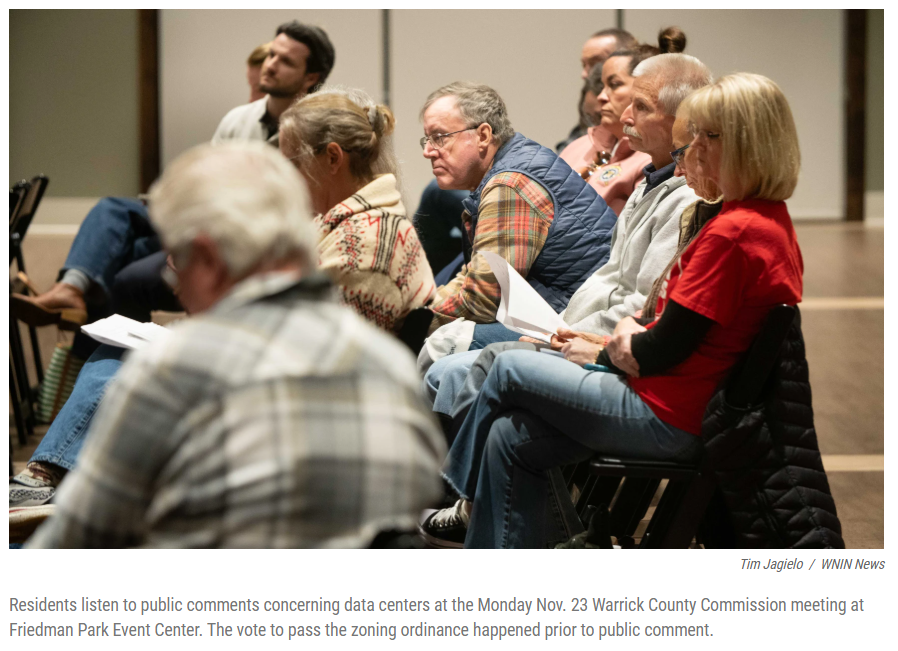
The ordinance allows special zoning in areas the county finds appropriate for data centers, sets a minimum 500-foot setback, addresses noise levels, and lets the county adjust requirements based on each project. Commission President Sarah Seaton called it a first step, saying the minimums addressing proximity to schools and homes could be strengthened through amendments soon.
The vote followed months of development and a public hearing, after the ordinance had been tabled at both the Area Plan Commission and the commissioners' level. Attorney Morrie Doll had previously warned that the county needed an ordinance allowing data centers to be considered, since rules that are too restrictive could invite lawsuits from developers.
Pennington County, South Dakota
The Pennington County Planning Commission voted to continue its review of a conditional use permit for a proposed 20-megawatt modular data center near 7751 Old Folsom Road until its Jan. 25, 2027, meeting.
The delay gives applicant Nodiac Development LLC time to address outstanding platting requirements and submit more documentation, including a detailed acoustical study on noise and vibration that county staff requested. Residents at a recent meeting raised concerns about electricity demand, water use, noise, and effects on neighboring properties.
According to the county, the developer would pay for all required electrical infrastructure upgrades, and the project would use a closed-loop cooling system needing about 28,000 to 30,000 gallons of coolant at setup, with no new well proposed. The application is being reviewed under data center regulations the county adopted in October 2025, which cover setbacks, screening, stormwater, water use, noise, road access, and public notification.
Huron, South Dakota
Greater Huron Development presented an early proposal for a data center at Vantage Business Park to the Huron City Commission on Nov. 23, with the site located just east of Huron on the south side of U.S. Highway 14.
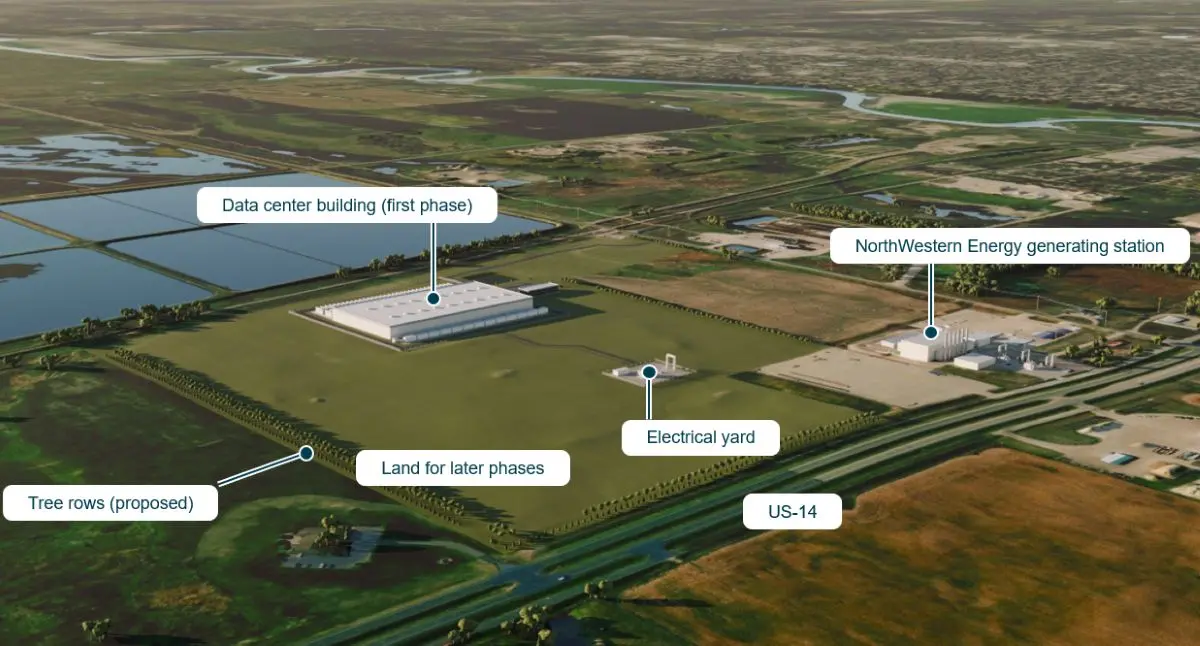
Ted Haeder of Greater Huron Development said a conditional purchase agreement involving construction company CSW and real estate firm JLL was signed Nov. 20, but the purchase is still pending and preliminary plans and renderings could change.
Haeder also reviewed South Dakota's Data Center Bill of Rights for Citizens, signed into law in March, which applies to data centers with peak demand of at least 10 megawatts. The law requires utilities to use separate service terms so data centers reimburse costs tied to serving them, requires operators to notify local water providers of projected water use before opening, and preserves local governments' authority to regulate data centers.
Cheyenne, Wyoming
Cheyenne Light, Fuel and Power filed agreements with the Federal Energy Regulatory Commission on Tuesday to build distribution and transmission infrastructure for three Microsoft data centers planned in Wyoming, with Microsoft covering the cost.
Under the redacted agreements, Microsoft will pay for the infrastructure through contribution in aid of construction payments. The utility said it doesn't believe FERC has jurisdiction over the retail agreements but submitted them out of caution, citing the agency's recent statements on cost recovery for transmission serving large loads. Cheyenne Light plans to serve data centers through its Large Power Contract Service tariff and a proposed Large Customer Transmission Cost Adjustment Mechanism, which is designed to keep data center infrastructure costs off other customers' bills. The Wyoming Public Service Commission is expected to decide on the transmission tariff by mid-2027.
📱 Social Buzz
Supervisors voted 3-0 to answer Mayes's request to delay the Dec. 9 SpaceX data center vote, and 3-0 to partner with the Goldwater Institute and let the county attorney take legal action. Neither side has made the records public. pic.twitter.com/xP8QgED2jq
— Tucson Daily Brief (@tusdailybrief) November 25, 2026
📰 REPORT: Kalshi traders say odds of states imposing data center moratoriums are more likely than not.
— Macro Point Break (@MacroPointBreak) November 25, 2026
Odds fell after Democrats swept Congress and key governor races — per CNBC.
KSHB 41 Finds Olathe Site Is Warehouse Project, Not Data Center@kshb41 has found no current plan for a data center at an Olathe site near 175th Street and U.S. 169, despite community discussion about a proposed $80 billion computing facility receiving tax breaks (source).
— Rich Tehrani (@rtehrani) November 25, 2026
The…
C
Nashville’s data center moratorium expires Dec. 1. What happens next? https://t.co/356LMpK0yr
— Tennessean (@Tennessean) November 25, 2026
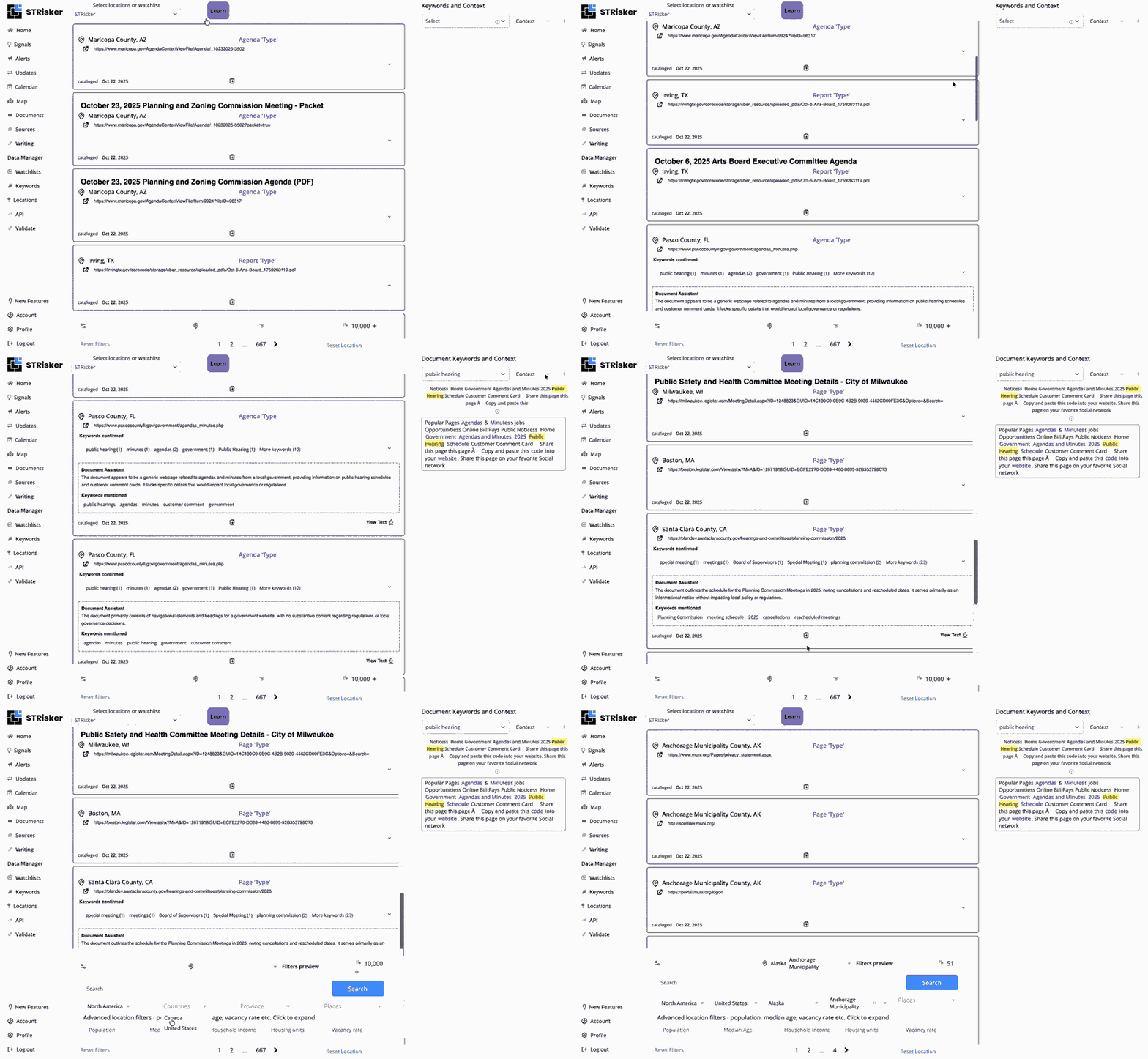
Strisker Document Analysis
Finding the right compliance documents shouldn’t feel like searching for a needle in a haystack - Strisker’s Documents Analysis is built to simplify your life, offering instant access to hundreds of thousands of documents from thousands of cities across the world.
Stay Updated with Strisker!
Strisker offers tools and features to keep you updated with the Short Term Rental and Data Centers movement across the world.
👍 We’d love your feedback.
Which stories hit? Which ones missed?
We're exploring a new branch of topics centered around Data Centers and want to make it even more useful for you.
✉️ Just reply directly to this email. We read and respond to every message!
-Will McClure
🙋 P.S.
Know someone else who should be reading Daily Notes? Feel free to forward this along. We’re opening a few more spots.