
Data Centers: Daily Notes | October 20, 2026
Loudoun, Taunton and Pettis County weigh or pass pauses, Volusia moves to ban large facilities, Montgomery County tightens setbacks, Boone caps water use, and Albany and San Antonio residents push back. READ MORE.


At A Glance 🔽
- Pettis County, Missouri approved a temporary moratorium on data centers that use at least 30 acres or are worth at least $5 million, giving the county up to two years to study economic and environmental impacts.
- Albany, New York residents packed a public forum to raise concerns about a proposed 180-megawatt data center at Kenwood Commons, warning that South End residents would bear the brunt of higher electric bills, strain on the grid and environmental justice harms.
- Montgomery County, Tennessee approved data center zoning restrictions on a 17-4 vote, raising the residential setback to 500 feet and setting limits on noise, site size and utility capacity before the rules return in November.
- Loudoun County, Virginia votes Tuesday on a yearlong pause on data center and substation applications, which would hold 33 active applications while the county finishes its rules for the industry.
- Boone, Iowa approved a memorandum of understanding with Lightedge that caps a potential data center’s water use at 75,000 gallons a month and bars city property tax incentives.
- Taunton, Massachusetts discusses a proposed 365-day data center moratorium Tuesday, while VMD Companies seeks an exemption it says would save a pending 24-megawatt tenant deal.
- San Antonio, Texas residents pressed City Hall at a town hall for tighter data center rules on zoning, noise, water and electricity as the city updates its Unified Development Code.
- Volusia County, Florida takes a final vote Tuesday on banning data centers with a peak load of 50 megawatts or more in unincorporated areas.
Pettis County, Missouri
The Pettis County Commission approved a temporary moratorium on data center development, giving county leaders time to evaluate the impacts of any potential projects.
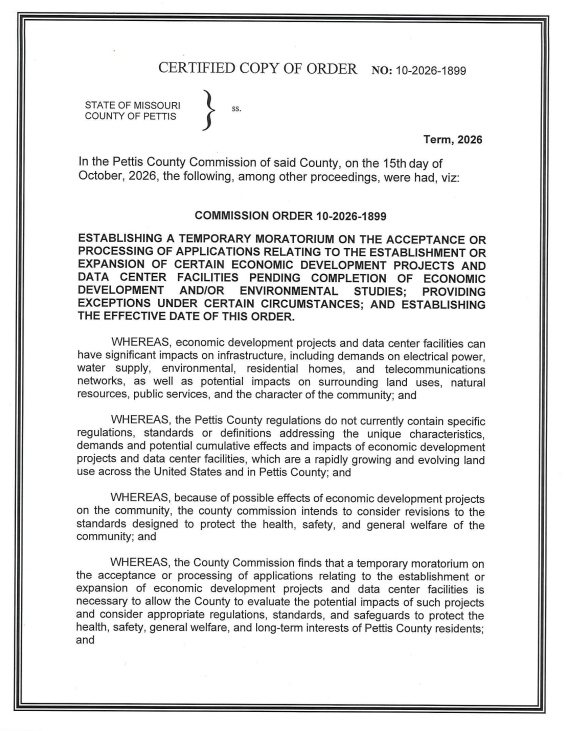
The pause applies to facilities that involve at least 30 acres of unincorporated county land or carry a value of at least $5 million. During the moratorium, the county will conduct an economic development study, an environmental impact study, or both, and weigh whether new regulations, standards, or safeguards are needed. The studies and review are expected to wrap up within two years.
Albany, New York
Albany residents packed a public forum Monday evening to raise concerns about a proposed data center at Kenwood Commons, focusing on the city’s power grid, electric bills, and environmental justice.
 WRGB Staff
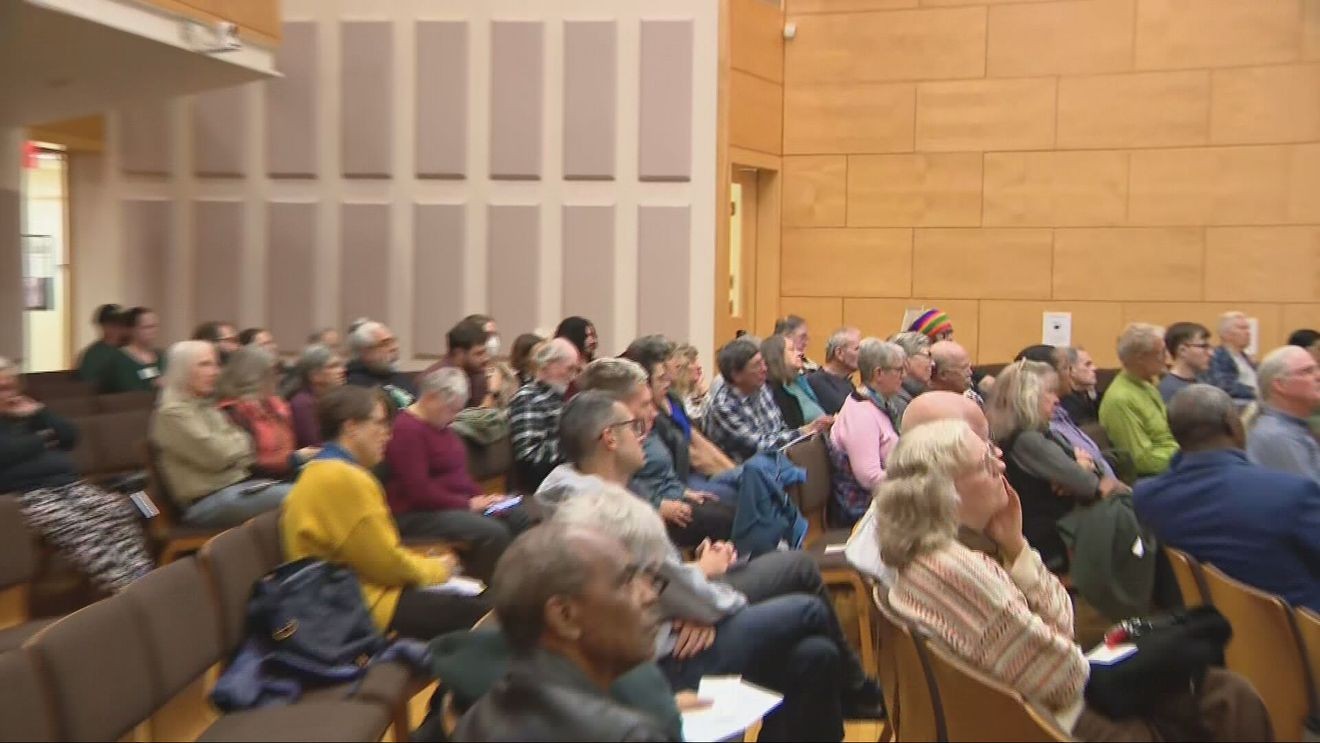
Held at the First Unitarian Universalist Society on Washington Avenue, the forum brought together engineers, financial experts, and South End residents to walk through potential environmental and financial risks, the approval process, and ways the public can get involved.
Several speakers worried the South End would bear the brunt of the project, and Frack Action organizer Isaac Siberman-Gorn said the developers applied for a 180-megawatt facility that would push up electricity bills. A mechanical engineer questioned whether the data center would bring in enough revenue to sustain itself, warning the costs could land on Albany residents.
Montgomery County, Tennessee
The Montgomery County Commission voted 17-4 Monday to approve zoning restrictions on future data centers, tightening the proposal by raising the minimum residential setback from 100 feet to 500 feet.


The amendment came from Commissioner Joshua Beal, who initially pushed for 1,000 feet before the commission settled on 500. The rules would limit sites to between 10 and 100 acres, cap noise at 3 decibels over ambient levels and at 55 decibels next to property not zoned M1 or M2, and require letters from water and power providers confirming they can serve the facility. Applicants would also cover the full cost of any utility infrastructure upgrades.
Loudoun County, Virginia
Loudoun County’s Board of Supervisors is scheduled to vote Tuesday on a yearlong “Legislative Pause on Data Center and Substation Applications” in the county with the most data centers in Virginia.
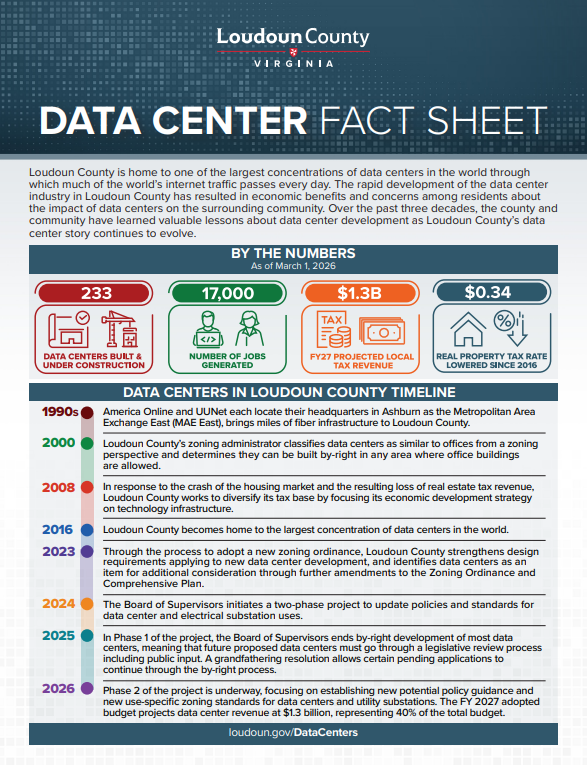


The resolution would bar the board from acting on any legislative application that proposes or would allow a data center or substation, retroactive to Sept. 15, 2026, and would hold each application for a year from the time it is filed. Substations that meet the resolution’s criteria for grid reliability could still move forward. County documents show 33 active legislative applications for data centers or substations, one of which is solely a grid-reliability substation.
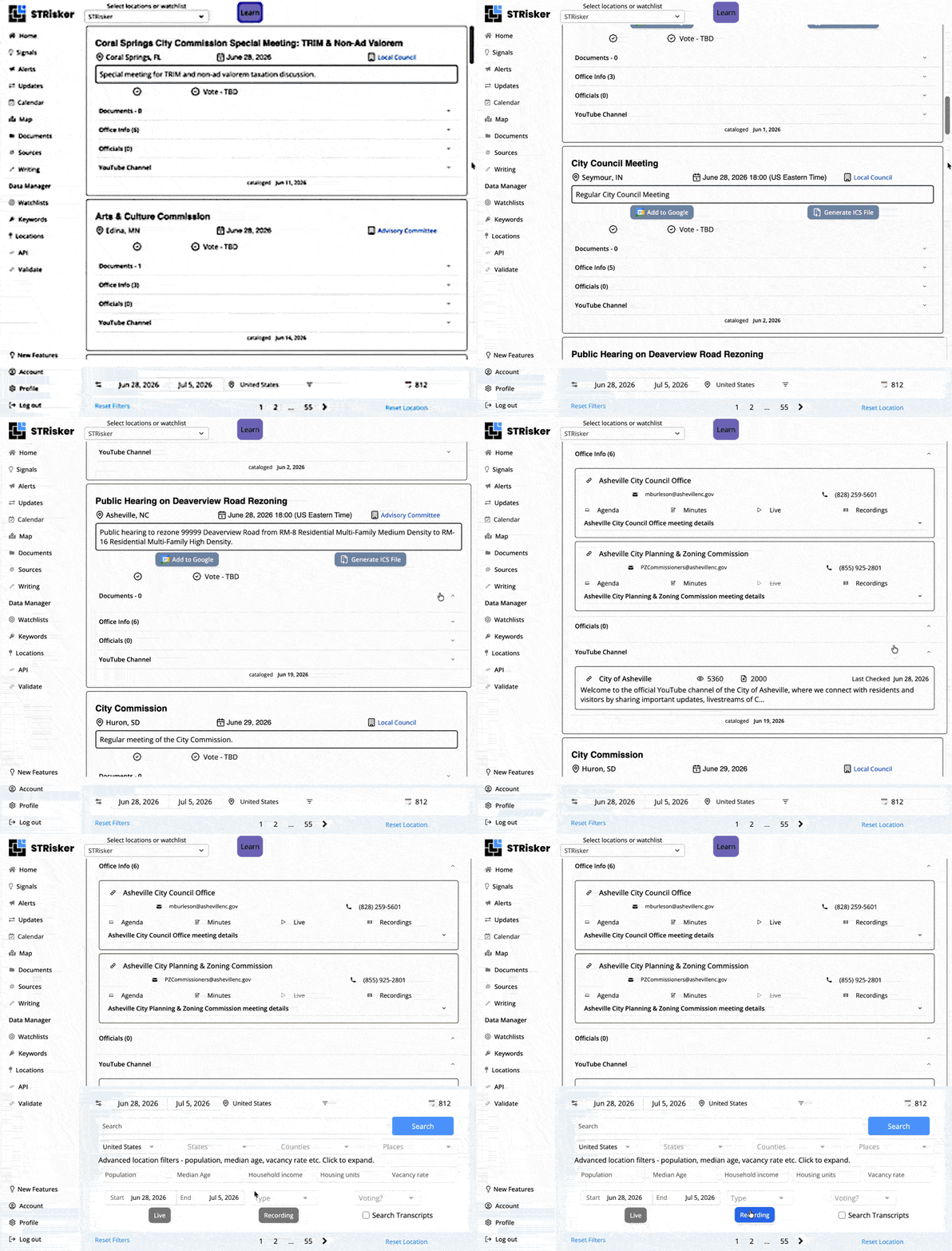
Strisker Calendar Tracker
Staying ahead of STR and data center regulations isn’t just about deadlines—it’s about knowing what’s coming. Our Calendar Tracker keeps you informed on upcoming meetings, key votes, and policy changes, so you never miss a critical update.
Boone, Iowa
The Boone City Council approved a Memorandum of Understanding with Lightedge on Monday, moving the city a step closer to potentially hosting a data center.
The agreement caps the data center’s water use at 75,000 gallons a month, about what five five-person households use. Lightedge would not be eligible for city property tax incentives and would have to pay for any needed utility upgrades. Mayor Dave Casotti said the city is weighing the project’s potential impact carefully. No final decision has been made, and Boone is one of several locations under consideration for the project.
Taunton, Massachusetts
The Taunton Municipal Council is scheduled to discuss a proposed 365-day moratorium on new data centers Tuesday, while an industrial property owner pushes for an exemption it says would save a pending tenant deal.
City leaders say the pause would give them time to review zoning rules and assess the infrastructure, electrical, and environmental demands of data centers. VMD Companies, which owns an industrial building at 50 John Hancock Road in the Myles Standish Industrial Park, wrote to Mayor Shaunna O’Connell warning that a yearlong delay would derail its agreement with a confidential technology tenant. The company’s filings with the Taunton Municipal Lighting Plant show the project would need 24 megawatts of electricity, split between a 13-megawatt first phase and an 11-megawatt second phase.
San Antonio, Texas
San Antonio residents pressed City Hall for tighter data center rules at a town hall at Northwest Vista College, urging action before more projects move from permitting to construction.
 Daniel John
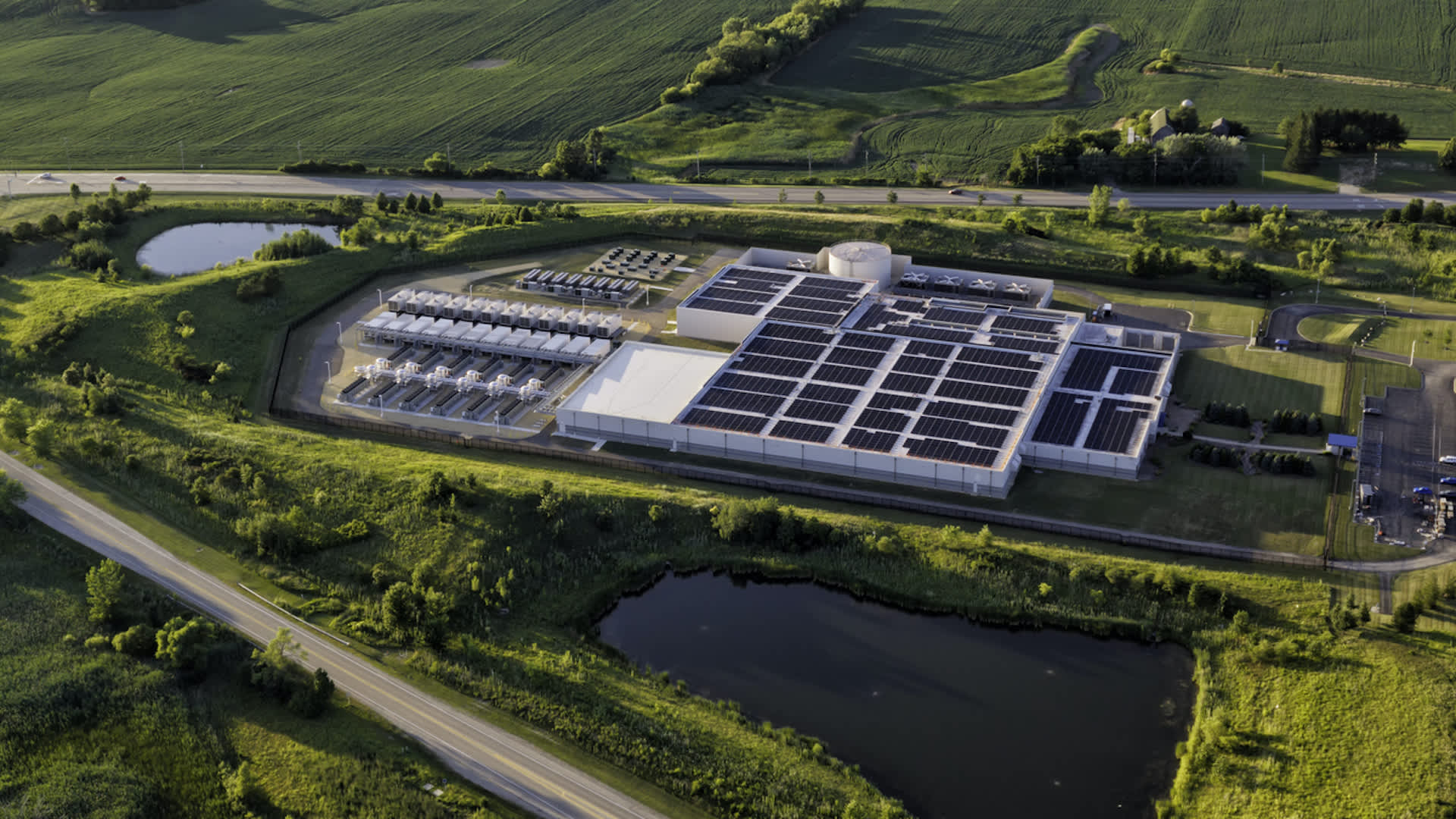
District 6 Councilman Ric Galvan organized the event with the Greater Edwards Aquifer Alliance and Public Citizen, giving residents a chance to weigh in as the city updates its Unified Development Code. Speakers raised concerns about neighborhood impacts, zoning, noise, water use, and electricity demand. The city’s Development Services Department has been preparing proposed data center regulations for the City Council to consider.
Volusia County, Florida
Volusia County Council set to vote on ban of large-scale data centers
Volusia County Council members are set to take a final vote Tuesday on an ordinance banning large-scale data centers in unincorporated parts of the county.
 Keith Jones

The ban would apply to data centers with an anticipated monthly peak electrical load of 50 megawatts or more, and would not cover cities, which keep control over their own zoning and land-use decisions. The council advanced the ordinance unanimously on first reading Oct. 6, and the county has not accepted new applications for large-scale data centers in unincorporated areas since Aug. 17.
📱 Social Buzz
Little Rock city directors set to vote Tuesday on 6-month data center moratorium; previous effort to pass 1-year moratorium fell short.https://t.co/KKXhrYhOVZ
— The Shumater (@The_Shumater) October 20, 2026
A federal judge, just hours before the Memphis City Council meeting, reversed the bans for a group of anti-data center advocates. See link below ⬇️
— Commercial Appeal (@memphisnews) October 20, 2026
📸 Neil Strebig/ The Commercial Appeal https://t.co/gCpuMroHeJ pic.twitter.com/9JWGNpFgRA
Cleveland extends data center moratorium https://t.co/1QefEW8biA
— Ideastream News (@Ideastream) October 20, 2026
Midterm campaigns are putting candidates on the record on data center policy — and saddling them with a list of promises to fulfill when the 120th Congress convenes in January. https://t.co/o5lRMNy4wH
— Bloomberg Government (@BGOV) October 20, 2026
The City of Madison will hold a public information meeting on Tuesday, October 27, 2026, to update community members on a draft framework for proposed zoning regulations for data centers within city limits. https://t.co/rcHDWz6BS3
— Mayor Satya Rhodes-Conway (@SatyaForMadison) October 20, 2026
Social Listening📱: Facebook
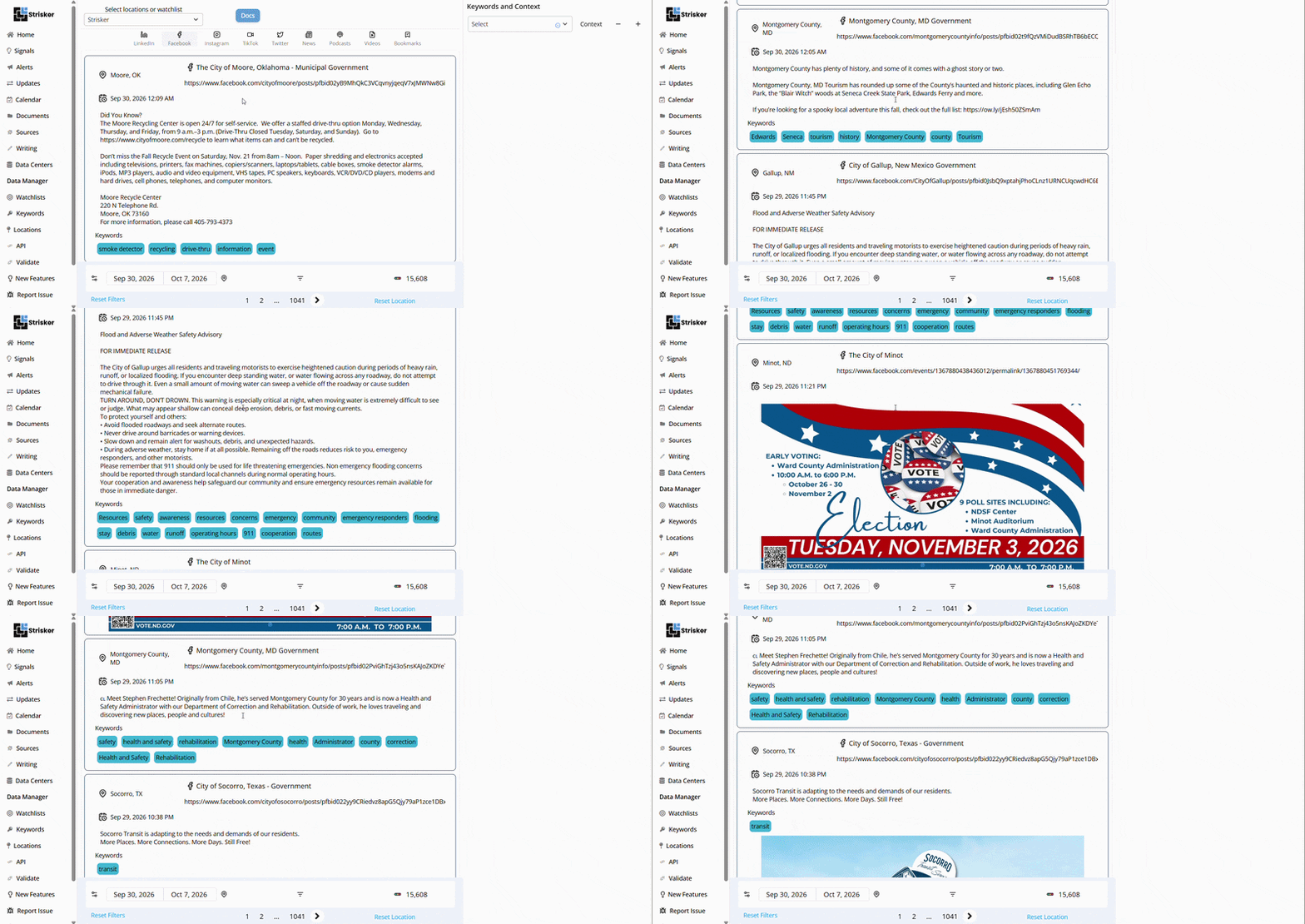
Where do neighbors, community groups, and local officials go to express their concerns? On Facebook. Strisker's Facebook Signal monitors public pages and community discussions to identify proposed ordinances, zoning disputes, and upcoming hearings, all of which can be filtered by location.
Stay Updated with Strisker!
Strisker offers tools and features to keep you updated with the Short Term Rental and Data Centers movement across the world.
👍 We’d love your feedback.
Which stories hit? Which ones missed?
We're exploring a new branch of topics centered around Data Centers and want to make it even more useful for you.
✉️ Just reply directly to this email. We read and respond to every message!
-Will McClure
🙋 P.S.
Know someone else who should be reading Daily Notes? Feel free to forward this along. We’re opening a few more spots.