
Global Regulatory Notes (1)
Keep a pulse on global regulatory trends. Kelowna, BC dismisses a challenge; Lambton, ON implements 4% MAT; Europe tightens regulation; Italy enforces rules; Wales proposes bill; Lisbon lifts moratorium; Matosinhos reforms tourist tax; Athens, Greece; Bucharest, Romania; Mallorca, Spain. READ MORE.

Canada
Kelowna, BC
A B.C. Court of Appeal panel dismisses a challenge to the province’s short-term rental restrictions, ruling the case was filed prematurely and amounted to an abuse of process.
Judges agree the lawsuit was speculative because it was launched before the law took effect in May 2024, with no enforcement action taken against owners. The ruling upholds the Short-Term Rental Accommodation Act, which limits rentals to primary residences in most markets while allowing future exemptions tied to vacancy rates.
Lambton, ON
Lambton Shores has implemented a new 4 percent municipal accommodation tax effective Jan. 1, applying to hotels, motels, and short-term rentals such as Airbnbs and cottages.
The tax is expected to raise up to $500,000 annually, with revenue split between the municipality and a new board tasked with funding off-season tourism initiatives.
Europe
France, Spain, the Netherlands, Greece, the UK, Italy, Austria, Portugal, Germany, and others are introducing measures such as annual night caps, mandatory registration, stricter zoning, and hefty fines for non-compliance. Highlights include Paris’s 120-night cap, London’s longstanding 90-night limit, Florence’s ban on new STRs in its historic center, and Palma de Mallorca’s ban on STRs in apartment buildings.
Italy
From January 1, 2026, Italian landlords renting out three or more properties on a short-term basis must register for VAT, triggering higher compliance costs and social security payments.
The reform leaves existing flat-tax rates in place for one or two properties but signals tighter oversight of professionalized hosting. Courts have also cleared the way for municipalities to impose zoning and planning limits on short-term rentals.
Wales
Online Travel UK raises concerns over the Welsh Government’s proposed visitor accommodation bill, calling its platform liability provisions “manifestly disproportionate.”




The bill would introduce a licensing system and make booking platforms criminally liable for inaccurate or non-compliant listings, including missing registration numbers.
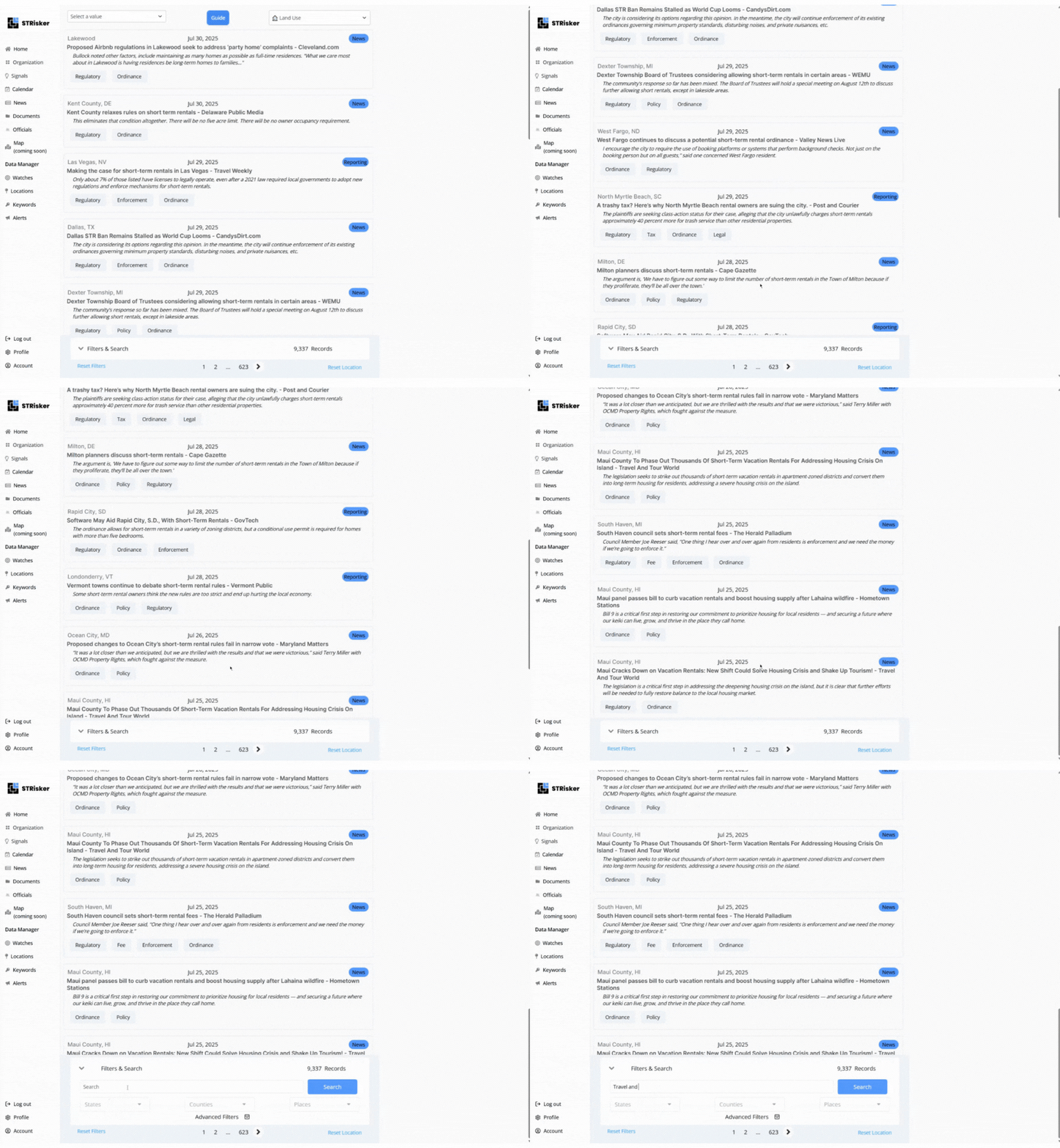
STRisker News Tracker
Trying to keep up with STR regulations across multiple cities and states? Our News Tracker makes it easier than ever. Filter by location, search a comprehensive database, and sort by impact level—this tool helps you focus on what matters most.
Portugal
Lisbon
Lisbon has lifted its moratorium on new short-term rentals after years of restrictions failed to slow rising house prices.
Despite tighter licensing rules introduced in 2019, housing costs continued to climb, with prices up more than 10% year over year in 2024. City officials say the policy reduced active permits but acknowledge broader housing shortages are driving affordability pressures.
Lisbon has lifted restrictions on STR. Evidence showed that previous controls did not improve housing cost. A quota system brings a balance between tourism and housing needs, with Mayor & industry collaboration in decision making based on clear data. https://t.co/fHuaenbsLM
— ISCF.ie (@ISCFederation) January 7, 2026
Matosinhos
The Matosinhos City Council has reformed its tourist tax to better reflect visitor impact and encourage tourism growth.
Overnight stays shorter than four hours and long-term camping or caravan rentals of three months or more are now exempt, while standard accommodation is taxed €2 per night and campgrounds/hostels €0.50.
The Matosinhos City Council (Câmara Municipal de Matosinhos) will stop charging a tourist tax for overnight stays of less than four hours and for stays in campsites or caravan parks of three months or more. #Matosinhos #business #tax #tourismhttps://t.co/isFURJ9KG0
— The Portugal News (@theportugalnews) January 1, 2026
Athens, Greece
Athens has extended its ban on registering new short-term rentals in central districts through December 31, 2026, citing ongoing housing shortages and rising rents.
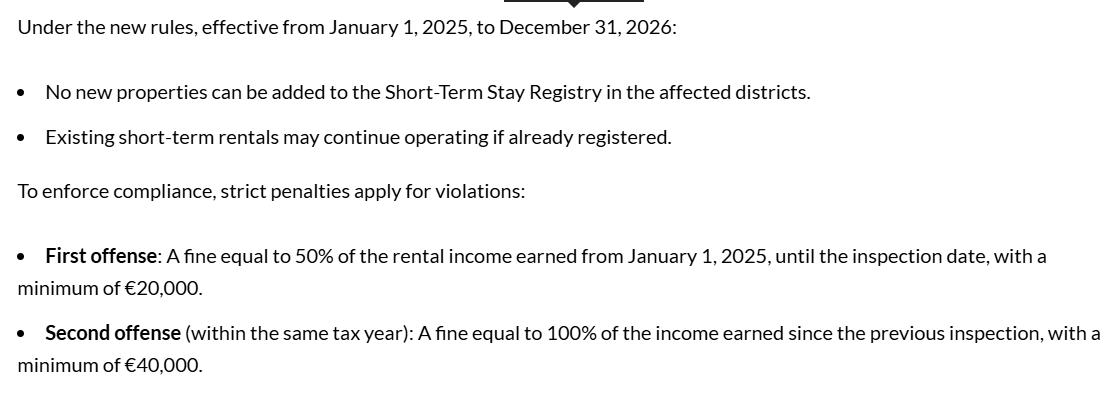
The measure applies to the city’s first, second, and third municipal districts, where tourism demand is highest. Existing registered rentals may continue operating, but no new listings will be allowed during the ban period.
Bucharest, Romania
Bucharest has approved a new tourist tax that will charge visitors about £1.70 (€2 / 10 lei) per night for overnight stays.
The levy, passed by the municipal council in December, will apply across hotels and other visitor accommodations. City officials say the revenue will be reinvested in infrastructure, cultural preservation, and sustainable tourism initiatives as visitor numbers continue to rise.
Mallorca, Spain
Authorities in the Balearic Islands are stepping up efforts to combat property fraud through a joint awareness campaign with licensed property agents.
The initiative targets illegal rentals, including substandard apartments under 30 square metres, missing energy certificates, and unauthorized room conversions. The campaign also highlights legal risks tied to short-term rentals.
In case you missed it:
 Genelaine Urbano
 Crystel
 Crystel
Stay Updated with STRisker
STRisker offers tools and features to keep you updated with the Short-Term Rental movement across the U.S.
👍 We’d love your feedback.
Which stories hit? Which ones missed?
We're constantly refining Global Regulatory Notes to make it even more useful for you.
✉️ Just reply directly to this email. We read and respond to every message!
-Will McClure
🙋 P.S.
Know someone else who should be reading Global Regulatory Notes? Feel free to forward this along. We'd love to keep them in the loop on the latest short-term rental trends and regulatory updates from around the world.