
Global Regulatory Notes (8)
Clarington, ON approved MAT plans; Haliburton, ON established MAT MSC; Croatia published draft law; Japan rolled out levies; Malta published accommodation regulations; Canary Islands, Spain ruled property listing to IGIC; Ho Chi Minh, Vietnam permits STR; READ MORE.
🇨🇦 CANADA
CLARINGTON, ON
On April 13, Clarington council approved plans of implementation framework for a Municipal Accommodation Tax set at 5% on transient accommodation stays of up to 29 days, including hotels, motels, and short-term rentals. The tax is scheduled to take effect July 1, 2026.
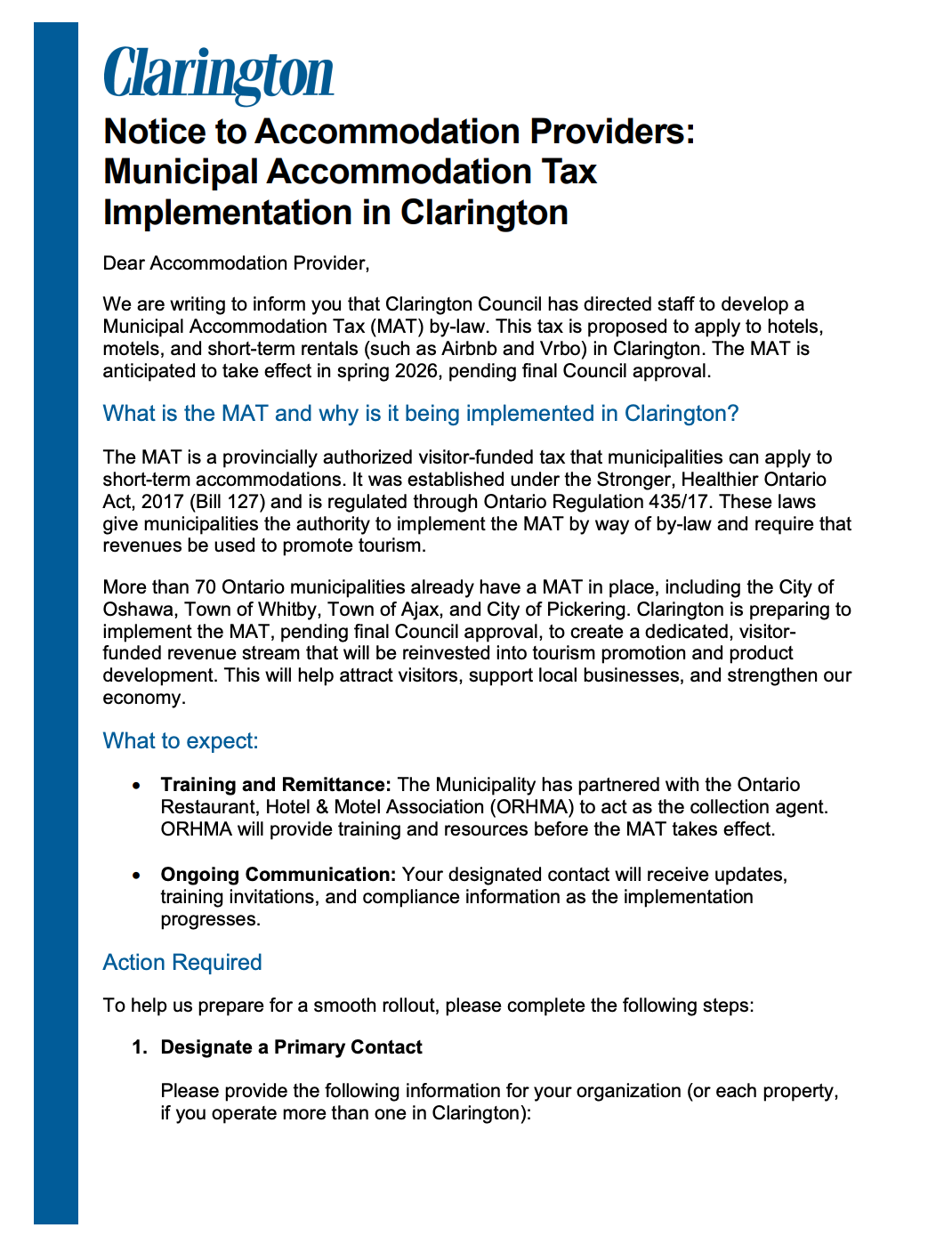
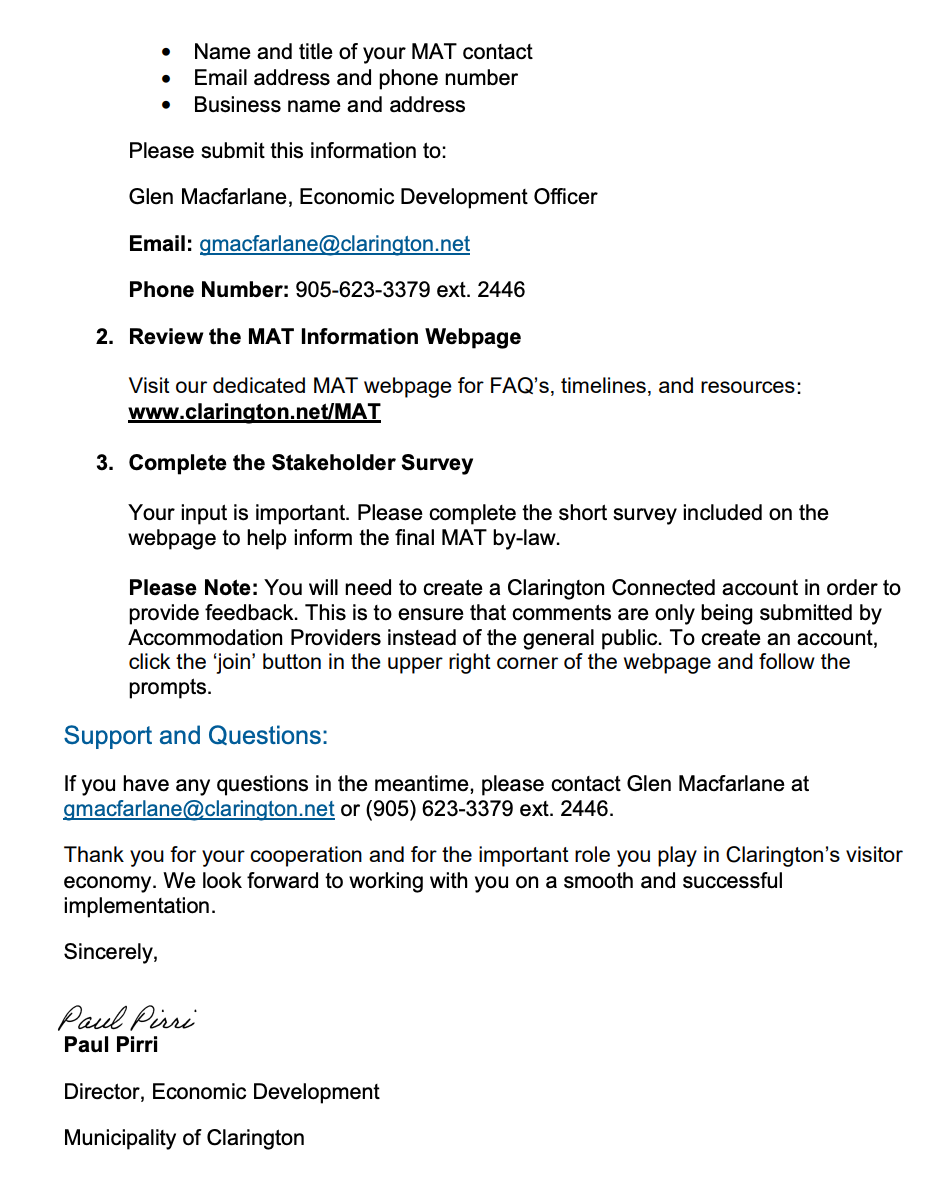
Administration will be contracted to the Ontario Restaurant, Hotel and Motel Association at 1.8% of remittances. The move brings Clarington in line with more than 70 Ontario municipalities that already collect a MAT including all of its Durham Region neighbours.
HALIBURTON, ON
Haliburton County is establishing a Municipal Services Corporation to oversee its share of Municipal Accommodation Tax revenue collected from short-term rentals since October 2024.
The board will include four council representatives and three public members. Once in place, it will guide the county's transition to a new Destination Management Organization. Under provincial rules, 50% of MAT proceeds must fund county-level tourism marketing with the remainder retained by individual townships.

🇭🇷 CROATIA
A draft hospitality law published for public consultation on April 17 proposes barring unregistered short-term rentals from online platforms and shifting all permitting to a central digital register.
The proposal also calls for mandatory re-categorisation of private accommodation every ten years and removes the possibility of issuing hospitality permits for certain apartments. The 30-day consultation period closes May 18, 2026.
🇯🇵 JAPAN
Japan is rolling out a widening set of accommodation levies across cities and prefectures, alongside a planned tripling of the national departure tax from ¥1,000 to ¥3,000 per person effective July 2026.
Kyoto led the way with a revised five-tier accommodation tax that took effect March 1 with luxury stays now subject to up to ¥10,000 per person per night. Hokkaido, Okinawa, Hiroshima, and several other municipalities are introducing or expanding similar levies through the year.
🇲🇹 MALTA
Short-let operators in Malta face a broader set of compliance obligations following the publication of the Tourism Accommodation Regulations 2026 on April 16. The rules consolidate four existing pieces of legislation under the Malta Travel and Tourism Services Act and apply across hotels, guesthouses, and short-term rentals.
Hosts must display licence details and a 24/7 contact at the property entrance, notify condominium administrators upon receiving a licence, and submit a waste management plan. Operating without a valid licence now carries a three-year disqualification.
🇮🇨 CANARY ISLANDS, SPAIN
In a ruling published April 1, the Canary Islands Deputy Ministry of Finance confirmed that listing a property on digital platforms subjects the activity to the regional Indirect Tax (IGIC), regardless of whether the owner has employees or a corporate structure.
Official Canary Islands Tax Agency portal for IGIC procedures including registration (Modelo 400) and filing obligations (Modelos 420 and 425)
This decision closes off a longstanding exemption many private hosts in municipalities like San Bartolomé de Tirajana and Mogán had relied upon. Hosts with annual transactions under €30,000 can still qualify for automatic exemption under the Special Regime for Small Businesses (REPEP).
🇻🇳 HO CHI MINH, VIETNAM
Effective April 25, Decision No. 19/2026/QD-UBND formally permits short-term rentals in apartment buildings in Ho Chi Minh City provided they align with each unit's approved intended use. This means hosts operating tourist accommodation units must register their business and comply with tourism laws.
Temporary residence must be reported through digital platforms including the VNeID app and the National Public Service Portal while landlords and apartment owners are also required to fulfill tax obligations and sign formal tenancy contracts.
HCMC Airbnb Rules Explainer
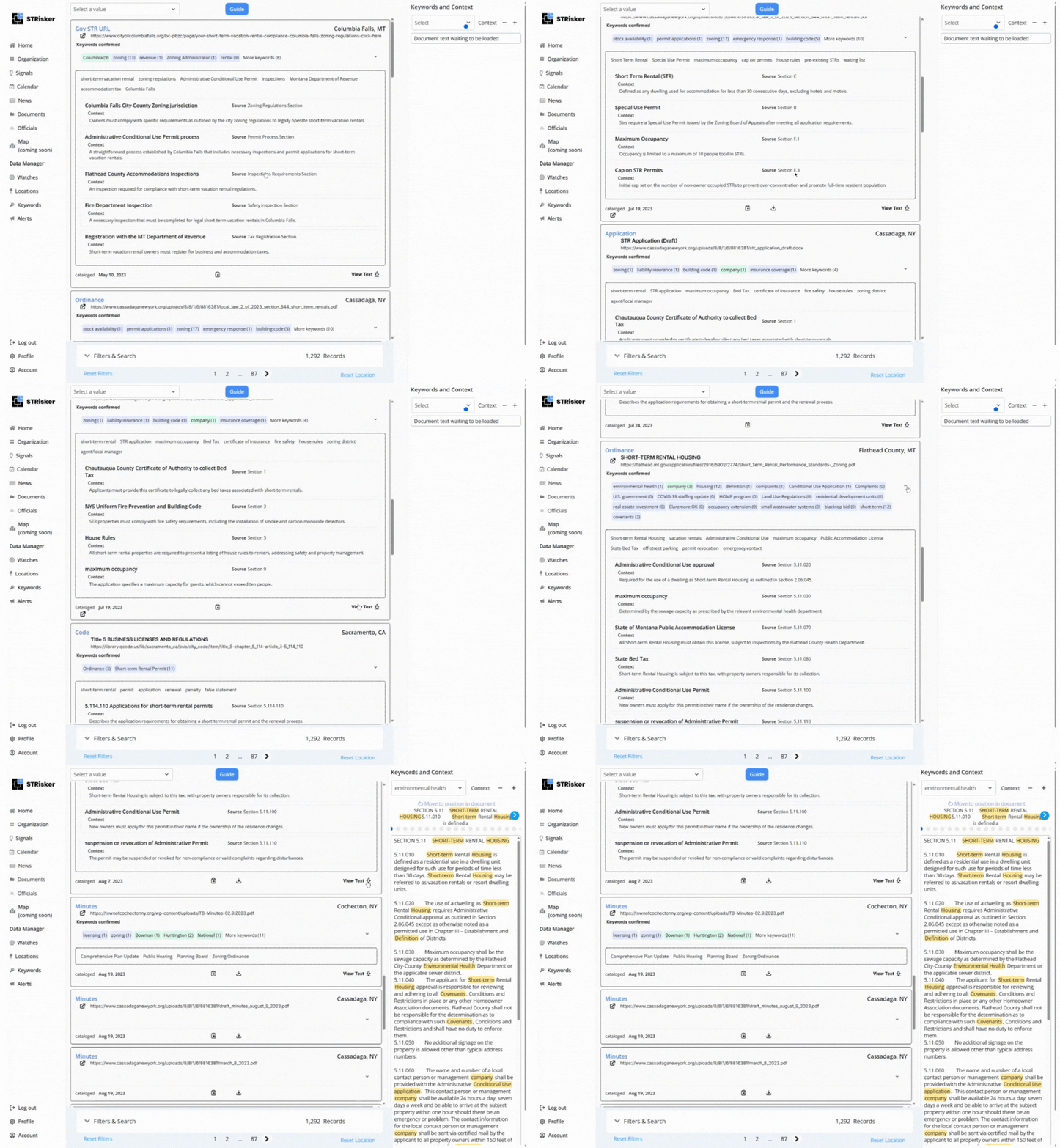
STRisker Document Analysis
Finding the right compliance documents shouldn’t feel like searching for a needle in a haystack - STRisker’s Documents Analysis is built to simplify your life, offering instant access to hundreds of thousands of documents from thousands of cities across the US.
Stay Updated with STRisker!
STRisker offers tools and features to keep you updated with the Short Term Rental movement (and now Data Centers!) movement across the world.
👍 We’d love your feedback.
Which stories hit? Which ones missed?
We're constantly refining Global Regulatory Notes to make it even more useful for you.
✉️ Just reply directly to this email. We read and respond to every message!
-Will McClure
🙋 P.S.
Know someone else who should be reading Global Regulatory Notes? Feel free to forward this along. We'd love to keep them in the loop on the latest short-term rental trends and regulatory updates from around the world.