
🎯 STRisker: Bulletin - European Union
May 2026 deadline brings mandatory registration, data sharing, and local control to platform-booked accommodations


Europe Tightens the Reins on Short-Term Rentals Starting May

The European short-term rental market is about to hit a major turning point. Starting May 20, 2026, a comprehensive EU framework will reshape how platforms like Airbnb and Booking.com operate across Europe, with France, Portugal, Italy, Spain, Netherlands, Switzerland, Poland, and other nations implementing coordinated restrictions aimed at protecting local housing markets.
Here's what's driving the change: in some European city centers, up to 20% of housing stock has shifted to tourist rentals, pushing local residents out as rents skyrocket. The numbers tell the story: 854.1 million guest nights were booked via major platforms in 2024, an 18.8% jump from 2023. Paris alone saw 23.5 million guest nights, followed by Rome with 15.7 million and Barcelona with 12.5 million.
The New Rules at a Glance
Under EU Regulation 2024/1028, every host will need to register with local authorities and obtain an identification number. Platforms must display this registration info and share crucial data, including rental nights, guest numbers, and property locations, through national digital entry points. Cities can now cap annual rental nights or restrict short-term rentals to specific seasons, requiring hosts to offer long-term housing (like student accommodation) during off-peak months.
The framework distinguishes between casual hosts supplementing income and professional operators running multiple properties, addressing unfair competition concerns from the traditional hotel industry.
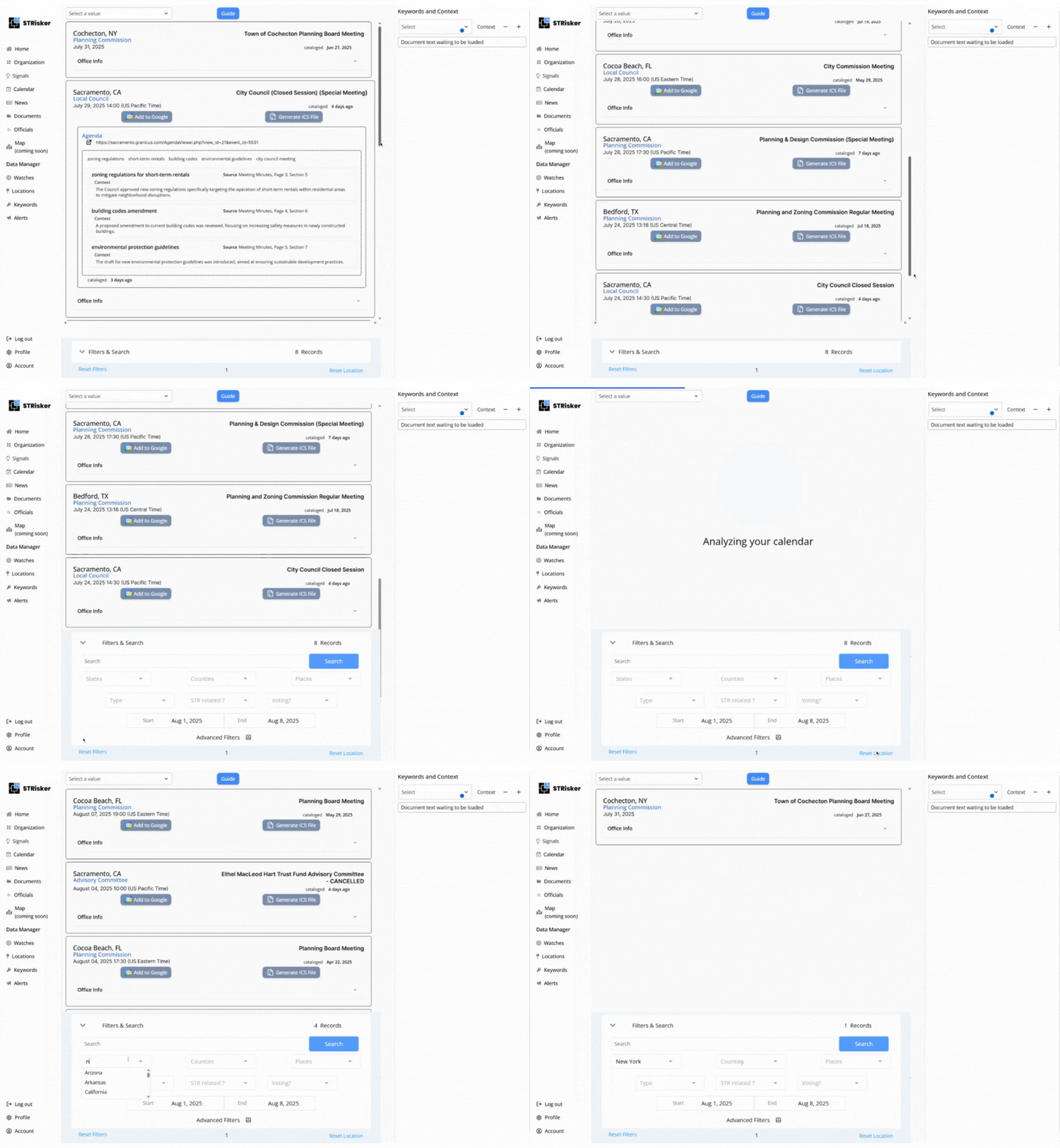
STRisker Calendar Tracker
Staying ahead of STR regulations isn’t just about deadlines—it’s about knowing what’s coming. Our Calendar Tracker keeps you informed on upcoming meetings, key votes, and policy changes, so you never miss a critical update.
Already Making Waves
Several countries jumped ahead of the EU timeline. Spain fined Airbnb over unlicensed listings in 2025, and Barcelona announced it will phase out tourist apartment licenses completely by late 2028. France introduced tighter compliance rules and "change of use" requirements, sometimes demanding housing "compensation" before residential-to-tourist conversions. Germany's tackling furnished "micro-letting" arrangements that critics say dodge existing controls.
Spanish government says it has fined Airbnb $75 million, citing posting of listings for banned, unlicensed rental propertieshttps://t.co/frJkFupIcF
— Daily Sabah (@DailySabah) December 15, 2025
🇫🇷 France moves to tighten up Airbnb rules amid row over short-term lets.
— euronews (@euronews) May 24, 2024
The deregulation of the tourist rental market is not just a French concern.
Other countries have been considering the matter for some years.https://t.co/p0Dqcdfp2X
What's Next
European Commissioner Dan Jørgensen promises additional legislative proposals by late 2026, focusing on defining and protecting "areas under housing stress." These won't ban short-term rentals outright but will authorize cities to restrict or limit them in particularly pressured neighborhoods, typically historic centers where tourism density hits hardest.
Audio from https://www.euronews.com/
The Bottom Line

Budget travelers might see reduced availability and potentially higher prices in peak destinations, but the regulations promise fairer competition and more transparent markets. For local communities, it's about reclaiming neighborhoods transformed by tourism's rapid expansion, ensuring that the places people visit remain livable for those who call them home.
Stay Updated with STRisker
STRisker offers tools and features to keep you updated with Short Term Rental movement across the globe.
👍 We’d love your feedback.
We're always looking for ways to improve Bulletins.
Was this one useful to you? Other topics you'd like to see get covered?
✉️ Just reply directly to this email. We read and respond to every message!
-Will McClure
🙋 P.S.
Know someone else who should be reading this Bulletin? Feel free to forward this along. We want to make sure operators and stakeholders are aware of regulatory changes in their area.