
🎯 STRisker: Bulletin - Kenya
Tourism levy expansion targets online hospitality platforms


Kenya Makes It Official: Airbnb and STRs Now Pay Tourism Levy

Since Airbnb entered Kenya in the early 2010s, traditional hotel associations have been making the same argument: we pay taxes, meet standards, employ staff, and contribute to the Tourism Fund, while short-term rentals do none of that. For over a decade, their lobbying was polite but persistent. In 2026, they finally got what they wanted.
Industry analysts describe years of "silent lobbying" by traditional hospitality operators who watched short-term rentals chip away at their market share without facing equivalent regulatory burdens. A licensed hotel pays the 2% tourism levy, undergoes regular inspections by the Tourism Regulatory Authority, maintains fire safety systems, employs trained staff, and deals with labor law compliance. An Airbnb host, by contrast, could list a spare bedroom with minimal oversight and zero contribution to the Tourism Fund.
Document by Ministry of Tourism & Wildlife (with TRA) about updating the regulatory framework within Kenya’s tourism law
The competitive imbalance became stark during the COVID-19 pandemic. Hotels faced strict health protocols, capacity restrictions, and operational costs that short-term rentals could avoid. Yet both competed for the same travelers. When tourism recovered post-pandemic, the sector saw explosive growth in STR bookings while traditional occupancy rates struggled. Hotels argued they were being regulated out of competitiveness.
The Kenya Association of Hotelkeepers and Caterers (KAHC) and similar industry bodies made their case quietly but consistently. They weren't demanding that short-term rentals be banned: they wanted parity. If STRs were going to operate as accommodation providers, they should meet the same basic requirements: registration, quality standards, safety compliance, and yes, the 2% tourism levy.
A past media coverage of Airbnb hosts and the 2% tourism levy in Kenya, including discussion of compliance issues before the 2026 policy shift.
The government's 2026 announcement represented a victory for this position. By extending the Tourism Act levy to digital platforms and requiring all STR operators to register with the Tourism Regulatory Authority, Kenya is creating what hotels have wanted for years: a level playing field. The 2% levy alone isn't punitive; hotels already pay it, but it signals that short-term rentals are now part of the formal, regulated tourism sector.
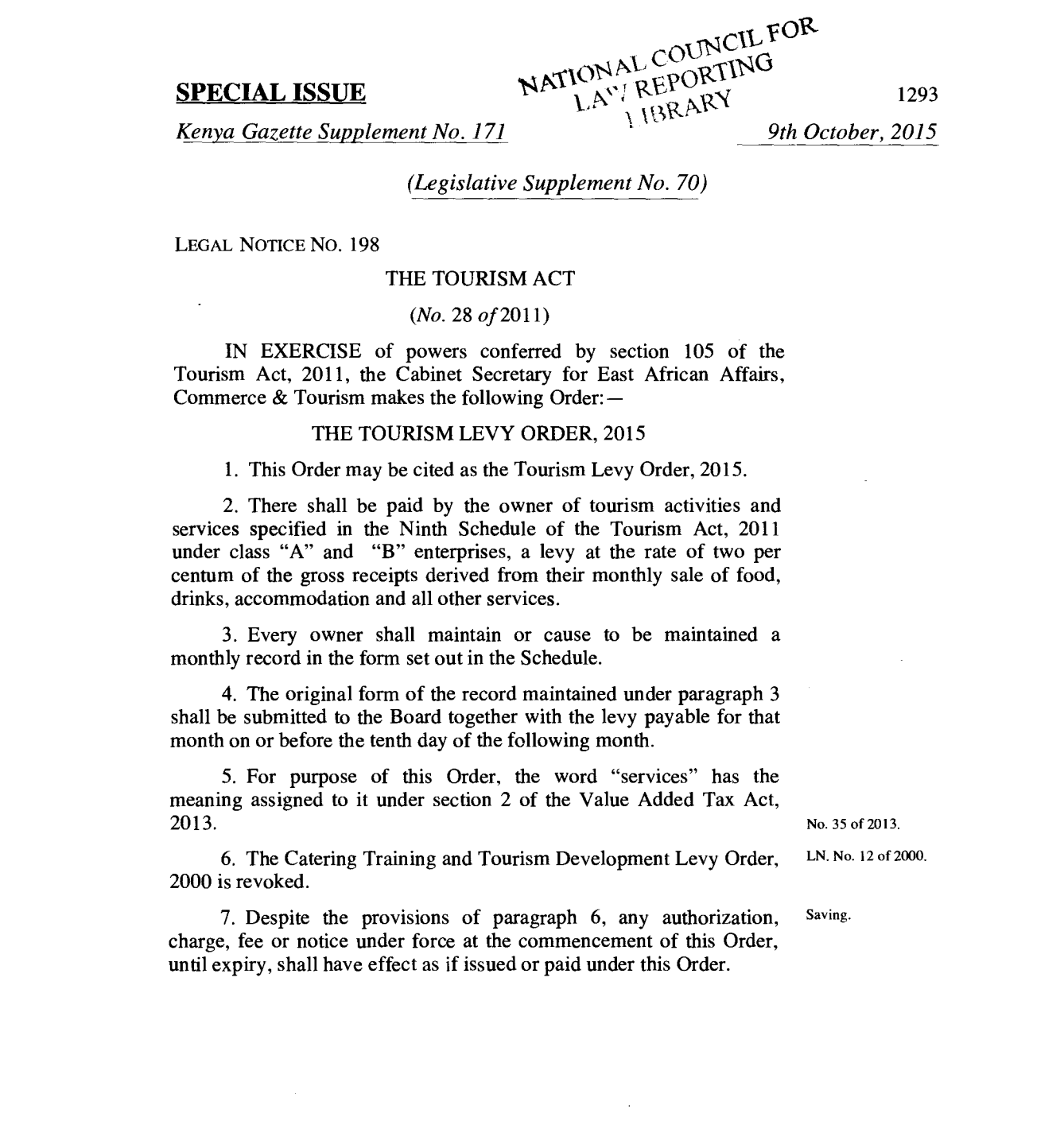
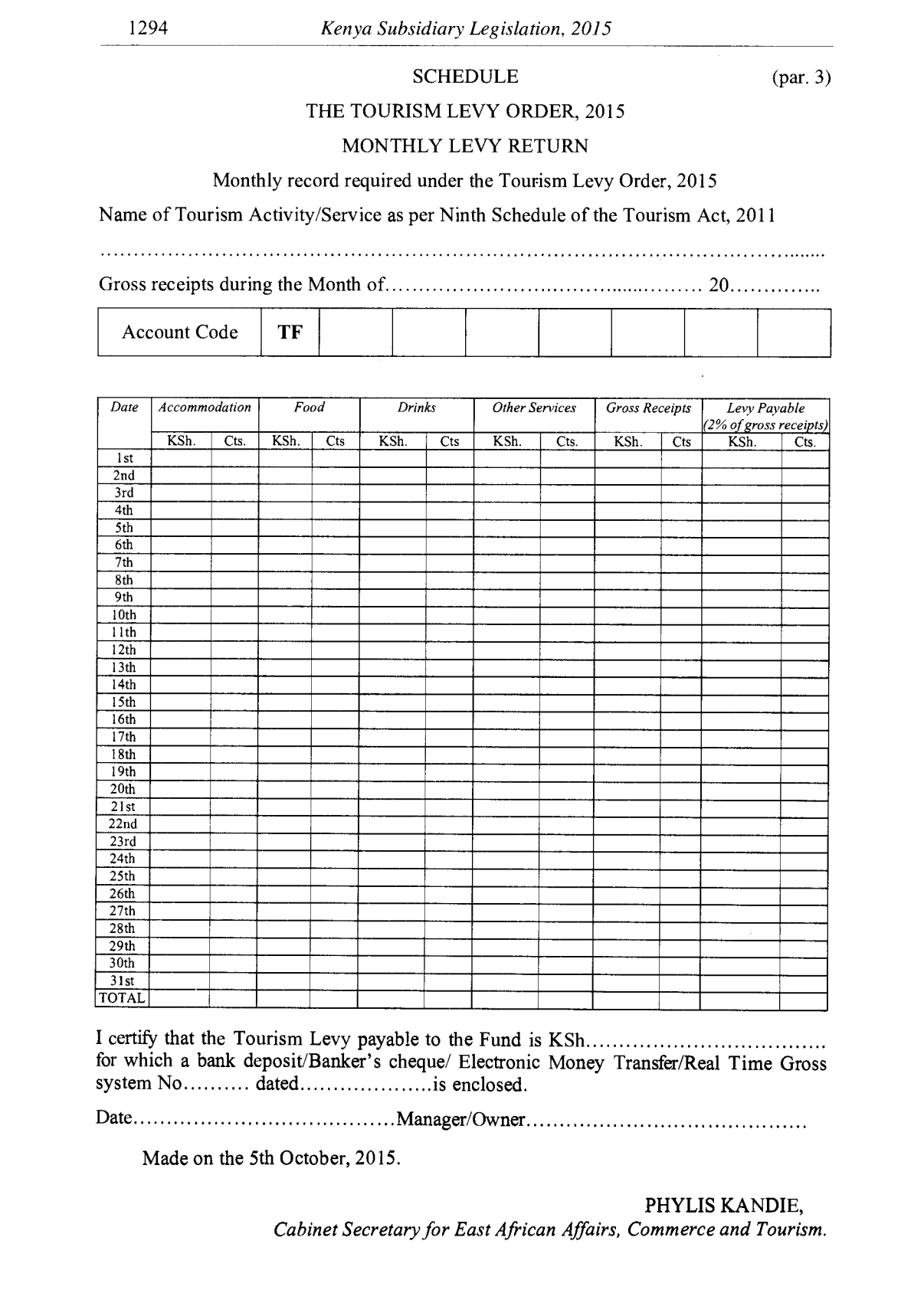
Kenya's Tourism Levy Order - Legal Notice 198 of 2015 (Original Enactment)
For hotel operators, this development validates a decade of advocacy for equal rules, with the June 2026 implementation delivering that principle. But hotels should be careful what they wished for. Formalization brings legitimacy; short-term rentals that register, pay the levy, and meet quality standards can now market themselves as fully compliant, officially recognized providers. The competitive advantage hotels sought to eliminate might be replaced by a more professionalized STR sector that's even tougher to compete against.
🐦 Tweet Highlights: Catch the latest discussions on X
Kenya expands 2pc tourism levy to Airbnb, Booking(.)com rentals
— BusinessDaily (@BD_Africa) January 27, 2026
Under the Tourism law, regulated hotels, restaurants and other licensed tourism establishments are required to remit a two per cent tourism levy on gross sales to the Tourism Fund.
More on: https://t.co/2lsOcb1iEV pic.twitter.com/qeVdyUMfJS
Kenya to Extend Tourism Levy to Short-Term Rentals
— Khusoko | East African Markets (@khusoko) February 2, 2026
Under the proposed changes, short-term rental operators will be required to pay a 2% tourism levy on bookings, aligning them with hotels, lodges, & serviced apartments that already contribute to the levy.https://t.co/1RUGjt47QT
Kenya is expanding its 2% tourism levy to cover short-term rental platforms like Airbnb and Jumia, bringing the fast-growing digital hospitality sector into the formal tax system.https://t.co/TGVTbISL5i
— Techweez (@techweez) January 27, 2026
Stay Updated with STRisker
STRisker offers tools and features to keep you updated with Short Term Rental movement across the globe.
👍 We’d love your feedback.
We're always looking for ways to improve Bulletins.
Was this one useful to you? Other topics you'd like to see get covered?
✉️ Just reply directly to this email. We read and respond to every message!
-Will McClure
🙋 P.S.
Know someone else who should be reading this Bulletin? Feel free to forward this along. We want to make sure operators and stakeholders are aware of regulatory changes in their area.