
🎯 STRisker: Bulletin - Kyoto, Japan
Top rate hits ¥10,000 per person per night as city targets luxury stays and STR operators


Kyoto Raises Accommodation Tax Up to Tenfold, Targeting Luxury STRs and Hotels
Photo by Daisy Chen on Unsplash
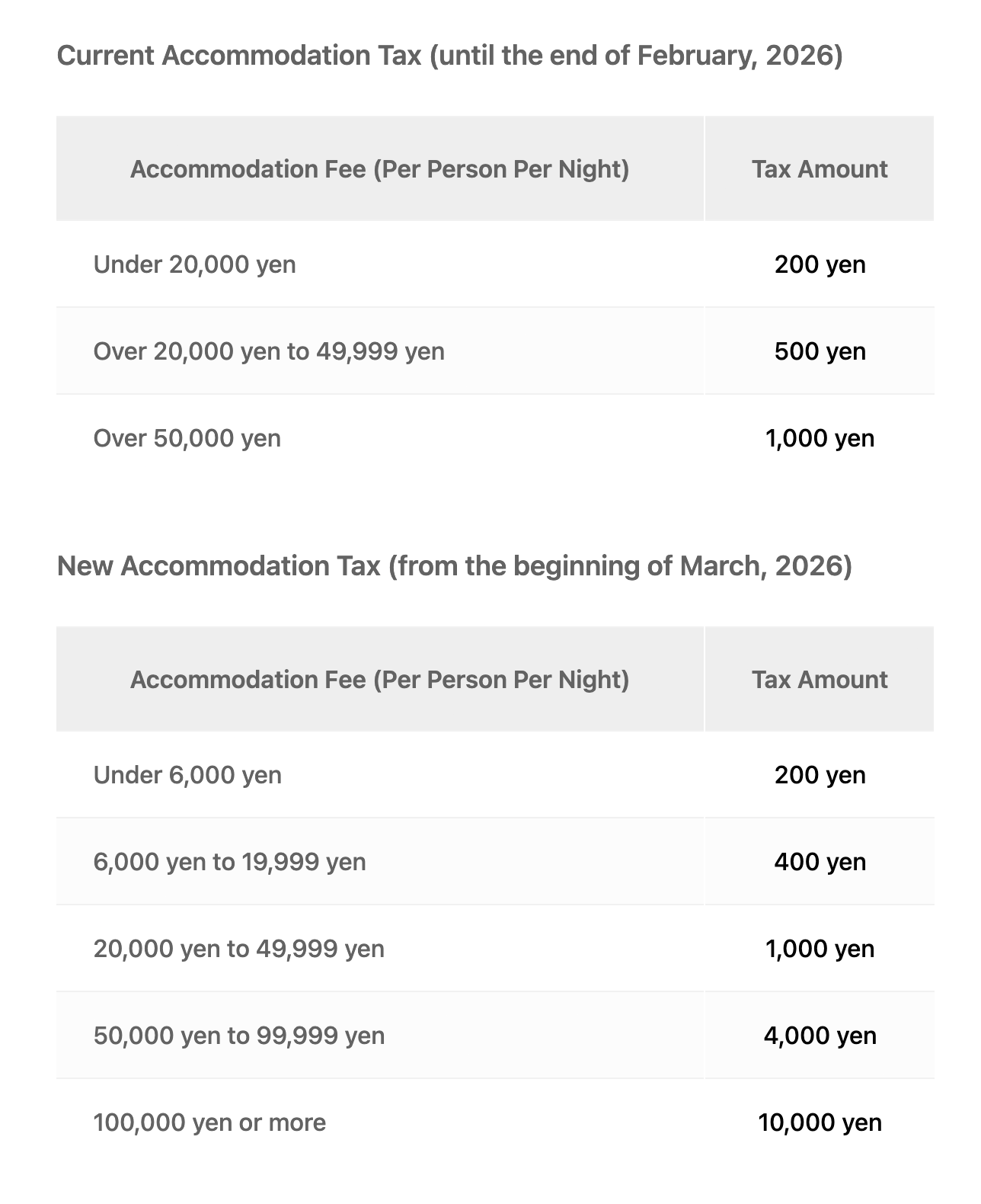
Kyoto's accommodation tax took effect March 1, 2026 under a new structure that raises the top rate to ¥10,000 per person per night for rooms priced at ¥100,000 or above, a tenfold increase from the previous maximum of ¥1,000. No lodging type is exempt: hotels, ryokan, guesthouses, and private accommodations under Japan's Private Lodging Business Act all come under the tax's new rate structure.
Originally introduced in October 2018, the accommodation tax had held steady at ¥200–¥1,000 per night until the Kyoto City Council passed the revision in March 2025. Final approval from Japan's Ministry of Internal Affairs and Communications came in October 2025. The city's reasoning: tourists benefit from local infrastructure and heritage sites, so they should help foot the bill.
The five-tier system scales with nightly room price. Budget travelers see modest increases from ¥200 to ¥400 while mid-range rooms move from ¥500 to ¥1,000. Luxury stays above ¥100,000 per night face the maximum ¥10,000 rate, roughly $65 USD per person. The levy is charged per person per night, and this compounds quickly for multi-guest and multi-night stays. Analysts project Kyoto will collect approximately ¥13.2 billion in accommodation tax in 2026 which is more than double the ¥5.9 billion collected in fiscal 2025.
⦾ Effective date: March 1, 2026
⦾ Registration required: Yes (Hotel and Inn Business Act or Private Lodging Business Act)
⦾ Night cap: N/A
⦾ Tax rate: ¥200–¥10,000 per person, per night (five tiers based on room price)
⦾ Platform responsibility: Not specified; operator collects at check-in or check-out
⦾ Exemptions: School excursion participants; children under 12
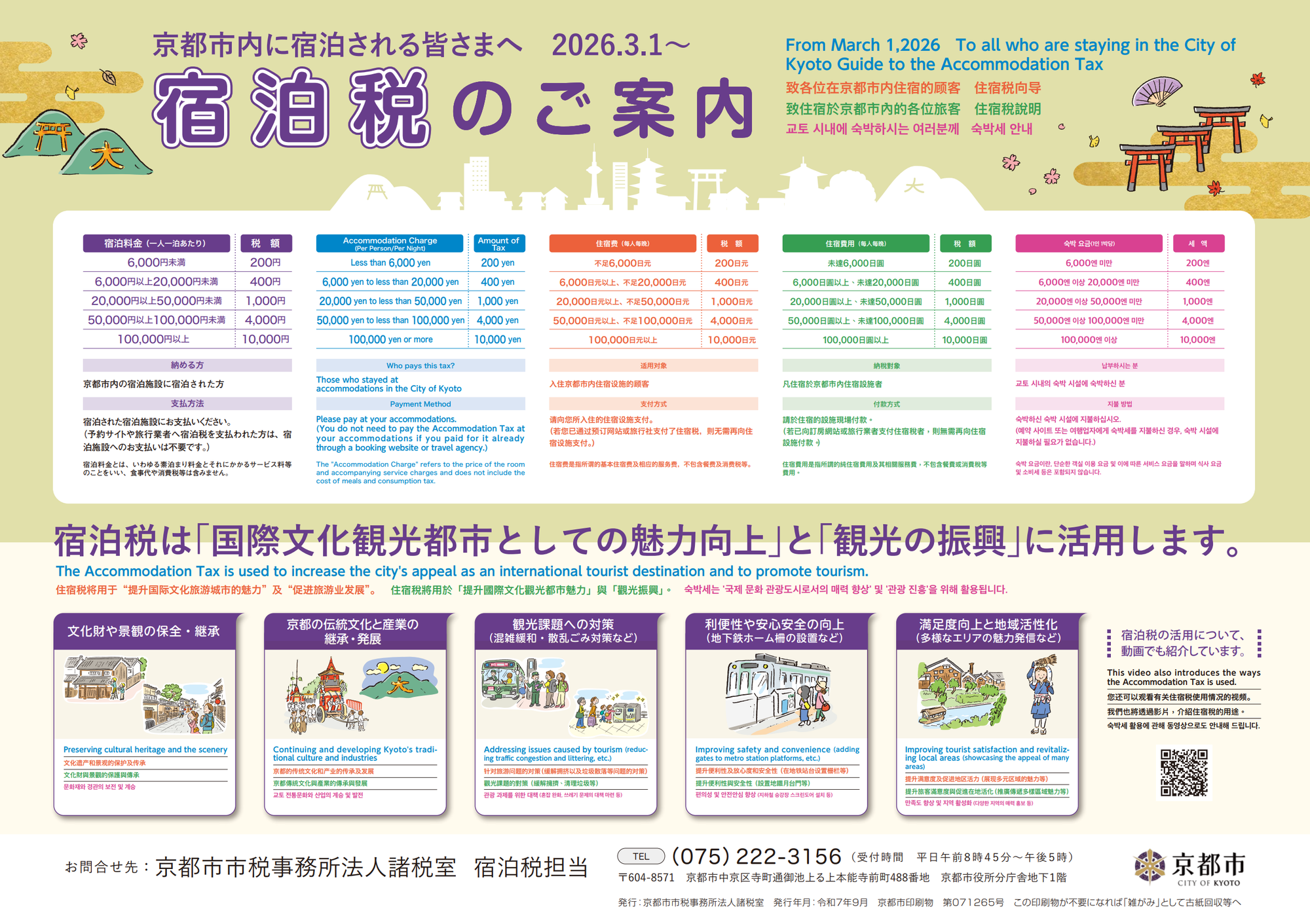
Revenue goes toward overtourism countermeasures such as traffic congestion, litter, and the usual resident grievances that come with tourists crowding commuter buses on popular sightseeing routes. School excursions are exempt.
As of April 2025, 13 Japanese municipalities had adopted lodging taxes, with nearly 50 more under consideration. Kyoto's March 2026 implementation landing squarely in peak tourist season will test how the new structure holds up under maximum visitor load.
🐦 Tweet Highlights: Catch the latest discussions on X
Kyoto hikes hotel tax on March 1 with top rate of $64 a night https://t.co/iM9oUDrMWr
— Nikkei Asia (@NikkeiAsia) February 27, 2026
Kyoto hikes hotel tax on March 1 with top rate of $64 a night - #NikkeiAsia#Trip #Kyoto #Japan https://t.co/bZ9oNMmWBw pic.twitter.com/ZgNwnaYif4
— HM: Trip✈ (@HitoshiMisaka2) March 1, 2026
The newly increased accommodation tax in Kyoto went into effect on March 1.
— TimeOutTokyo (@TimeOutTokyo) March 3, 2026
https://t.co/ep94p0DxqP
Kyoto's increased hotel guest taxes, raised to fight overtourism, are now in effect. https://t.co/W2g4GSLHWH
— SoraNews24 (@RocketNews24En) March 3, 2026
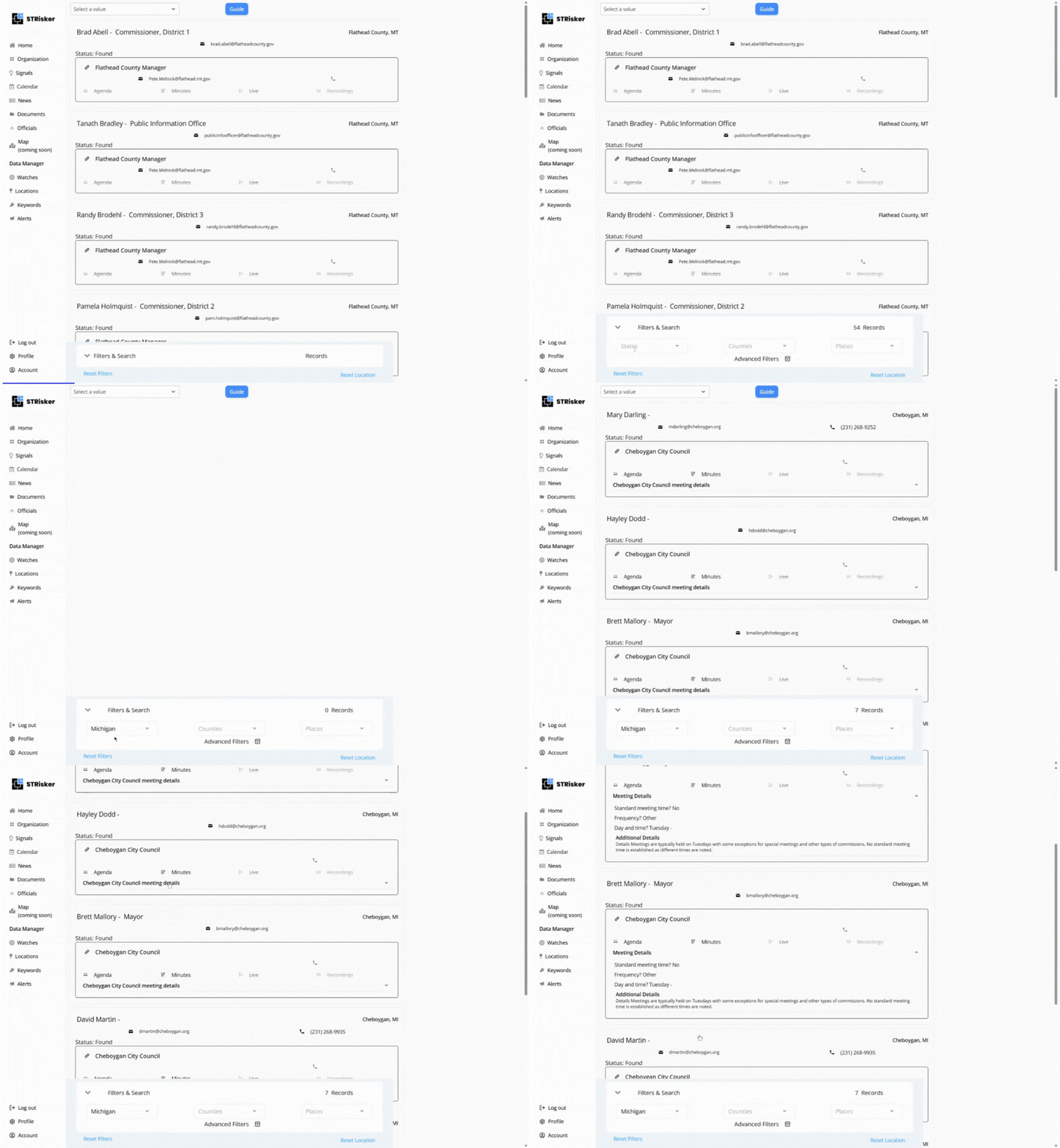
STRisker Government Office Dashboard
Trying to keep up with the main players in the STR game? Know your councilmembers, commissioners, committee chairs, and key staff that are part of the process.
Stay Updated with STRisker
STRisker offers tools and features to keep you updated with Short Term Rental movement across the globe.
👍 We’d love your feedback.
We're always looking for ways to improve Bulletins.
Was this one useful to you? Other topics you'd like to see get covered?
✉️ Just reply directly to this email. We read and respond to every message!
-Will McClure
🙋 P.S.
Know someone else who should be reading this Bulletin? Feel free to forward this along. We want to make sure operators and stakeholders are aware of regulatory changes in their area.