
🎯 STRisker: Bulletin - Oneida County, NY
Oneida County’s STR Countdown: Registration Required by January 1


Register or Risk Delisting: Oneida County’s STR Rules Take Effect
 Oneida County
As January 1 approaches, Oneida County is sending a firm reminder to short-term rental hosts: register now, or stop listing. Under new rules aligned with New York State law, all STRs must be officially registered with the county in order to continue advertising on booking platforms.
The registry, created earlier this year, applies to properties listed on Airbnb, VRBO, Expedia, TripAdvisor, and similar services. Once registered, hosts may continue operating as usual, with booking platforms collecting and remitting the county’s 5% occupancy tax on guest stays.

County officials say the initiative is about leveling the playing field. Hotels and motels have long been subject to registration and occupancy taxes, and the county wants short-term rentals to follow the same standards. According to County Executive Anthony J. Picente Jr., the registry promotes transparency, protects the quality of lodging options, and ensures that tourism-related taxes help fund local services.
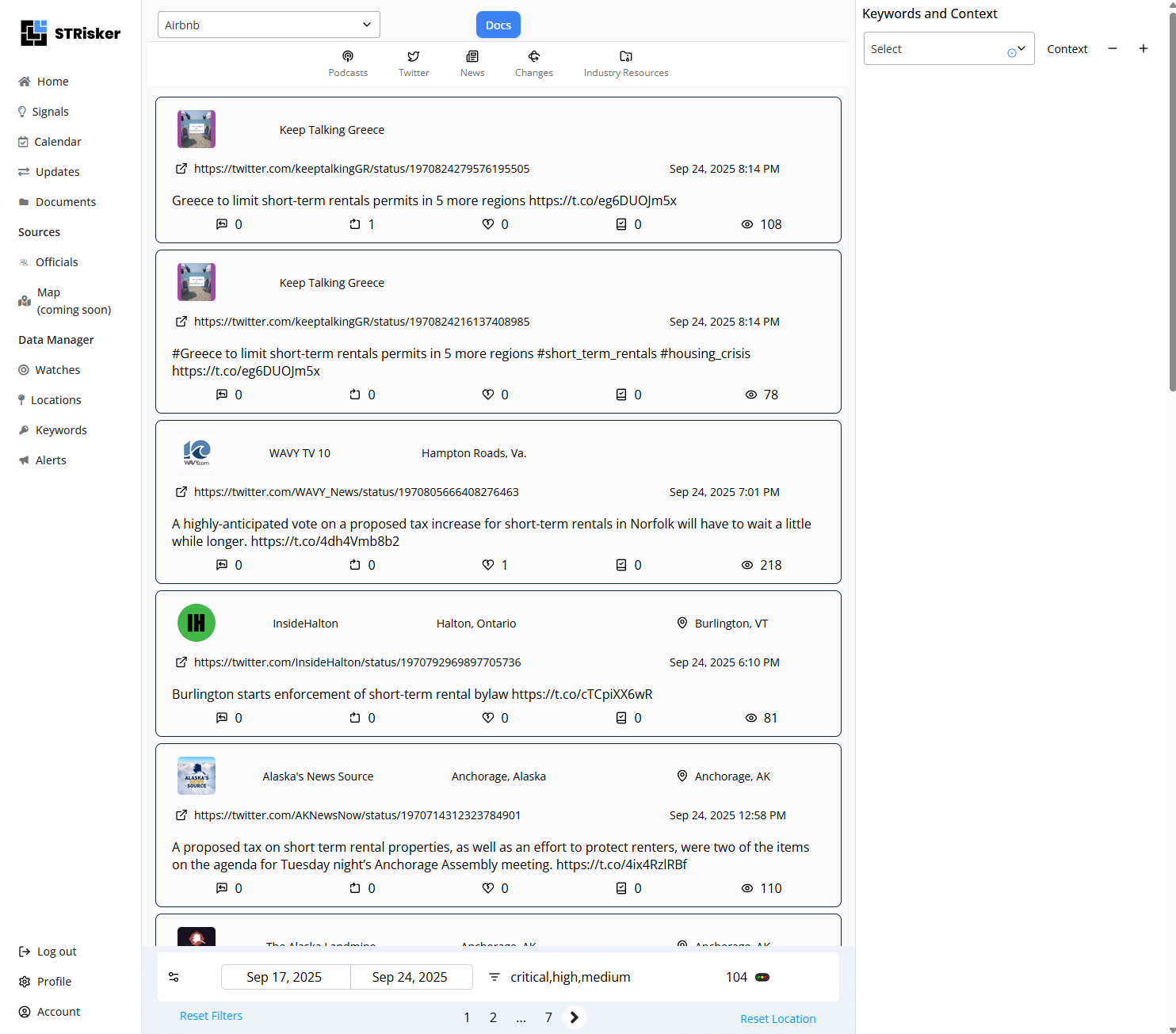
Social Listening📱: Twitter
STRisker’s Twitter Signal pulls real-time posts from officials, agencies, advocacy groups, and local influencers—so you see emerging sentiment and policy signals the moment they surface. Track conversations by place, people, and topics, then zero in on what actually matters.
Starting January 1, 2026, registration becomes mandatory before a property can be listed for rent. Each host will receive a county-issued registration number, which must be displayed on all advertisements and online listings. Registration is currently free and completed through an online portal, removing cost as a barrier to compliance.

Tax collection is a major component of the new framework. All STR bookings are subject to Oneida County’s 5% occupancy tax, on top of the state’s 8.75% sales tax. When rentals are booked through online platforms, those platforms handle tax collection automatically. However, hosts who accept direct bookings are responsible for collecting the occupancy tax themselves and remitting it to the county.
With several hundred STR units active each month, officials say enforcement will be consistent. Hosts who fail to register by the deadline will not be allowed to list their properties until they come into compliance. Reminder letters will be sent, but county officials stress that receiving a notice is not required for enforcement to apply.

As Oneida County heads into the new year, STR operators are being encouraged to view registration not as a hurdle, but as the new standard for participating in the county’s growing tourism economy.
Stay Updated with STRisker
STRisker offers tools and features to keep you updated with the Short-Term Rental movement across the U.S.
👍 We’d love your feedback.
We're always looking for ways to improve Bulletins.
Was this one useful to you? Other topics you'd like to see get covered?
✉️ Just reply directly to this email. We read and respond to every message!
-Will McClure
🙋 P.S.
Know someone else who should be reading this Bulletin? Feel free to forward this along. We want to make sure operators and stakeholders are aware of regulatory changes in their area.