
🎯 STRisker: Bulletin - Princeton, NJ
Registration, Fees, and Residency: Princeton’s New STR Playbook


Princeton Draws the Line on Short-Term Rentals
Princeton officially joined the growing list of municipalities tightening the reins on short-term rentals, as Council unanimously approved a new ordinance regulating properties listed on platforms like Airbnb, VRBO, and Expedia. While the vote itself wasn’t surprising, the scope of the new rules and what they revealed about Princeton’s STR market—sparked plenty of discussion.
"We value the kind of Princeton where year-round residents aren't pushed out by speculation and where the quality of life that built this town is protected for the long haul.” -- Leighton Newlin. https://t.co/UxKu9dHaBB
— TAPinto Princeton Community News (@TAPPrinceton) December 11, 2025
At the heart of the ordinance is a new registration requirement and a 3% occupancy fee on STR revenue, aligning short-term rentals with local hotels. Owners must register their units with the town and pay the same tax already applied to commercial lodging. According to town officials, this step levels the playing field while creating a clearer picture of how many STRs are actually operating.
The most consequential provision, however, centers on ownership. Under the new rules, STRs are largely limited to properties that serve as a principal residence for the owner or a long-term lessee. Absentee-owned rentals—often associated with more commercial-scale operations—are not outright banned, but current operators have a three-year transition period to comply, convert to long-term rentals, or return properties to owner-occupied use.


The ordinance lays out detailed scenarios based on housing type, from single-family homes to multi-unit buildings and accessory dwelling units. Across the board, the message is consistent: at least one unit must be owner- or long-term tenant-occupied to host short-term guests.
Operational standards are also clearly spelled out. Owners or their representatives must be available 24/7, respond to complaints within two hours, and post an interior placard listing contact information, occupancy limits, trash rules, parking requirements, and notice of enforcement penalties. These measures are aimed squarely at addressing neighborhood concerns about noise, maintenance, and accountability.
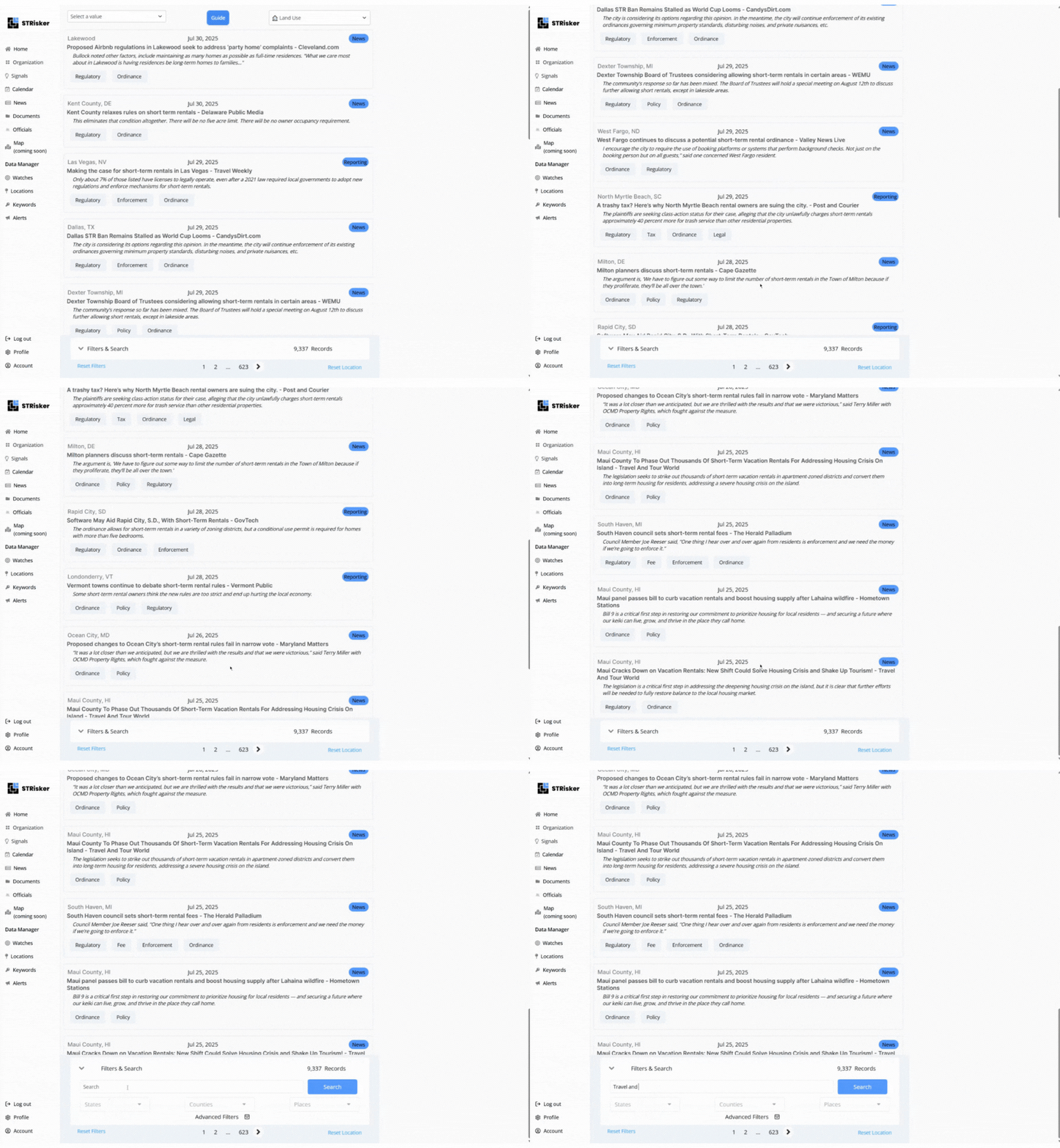
STRisker News Tracker
Trying to keep up with STR regulations across multiple cities and states? Our News Tracker makes it easier than ever. Filter by location, search a comprehensive database, and sort by impact level—this tool helps you focus on what matters most.
Public comment revealed a much larger STR footprint than many expected. Some estimates placed the number of short-term rentals in Princeton at around 150 units. Advocates argued that these rentals serve visiting scholars, families, and professionals tied to Princeton University, especially given the town’s limited hotel supply. Letters and testimony emphasized that longer stays often require kitchens, laundry, and living space that hotels don’t provide.




Still, Council members framed the ordinance as a statement about community priorities. Limiting STRs to principal residences, they argued, protects housing stability and prevents residential neighborhoods from becoming de facto commercial lodging zones.
As Princeton moves toward future zoning updates, questions remain about whether short-term rentals might eventually find a home outside residential districts. For now, the message is clear: STRs are welcome—but only when they fit within the fabric of year-round residential life.

Stay Updated with STRisker
STRisker offers tools and features to keep you updated with the Short-Term Rental movement across the U.S.
👍 We’d love your feedback.
We're always looking for ways to improve Bulletins.
Was this one useful to you? Other topics you'd like to see get covered?
✉️ Just reply directly to this email. We read and respond to every message!
-Will McClure
🙋 P.S.
Know someone else who should be reading this Bulletin? Feel free to forward this along. We want to make sure operators and stakeholders are aware of regulatory changes in their area.