
🎯 STRisker: Bulletin - Rhode Island
Rhode Island Faces New Tax Rules for Short Term Rentals in 2026

More Than a New Year’s Change: How Rhode Island’s 2026 Tax Laws Impact STRs

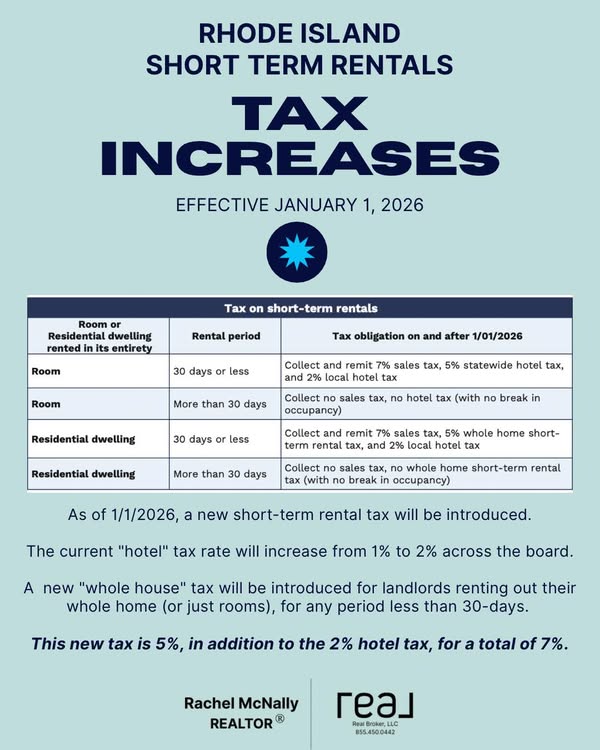
When the calendar flips to January 1, 2026, Rhode Island’s short-term rental landscape will officially change. New tax rules targeting short-term rentals especially entire-home listings will move from discussion to enforcement, marking a significant moment for hosts, communities, and travelers alike.
At the center of the update is a two-part tax expansion. First, the local hotel tax will double from 1% to 2%. Second, a new state tax will apply to entire-home short-term rentals, typically those rented for fewer than 30 days. These changes place short-term rentals on a more equal footing with hotels and traditional lodging, addressing long-standing concerns about fairness in the hospitality market.

Lawmakers backing the changes point to Rhode Island’s booming short-term rental industry and its impact on housing supply and neighborhoods. By increasing taxes, the state aims to generate additional revenue while also discouraging the conversion of long-term housing into full-time vacation rentals. Municipal leaders have also emphasized that the funds can support local services, tourism efforts, and housing initiatives.


For hosts, the new rules bring added responsibility. Property owners will need to ensure the correct taxes are being collected and remitted, whether through booking platforms or through their own payment processes. While many platforms offer automatic tax collection, hosts are still expected to verify compliance and stay updated on any local requirements tied to these changes.
STRisker Calendar Tracker
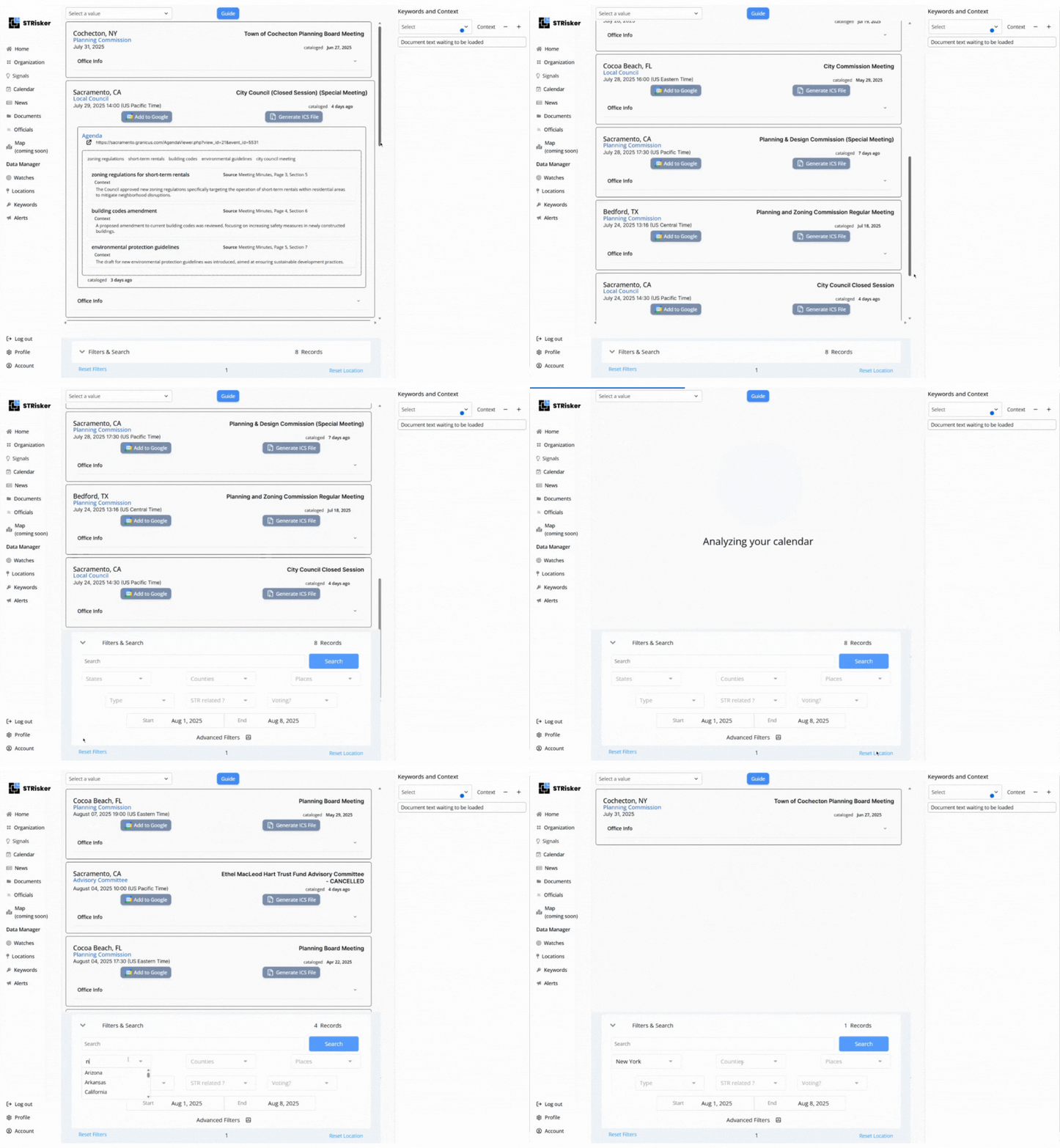
Staying ahead of STR regulations isn’t just about deadlines—it’s about knowing what’s coming. Our Calendar Tracker keeps you informed on upcoming meetings, key votes, and policy changes, so you never miss a critical update.
The ripple effect may also reach guests. Travelers booking entire-home short-term rentals could see slightly higher nightly rates once the new taxes are applied. While not expected to drastically change booking behavior, the increase reinforces that short-term rentals are now firmly part of Rhode Island’s regulated lodging economy.
As the January 1 enforcement date approaches, hosts are advised to review their listings, consult platform policies, and stay alert for guidance from state or local officials.
Stay Updated with STRisker
STRisker offers tools and features to keep you updated with the Short-Term Rental movement across the U.S.
👍 We’d love your feedback.
We're always looking for ways to improve Bulletins.
Was this one useful to you? Other topics you'd like to see get covered?
✉️ Just reply directly to this email. We read and respond to every message!
-Will McClure
🙋 P.S.
Know someone else who should be reading this Bulletin? Feel free to forward this along. We want to make sure operators and stakeholders are aware of regulatory changes in their area.