
🎯 STRisker: Bulletin - Victoria, Australia
Airbnb Levy Meets a Market Wall: Why Victoria’s Short-Stay Boom Has Flatlined


Just a Plateau: Inside Victoria’s Stalled Short-Term Rentals
Victoria’s short-term rental market has officially hit pause, and the timing couldn’t be more awkward. Just as the state’s new 7.5% short-stay levy was meant to start delivering a steady funding stream for social housing, growth across platforms like Airbnb and Stayz has stalled.
According to AirDNA data, the average number of short-stay listings across Victoria barely moved in 2025, sitting at roughly 43,735 properties per day virtually unchanged from the year before.
That flatline followed a strong post-pandemic surge, with listings jumping 22% in 2023 and another 12% in 2024. But in 2025, the momentum disappeared. While some hosts point to the new levy as a deterrent, analysts say the real story is simpler, demand has cooled. Accommodation demand growth slowed to just 2% in 2025, creating a market where supply now outweighs demand. Lower occupancy rates have made many potential hosts think twice about entering the space.


The levy itself, introduced in January 2025 and announced two years earlier, applies to stays under 28 days. The government positioned it as a two-for-one policy encouraging property owners to move listings back into the long-term rental pool while raising money for social and affordable housing through Homes Victoria. The target? Around $75 million a year, with a quarter earmarked for regional communities.

Meanwhile, the hoped-for shift from short-term to long-term rentals hasn’t materialized. Research from the University of Canberra suggests levies alone rarely convince hosts to change course. Many short-stay owners use their properties personally or plan to move into them later, making long-term leases unattractive especially under rental laws they fear could limit future flexibility.
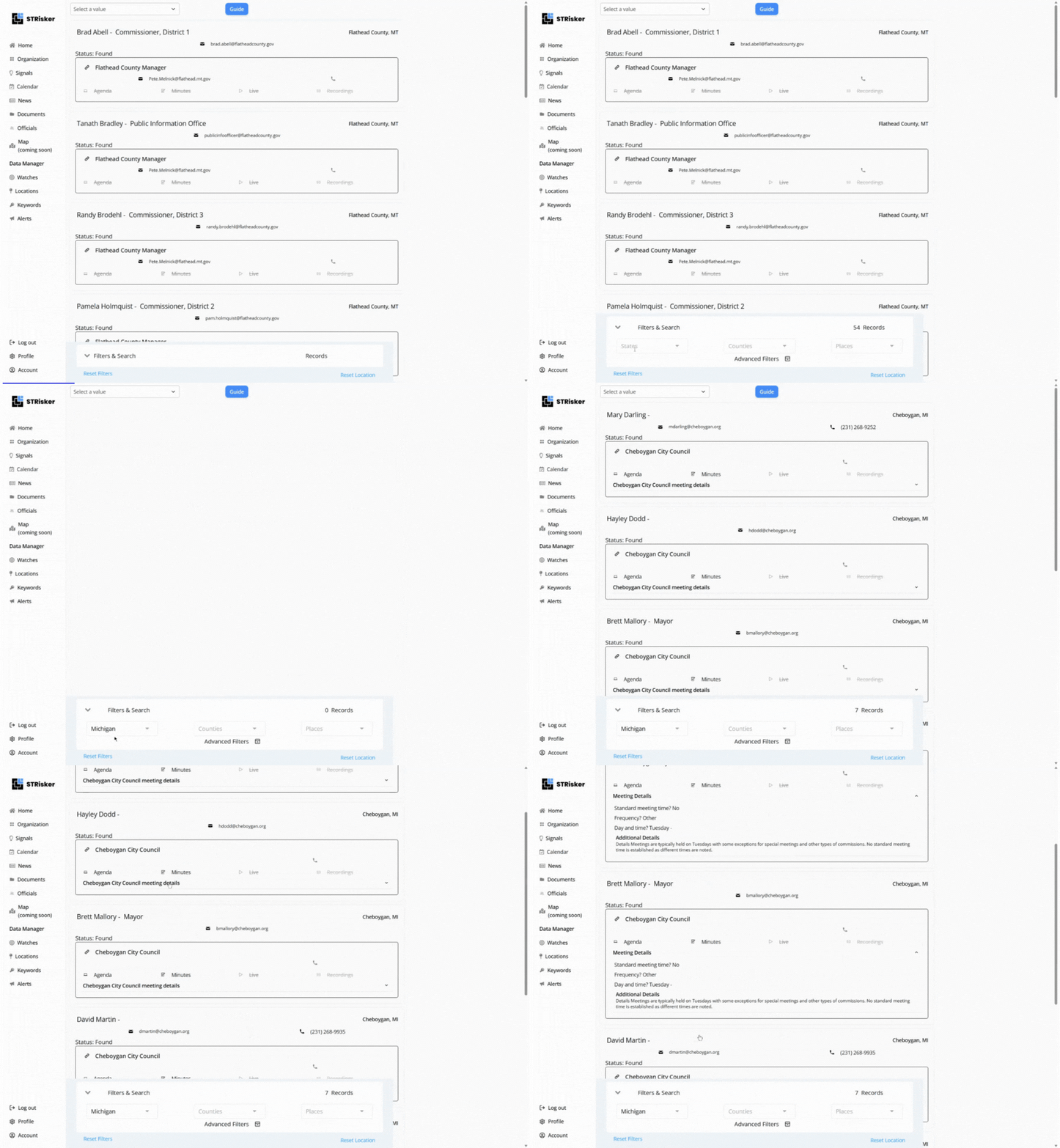
STRisker Government Office Dashboard
Trying to keep up with the main players in the STR game? Know your councilmembers, commissioners, committee chairs, and key staff that are part of the process.
State data backs up the concern, showing active rental bonds continued to decline in 2025, signaling fewer long-term rentals overall. Political debate is heating up, with the opposition labelling the levy a revenue grab and promising repeal, while the government maintains it’s part of a broader housing supply strategy.
For now, Victoria’s short-stay market isn’t shrinking, but it’s no longer growing either. And that reality may reshape expectations around what the levy can truly deliver.
Stay Updated with STRisker
STRisker offers tools and features to keep you updated with the Short-Term Rental movement across the U.S.
👍 We’d love your feedback.
We're always looking for ways to improve Bulletins.
Was this one useful to you? Other topics you'd like to see get covered?
✉️ Just reply directly to this email. We read and respond to every message!
-Will McClure
🙋 P.S.
Know someone else who should be reading this Bulletin? Feel free to forward this along. We want to make sure operators and stakeholders are aware of regulatory changes in their area.