
US State Short-Term Rental Highlights
A Closer Look at the Evolving State-level Policies on Short-term Rentals


Short-term rentals are continually transforming the way people travel and live, reshaping communities across the United States. What began as a niche option for visitors has evolved into a mainstream tourism model, sparking debates over affordability, neighborhood character, and local governance.
States have responded by crafting policies that seek to balance opportunity with oversight, addressing issues of taxation, zoning, and housing supply. Below is an overview of the latest state-level policy proposals on short-term rental regulation.

US State Short-Term Rental Highlights
A Closer Look at the Evolving State-level Policies on Short-term Rentals
| State | Local Control Expansion | State Preemption | Taxation | Safety Regulation | Platform Accountability | Housing Supply / ADU |
|---|---|---|---|---|---|---|
| Arizona | HB 2429 (limited) | SB 1350 (strong preemption) | Hobbs’ $3.50 nightly fee | — | — | SB 1105 (ADU restrictions) |
| Colorado | HB 36 (vacancy tax authority) | — | Vacancy tax (STRs excluded) | — | — | Housing supply focus |
| Connecticut | — | — | Local STR tax up to 2.75% | — | Statewide registry | — |
| Florida | — | — | — | SB 658 (pool/water safety) | — | SB 48 (ADU legalization) |
| Hawaii | HB 1590 (local enforcement tools) | — | Green Fee + TAT increases | — | Platform tax collection + enforcement | — |
| Idaho | SB 1263 (more local authority) | HB 583 (strong preemption) | — | Basic safety requirements | — | — |
| Kentucky | — | SB 112 (removes local zoning tools) | — | — | — | — |
| Maryland | — | — | — | Statewide STR safety act | Platform verification required | — |
| Missouri | — | — | Residential tax classification fix | — | — | — |
| Ohio | — | SB 104 (major preemption) | — | — | — | — |
| Oregon | — | — | HB 4134 (lodging tax increase) | — | — | — |
| Pennsylvania | Local flexibility preserved | — | — | Safety standards in HB 2303 | Countywide registries + contacts | — |
| Rhode Island | — | — | Hotel tax doubled + new STR tax | — | — | — |
| Tennessee | — | Private Property Vesting Rights (limits STR regulation) | — | — | — | — |
| Washington | — | — | Local STR tax up to 4% | — | — | — |
🏜️ Arizona
Arizona remains one of the most contested battlegrounds for short-term rental (STR) regulation. A unanimous Court of Appeals ruling reaffirmed SB 1350, the 2017 law that bars cities from banning or broadly restricting STRs, striking down Sedona’s attempt to block mobile home park conversions into vacation rentals.
SB 1350
Governor Katie Hobbs has proposed a $3.50 nightly fee on STR stays to fund the Arizona Affordability Fund, which would support utility relief, home weatherization, and affordable housing.

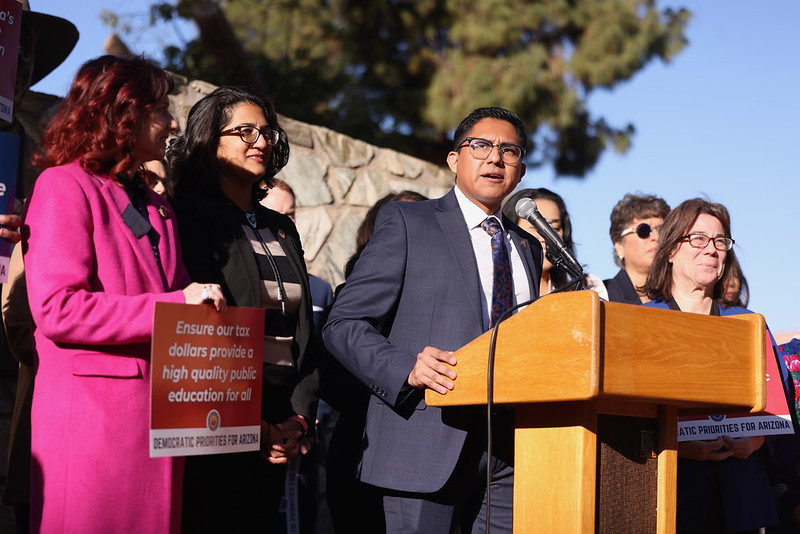
Meanwhile, Senate Majority Leader John Kavanagh introduced SB 1105, which would allow cities and counties to prohibit accessory dwelling units (ADUs) from being used as STRs, ensuring they serve long-term housing needs.
SB 1105
UPDATE as of 04/08/2026: A proposed Arizona law, House Bill 2429, to tighten short-term rental oversight is unlikely to move forward this year after missing its chance for a Senate hearing.
The bill included provisions for occupancy limits, stronger enforcement against problematic rentals, and mandatory background checks for guests. Although it passed the House and was considered a compromise among stakeholders, delays in the process prevented further action. The outcome leaves current regulations in place and highlights continued challenges in advancing statewide short-term rental reforms.
Original: The Arizona House has approved HB 2429, giving cities limited new oversight of short-term rentals while stopping short of allowing caps on the number or placement of properties. The bill permits local governments to impose occupancy limits (two adults per bedroom plus two more, excluding children) and makes it easier to suspend licenses for violations. Originally, the measure would have allowed cities to restrict STR density and numbers, but those provisions were dropped after opposition from the Realtors Association and Airbnb.
HB 2429
Arizona Senate Bill 1076 (2026) proposes new restrictions on vacation rentals by setting limits on the maximum number of properties and requiring minimum distance between them. The bill is currently under consideration in the Senate Government Institutions Committee.
HB 1076
🏔️ Colorado
Colorado lawmakers have introduced House Bill 36, which would give local governments the authority to ask voters to approve vacancy taxes on homes left empty for much of the year. The bill sponsored by Brianna Titone and Elizabeth Velasco was postponed indefinitely during a House Committee on Finance committee meeting on February 9th.


The measure was aimed at resort communities where vacancy rates exceed 40% and in some counties reach 70%, contributing to severe housing shortages for local workers. Revenue from the tax would fund affordable housing initiatives. Importantly, the bill explicitly excludes short-term rentals from being classified as “vacant homes."
🏛️ Connecticut
Connecticut lawmakers are considering HB 5536, a proposal that would create a statewide registry for short‑term rentals and allow municipalities to impose an additional local tax of up to 2.75% on STR stays.
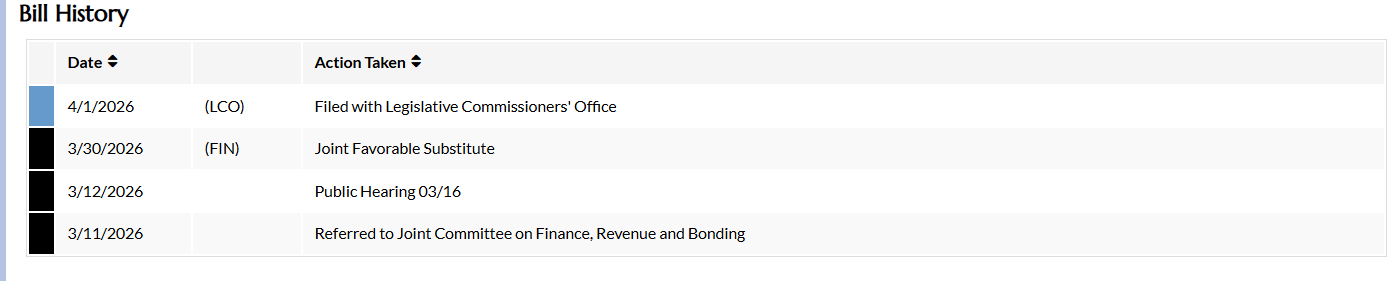
HB 5536
The bill would require Airbnb, Vrbo, and individual operators to register with the state and report activity data.
🏖️ Florida
Florida lawmakers are moving forward with Senate Bill 48, a unanimously approved measure that would require local governments to allow accessory dwelling units (ADUs) in designated areas and permit homeowners to rent out portions of their homes. SB 48 would compel cities and counties to adopt ordinances enabling ADU construction, giving homeowners the ability to create small rental units that can help offset mortgage costs while providing lower‑cost housing for tenants such as seniors, students, workers on fixed incomes, and residents priced out of traditional rentals.

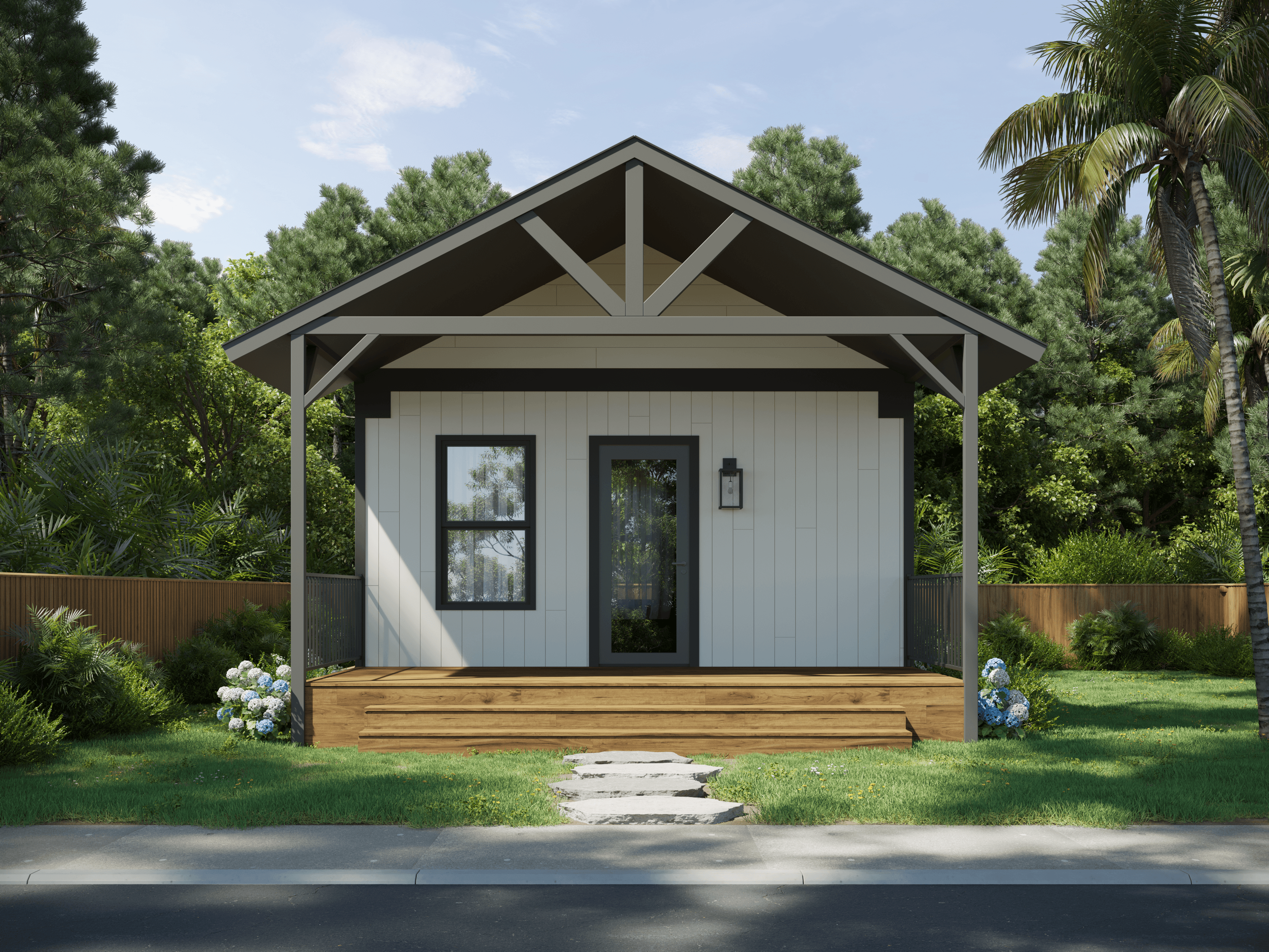

A similar measure failed last year in the final hours of session due to disagreements over STR use, and the revived bill again includes provisions addressing vacation rental regulation.
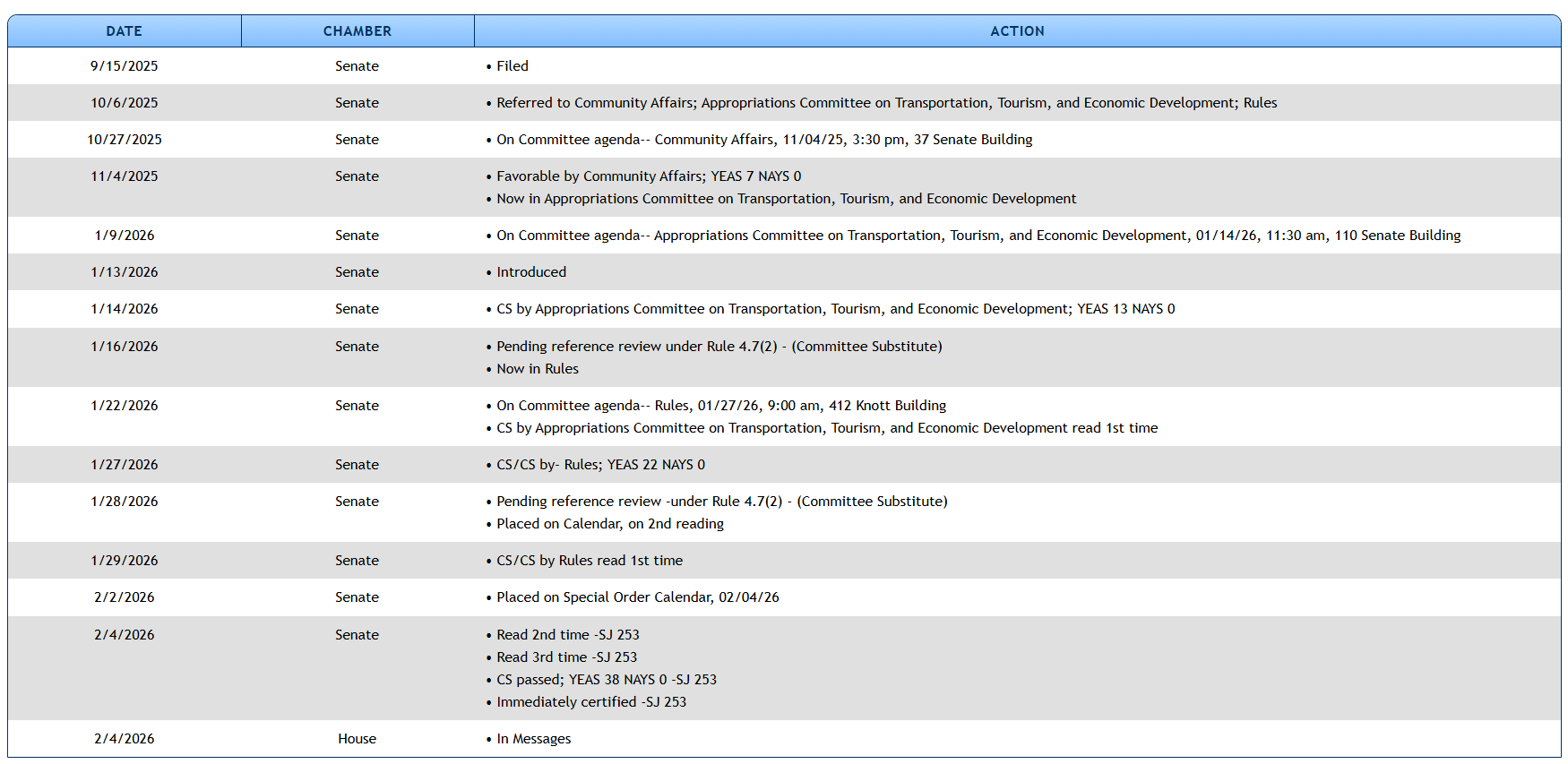
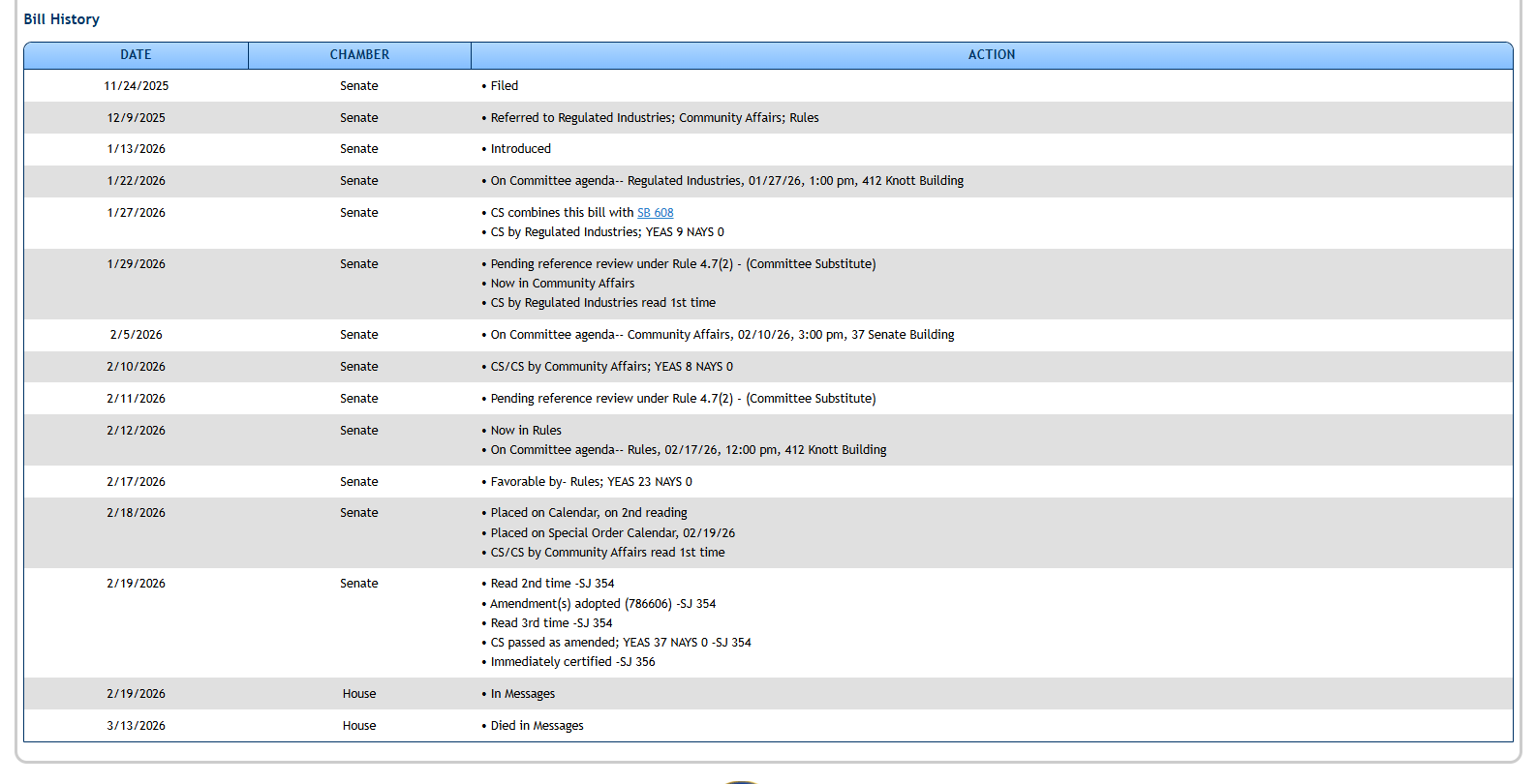
Separately, the Florida Senate has unanimously approved bipartisan legislation requiring vacation rental homes with pools or any body of water within 150 feet to install at least one safety feature, such as a fence, alarm, or pool cover. The measure allows the state to suspend or revoke rental licenses or fine owners who fail to comply.

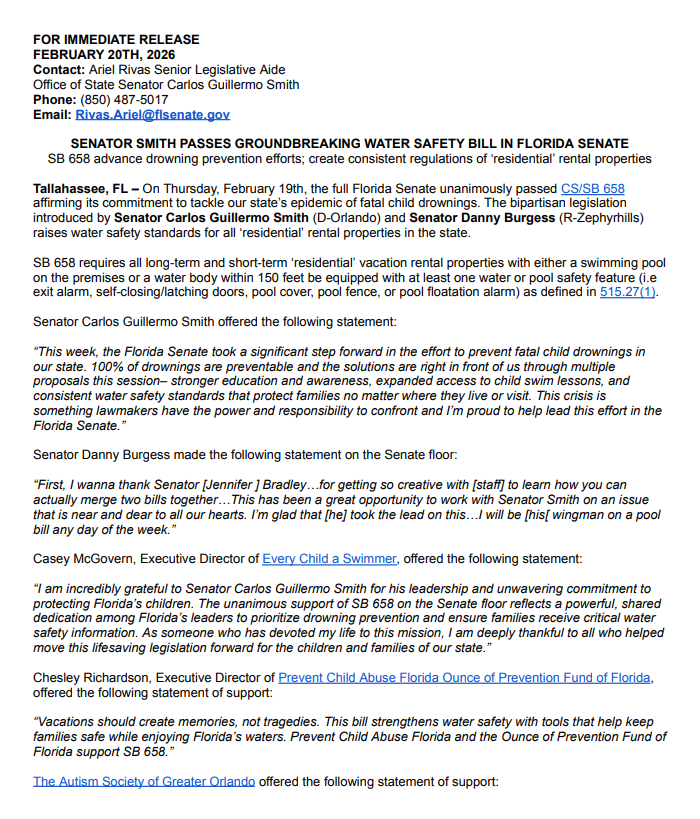
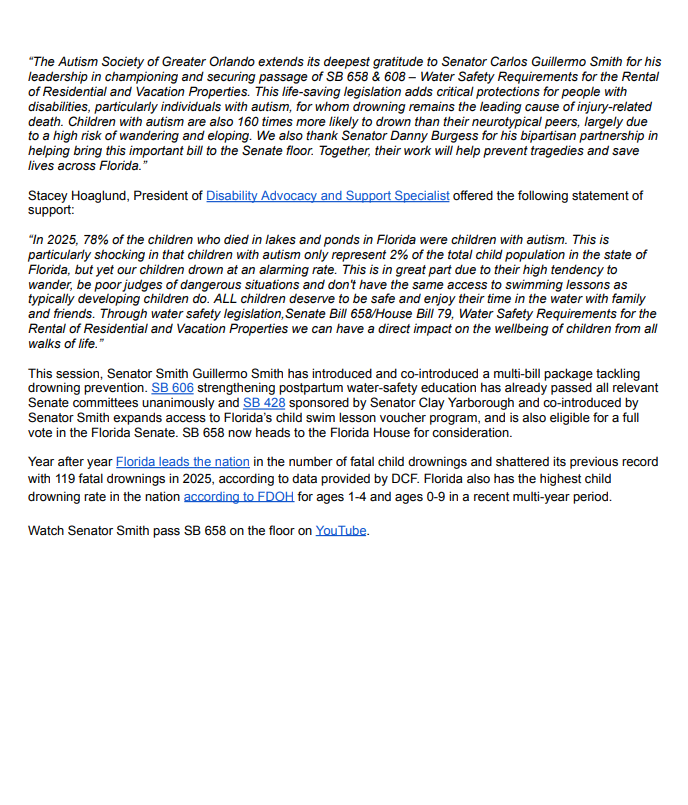
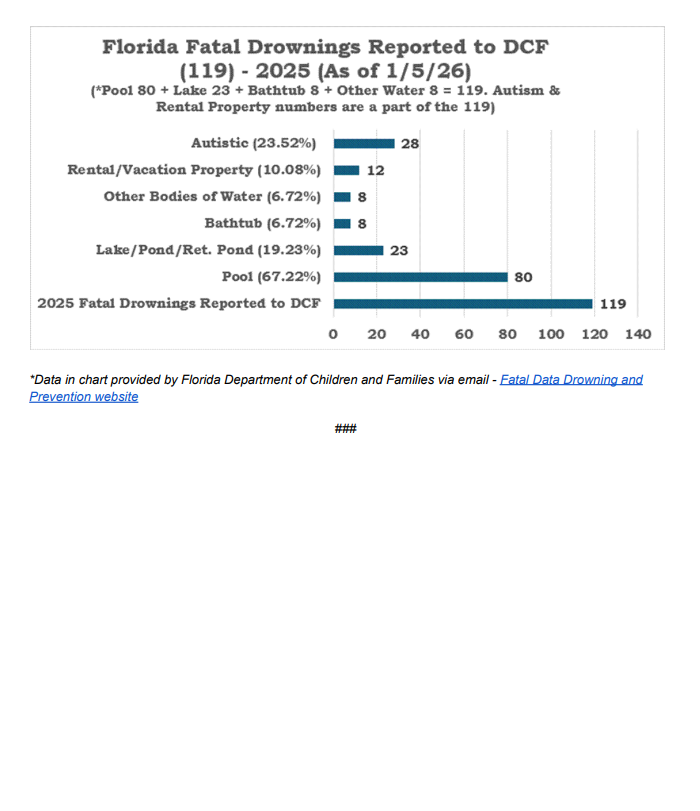
SENATOR SMITH PASSES GROUNDBREAKING WATER SAFETY BILL IN FLORIDA SENATE
🌺 Hawaii
Hawaii’s new climate-focused tourism tax, known as the “Green Fee,” is reshaping visitor costs and sparking legal battles. The law expands the Transient Accommodation Tax (TAT) to include cruise passengers for the first time, applying an 11% levy on prorated cruise fares while ships are in state waters, with counties authorized to add up to 3% more.
Hotel and vacation rental taxes also rise by 0.75%, meaning lodging taxes can reach 14% or higher depending on location. State officials estimate the measure could generate nearly $100 million annually for climate resilience projects such as shoreline preservation and wildfire mitigation.
House Bill 1590 would shift responsibility for vacation rental enforcement and tax collection directly onto platforms like Airbnb and VRBO. The measure allows counties to use time-stamped screenshots of listings as evidence in enforcement cases, making it easier to prove illegal rentals without lengthy inspections. It also authorizes liens and foreclosures against repeat violators.
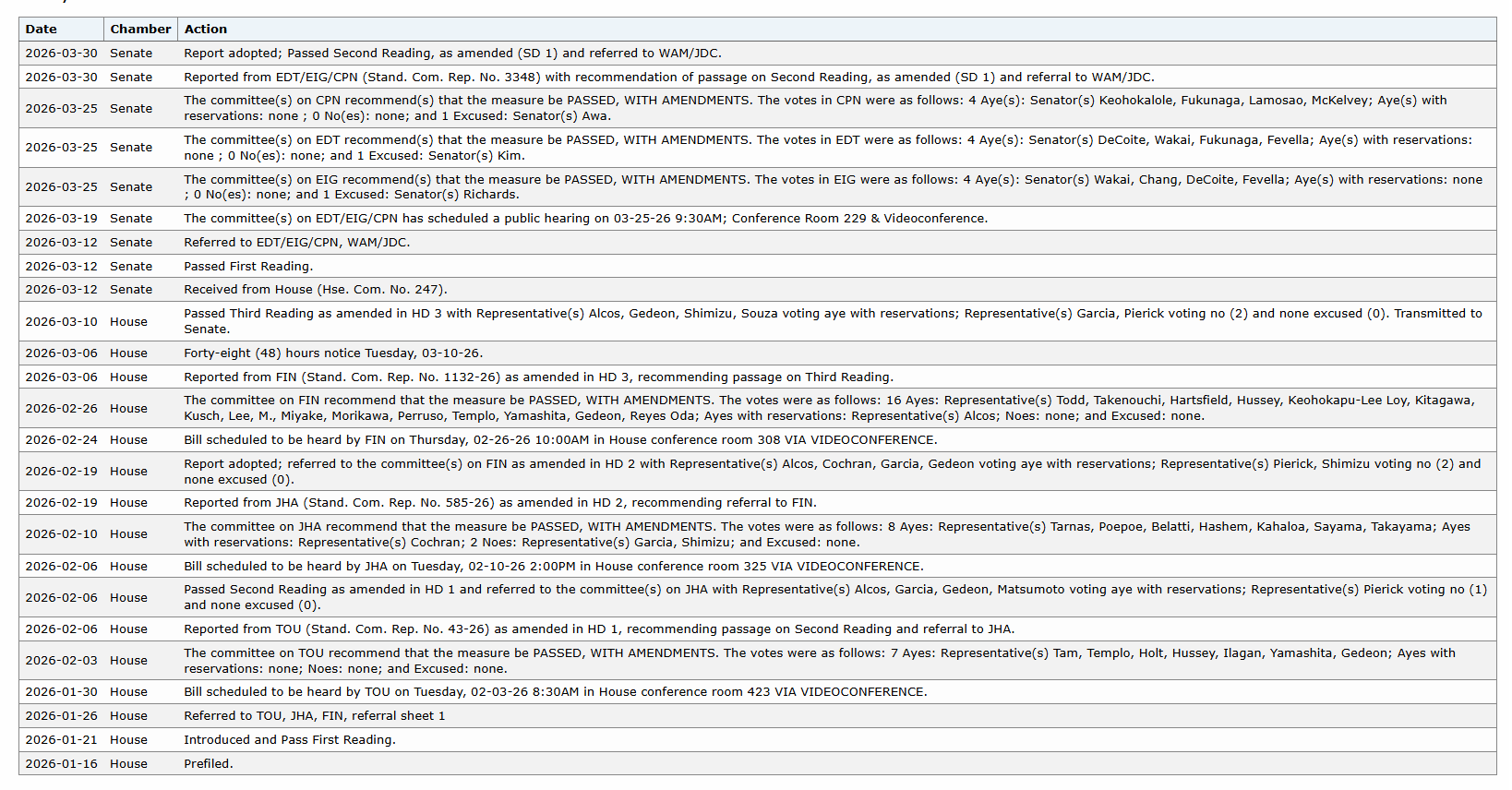
On the financial side, HB 1590 requires platforms to register as tax collection agents and remit Hawaiʻi’s General Excise and Transient Accommodations Taxes. The bill further directs the Hawaiʻi Tourism Authority to discourage illegal rentals in its messaging. The bill now awaits full legislative approval, with tax reporting requirements slated to begin January 1, 2027 if enacted.
🏞️ Idaho
Idaho lawmakers are debating how much authority cities and counties should have over short-term rentals. House Bill 583, now on Gov. Brad Little’s desk, would restrict how cities and counties regulate short-term rentals such as Airbnbs and VRBOs.
HB 583
The measure, passed by the Senate in a 23–12 vote after clearing the House, requires that STRs be treated the same as single-family residences, with no cap on rental days. Under the bill, any requirements must apply equally to single-family homes, preventing cities from singling out STRs with stricter rules. Localities could still mandate basic safety measures such as smoke detectors, fire extinguishers, carbon monoxide detectors, and escape ladders but not additional inspections, parking mandates, or costly fire protection upgrades.
Meanwhile, the Senate is considering SB 1263, a competing proposal that would give cities and counties more leeway to regulate STRs.
SB 1263
🏇 Kentucky
Kentucky lawmakers are considering Senate Bill 112, which would strip local governments of key regulatory powers over short-term rentals. The bill prohibits cities and counties from requiring conditional use permits or imposing density-based restrictions, effectively preempting local zoning boards from controlling where and how STRs operate. Local officials in Nelson County, La Grange, Glasgow, and Louisville warn this would undermine community oversight, eliminate public input, and force major rewrites of zoning codes.
Supporters of SB112 frame it as protecting property rights and reducing regulatory burdens, but critics say it sets a “dangerous precedent” by nullifying local standards and destabilizing housing markets. While the bill allows governments to require permits for STRs, it removes the ability to tailor rules to local conditions.
 Kentucky Legislative Research Commission
💐Maryland
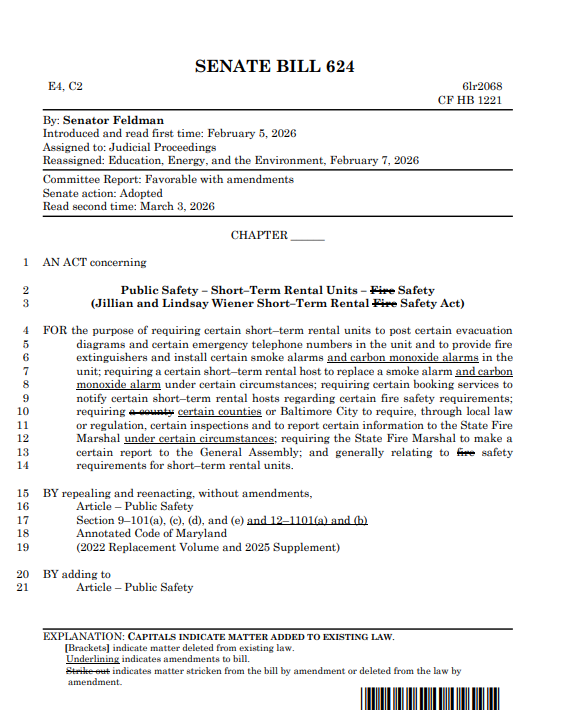
Maryland lawmakers have approved the Jillian and Lindsay Wiener Short‑Term Rental Safety Act, a bipartisan bill that creates the country’s first statewide safety requirements for vacation rentals. The law mandates that all short‑term rentals be equipped with working smoke alarms, carbon monoxide detectors, a fire extinguisher, a visible evacuation plan, and emergency contact information, with counties and Baltimore City responsible for annual inspections and enforcement. Booking platforms like Airbnb and Vrbo will also be required to verify that listings meet these standards.


🗃️ Missouri
With Kansas City preparing to host World Cup matches this summer, Missouri legislators are pushing to resolve long‑standing ambiguity over how short‑term rentals should be taxed.
Homeowners have faced inconsistent treatment across counties, with some assessors reclassifying STR properties from residential to commercial dramatically increasing tax bills and creating uncertainty for hosts planning to rent during the tournament.
Lawmakers have consolidated multiple proposals (SB 1066, SB 1088, HB 1768, and HB 1086) into a single effort to ensure STRs remain taxed at residential rates.
HB 1768
The House has already advanced its bill, and the Senate version is queued for a vote, but lawmakers must act before the second week of May to finalize the fix.
🎢 Ohio
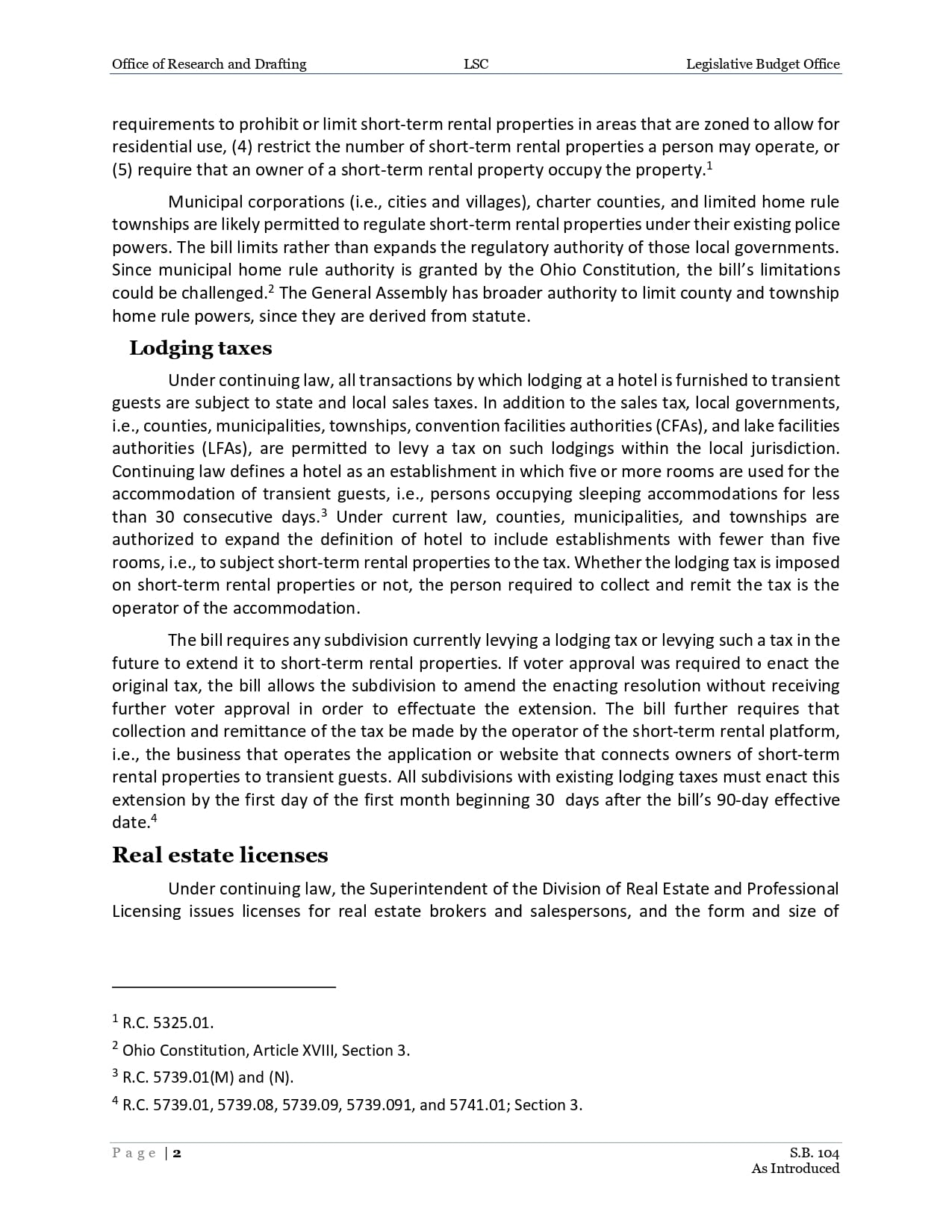
Ohio cities have adopted a patchwork of rules for short-term rentals: Cleveland requires permits, Hudson mandates neighbor notification, Toledo enforces a 45-minute local contact rule, and some suburbs like Parma Heights and Shaker Heights have banned STRs outright.
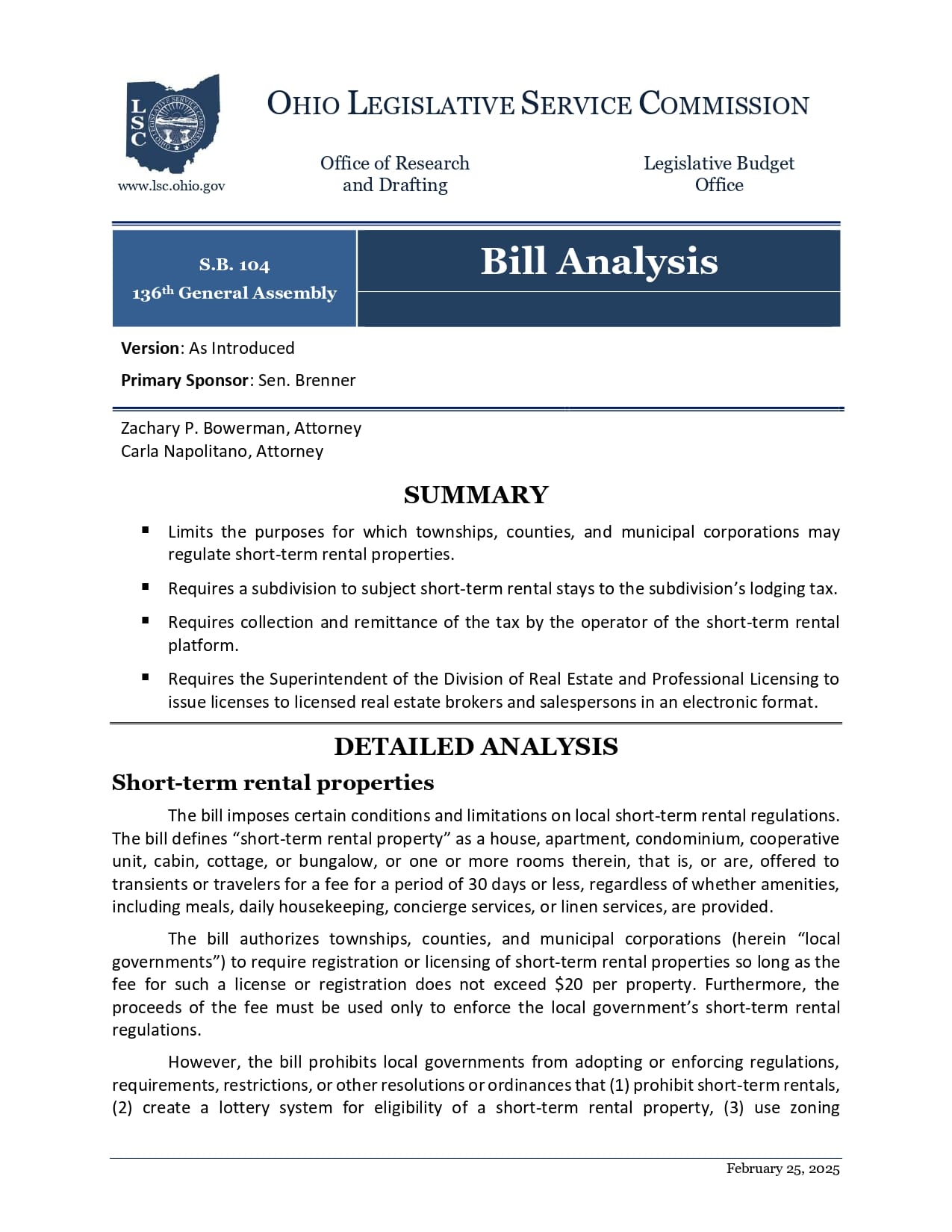
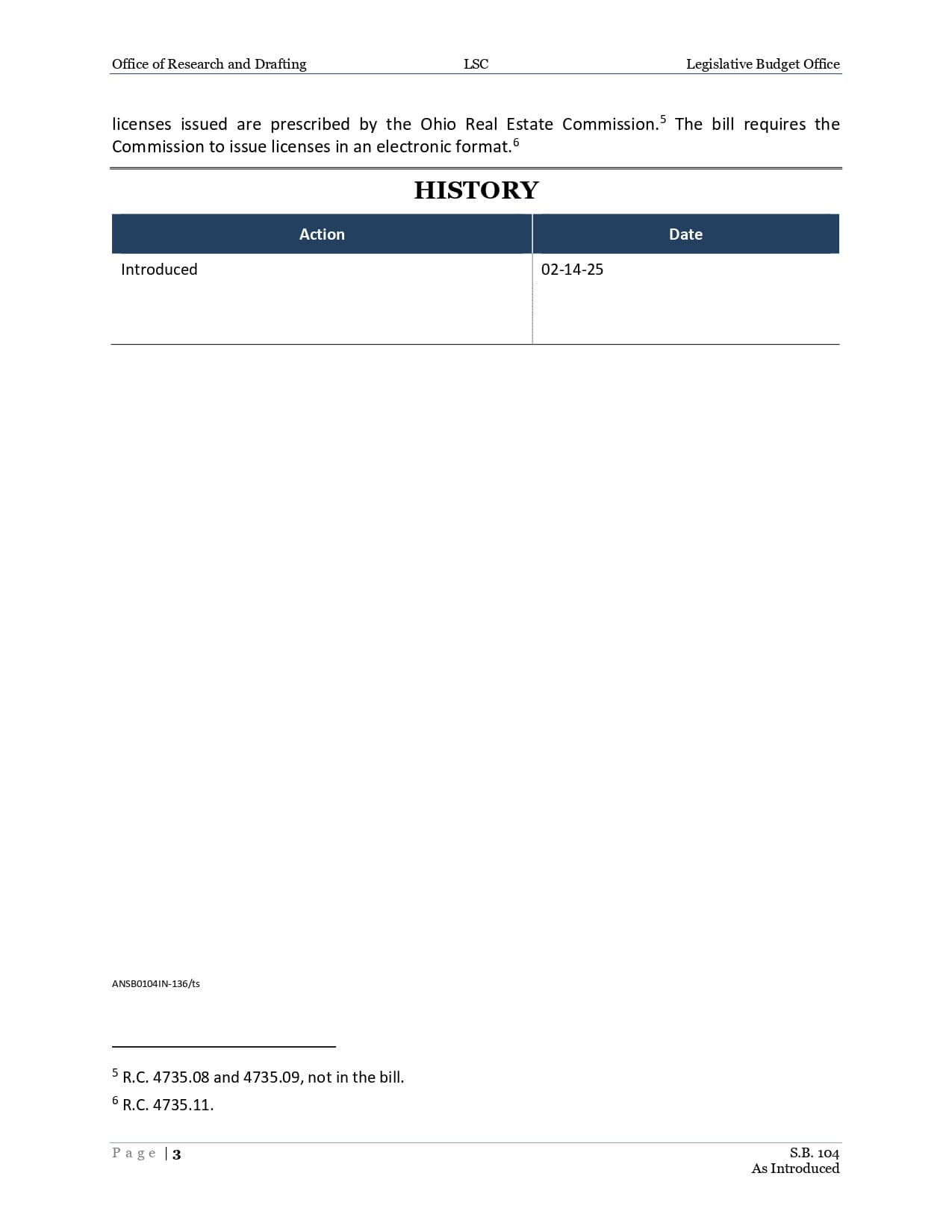
In response, Sen. Andrew Brenner has reintroduced Senate Bill 104, a preemption measure that would sharply limit local authority. The bill, backed by real estate and business groups, prohibits cities from banning STRs, restricting the number of units, requiring owner occupancy, or using lotteries to allocate permits. It allows only minimal licensing or registration fees capped at $20 per property.
SB 104
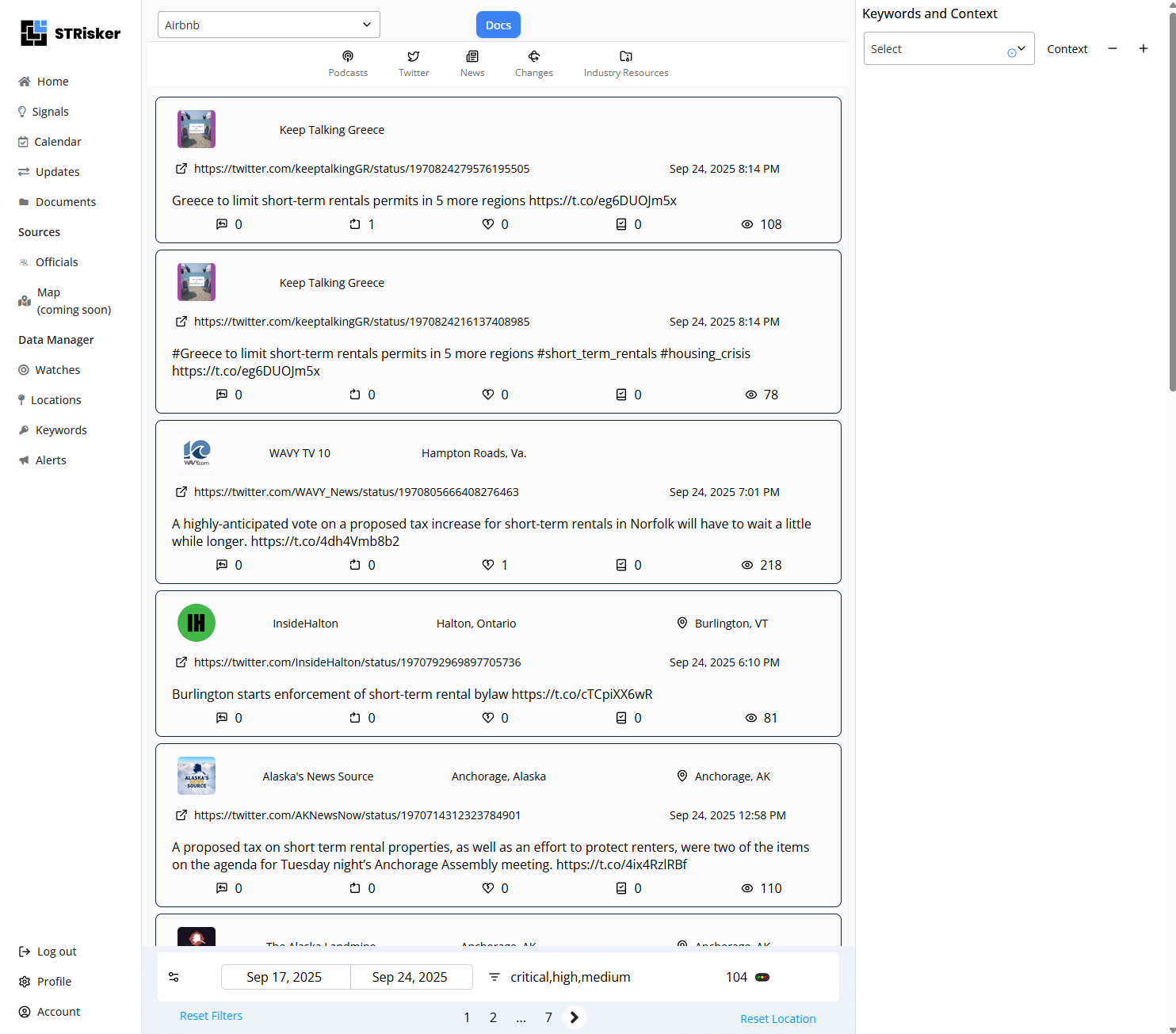
Social Listening📱: Twitter
STRisker’s Twitter Signal pulls real-time posts from officials, agencies, advocacy groups, and local influencers—so you see emerging sentiment and policy signals the moment they surface. Track conversations by place, people, and topics, then zero in on what actually matters.
🚴♀️Oregon
Oregon lawmakers have passed HB 4134, raising the statewide lodging tax from 1.5% to 2.75%, a $38 million increase earmarked for conservation initiatives and reimbursements to ranchers for livestock losses tied to wolf activity.
HB 4134
Supporters say the measure represents a long‑overdue investment in protecting ecosystems and at‑risk species, while hospitality leaders warn the 83% tax hike adds pressure to an industry still struggling, particularly in Portland where hotel occupancy remains well below pre‑pandemic levels.
🏞️ Pennsylvania
Pennsylvania lawmakers have introduced HB 2303, a comprehensive proposal to establish uniform statewide rules for short‑term rentals while preserving local flexibility.
HB 2303
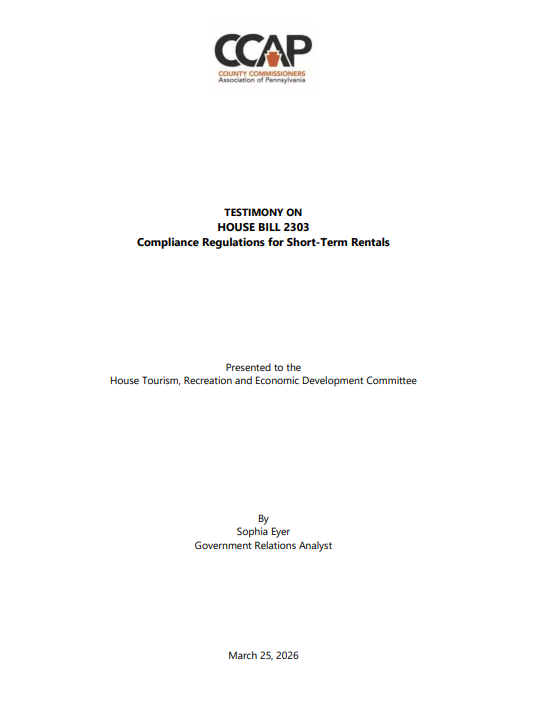
The bill stems from a Joint State Government Commission study ordered in 2024 after multiple violent incidents at STR properties, including one in Rep. Lindsay Powell’s district.
HB 2303 would create countywide registries, require each rental to designate a 24/7 responsible contact, and establish separate regulatory categories for homestays, vacation rentals, and corporate operators. It also sets baseline safety standards, with stricter requirements for larger‑scale operations.
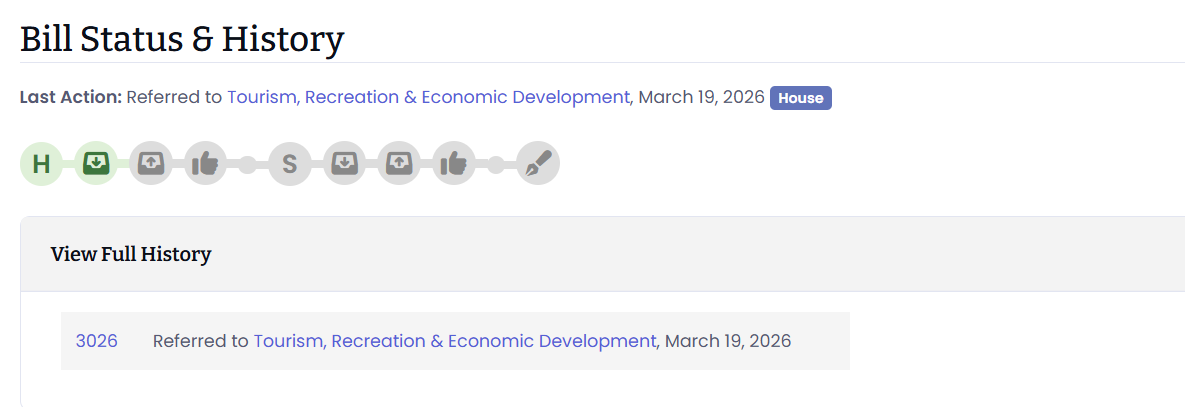
⛵ Rhode Island
Rhode Island is tightening regulations on short-term rentals as part of a broader set of laws taking effect in 2026. The local hotel tax will double from 1% to 2%, and a new state tax will apply specifically to entire-home rentals of fewer than 30 days.
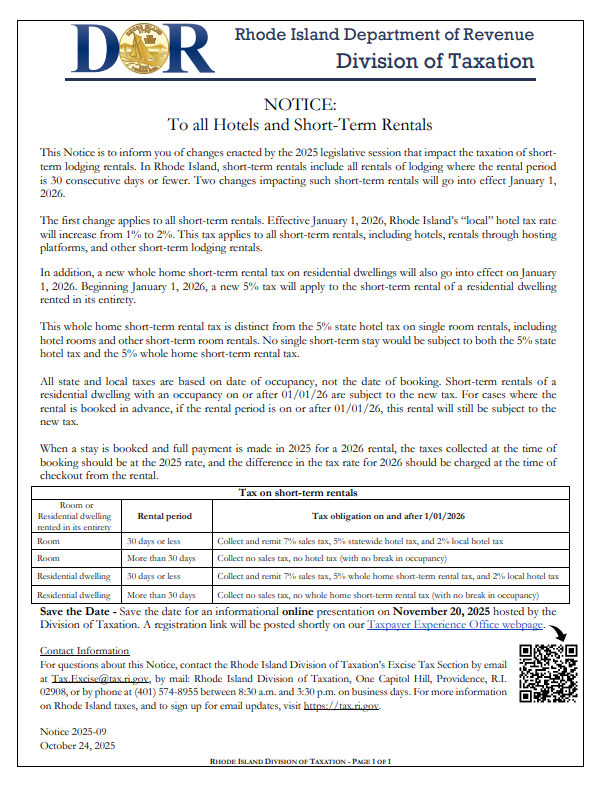
Property owners must ensure proper tax collection and remittance, often through booking platforms, while travelers can expect slightly higher nightly costs.
🎸 Tennessee
Tennessee’s proposed Private Property Vesting Rights of 2026 could significantly limit how cities and counties regulate short‑term rentals by requiring local governments to compensate property owners whenever new land‑use rules reduce property value.
Because STR restrictions such as caps, zoning limits, or neighborhood bans often affect revenue potential, experts warn the bill could expose counties to lawsuits from STR investors who argue that new rules diminish their expected earnings. Local officials say this would create a “freeze” on STR regulation statewide, making it financially risky to impose new limits even when residents demand action.
🍎 Washington
Washington lawmakers are reviving efforts to tax short-term rentals through Senate Bill 5576 and House Bill 2559, which would allow local governments to impose up to a 4% tax on STR bookings via platforms like Airbnb and Vrbo. The goal is to generate new housing funds in tourist-heavy areas where STRs reduce affordable housing availability. Airbnb strongly opposes the measure, arguing it unfairly burdens hosts and travelers while benefiting hotels, while Vrbo supports it as a balanced alternative to outright bans.
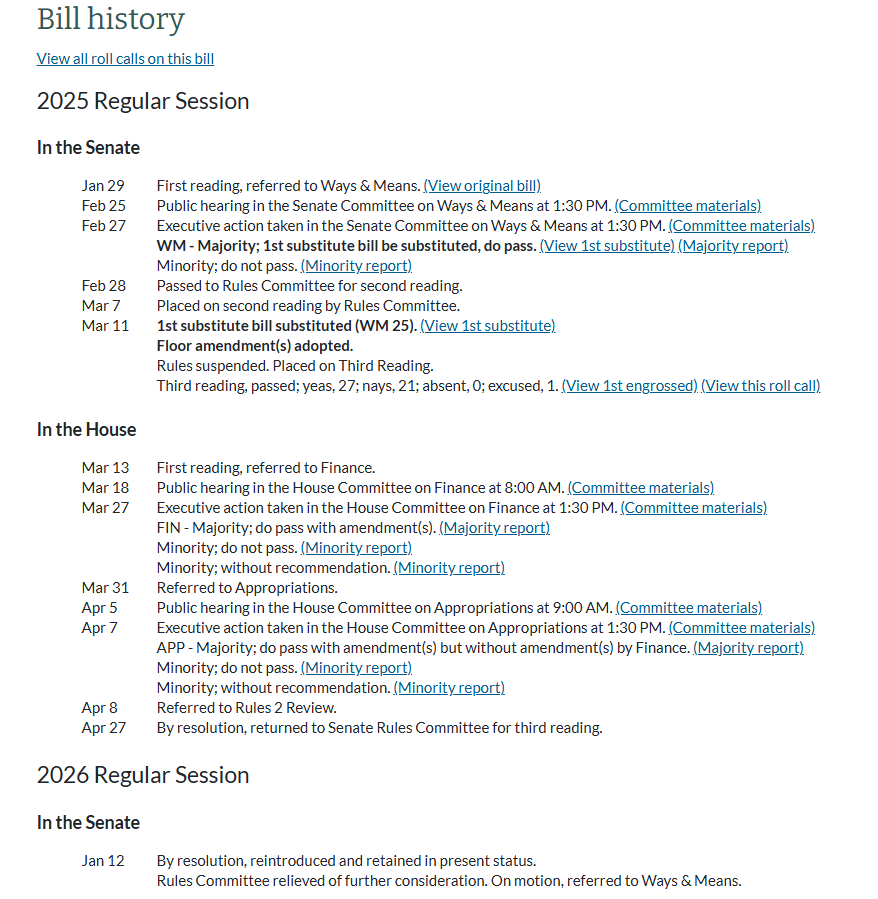
SB 5576
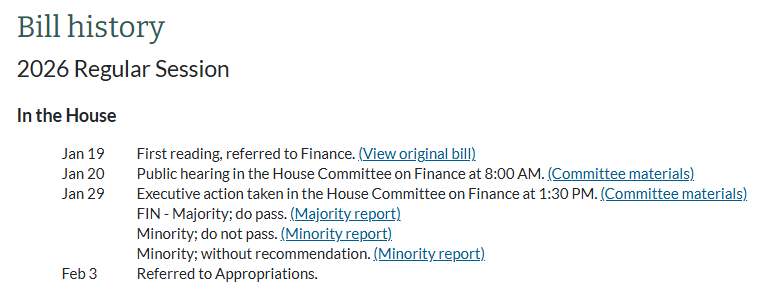
SB 2559
Separately, a new proposal would permit licensed STRs to offer adult guests complimentary cannabis prerolls, with operators paying a $75 annual permit fee and verifying age at check-in.
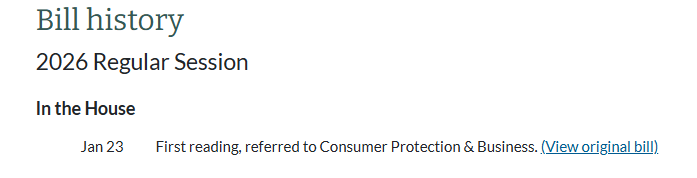
HB 2639
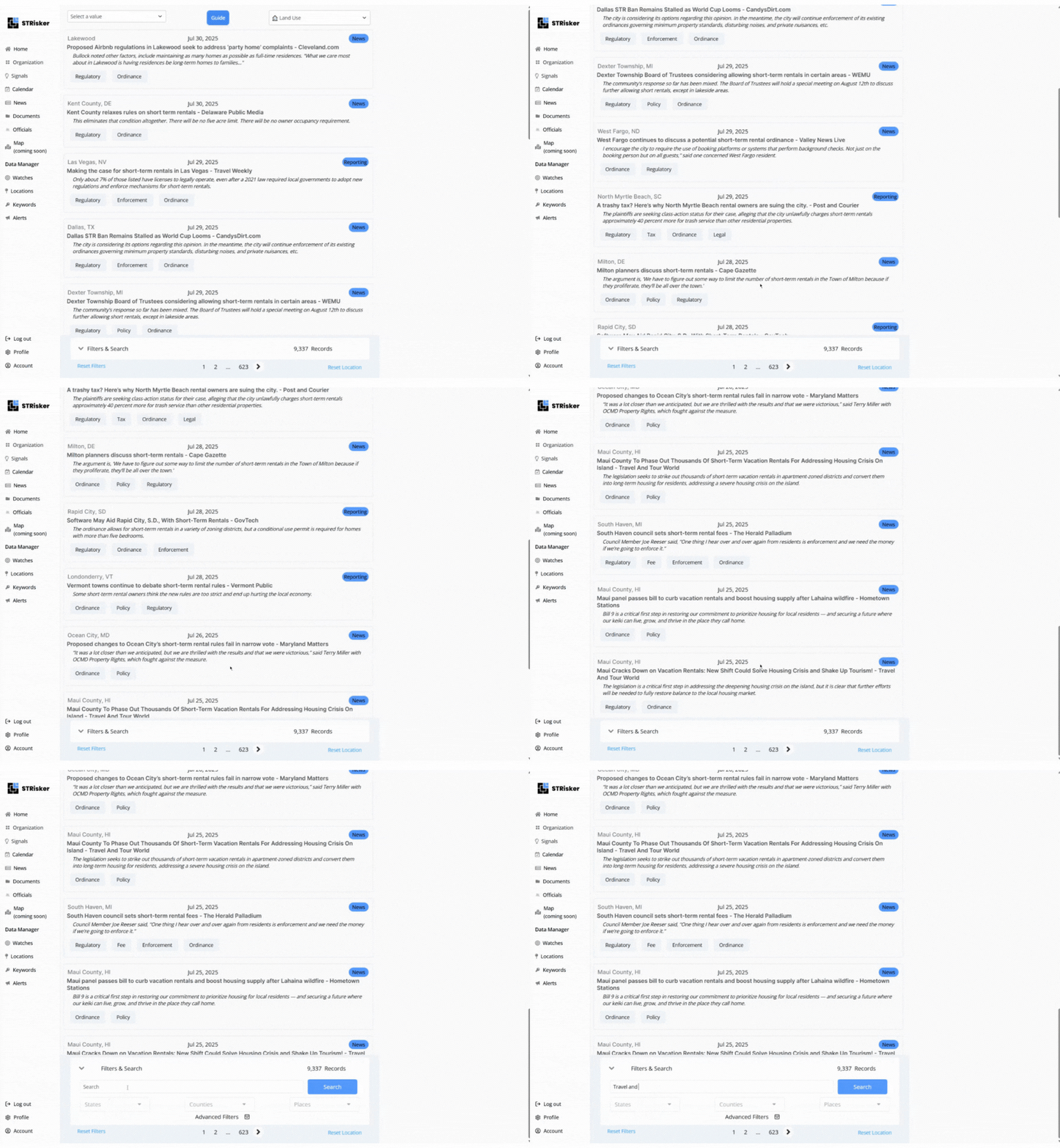
STRisker News Tracker
Trying to keep up with STR regulations across multiple cities and states? Our News Tracker makes it easier than ever. Filter by location, search a comprehensive database, and sort by impact level—this tool helps you focus on what matters most.
Stay Updated with STRisker
STRisker offers tools and features to keep you updated with the Short-Term Rental movement across the globe.
👍 We’d love your feedback.
Which stories hit? Which ones missed?
We're constantly refining Daily Notes to make it even more useful for you.
✉️ Just reply directly to this email. We read and respond to every message!
-Will McClure
🙋 P.S.
Know someone else who should be reading Daily Notes? Feel free to forward this along. We’re opening a few more spots.