
An Introduction to Data Center Zoning
Learn how local governments effectively use zoning codes to determine where data centers can be constructed, the required standards they must meet, and examples of locations with implemented data center zoning.
At A Glance 🔽
- Data center zoning is a set of local-use rules and regulations that determine where data center operations and developments can be built, whether by right, by conditional use, or through a special exception.
- Having zoning codes provides predictability for owners, protects nearby residents, ensures consistency in projects, and improves planning for taxes, revenue, and utilities.
- It also covers common requirements for Site and Building, Utilities and Environmental, and Operational Standards.
- There is an increase in the number of data center zoning regulations being adopted and updated, especially in municipalities with high data center demand.
Definition
Data center zoning is a set of land-use rules that a city or county applies to dictate where data centers can be constructed and used. This approval differs from past approvals for data centers, which were previously treated like regular industrial and commercial buildings. Many municipalities and local jurisdictions are now establishing their own zoning categories, overlay districts, or even conditional use processes. Data center zoning allows local officials to regulate factors like lot size, setbacks, noise, water use, and traffic for hyperscale or large-scale facilities.
The National League of Cities defined three different zoning approaches for data centers.
- By right: This refers to data center projects that fulfill all zoning requirements. They can begin without review or public hearings.
- By condition use: This pertains to projects that comply with specific conditions in zoning ordinances. They may require a public hearing and approval from the zoning board.
- By special exception: This applies to data center projects that may be approved even if they are not currently allowed under the existing zoning standards. Typically, this requires a public hearing and discretionary reviews.
➕Benefits
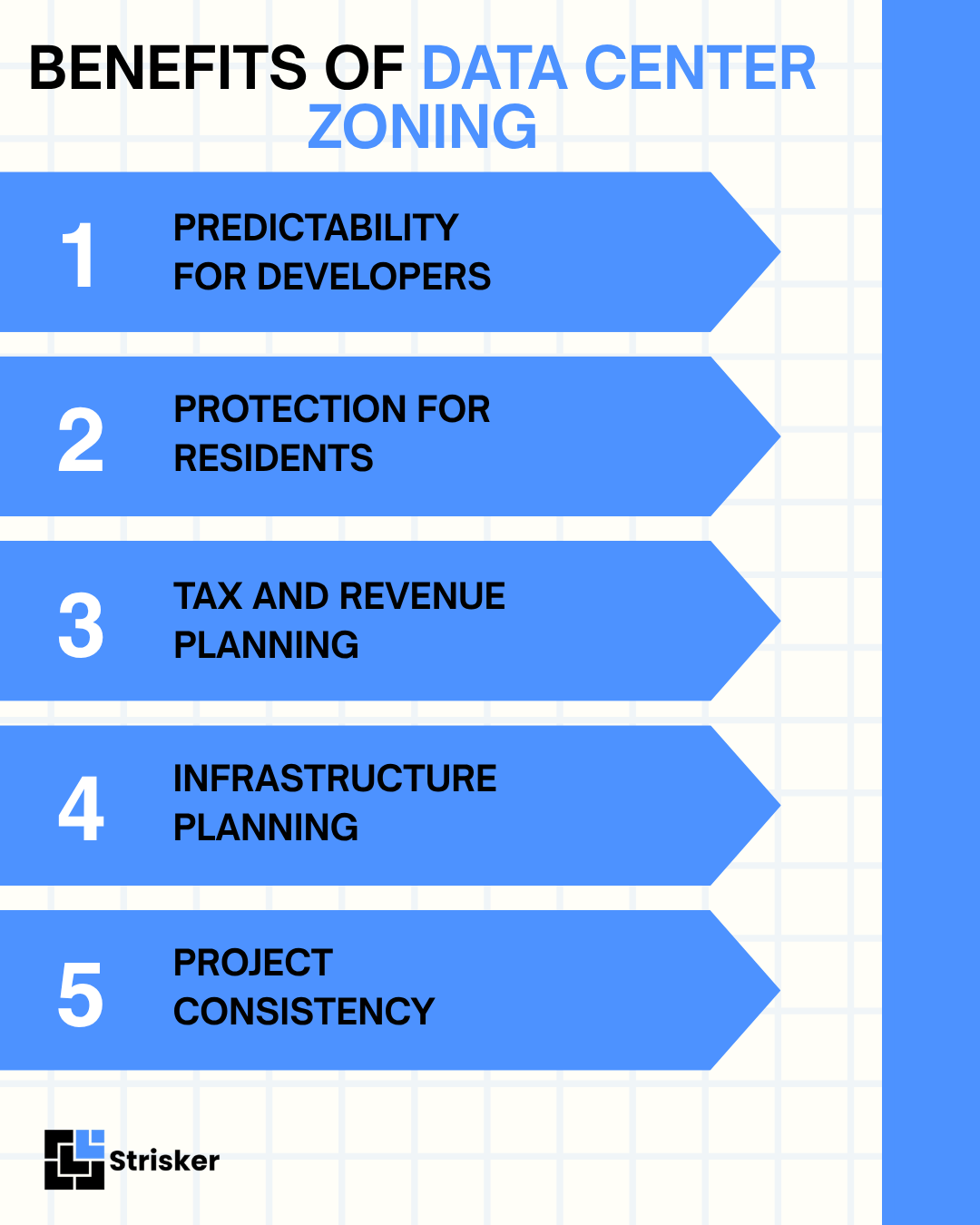
Data center zoning provides residents, developers, and local governments with a clear, organized framework, rather than relying on case-by-case negotiations. Some of the benefits of it include:
Predictability for Developers
Data center developers assess which projects meet the necessary criteria and identify any limitations or setbacks regarding their size. They also determine the required approvals based on the specifications outlined for a data center zoning category. This process helps minimize the risk of project delays or interruptions during the review phase.
Protection for Residents
Having a defined zoning category will establish standards for noise, buffering, and lighting, ensuring that data centers are kept away from residential areas. This will help prevent large data center facilities and equipment from negatively impacting the quality of life for nearby homes and schools.
Tax and Revenue Planning
Data centers offer significant property and equipment tax revenue. Zoning regulations designate these data centers for suitable industrial or commercial areas, allowing local jurisdictions to collect this revenue without disrupting other public services.
Infrastructure Planning
Some zoning regulations are linked to utility capacity, confirming the availability of power, water, and sewer services. This assists the municipality or local jurisdiction in confirming that a site selection can support the data center's load prior to granting approvals.
Project Consistency
While data center zoning regulations may vary between cities and counties, it is important to recognize that these rules apply uniformly to all data center applicants within their respective jurisdictions. This provides an objective standard without favoritism.
📋Data Center Zoning Requirements
Local data center zoning regulations generally address similar topics, although the specific boundaries can vary by jurisdiction. Below are some common requirements:
Site and Building Requirements
Utilities and Environmental Requirements
Operational Requirements
📍Locations with Zoning Codes
An increasing number of data center zoning regulations are being adopted and updated in regions with high data center demand. Here are some locations that have active and rejected zoning codes for data centers:
Loudoun County, Virginia
The county now requires a special exception for all new data center applications. Additionally, a legislative review and public hearings must take place before the planning commission and the board of supervisors can proceed. The county is currently drafting the second phase of its use-specific standards for data centers, substations, and generators.
Prince William County, Virginia
The county has established a Data Center Opportunity Zone Overlay District (DCOZOD) to determine areas where data centers can be built by right. If a proposed location falls outside this overlay or involves parcels that do not meet eligibility requirements, new data centers must go through a Special Use Permit process. This also includes public hearings before the Board of Supervisors. As of September 2026, the Board voted to lower the overlay by 62% (from about 9,700 to around 3,500 acres), which narrows where by-right development is allowed moving forward.
Albemarle County, Virginia
The county currently allows data centers up to 40,000 square feet by right in their industrial zoning. If a data center exceeds the established size limit, it requires a special use permit. Additionally, a draft ordinance proposed overlay districts for the Emerson/Rivanna Futures area and the Airport Industrial Area. This would allow for the construction of larger facilities, up to 500,000 square feet, by right. However, the county postponed the consideration of this draft in October 2025. As a result, these overlay allowances are not currently in effect.
DeKalb County, Georgia
The county’s rejected zoning text amendment categorizes data centers based on square footage and power demand, applying stricter standards to larger facilities. It also requires buffers and a review process depending on the project's scale. This was rejected last June 23, 2026, by the Board of Commissioners.
Nashville, Tennessee
In Davidson County, the zoning ordinance restricts data centers that are larger than 500,000 square feet. Data centers between 100,000 and 499,000 square feet also require a special-exception process and a public hearing and must be located in heavy industrial zones, away from homes and schools.
Groton, Connecticut
There is a 12,500-square-foot zoning cap in this town. They are also limited to industrial areas, must meet noise standards, must not use water-evaporation cooling, must utilize renewable energy, and must be at least 1,500 feet away from another data center.
Conclusion
Data center zoning is essential for determining where data centers can be built and used. It establishes the district regulations, approval processes, and standards that a project must meet before development can proceed. An increasing number of local governments are revising these zoning codes, which can include citywide overlay districts or parcel-specific special exceptions.
For developers, it's crucial to understand local zoning codes to verify the qualifications required for approvals. For residents, these zoning codes protect physical separation, environmental safeguards, and design standards regulating noise, light, and resource use. Strisker offers tools, features, and newsletters to keep you informed on new or revised data center zoning codes.
FAQs
How long does zoning approval for a data center take?
Zoning approvals usually take between 6 and 18 months, depending on the project's complexity and the selected approval pathway. Here are the estimated durations based on the zoning approach:
- Permitted By-Right - 1 to 3 months
- Conditional or Special Use Permit - 6 to 12 months
- With Text Amendments - 4 to 12 months
- Rezoning - 9 to 18 months
Can residents challenge a proposed data center?
Residents can challenge a proposed data center through the following:
- Participating in local zoning hearings by submitting written objections and presenting evidence for violations of the projects
- Intervening in public utility proceedings by contesting changes in rates and the allocation of infrastructure costs.
- Filing legal lawsuits due to inadequate environmental impact reviews and insufficient public notice
How can a developer appeal a data center zoning denial?
A developer, likewise, can also appeal the data center zoning denial by considering these steps:
- Administrative appeal
- Validity challenge
- Vested rights
- Court review
Stay Updated with Strisker!
Strisker offers tools and features to keep you updated with the Short Term Rental movement (and now Data Centers!) movement across the world.
👍 We’d love your feedback.
We're always looking for ways to improve our content.
Was this one useful to you? Other topics you'd like to see get covered?
✉️ Just reply directly to this email. We read and respond to every message!
-Will McClure
🙋 P.S.
Know someone else who might be interested in this content? Feel free to forward this along.