
Bulletin - Denison, TX News Today
Platform collection began November 1 and replaces monthly city filings for covered bookings while hosts who take direct reservations must still report and pay the city by the 15th of each month



Airbnb, Vrbo and Expedia Now Collect Denison's 7% Hotel Occupancy Tax on Short-Term Rentals
Platform collection began November 1 and replaces monthly city filings for covered bookings while hosts who take direct reservations must still report and pay the city by the 15th of each month
Photo from https://www.britannica.com/
Airbnb, Vrbo and Expedia Group began collecting and remitting Denison's 7% hotel occupancy tax on short-term rental bookings on November 1, 2026 so guests now pay the city tax at checkout and hosts no longer file city returns for reservations a platform has already taxed. The city stresses that this is not a new tax or a rate increase because short-term rentals have owed the tax for several years.
 Government Websites by CivicPlus®

Why Denison Moved Collection to the Platforms
When hosts filed on their own, many never paid. Tourism Manager Jordan Starr told officials in August that only about 40% of the city's estimated 120 to 130 short-term rentals were paying which brought in roughly $7,000 a month when full compliance would yield between $17,500 and $18,000.
Starr put the shortfall over the prior nine months at more than $90,000. Platforms will send the city a lump sum rather than host-by-host data and the city is ending its use of Avenu for short-term rental tax monitoring, a change staff said would save the general fund about $12,000 a year.
What the Ordinance Requires
The City Council adopted Ordinance No. 5465 on September 8, 2026, amending the hotel occupancy tax article in Chapter 24 of the city code. It defines a short-term rental platform and requires any platform that facilitates bookings in Denison to collect and remit the tax in place of owners.
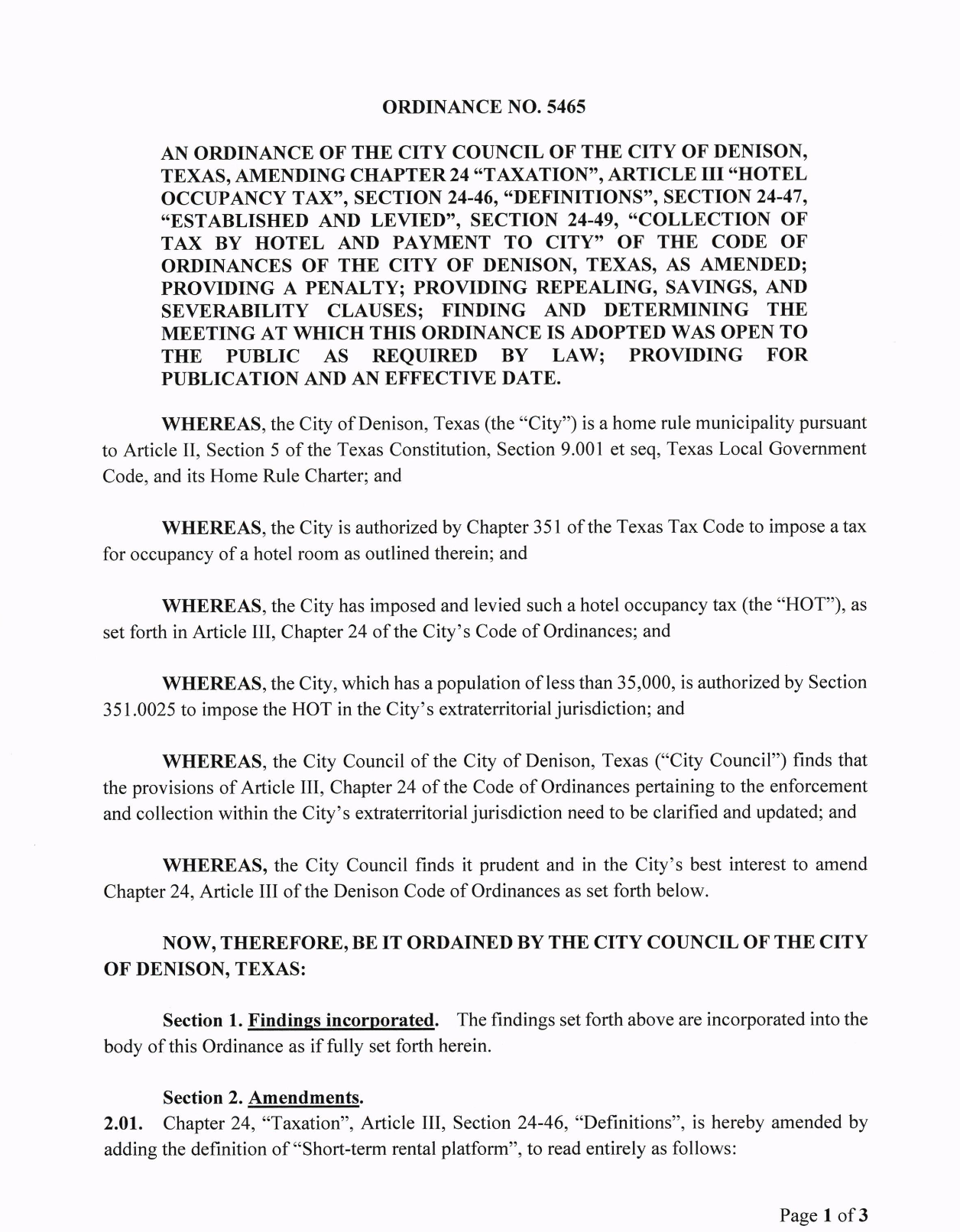
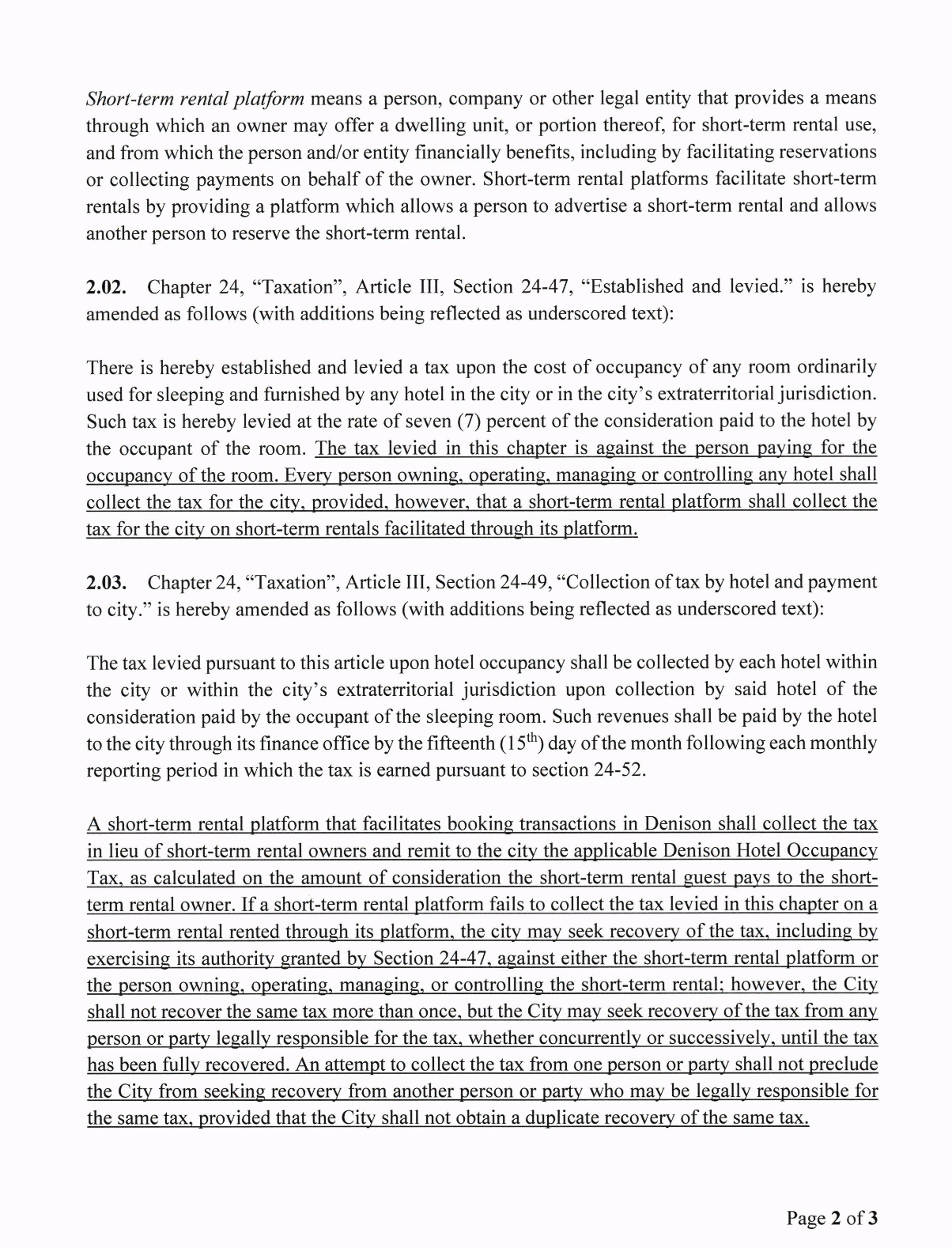
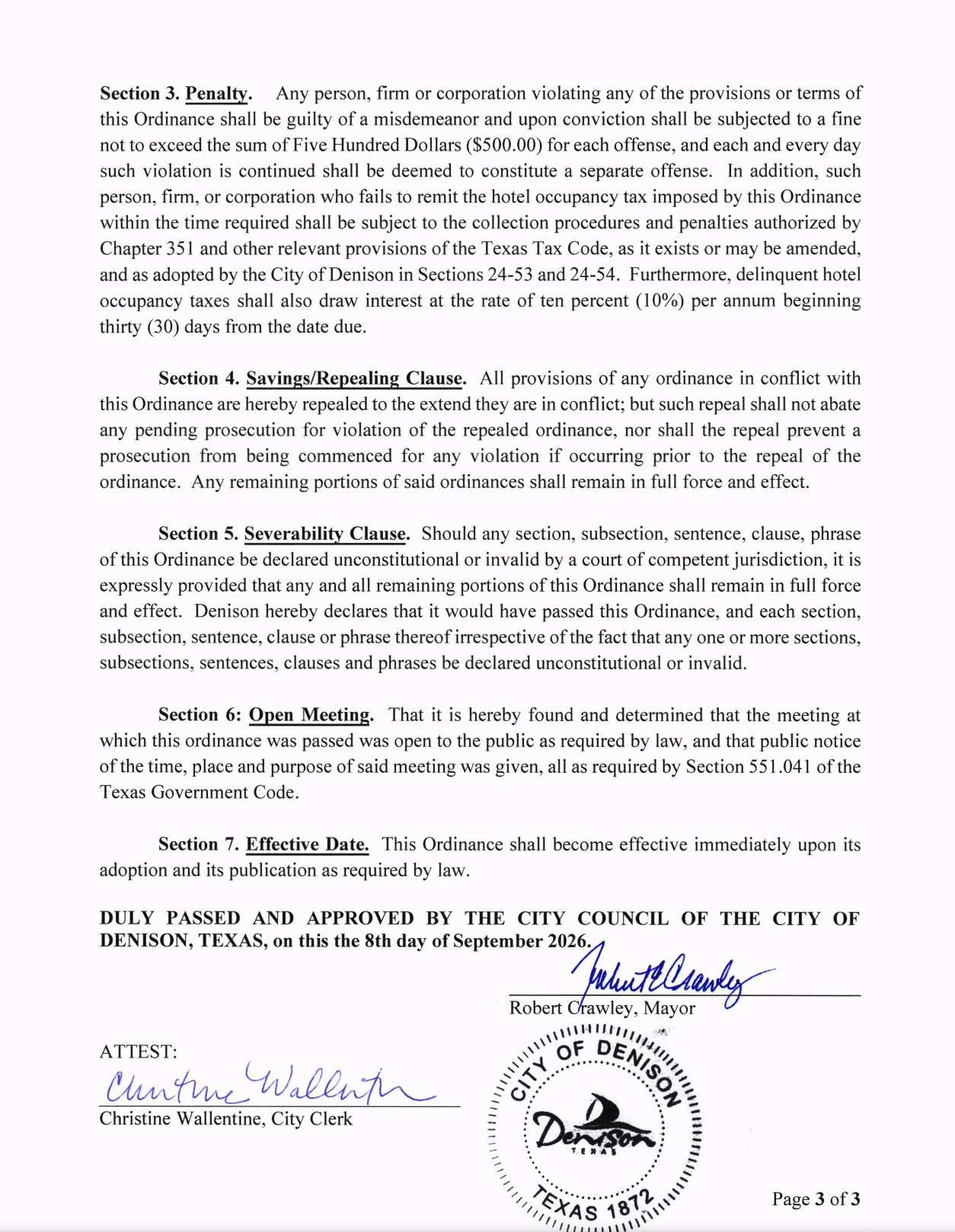
Denison’s Ordinance No. 5465, adopted September 8, 2026, requires short-term rental platforms to collect and remit the city’s 7% hotel occupancy tax.
If a platform fails to collect, the city may pursue either the platform or the property owner until the tax is paid though it cannot recover the same tax twice. Violations are misdemeanors carrying fines of up to $500 with each day counted as a separate offense.
What Each Platform Collects
Airbnb applies the 7% city tax to reservations of 29 nights or fewer including cleaning fees on top of the 6% Texas state hotel tax it already collects, bringing the combined rate to 13%.
 Denison

 OBBM Network Editorial Staff

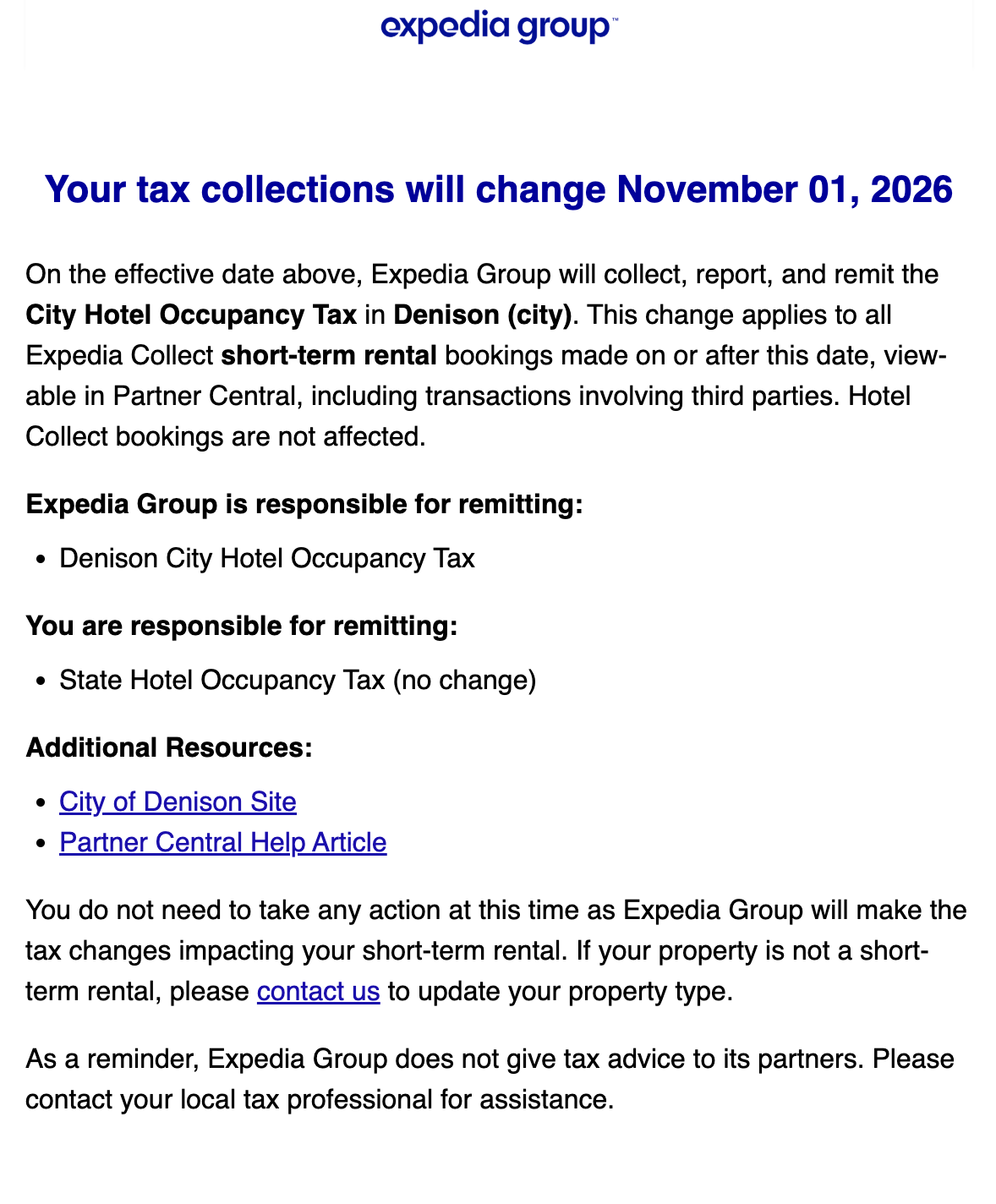
Expedia Group covers only Expedia Collect bookings made on or after November 1, leaving Hotel Collect reservations with the operator. Vrbo has notified owners of the switch, and the city says Airbnb and Vrbo hosts no longer need to submit monthly reports for covered bookings.
Who Still Owes the Tax Directly
Hosts who take direct bookings or list on platforms that do not collect the city tax must keep filing, now using a city remittance form revised on October 28 and mailed to the Tourism Department. Late returns draw penalties of up to 20% plus 10% annual interest once they are 30 days overdue.
Because the city tax also reaches its extraterritorial jurisdiction while Airbnb lists collection for the City of Denison, owners just outside city limits should confirm their platform's settings.
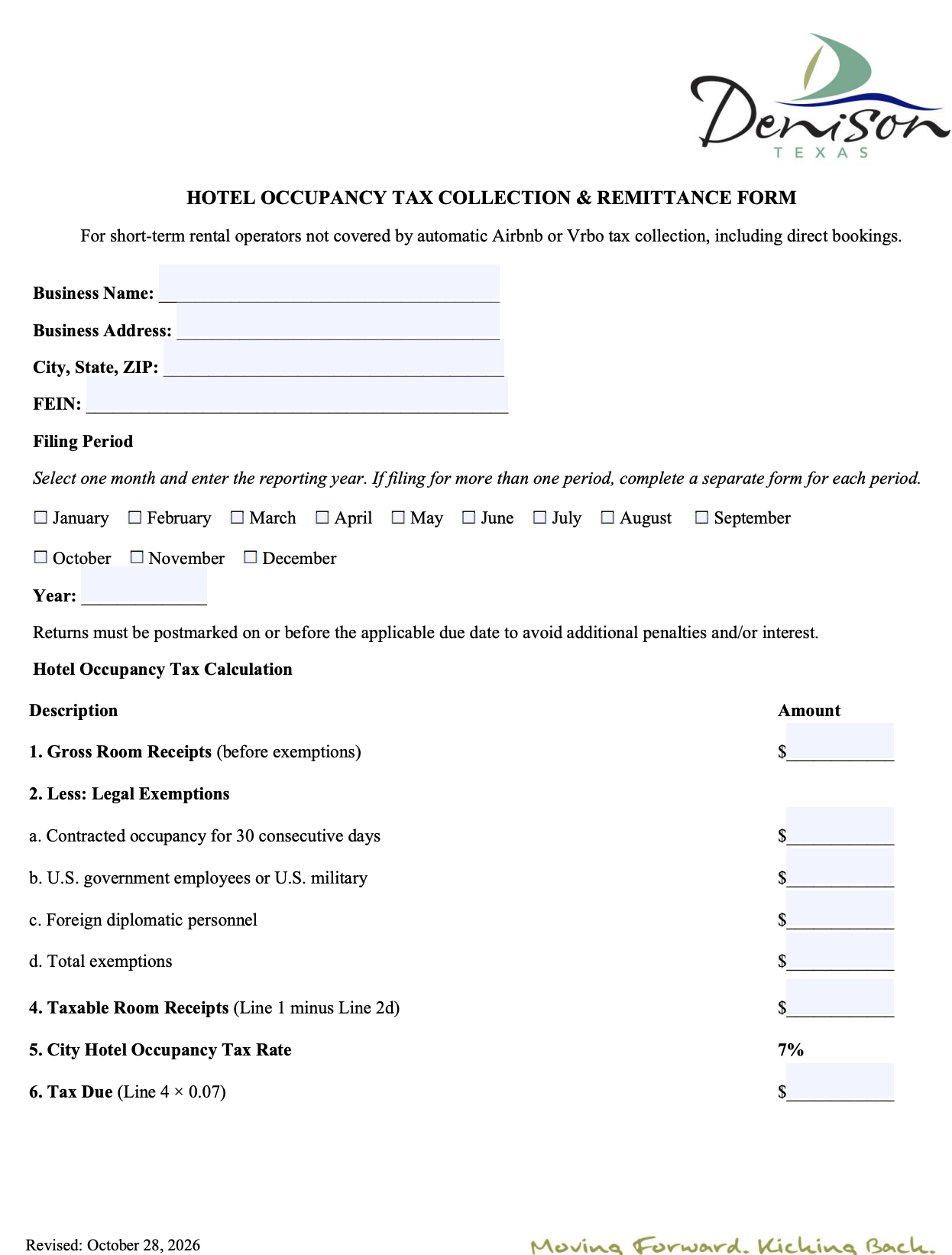
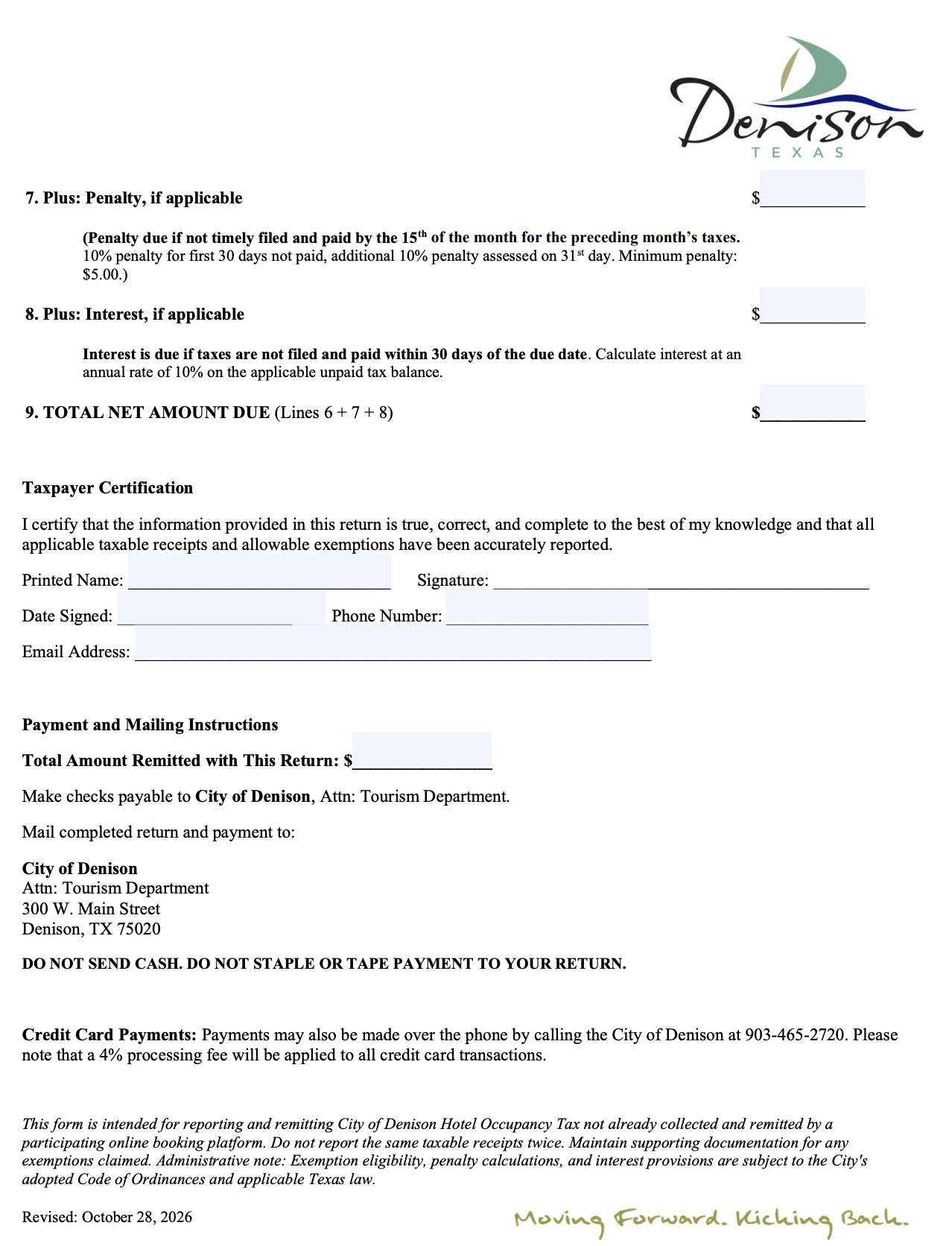
City of Denison Hotel Occupancy Tax Collection & Remittance Form, revised October 28, 2026, for short-term rental operators whose bookings are not covered by automatic platform tax collection. | Source: https://www.denisontx.gov/
⦾ Platform collection start: November 1, 2026
⦾ Legal basis: Ordinance No. 5465, adopted September 8, 2026
⦾ Tax rate: 7% city plus 6% state, 13% combined
⦾ Platforms collecting: Airbnb, Vrbo, Expedia Group (Expedia Collect only)
⦾ Platform responsibility: Mandatory collection; city may recover unpaid tax from platform or owner
⦾ Ordinance violations: Misdemeanor, up to $500 per offense, each day a separate offense
⦾ Host filing: Required only for direct or non-collecting bookings, due the 15th for the prior month
⦾ Penalties: 10% late, additional 10% after 30 days, $5 minimum, 10% annual interest
⦾ Exemptions: Stays of 30+ consecutive days, U.S. government or military, foreign diplomats
⦾ Card payments: 4% processing fee
 Texas Comptroller of Public Accounts

In case you missed it:
 Jas Albatana

 Jas Albatana

 Jas Albatana

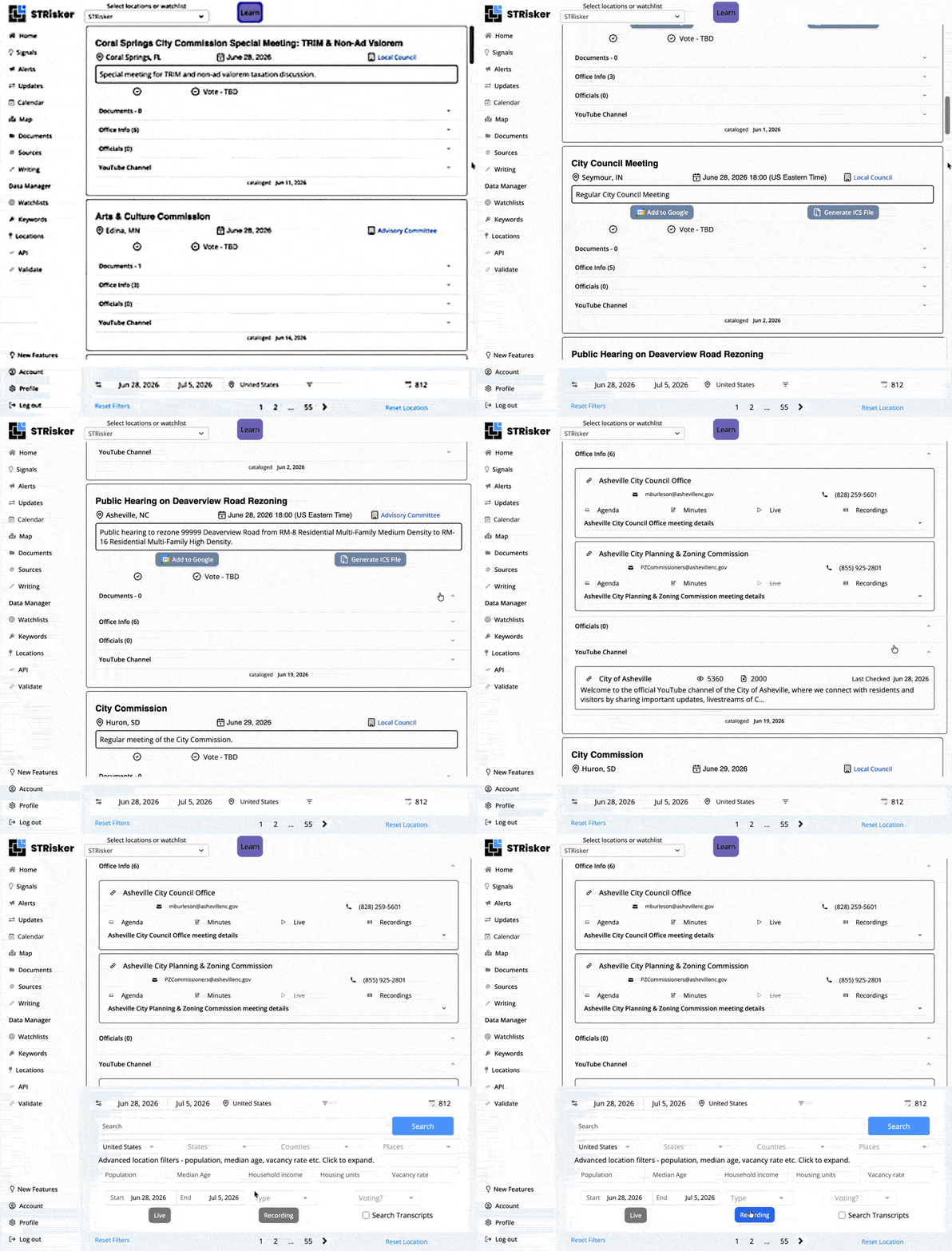
Strisker Calendar Tracker
Staying ahead of STR and data center regulations isn’t just about deadlines—it’s about knowing what’s coming. Our Calendar Tracker keeps you informed on upcoming meetings, key votes, and policy changes, so you never miss a critical update.
Stay Updated with Strisker!
Strisker offers tools and features to keep you updated with the Short Term Rental movement (and now Data Centers!) movement across the world.
👍 We’d love your feedback!
We're always looking for ways to improve Bulletins.
Was this one useful to you? Are there other topics you'd like to see get covered?
✉️ Just reply directly to this email. We read and respond to every message!
— Will McClure 🙋
P.S. Know someone else who should be reading this Bulletin? Feel free to forward this along. We want to make sure operators and stakeholders are aware of regulatory changes in their area.