
Bulletin - Hawaii County, HI News Today
The 7-2 vote opens residential zones to hosted rentals, limits new unhosted rentals mostly to resort and commercial areas, and allows a zoning enforcement grace period through 2027




Hawaii County Passes Bill 147, Rewriting Where Big Island Vacation Rentals Can Operate
The 7-2 vote opens residential zones to hosted rentals, limits new unhosted rentals mostly to resort and commercial areas, and allows a zoning enforcement grace period through 2027
Photo from https://www.staradvertiser.com/
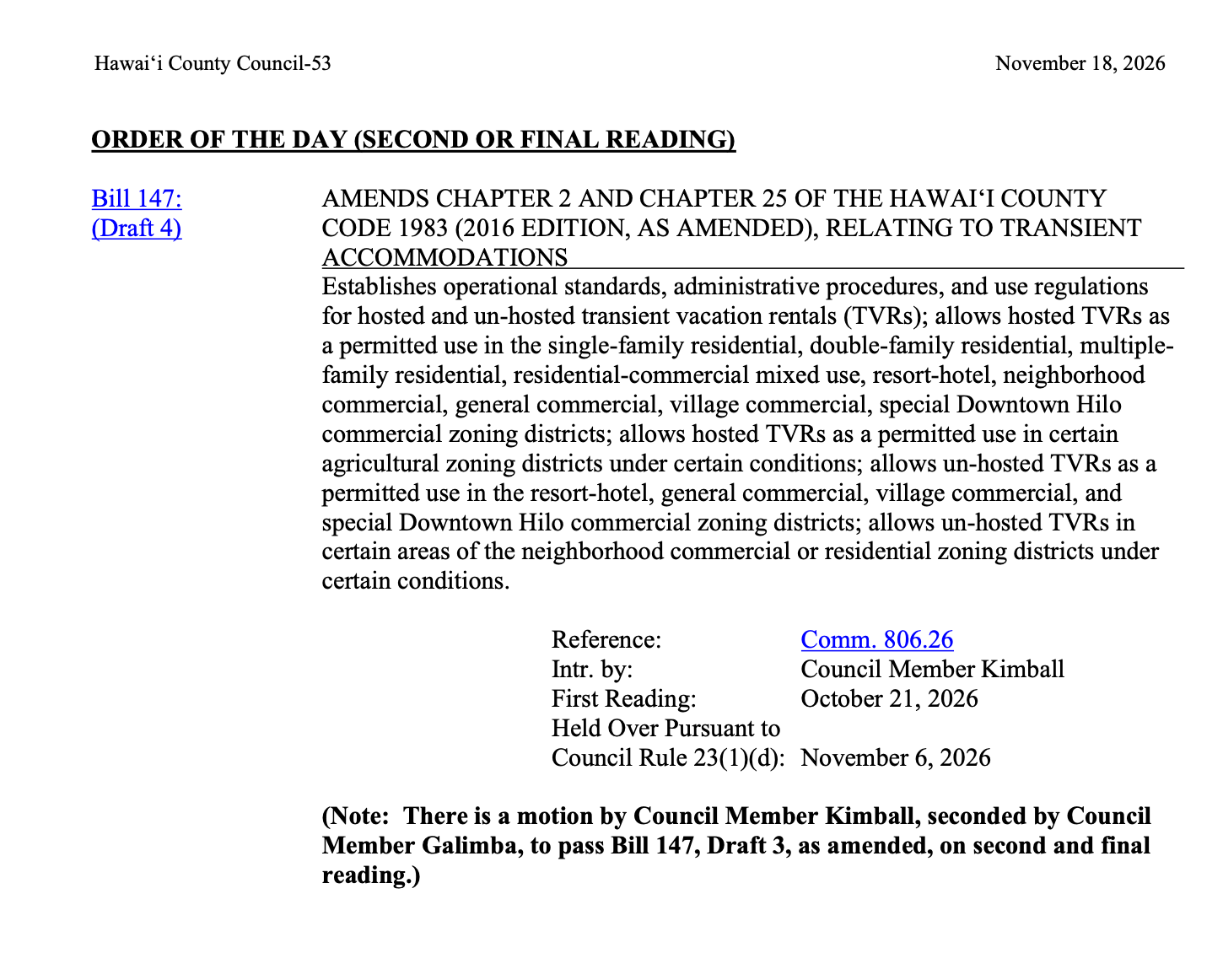
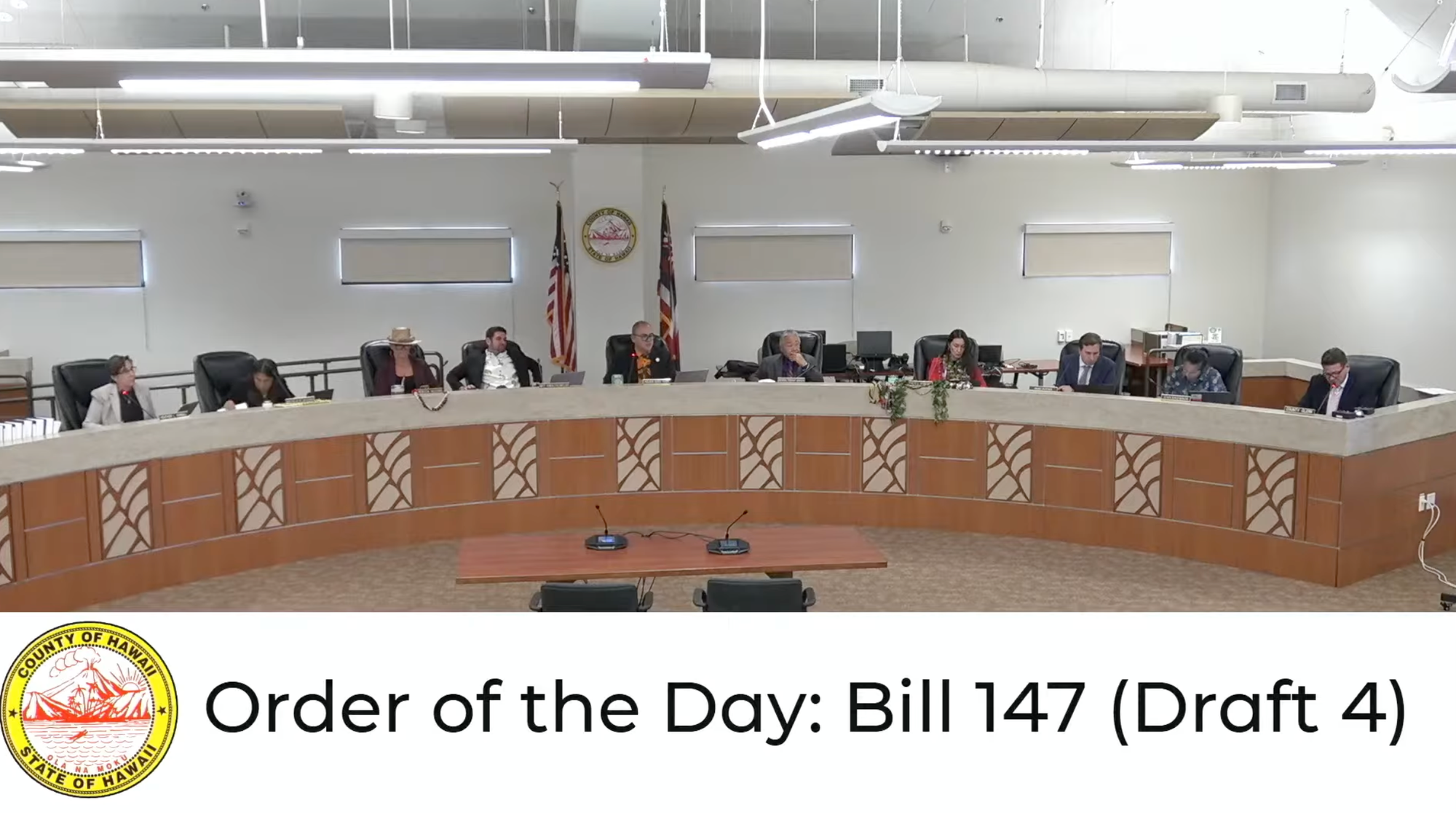
The Hawaii County Council passed Bill 147 on final reading by a 7-2 vote on November 18. The bill makes hosted vacation rentals a permitted use across residential, commercial and some agricultural zones while largely limiting new unhosted rentals to resort-hotel and commercial districts and General Plan resort areas. The ordinance takes effect upon approval and Mayor Kimo Alameda has said he will likely sign it.
Where Hosted and Unhosted Rentals Can Operate
Councilwoman Heather Kimball introduced the bill which will make hosted rentals a permitted use in residential, mixed-use, resort-hotel and commercial districts.
Hawaiʻi County Bill 147: Relating to Transient Accommodations
The full text of Bill 147 which sets where hosted and unhosted vacation rentals can operate in Hawaiʻi County along with their operating standards and fines.
Hosted rentals are also allowed on agricultural land in state urban or rural districts, and on state agricultural lots created before June 4, 1976 so those hosts no longer need a use permit. Unhosted rentals are permitted in resort-hotel, general commercial, village commercial and Downtown Hilo commercial districts. In residential or neighborhood commercial zones, they are allowed only inside General Plan resort areas or neighboring shoreline open areas. Elsewhere, an unhosted rental can continue in three situations:
Council Chair Holeka Inaba and Councilwoman Ashley Kierkiewicz cast the two no votes.
Transient Vacation Rentals, Hawaiʻi County Planning Department
The county's official page for vacation rentals with the registration ordinance (Ordinance 25-50), a registration FAQ, the text of Bill 147 with a plain-language explainer, and a recording of the Aug. 7 owner webinar.
The 180-Day Definition and Operating Rules
A vacation rental now means any stay under 180 consecutive days in a unit of no more than five bedrooms. The bedroom cap does not apply in resort areas and each building site may hold only one rental. Adult occupancy is the lesser of 12 or twice the number of bedrooms plus two, and gatherings cannot exceed twice that number.
Weddings, concerts and other special events are banned. Quiet hours run from 10 p.m. to 8 a.m., unhosted units cannot be rented room by room and every listing must show the county registration number.
 Jeff Tucker and Rob Kvidt

Fines and a 2027 Grace Period
Fines come after a warning letter and run $5,500 for a first violation, $7,500 for a second and $10,000 after that. On top of that is a daily penalty of up to twice the highest advertised daily rate and all fine money goes to a new enforcement fund.
The county can use active listings, the fact that a property can be booked, tax returns or data from a third-party contractor as evidence of a violation, and owners must then prove their use is legal. The planning director may delay enforcement against rentals lacking required permits until December 31, 2027. Hosted special permit applications filed before September 1, 2027 are exempt from sign posting and the usual review deadlines.
Registration Deadline
Registration under Ordinance 25-50 opened September 1 with fees of $250 for hosted rentals and $500 for unhosted rentals. Ordinance 26-63 lets the planning director delay registration enforcement until December 31. Vice Chair Dennis Onishi introduced Bill 216, which would extend that authority to August 31, 2027. As of November 6, 95 hosted and 104 unhosted rentals had registered, while about 5,100 previously permitted rentals were deemed registered.
 Kate Swanson

⦾ Status: Passed 7-2 on November 18; takes effect on mayor's approval
⦾ Definition: Stays under 180 days; five-bedroom cap outside resort areas
⦾ Hosted: Allowed in residential, commercial, resort and some agricultural zones
⦾ Unhosted: Resort and commercial areas; elsewhere only with grandfathered approvals or a 31 to 179 day use permit
⦾ Limits: Up to 12 adults; quiet hours 10 p.m. to 8 a.m.; no special events
⦾ Fines: $5,500 to $10,000, plus daily penalties
⦾ Enforcement: Zoning grace period possible to December 31, 2027; registration to December 31, or August 31, 2027 under Bill 216
After months of debate, public testimony and four drafts, Bill 147, which makes changes to the regulation of short-term vacation rentals in Hawaii County, passed its final reading before the County Council on Wednesday with a vote of 7-2.
— Star-Advertiser (@StarAdvertiser) November 23, 2026
Read more: https://t.co/jthCD3dO9r
In case you missed it:
 Jas Albatana

 Carla Almendral

 Carla Almendral

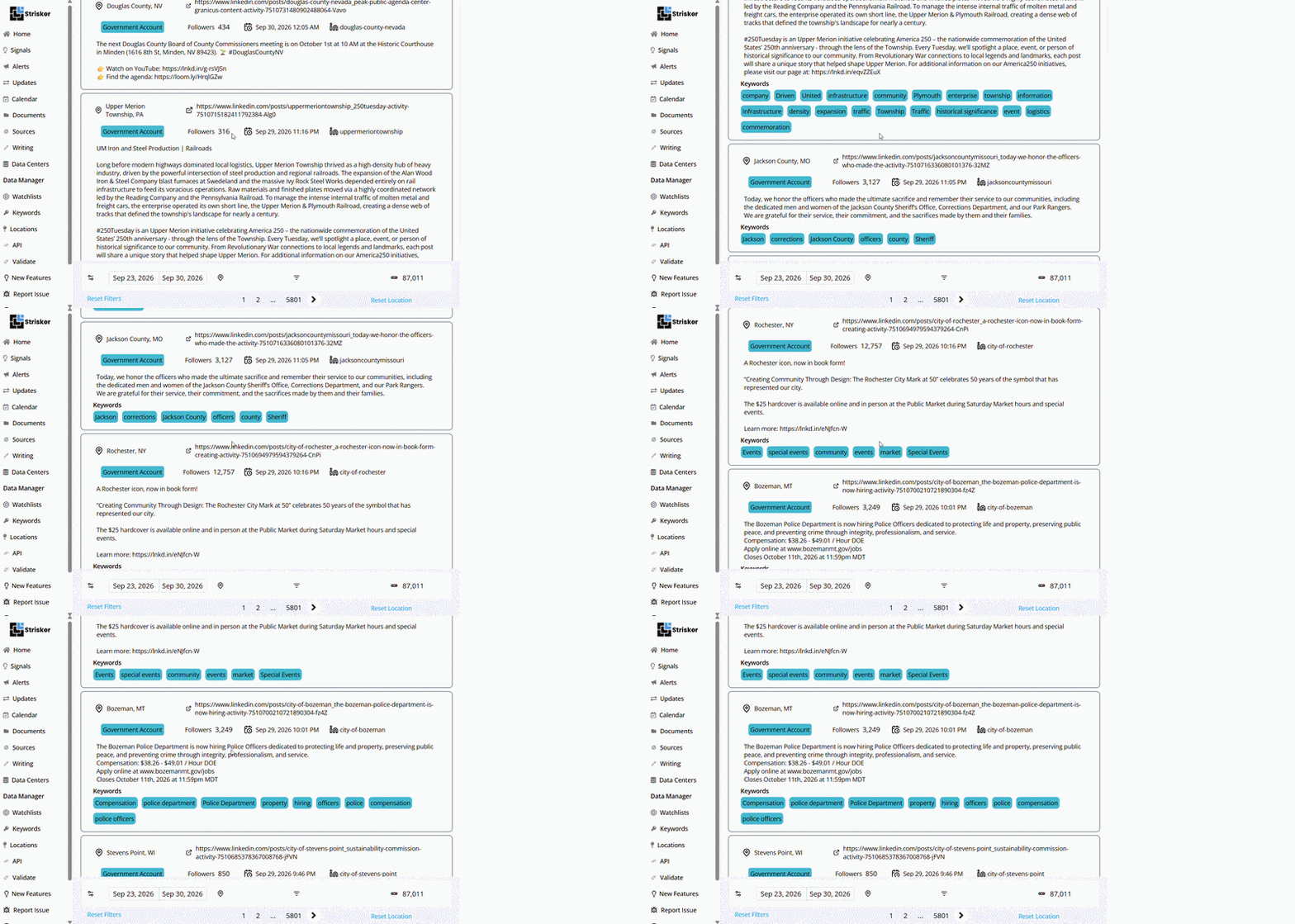
Social Listening📱: LinkedIn
Industry leaders and policymakers are actively shaping the conversation on LinkedIn every day. Strisker's LinkedIn Signal tracks professional posts and commentary, which allows you to monitor industry trends, identify key influencers, and observe policy shifts related to short-term rentals and data centers.
Stay Updated with Strisker!
Strisker offers tools and features to keep you updated with the Short Term Rental movement (and now Data Centers!) movement across the world.
👍 We’d love your feedback!
We're always looking for ways to improve Bulletins.
Was this one useful to you? Are there other topics you'd like to see get covered?
✉️ Just reply directly to this email. We read and respond to every message!
— Will McClure 🙋
P.S. Know someone else who should be reading this Bulletin? Feel free to forward this along. We want to make sure operators and stakeholders are aware of regulatory changes in their area.