
Data Centers: Daily Notes | April 9, 2026
Maryland Senate passes Utility Relief Act targeting data center grid impacts; Georgia's ratepayer protection bills all fail; Virginia Democrats deadlocked over $1.9 billion data center tax break.


At A Glance 🔽
- Maryland passes Utility Relief Act with provisions for large load users; moves to conference committee to reconcile with House version.
- Georgia fails to advance any data center bills, leaving $2.5B tax exemption in place through 2032.
- Virginia Democrats deadlocked on budget over data center tax break worth roughly $1.9B; special session set for late April.
- Illinois begins first of three planned hearings on data center regulation including the POWER Act.
- East Manchester Township, PA approves two data center ordinances with 55-foot height limit and 500-foot setback.
- Jackson County, MO weighs 120-day moratorium on data center and BESS site applications.
- Troup County, GA unveils draft data center ordinance for unincorporated areas during third 90-day moratorium.
- Washington Township, OH passes 12-month moratorium on data centers; will draft zoning code section during freeze.
MARYLAND
The Maryland Senate passed the Utility Relief Act with provisions to manage the impact of large load users, including data centers, on the electric grid. The bill passed almost unanimously and now moves to a conference committee to reconcile with the House version.
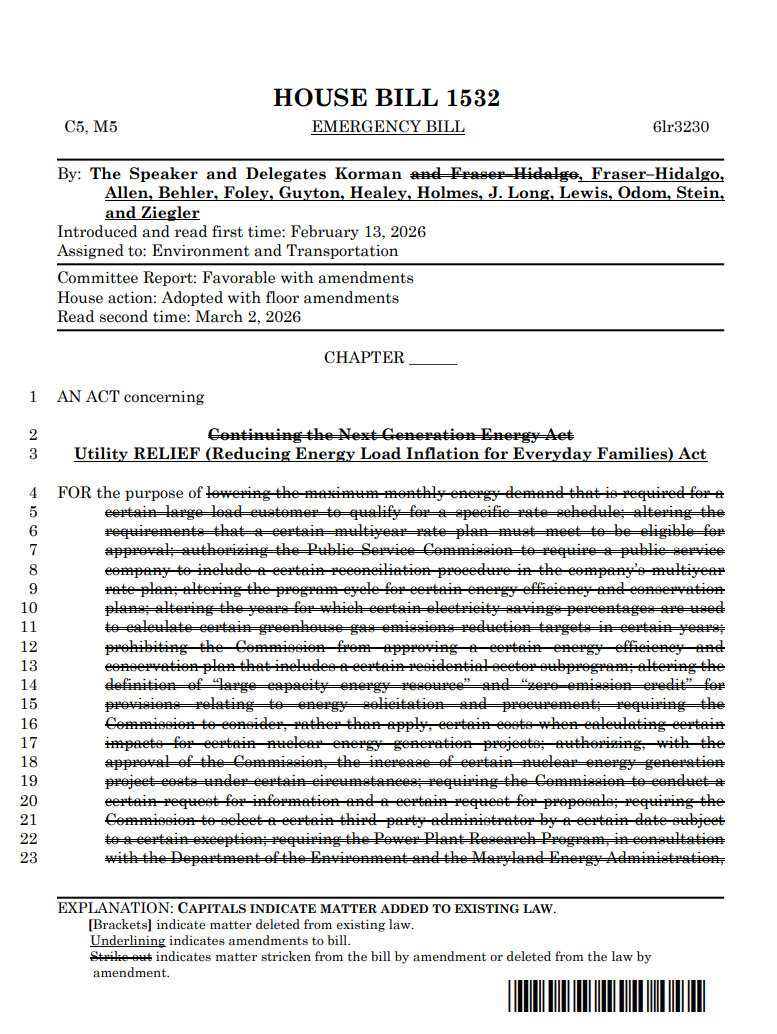
The Senate version lowers the load factor threshold, expanding the number of projects subject to regulatory oversight. It also added a voluntary clean capacity program giving priority interconnection to projects that bring their own clean energy or participate in demand response. Both chambers require data centers to disclose electricity and water usage to a state registry, though the House makes that information public during development while the Senate delays disclosure until operations begin.


More on the Utility RELIEF Act
Georgia
Every bill aimed at addressing data center expansion in Georgia failed to reach a final vote this session, leaving a tax exemption projected to cost the state $2.5 billion in fiscal year 2026 intact through 2032. House Bill 1012, which sought to halt new construction outright, had little chance in the Republican-dominated legislature. Senate Bills 408 and 410, which targeted the tax exemption offered since 2018, also failed to advance.
A University of Georgia analysis found roughly 70 percent of data center construction would have occurred without the incentive. Georgia's projected losses from the exemption are expected to climb to about $3 billion in 2027. By comparison, Virginia lost an estimated $1.6 billion in 2025.
Virginia
Virginia Democrats remain deadlocked on the state budget two weeks before a special session in late April, with the dispute centered on whether to phase out the sales and use tax exemption for data centers. Senate Democrats want to end the exemption, which would bring in roughly $1.9 billion for the state budget. House Democrats want to preserve it, and Governor Spanberger has expressed her aversion to repealing it.

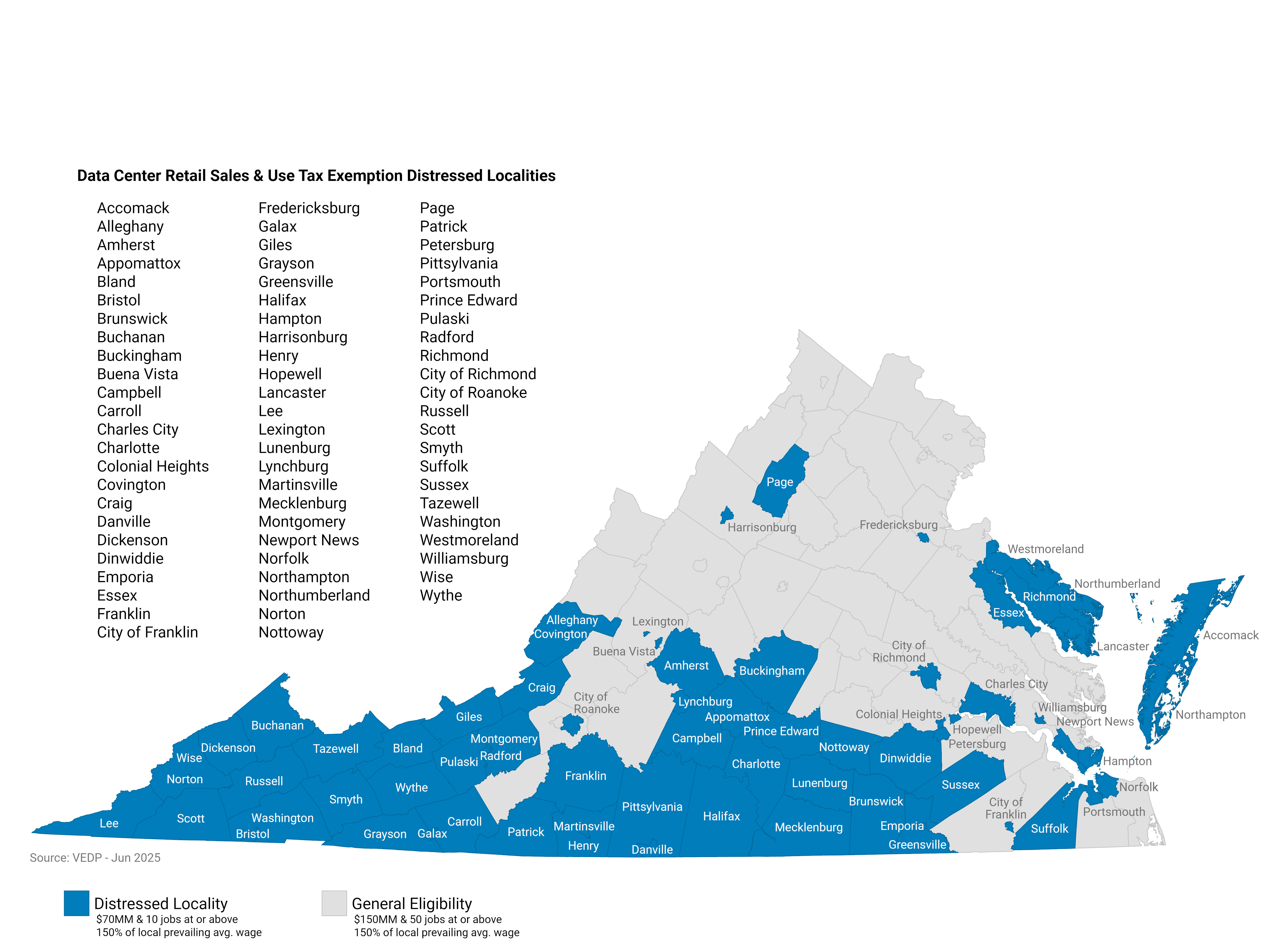
The standoff is striking because Democrats control the House, Senate, and Executive Mansion yet failed to produce a unified budget during the regular session. The budget is structurally deficient by about half a billion dollars.
Illinois
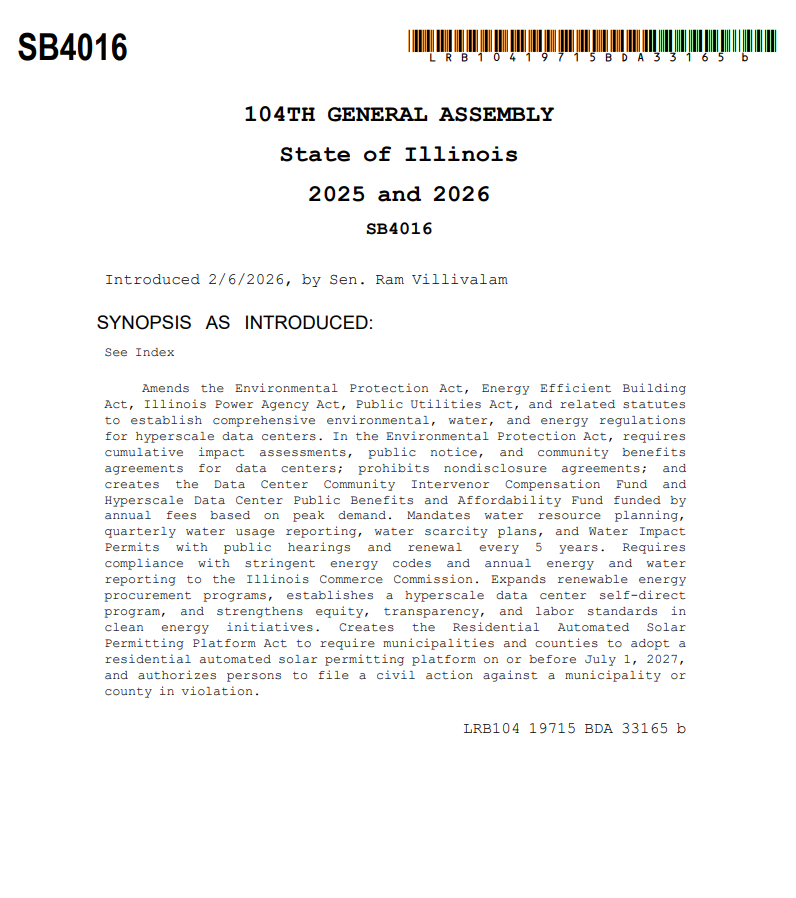
Illinois lawmakers launched the first of three planned hearings on data center regulation, with the House Executive Committee hearing from mayors, labor groups, and agriculture representatives about local impacts. The committee is considering regulations including the POWER Act. Water use, energy use, noise, and community benefit agreements were the primary topics.
East Manchester Township, Pennsylvania
East Manchester Township supervisors approved two new data center ordinances following a public hearing. The first regulates the siting, design, construction, and operation of data centers; the second establishes a data center overlay district on land near Gravel Hill and Saginaw Road. The ordinance requires developers to limit building height to 55 feet, maintain a 500-foot setback, and submit to sound studies.
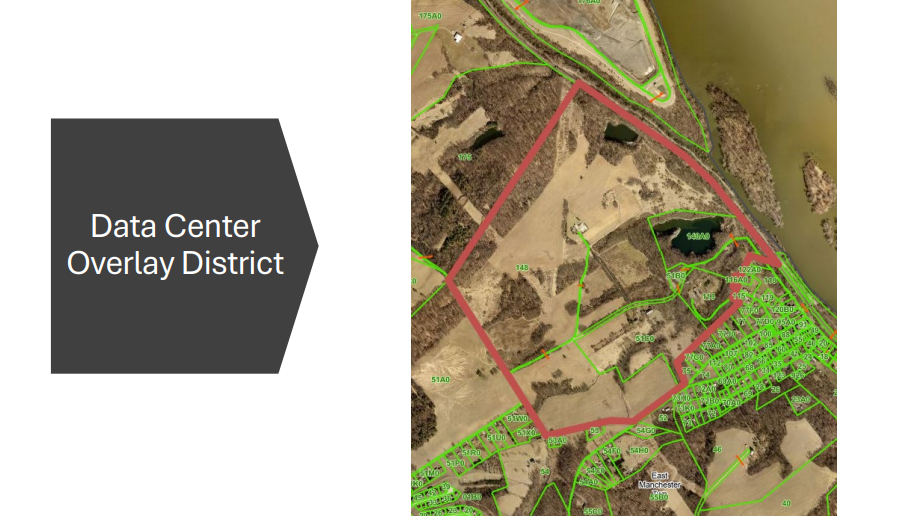
Township supervisors emphasized that Pennsylvania law required them to find a location conducive for data center development.

Jackson County, Missouri
Jackson County's legislature is weighing a 120-day moratorium on data center and Battery Energy Storage System land use applications in unincorporated areas. The ordinance would halt rezoning, site plans, and special use or conditional use permits for such projects during the freeze period.
The moratorium comes about a month after Independence passed $6 billion in tax breaks for a $150 billion AI data center.
Troup County, Georgia
Troup County unveiled a proposed draft ordinance for data center zoning in unincorporated areas during its third consecutive 90-day moratorium. No data center applications are currently before the county. Commission Chairman Patrick Crews referenced Project Pegasus (Google) within the city of LaGrange and the proposed $6 billion Project West, which was denied annexation into the city.
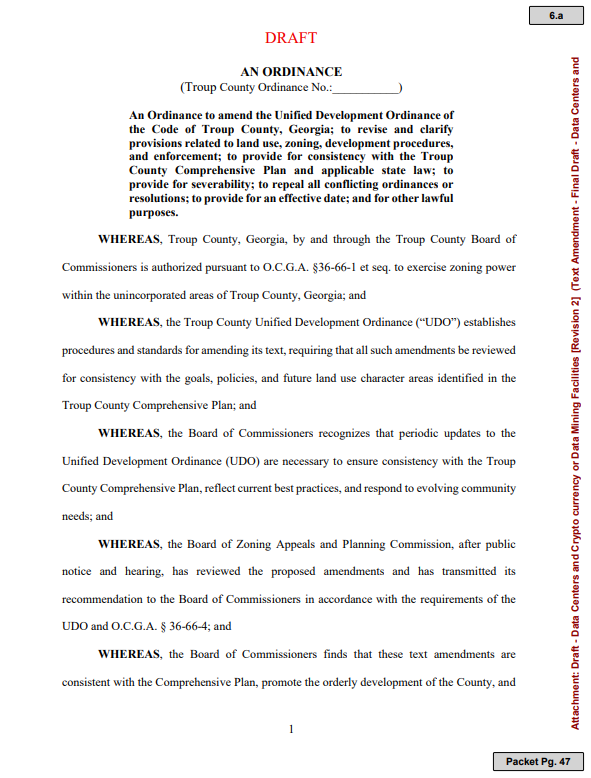
The county does not operate its own water system and cannot outright ban data centers. The moratoriums were issued to allow time to craft regulations that did not previously exist. The draft ordinance represents the county's effort to have rules in place before the current moratorium period ends.
Washington Township, Ohio
Washington Township trustees passed a resolution establishing a 12-month moratorium on any new data centers attempting to operate in the township. Trustees will use the freeze period to consider adding a dedicated section on data centers to the township's zoning code. The resolution directs the board to "fully and completely address the issue" during the moratorium. The township currently has no zoning provisions specific to data centers. Residents raised questions about potential impacts during the meeting before the board voted unanimously to approve the freeze.
📱 Social Buzz
If all planned data centers in North Carolina are built, developers would receive an estimated $450 million in sales tax exemptions each and every year. And with the state’s impending fiscal cliff and the federal government retreating on longstanding commitments, state revenue is…
— Governor Josh Stein (@NC_Governor) April 8, 2026
Lawmakers told me they were alarmed by the ballooning cost of this tax break, including Sen. @joanhuffman, who said she is considering filing a bill to repeal it altogether. Her Finance Committee will hold an interim hearing on the issue in July. #txlege https://t.co/0AyCdfrNxM
— Paul Cobler (@PaulCobler) April 8, 2026
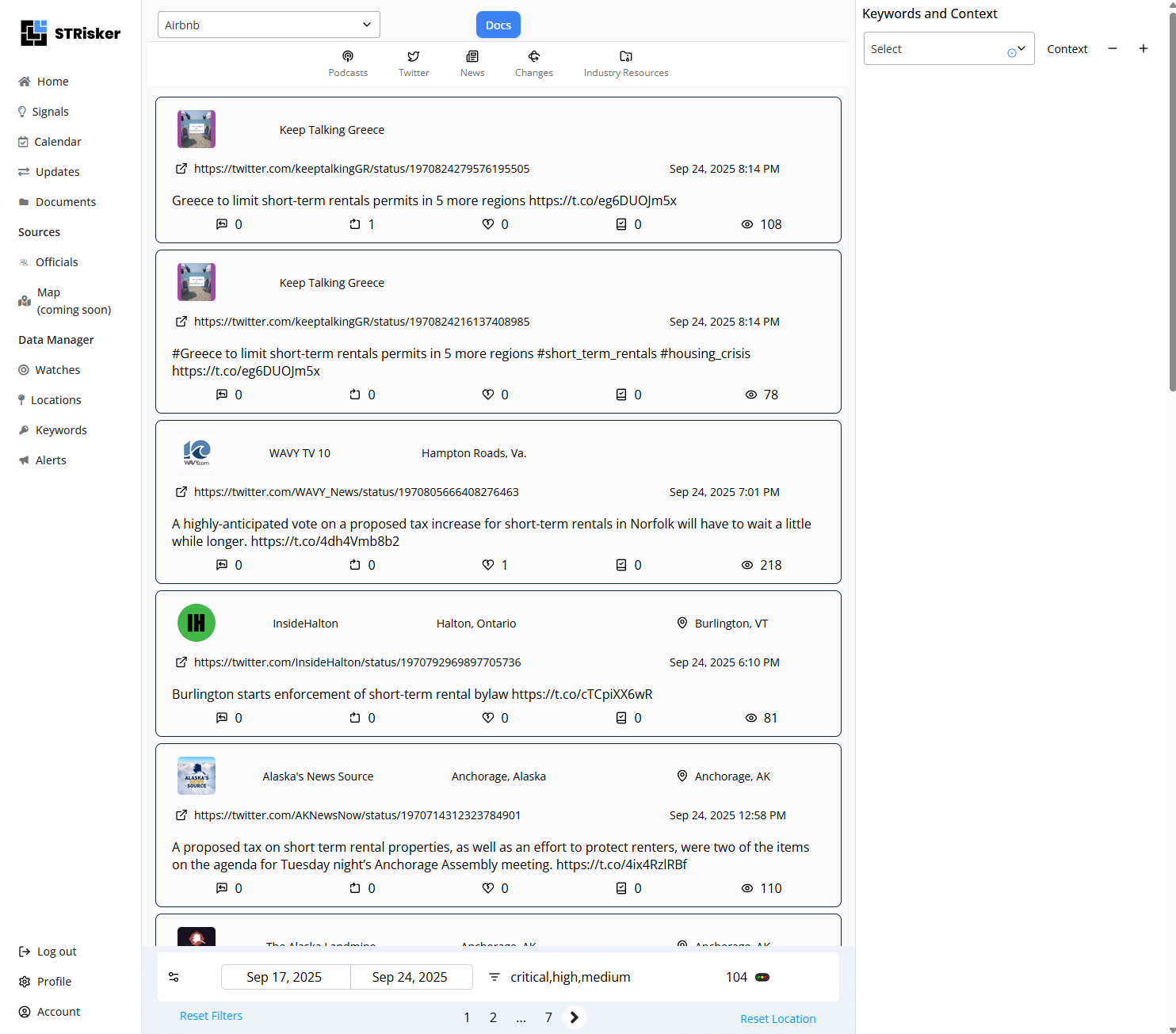
Social Listening📱: Twitter
STRisker’s Twitter Signal pulls real-time posts from officials, agencies, advocacy groups, and local influencers—so you see emerging sentiment and policy signals the moment they surface. Track conversations by place, people, and topics, then zero in on what actually matters.
Stay Updated with STRisker!
STRisker offers tools and features to keep you updated with the Short Term Rental movement (and now Data Centers!) movement across the world.
👍 We’d love your feedback.
Which stories hit? Which ones missed?
We're exploring a new branch of topics centered around Data Centers and want to make it even more useful for you.
✉️ Just reply directly to this email. We read and respond to every message!
-Will McClure
🙋 P.S.
Know someone else who should be reading Daily Notes? Feel free to forward this along. We’re opening a few more spots.