
Data Centers: Daily Notes | August 10, 2026
Wisconsin is seeing growing opposition to two proposed natural gas plants intended to power data centers; Cherokee Nation has banned hyperscale data centers on tribally owned and trust lands; Lincoln County is considering detailed data center regulations. READ MORE.


At A Glance 🔽
- Wisconsin is seeing growing opposition to two proposed natural gas plants intended to power data centers, with concerns over health impacts, water use, and whether ratepayers will bear the infrastructure costs.
- Cherokee Nation, Oklahoma has banned hyperscale data centers on tribally owned and trust lands after a task force found 64% of surveyed tribal citizens opposed data centers, while requiring consultation on projects elsewhere within the reservation.
- Lincoln County, Nebraska is considering detailed data center regulations requiring developers to address water, electricity, noise, infrastructure costs, decommissioning, and community impacts before applications can be approved.
- Fort Smith, Arkansas is considering additional data center regulations covering water use, utility capacity, setbacks, noise, and project approvals amid concerns over the city's ability to serve facilities outside its boundaries.
- Calvert County, Maryland is continuing to pursue a proposed six-month moratorium on new data center site plans after Amazon withdrew its planned campus, citing internal infrastructure planning rather than local opposition.
- Helena, Alabama is considering a 180-day pause on new data centers and several other industrial uses while officials review zoning regulations and potential impacts including noise, contamination, and hazardous materials.
- Tucson, Arizona approved its first large-scale data center regulations, establishing setbacks, height limits, water and energy requirements, environmental reporting, and mandatory mayor and council approval for new facilities.
- Vineland, New Jersey saw residents pack a public meeting over the proposed 2.6 million-square-foot Data One facility, raising concerns about noise, vibrations, air quality, and an estimated 8 million gallons of daily water use.
Wisconsin
Public opposition is mounting against two proposed natural gas plants in southeastern Wisconsin meant to power data centers, including one in Kenosha County's Town of Paris that would become the state's second-largest gas plant.
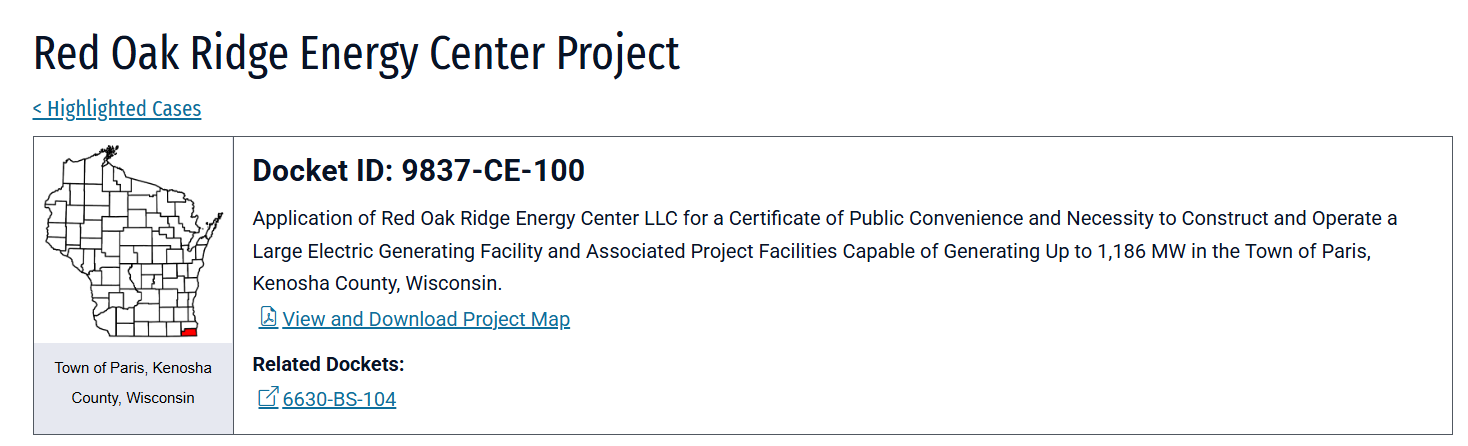
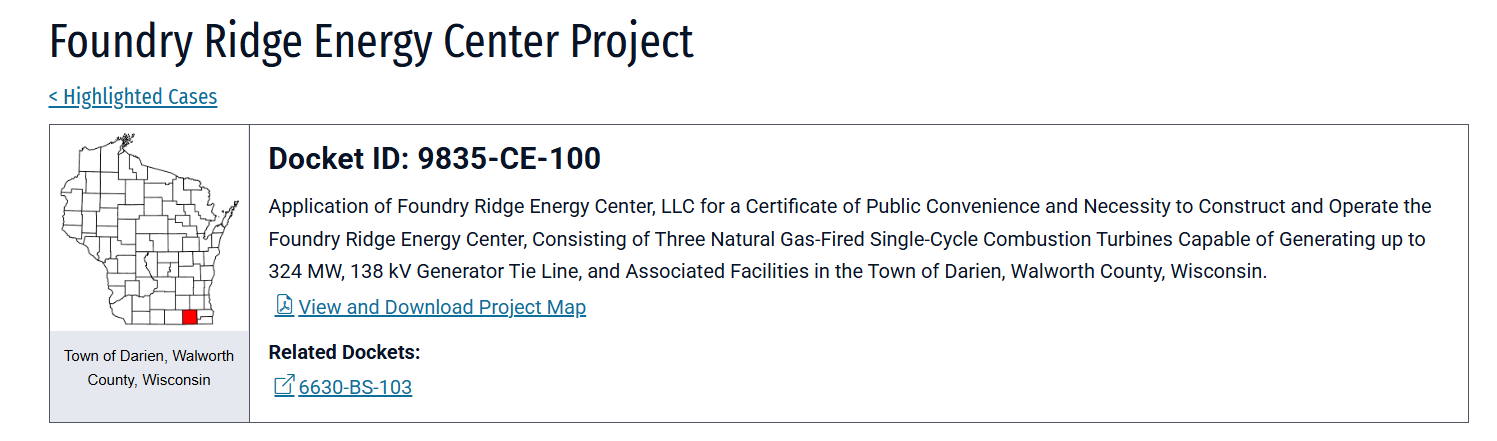
Chicago-based Invenergy is seeking approval to build Foundry Ridge in the Town of Darien and Red Oak Ridge in the Town of Paris, while We Energies has separately applied to purchase the power for what it calls "substantial data center load additions." Because state law limits how the Public Service Commission can weigh public impact in Invenergy's construction applications, versus We Energies' purchase applications, critics like Union of Concerned Scientists analyst Maria Fernanda Chavez say the process restricts ratepayers' ability to weigh in on the power source itself.

A University of Wisconsin-Madison study found that particulate matter emissions from the two plants alone could cause $1.38 billion in health harms nationwide over their 30-year lifetimes, an estimate UW Health Kids pediatrician Dr. Andrew Lewandowski said could translate to 118 deaths nationally, 41 of them in Wisconsin.
Cherokee Nation, Oklahoma
Cherokee Nation bans hyperscale data centers on tribally owned and trust land
The Cherokee Nation has banned hyperscale data centers on its tribally owned and trust lands, Principal Chief Chuck Hoskin Jr. announced, citing threats to the environment and Cherokee cultural lifeways.
Hoskin said the tribe won't support hyperscale data centers on reservation land without proper consultation, and that any proposed data center on non-tribal land within the reservation will require consultation with tribal government and citizens addressing environmental concerns and community input, since those projects still affect Cherokee Nation citizens.
The decision follows a report released this week by the Principal Chief's Task Force on Data Centers, mandated by a February executive order, which surveyed nearly 1,600 tribal citizens and found 64% opposed data centers while 14% were favorable. The Cherokee Nation's Office of Real Estate Services oversees roughly 46,000 acres of restricted land, more than 62,000 acres of tribal trust land and over 5,100 acres of tribal fee land within the reservation's roughly 4.4 million acres in northeastern Oklahoma.
And another data center ban. Last week, the Cherokee tribe in Oklahoma issued a report which said tribal members have “serious concerns” about data centers. In response, Chief Chuck Hoskins implemented a ban on hyperscale data center development on tribally owned and trust lands.…
— Robert Bryce (@pwrhungry) August 10, 2026
Lincoln County, Nebraska
Lincoln County, Nebraska is weighing a detailed nine-page draft of new data center regulations that would replace the county's general zoning language with specific rules covering water, electricity, noise, infrastructure costs and facility decommissioning.


The July 16 draft would require developers to prove a data center won't shift infrastructure costs onto existing taxpayers or ratepayers, and mandates closed-loop or recycled water cooling systems along with proof that withdrawals won't harm nearby groundwater or surface water. On electricity, applicants would have to show the project won't impair reliability for existing customers and would bear the full cost of any needed generation, transmission or substation upgrades.
The proposal sets a 10-acre minimum site size, applies the county's existing industrial district setbacks, and requires screening for visible equipment like cooling towers and backup generators, along with design standards meant to make facilities blend in near "Sensitive Receptor" areas such as schools, hospitals and residences.
The draft distinguishes between smaller ancillary and edge data centers and larger hyperscale facilities requiring 50 megawatts or more, and would require a lengthy list of studies, covering noise, water, wastewater, emergency response and community impacts, before an application would even be considered complete. The regulation remains in draft form and could still change as it moves through the county's zoning process.
Fort Smith, Arkansas
The Fort Smith, Arkansas Board of Directors is set to discuss possible new regulations for data center development Tuesday, including water usage requirements, as the city currently has no known data center projects planned.
 Ashley Torres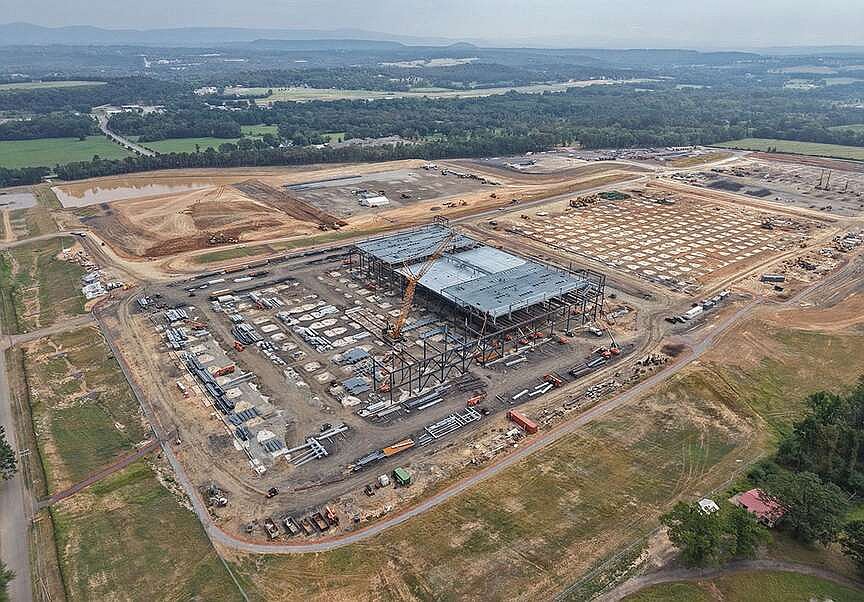
A 2023 ordinance already allows data centers by conditional use in "industrial light" zones and by right in "industrial moderate" and "industrial heavy" districts. Acting City Administrator Jeff Dingman's memo says any additional requirements, such as board approval of every data center plan, larger setbacks, utility capacity certifications, water usage reports or noise studies, would need to go through the standard zoning text amendment process. The memo also notes an existing surplus water user agreement requiring city approval for water meters larger than two inches, language staff say would effectively cover most high-volume users including data centers.
Director Kevin Settle requested the discussion after raising concerns in July that the city, which supplies water to 30 nearby communities and about 150,000 customers, could end up serving a large data center's water needs without ever approving the project itself if it were built outside city limits but tied to Fort Smith's water system.
Social Listening 🎧: Podcast
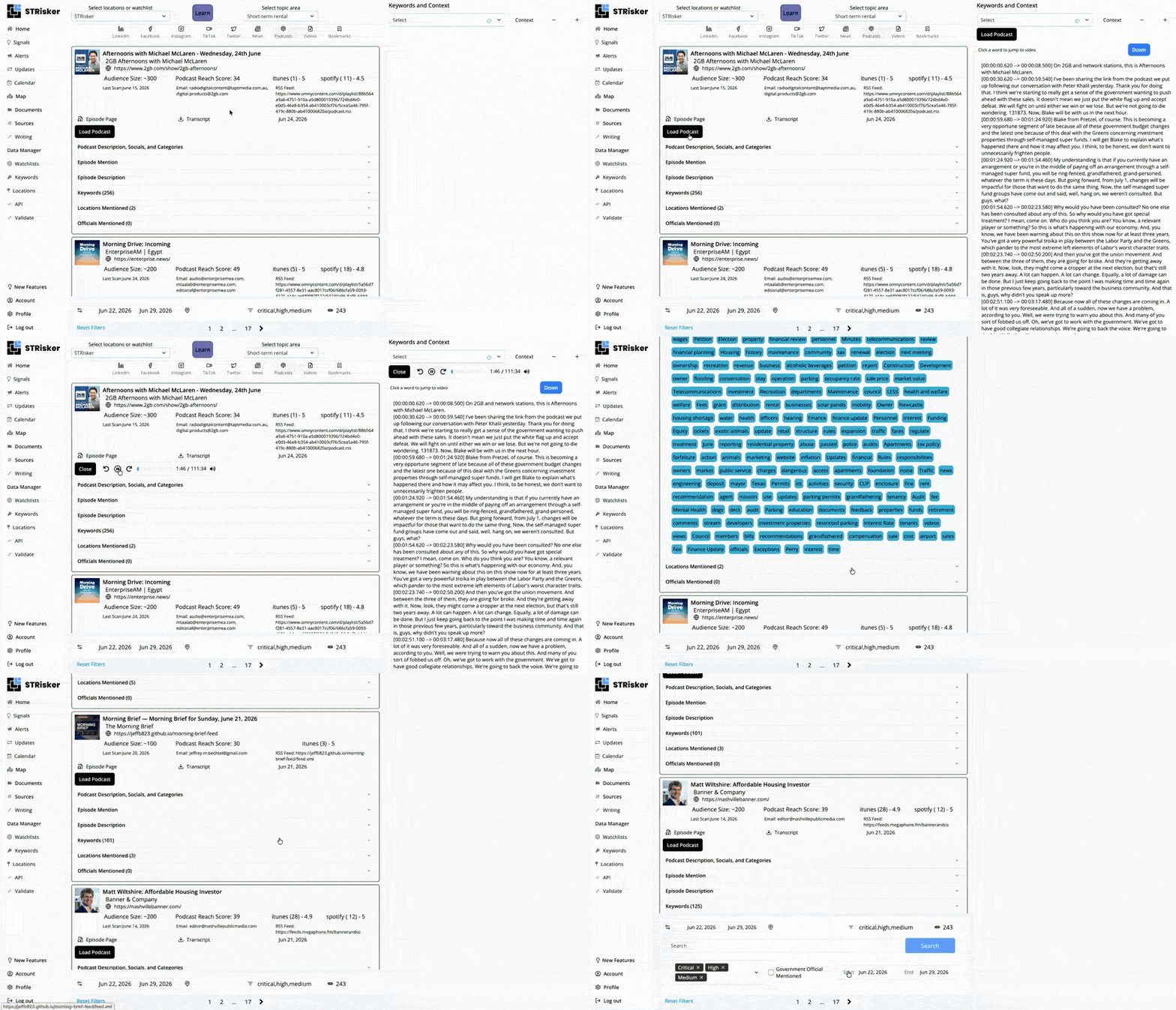
Policy talk doesn’t just happen in the news cycle—it can also live in long-form audio. Strisker’s Podcast Signal turns hours of episodes into actionable insight, indexing transcripts so you can surface key mentions of STRs, data centers, ordinances, and local decision-makers in seconds.
Calvert County, Maryland
Amazon has given its first public explanation for withdrawing its proposed Calvert Technology Center data center campus near the Calvert Cliffs Nuclear Power Plant in Calvert County, Maryland, saying the decision reflected internal infrastructure planning rather than local opposition.
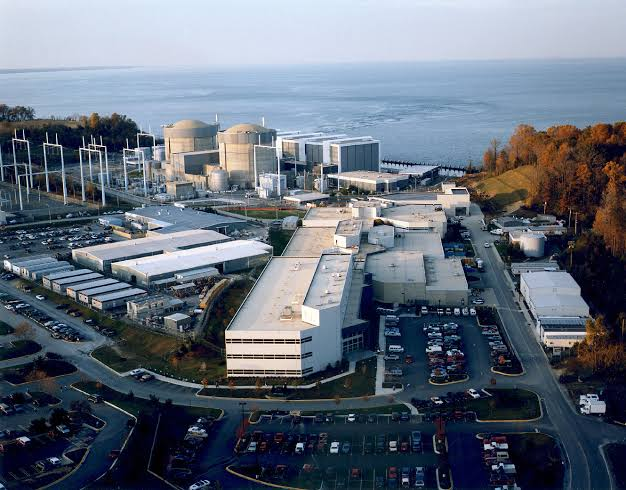
A company spokesperson said Amazon regularly evaluates projects based on development timelines, operational needs and delivery speed, and that this investment is now better directed elsewhere in the company's pipeline. The withdrawal came about six weeks after Calvert County's June primary, in which voters ousted three commissioners who had opposed a pause on data center approvals. Amazon said its relationship with Constellation Energy, which owns the Calvert Cliffs land where the campus would have been built, remains unchanged, and Constellation said in its own statement that the opportunity to build digital infrastructure in the county continues.
 David M. Higgins II, Publisher/Editor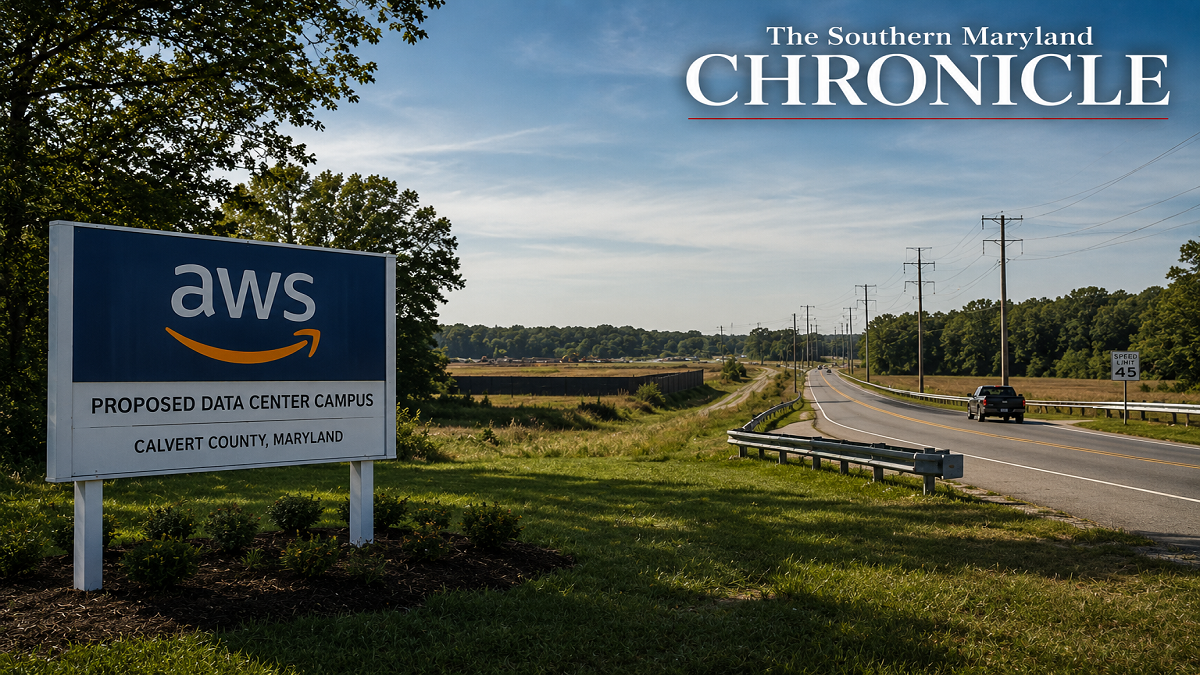
The proposed project, filed May 4, would have been the county's first large-scale data center, three campuses totaling about 2.46 million square feet across 2,000 acres with an estimated 500 megawatts of power demand. The county's Environmental Commission had separately recommended at least a 12-month pause on new approvals over unresolved questions about noise, water use, forest clearing and threatened species.
Helena, Alabama
The Helena, Alabama City Council is set to hold the first reading Monday of an amended ordinance imposing a 180-day pause on new gas stations, auto businesses and data centers, giving the city time to review its zoning regulations.
Under amended Ordinance 1043-2026, the city would suspend action for 180 days on building permits, site plan approvals, business licenses and other approvals for gas stations, auto parts stores, mechanic shops, automobile and manufactured-home dealerships, data centers and certain other industrial uses. The pause would also bar new affected businesses within 500 feet of Highways 17, 52, 58 and 95, excluding the stretch of Highway 52 shared with Highway 261. City documents state these uses are "not character conforming" to Helena's development goals, citing concerns over hazardous waste, chemical spills, soil and water contamination and noise.
The council packet doesn't identify what prompted the ordinance or whether any specific development led to it, and Monday's meeting could shed more light on the city's reasoning. The amendment doesn't change the original ordinance's effective or expiration dates, and some applications already submitted to the city before the effective date would be excluded from part of the suspension. The council meets at 6 p.m. Monday following a 5:30 p.m. work session.
Tucson, Arizona
Tucson, Arizona city officials approved the city's first rules for large-scale data centers in a 6-1 vote, following a year of review amid intense public concern over water and energy use in the desert city.


Under the ordinance, a facility qualifies as a large-scale data center if it exceeds 25,000 square feet or uses more than 20 megawatts of power. New developments must sit at least a half-mile from residential areas and no closer than 1,000 feet to office or commercial space, and are capped at 50 feet in height with 40-foot buffers required. Before moving forward, developers must demonstrate sufficient available electricity, disclose their planned energy sources, stay within potable water limits, and secure approval from the mayor and council, along with noise-control planning and environmental reporting.
Resident Kielly Lewis argued the facilities extract water the city can't spare, especially with anticipated losses to Colorado River basin allocations. Some residents pushed for a full moratorium instead, but the council didn't adopt that step, though it left open the option to revisit the ordinance later. Because each project will still require mayor and council approval, public input is expected to remain part of the process going forward.
Vineland, New Jersey
A public meeting on a proposed 2.6 million-square-foot data center in Vineland, New Jersey drew such a large crowd that officials moved it from City Hall to the Landis Theater, where residents pressed city leaders over noise, vibrations, air quality and water use.
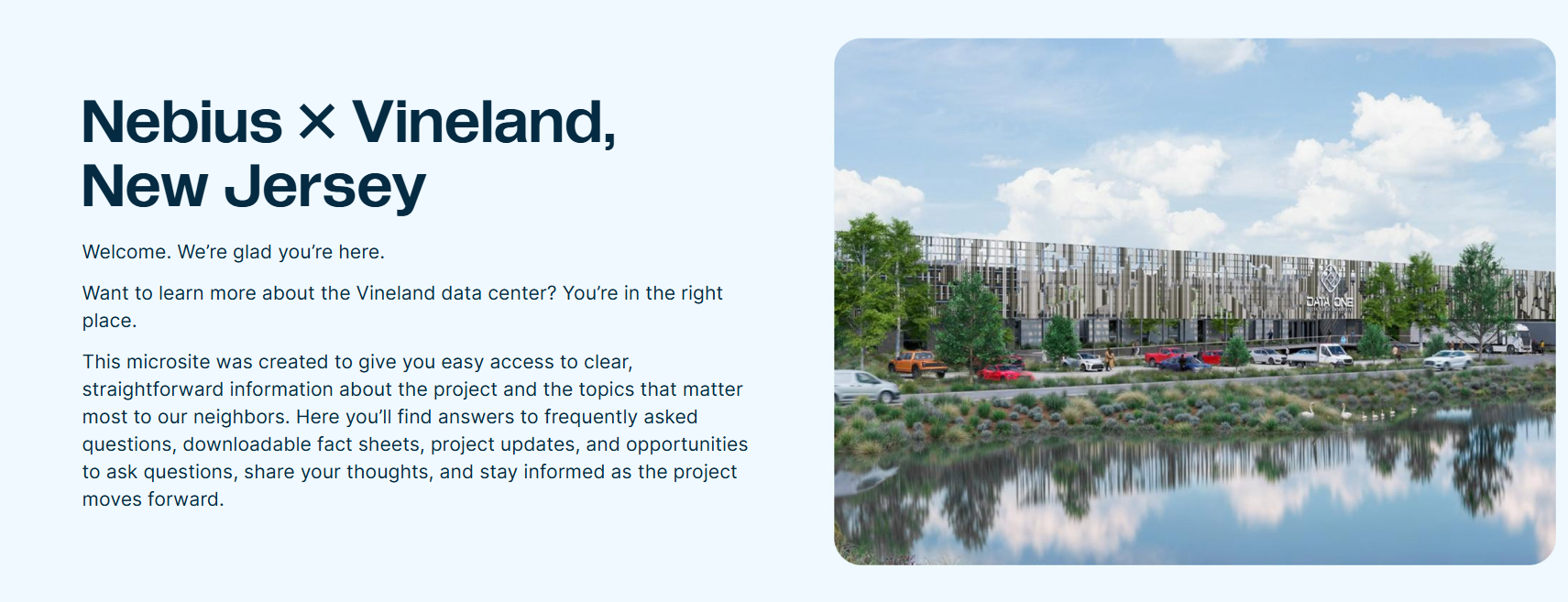
The project, called Data One, would occupy roughly the footprint of 45 football fields about a mile from some homes. Resident Peggy Schumacher, who has lived in her home 14 years, said vibrations from existing construction activity have already worsened a nerve condition in her legs and made her house feel unlivable. During the meeting, a company representative said the facility would need an average of 8 million gallons of water from the city, while acknowledging not all of the project's operational needs had yet been calculated.
Data One said it supports city leaders and that the site currently operates within local noise ordinance limits, adding that the facility could still be built if approved. Police maintained heavy security throughout the meeting as residents used the public comment period to demand clearer answers on resource use and what protections would be in place if the project moves forward.
📱 Social Buzz
Episode Title: The Bastrop City Council Controversy - MON 6.2
Episode: The Walton; Johnson Show
Listen:https://www.spreaker.com/episode/the-bastrop-city-council-controversy-mon-6-2--73765248
It was announced last week that planned data center construction by Quality Technology Services will comply with a set of guidelines pushed recently by Gov. Greg Abbott that are designed to protect Texans from the costs associated with the projects. pic.twitter.com/8QpneZXuLG
— Texas Scorecard (@TexasScorecard) August 10, 2026
Join us Aug. 25 from 4–8 PM at the Shreveport Convention Center for an open house on Amazon’s data center project coming to Bossier and Caddo Parishes. Drop in, ask questions and learn more. Parking cost is covered.
— NLEP (@theNLEP) August 10, 2026
Pre-register: https://t.co/nSdY09LFCO pic.twitter.com/gDC274RgDf
Rep. Ro Khanna (@RoKhanna) says AI data centers are shifting power, water and infrastructure costs onto communities.
— Benzinga (@Benzinga) August 10, 2026
He wants a Data Center Bill of Rights to let locals oppose projects and ban them in residential areas and farmland.https://t.co/ZpXkcjtBWh
Public comments regarding a Vermillion County data center ordinance will be held during a meeting at the end of August, after commissioners tabled the ordinance due to microphone issues during an August 3 meeting. https://t.co/tjuSaubIDC
— WTWO News (@wtwonews) August 10, 2026
Stay Updated with STRisker!
STRisker offers tools and features to keep you updated with the Short Term Rental and Data Centers movement across the world.
👍 We’d love your feedback.
Which stories hit? Which ones missed?
We're exploring a new branch of topics centered around Data Centers and want to make it even more useful for you.
✉️ Just reply directly to this email. We read and respond to every message!
-Will McClure
🙋 P.S.
Know someone else who should be reading Daily Notes? Feel free to forward this along. We’re opening a few more spots.