
Bulletin: Teller County, CO News Today
Ordinance 23 would cap short-term rentals at 10% of homes per subdivision, restrict them to four zoning districts, and charge operators $1,000 in first-year fees



Teller County Advances First Countywide Short-Term Rental Licensing Ordinance
Ordinance 23 would cap short-term rentals at 10% of homes per subdivision, restrict them to four zoning districts, and charge operators $1,000 in first-year fees
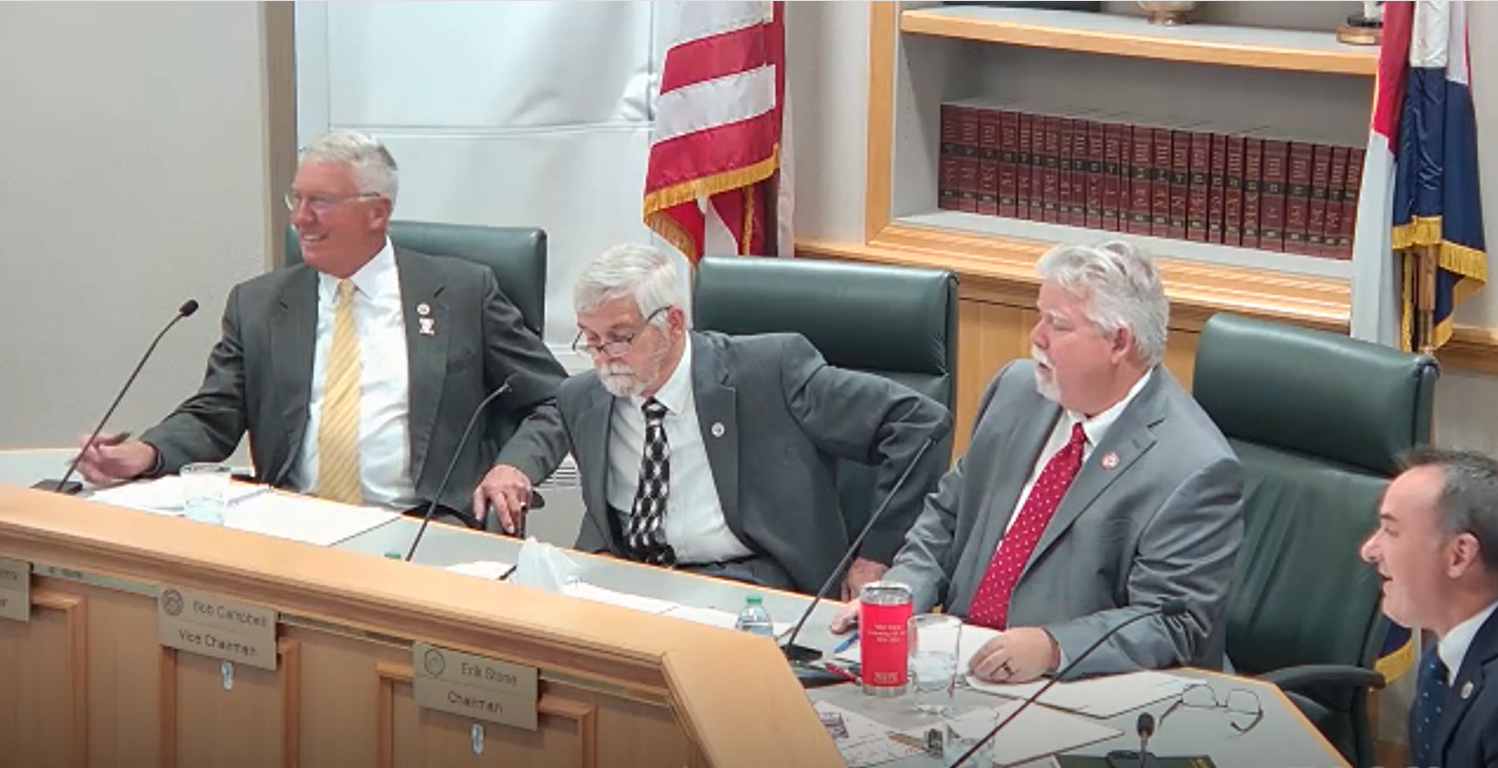
Photo from https://www.tellercounty.gov/
The Teller County Board of County Commissioners gave a first reading on August 6, 2026 to Ordinance 23 which would create the county's first countywide licensing system for short-term rentals.
The ordinance covers any lodging unit rented for fewer than 30 days in unincorporated Teller County. Operating without a license would become unlawful once the rules take effect.
What the ordinance requires
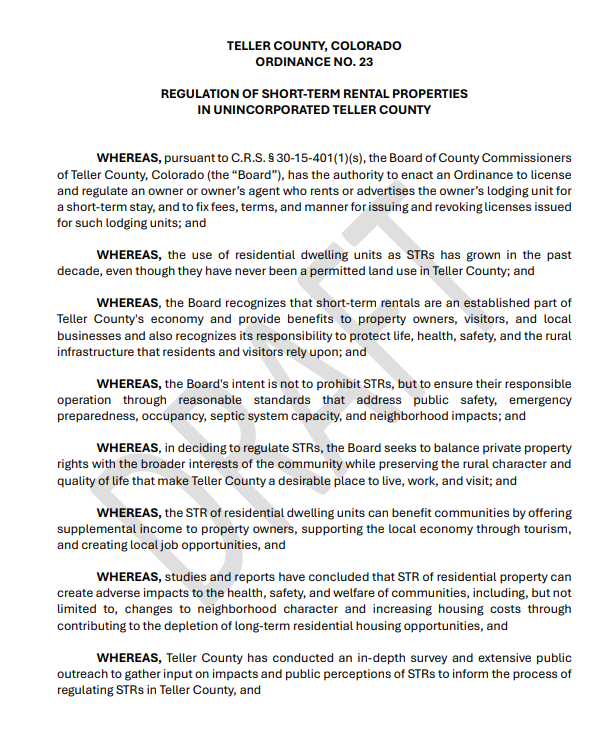
Teller County's Draft Short-Term Rental Ordinance
Draft Ordinance No. 23 outlining proposed licensing, safety, occupancy, and operating requirements for short-term rental properties in Teller County, Colorado.
Where rentals are allowed
Short-term rentals would be permitted only in the A-1, R-1, RR and R1M zoning districts and prohibited everywhere else. A density cap layers on top of that: within each subdivision, no more than 10% of residential properties containing a dwelling are eligible for a license.
Operating conditions and enforcement
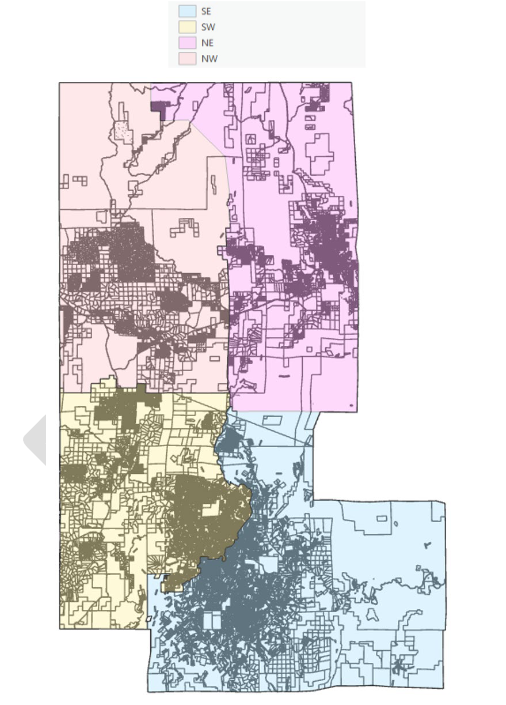
Teller County's Short Term Rental Information
Each licensed property needs a designated local contact (either a management company or a full-time resident) able to respond to complaints within 60 minutes. Quiet hours run from 10 p.m. to 6 a.m., trash containers must be wildlife-secure, and outdoor signage advertising the rental is banned.
Occupancy is set by the septic system's design capacity or two occupants per bedroom on central sewer. The county states it will not conduct routine pre-licensure or annual inspections but will rely instead on operator self-certification and complaint-driven investigation.
Violating a county ordinance adopted under this authority is a civil infraction punishable by a fine of up to $1,000 for each separate violation under C.R.S. § 30-15-402. The ordinance also invokes county zoning enforcement powers under C.R.S. § 30-28-124 where each day a violation continues counts as a separate offense. Separately, the Board of Adjustment may suspend a license for up to 30 days or revoke it, and revocation bars reapplication for two years.
⦾ Effective date: 30 days after publication following final adoption. No calendar date set.
⦾ Registration required: Yes, annual license
⦾ Application fee: $250, nonrefundable
⦾ Annual license fee: $750
⦾ Density cap: 10% of residential properties per subdivision
⦾ Night cap: None
⦾ Penalty for non-compliance: Civil infraction, up to $1,000 per separate violation; each day a violation continues is a separate offense
⦾ Platform responsibility: Yes. Listings must display a valid license number and maximum occupancy and platforms must remove non-compliant listings within seven days of county notice.
⦾ Grace period: 60 days for existing operators
Teller County's Draft Ordinance No. 23 Public Comment Form
In case you missed it:
 Jasmine Ruth Albatana
 Jasmine Ruth Albatana
 Jasmine Ruth Albatana
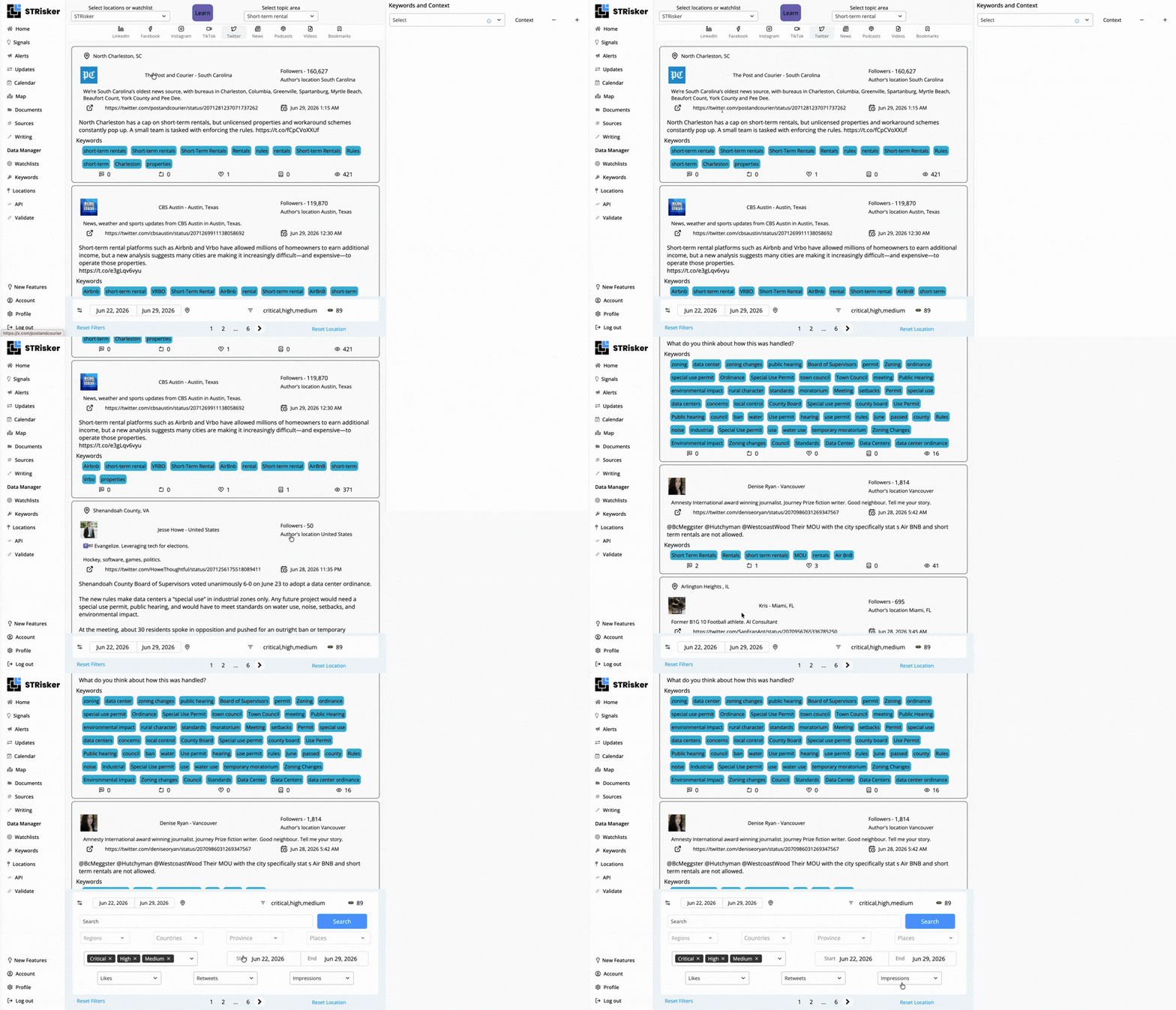
Social Listening📱: Twitter
Strisker’s Twitter Signal pulls real-time posts from officials, agencies, advocacy groups, and local influencers—so you see emerging sentiment and policy signals the moment they surface. Track conversations by place, people, and topics, then zero in on what actually matters.
Stay Updated with Strisker!
Strisker offers tools and features to keep you updated with the Short Term Rental movement (and now Data Centers!) movement across the world.
👍 We’d love your feedback.
We're always looking for ways to improve Bulletins.
Was this one useful to you? Other topics you'd like to see get covered?
✉️ Just reply directly to this email. We read and respond to every message!
-Will McClure
🙋 P.S.
Know someone else who should be reading this Bulletin? Feel free to forward this along. We want to make sure operators and stakeholders are aware of regulatory changes in their area.