
Data Centers: Daily Notes | August 6, 2026
Oklahoma is reviewing new utility tariffs for large electricity users; Bedford Township approved a comprehensive data center ordinance; Paducah could see its proposed $100 billion AI data center campus affected by federal legislation. READ MORE.


At A Glance 🔽
- Oklahoma is reviewing new utility tariffs for large electricity users to ensure expanding data center demand does not shift infrastructure costs onto residential ratepayers.
- Bedford Township, Pennsylvania approved a comprehensive data center ordinance establishing standards for setbacks, noise, lighting, environmental impacts, and electricity use before any projects are proposed.
- Paducah, Kentucky could see its proposed $100 billion AI data center campus affected by federal legislation that would prohibit AI data centers on federally owned land.
- Gregg Township, Pennsylvania is facing renewed opposition to a proposed data center as residents question whether new transmission lines needed for the project would shift infrastructure costs onto the public.
- Escambia County, Florida is considering an ordinance to ban large-scale data centers in unincorporated areas as officials debate whether the restrictions should explicitly cover all AI data center projects.
- Grimes County, Texas will review a resident petition calling for stronger oversight and community protections for large infrastructure projects seeking public incentives.
- Prince George's County, Maryland extended its moratorium on new hyperscale data center permits while officials develop stronger siting standards and public engagement requirements.
- Allentown, Pennsylvania is reviewing a proposed 75-megawatt data center amid legal challenges, community opposition, and new zoning rules that will apply only to future projects.
- Westlake, Texas approved initial plans for a proposed 300-megawatt PowerHouse Data Centers campus, with the developer funding new electrical infrastructure while future expansion remains subject to additional approvals.
- Butte County, California is emphasizing that no data center proposals are currently pending while residents urge officials to establish stronger safeguards and transparency requirements before any future applications are submitted.
Oklahoma
Oklahoma regulators are reviewing new utility tariffs for large electricity users as the state moves to shield households from the costs of expanding data center demand.
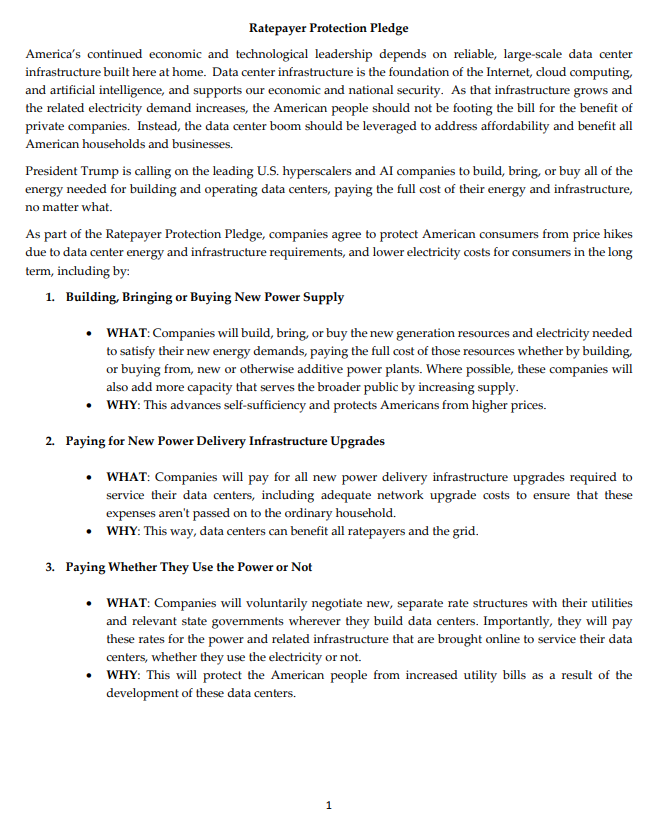
The review follows a state law requiring utilities to establish separate terms for large load customers and increase transparency, alongside Senate Bill 480, which allows data centers to build behind the meter power plants. State leaders have also backed a ratepayer protection pledge that requires developers to pay for their own electricity needs and invest in surrounding communities rather than shifting infrastructure costs to residential customers. While Oklahoma created a pathway for self generation, most proposed data centers continue to pursue grid connections through local utilities instead of building their own power plants.
Bedford Township, Pennsylvania
Bedford Township supervisors unanimously passed a data center regulatory ordinance Tuesday, while dropping a separate, unrelated ordinance targeting steel wheels and horse manure on township roads after residents said it unfairly targeted their Amish neighbors.
 Baylee Wojcik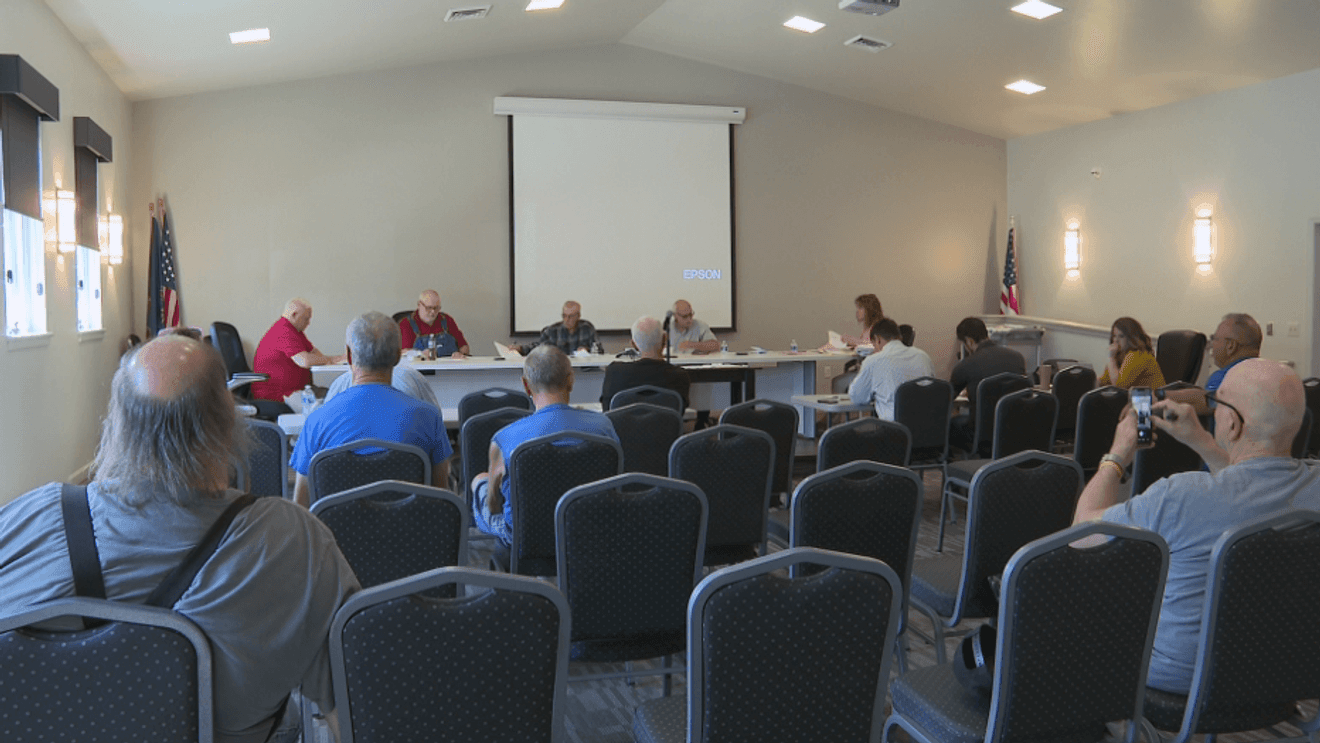
Township Attorney Brad Allison said the 20-page data center ordinance, covering setbacks, lighting controls, noise limits, environmental impacts and electricity use, is meant to put rules in place before any facility proposes locating in the township, since an outright ban would likely violate federal law. He said no data center company is currently in any communication with the township, and that Bedford County lacks the large water sources typically needed to attract such facilities. Residents who spoke raised concerns about water contamination, constant noise and strain on the electric grid, with one attendee playing an audio clip she said was typical data center noise, and others noting the potential harm to bees and other pollinators from habitat loss.
Paducah, Kentucky
A $100 billion AI data center campus planned for Paducah, Kentucky is now caught in the middle of federal legislation that would ban AI data centers on federal land, since the project sits on property owned by the U.S. Department of Energy.
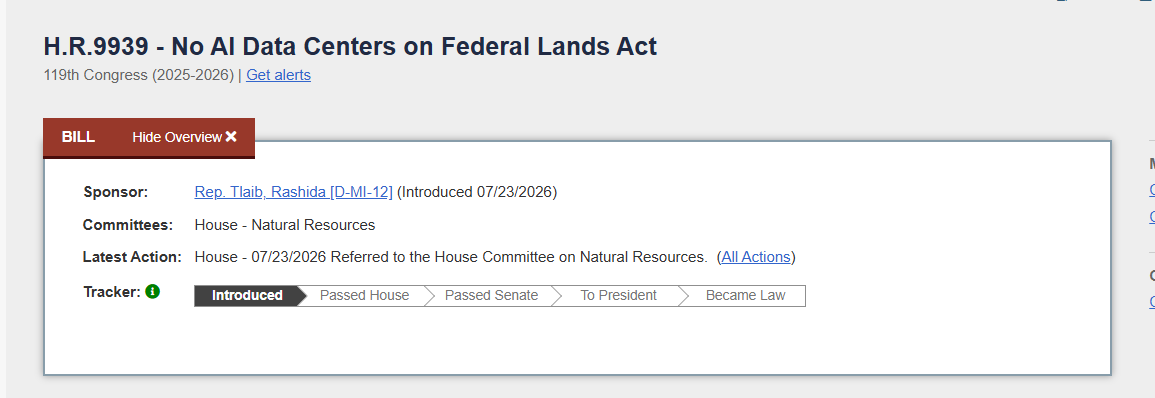
U.S. Rep. Rashida Tlaib introduced the No AI Data Centers on Federal Lands Act last month, just days before DOE announced plans to redevelop the former Paducah uranium enrichment site into a massive AI and computing campus. The bill would bar large AI data centers from federal land, including military installations, and would require existing qualifying facilities to be removed and their sites remediated. DOE selected Brookfield Corp. and NextEra Energy Resources to build and power the Paducah project, which is expected to bring more than $100 billion in investment, about 8,000 construction jobs and 600 permanent jobs, with more than 1.2 gigawatts of computing capacity and up to 1.8 gigawatts of utility capacity; NextEra plans to add up to 2 gigawatts of natural gas generation and 2.6 gigawatts of battery storage to supply it.
Gregg Township, Pennysylvania
Residents opposed to a proposed data center in Gregg Township, Pennsylvania are now facing a second development, PPL's proposal to build roughly nine miles of new 230,000-volt transmission lines through Lycoming and Union counties.


PPL described the project as necessary to meet growing energy needs and support new customer facilities, language residents believe refers to PNK Group's proposed data center at Great Stream Commons, though PPL hasn't confirmed the connection publicly. Potential routes shown in PPL's outreach materials cross residential properties, farmland and state game lands, and would require steel monopole towers 90 to 180 feet tall. Matthew DeWire of the Concerned Citizens of Gregg Township questioned who would ultimately pay the transmission costs, saying it appears the public could end up subsidizing infrastructure built primarily for a private data center project.
Construction, pending approval from the Pennsylvania Public Utility Commission, is expected to run from winter 2027 to winter 2029. PPL held an informational open house June 3 in Montgomery, two days after Gregg Township's own public hearing on zoning amendments tied to the data center project, where residents also raised concerns about water usage, pointing to a nearby Amazon Web Services facility in Salem Township that recently sought to increase its water use to 270,000 gallons per day.
Escambia County, Florida
Escambia County commissioners are set to continue discussion tonight on a proposed ordinance banning large-scale data centers, after residents said promised revisions to strengthen the ordinance's language haven't materialized.
 , Pensacola News Journal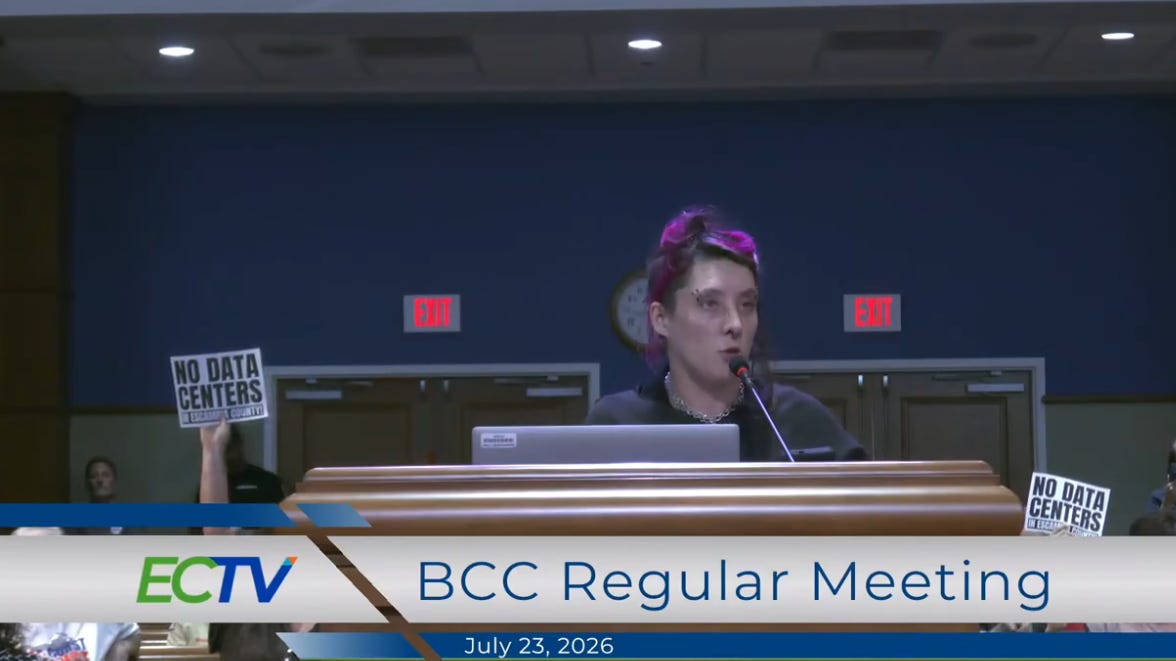
The proposed ordinance would amend Escambia's environmental health code to explicitly prohibit large-scale data centers in unincorporated areas, citing excessive utility demand without meaningful job creation. County leaders passed a resolution July 23 affirming that data centers aren't currently permitted under the county's Land Development Code, and County Attorney Alison Rogers said the code doesn't authorize data centers as a principal use of any size, meaning the county doesn't need to set specific size thresholds. Resident Brandy John, who launched a petition against data centers, said the ordinance as written leaves room for smaller and mid-size facilities, and criticized board members for resisting language that would explicitly cover AI data centers or "any and all" such facilities.
Tonight's public hearing, scheduled for 5:30 p.m. at 221 Palafox Place, gives commissioners the chance to vote on the ordinance as written or amend it based on further discussion.
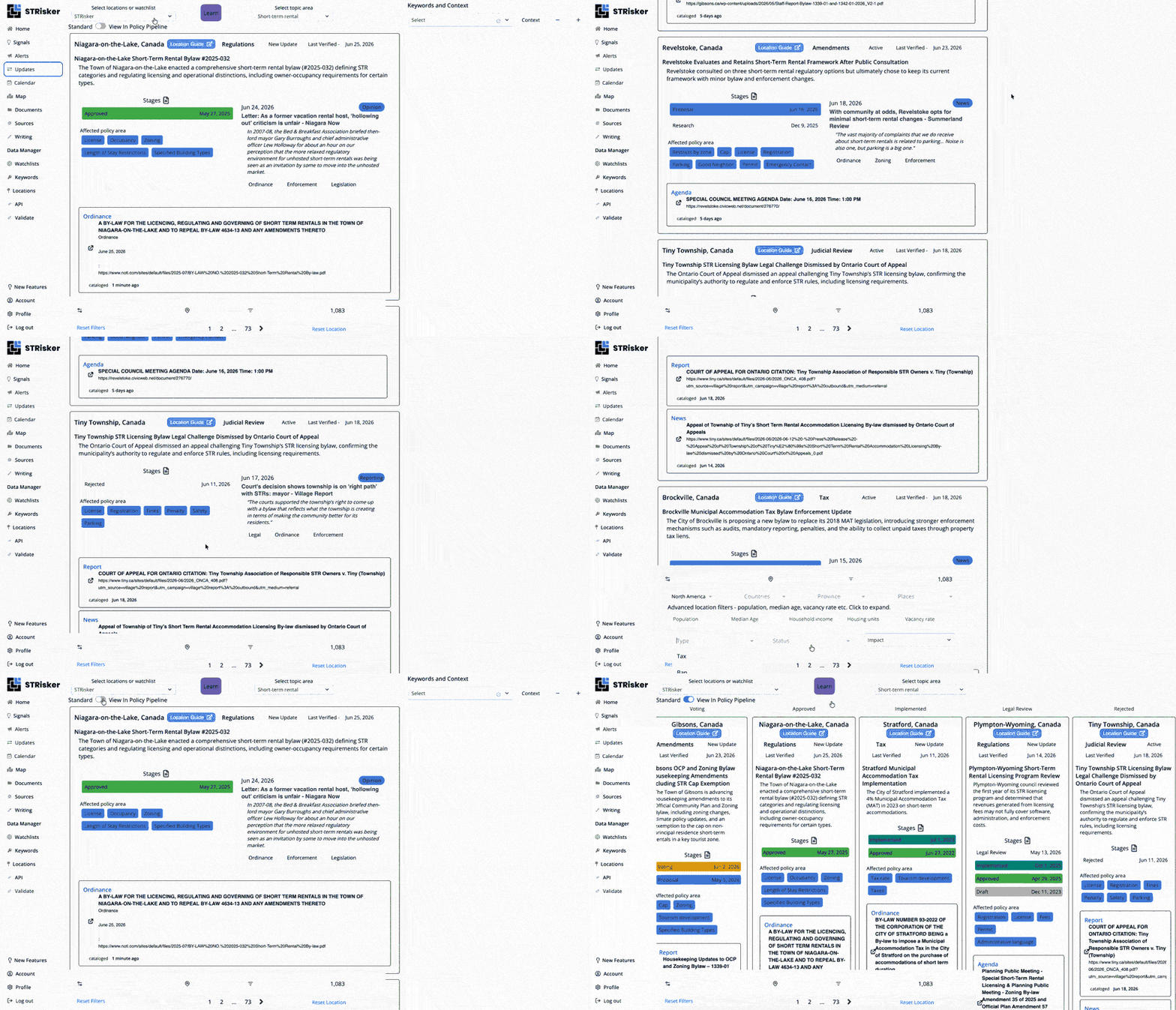
Strisker Updates Tracker
How do you keep up with the regulatory rollercoaster in your market? Strisker's Updates Tracker can be your guide - start tracking latest events as they happen and get access to essential documents as they come in. We know the struggle, which is why we built this product to capture every twist and turn in the regulatory saga so you never miss a beat.
Grimes County, Texas
Grimes County officials will review a resident petition calling for stricter oversight of large infrastructure projects receiving public incentives following concerns over SpaceX's planned Terafab semiconductor facility.



Nearly 900 residents urged the county to require stronger local oversight, measurable hiring commitments, pollution controls, and other community protections when companies seek tax abatements or development incentives. County commissioners said they will appoint a committee to evaluate some of the petition's proposals as residents continue raising concerns about power demand, environmental impacts, and rapid growth. The discussion comes as Texas faces increasing scrutiny over large AI infrastructure projects and their effects on local communities.
Prince George's County, Maryland
Prince George’s County extended its moratorium on new hyperscale data center permits after sustained public opposition to a proposed 820MW campus in Landover, where residents raised concerns over transparency, environmental impacts, and limited public input.
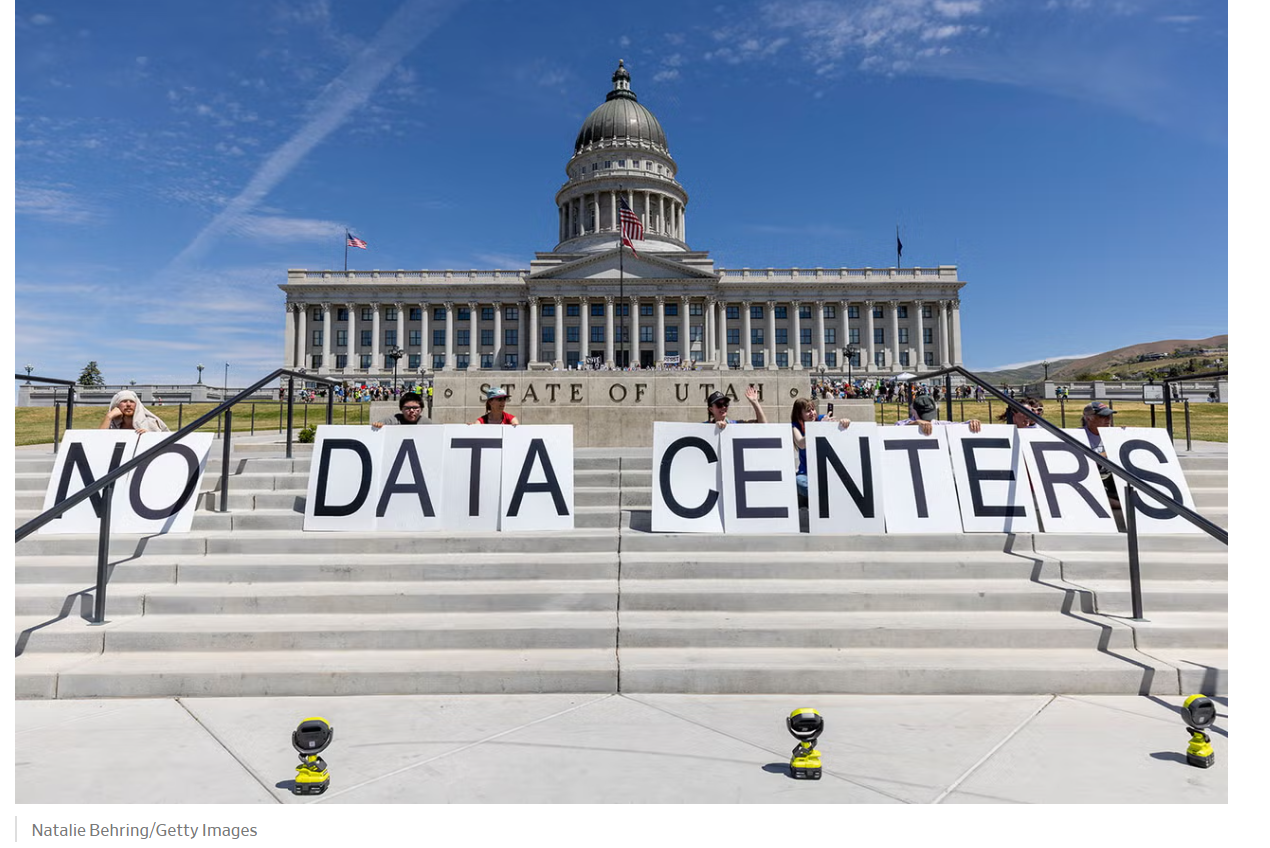
The debate has prompted county officials to reconsider earlier policies that streamlined data center approvals and explore stronger siting standards and community engagement requirements. While local leaders continue to recognize the industry's economic benefits, discussions now center on balancing future development with greater public oversight and stricter regulatory safeguards. The original Landover proposal remains uncertain, as officials weigh whether new regulations or additional action will determine its future.
Allentown, Pennsylvania
Allentown is facing increasing pressure over a proposed 75MW data center as developers push for a faster approval process while residents and community groups continue to oppose the project.
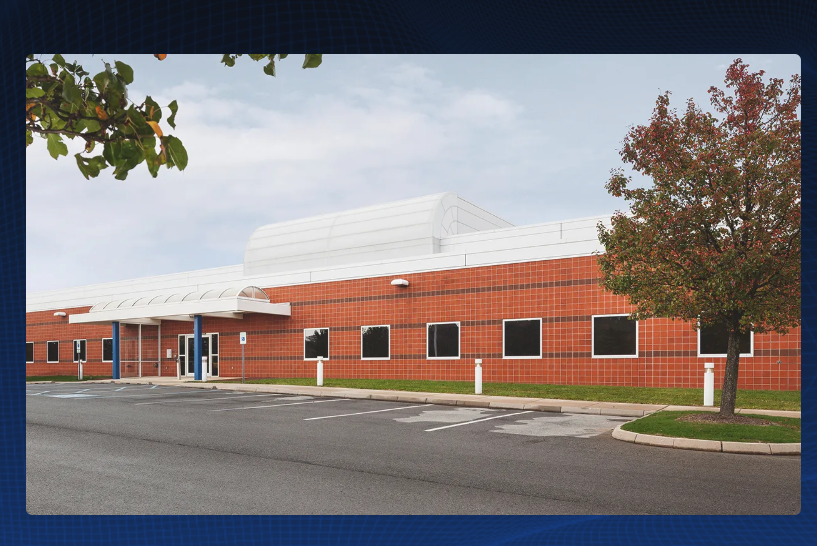

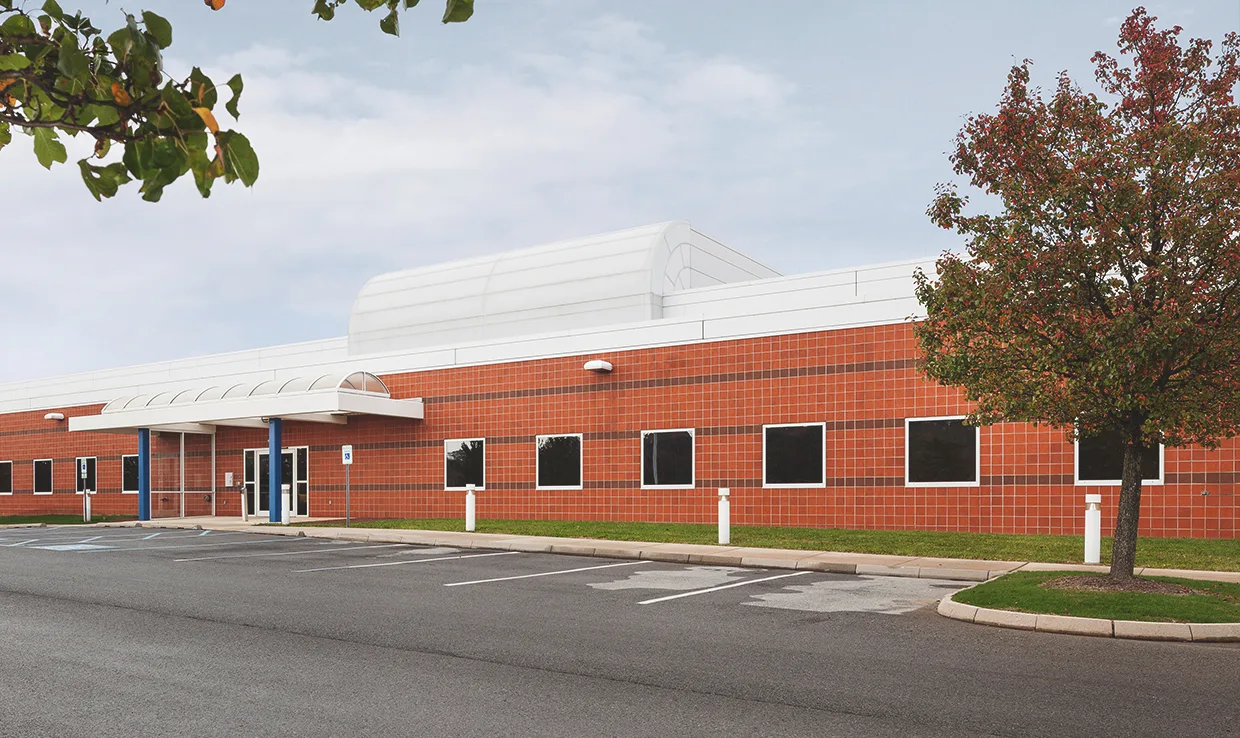
The city is reviewing plans to convert a 224,000-square-foot warehouse into a data center, with the proposal remaining before the planning commission despite a legal challenge from a neighboring nonprofit and concerns over noise, air pollution, and proximity to residential areas. Emails obtained through public records also show the developer warning of a potential zoning-related legal challenge while seeking an expedited review, highlighting tensions between rapid AI-driven development and local planning processes.
In response to growing public scrutiny, Allentown has adopted new notification requirements and stricter zoning rules for future data center proposals, although those regulations will not apply to the current application because it was filed before the ordinance took effect.
Westlake, Texas
Westlake, Texas approved initial plans for PowerHouse Data Centers' proposed 300MW Circle T campus, advancing a project that would include up to four 300,000-square-foot data center buildings on nearly 88 acres outside Dallas-Fort Worth.


The planning and zoning commission endorsed the site plans after town officials highlighted that the developer will fund a 350MW substation to serve both the data center and municipal infrastructure without passing costs to residents. While the first facility is permitted under existing zoning, any additional buildings will require separate specific-use permits, preserving local oversight as the campus expands. Town leaders also cited expected increases in tax revenue, infrastructure funding, and support for local schools while emphasizing efforts to minimize impacts on residents.
Butte County, California
Butte County officials told residents that no data center proposals have been submitted for unincorporated areas and emphasized that current zoning does not permit data center development, meaning any future project would require ordinance changes, public hearings, and approval from the county’s planning commission and board of supervisors.
More than 130 residents attended an informational meeting, with many urging the county to adopt stronger safeguards before any proposals emerge, citing concerns about water use, public oversight, and potential attempts to circumvent the approval process. Commissioners also discussed requiring greater disclosure of water consumption and acknowledged that nearby cities or neighboring counties could still pursue data center projects under their own land-use authority.
📱 Social Buzz
Commentary: A group of legislators in the Ohio House of Representatives introduced a far-reaching bill to regulate data center development across the state. Overall, though, it seems like this bill is a hammer for an issue that likely needs a scalpel. https://t.co/8Zbr1YWCbK
— David DeWitt (@DC_DeWitt) August 6, 2026
\
Lyon County developing data center ordinancehttps://t.co/Cpz7qaQngc
— Nevada Appeal (@nevadaappeal) August 6, 2026
✅ Data Center Moratorium. Vote for Will in November! https://t.co/5nnbdryrbB
— Big Tech Tracker (@TrackBigTech) August 6, 2026
Iowa coalition aims to back data center development across the state https://t.co/JCLRuFl97G
— Ames Tribune (@AmesTribNews) August 6, 2026
More locally, the Alexandria City Council called on Fairfax County to reject the proposed substation connected to a data center project. The Council is right: this is not an appropriate location for this sort of facility.https://t.co/ZzSH5nlbZw
— R. Kirk McPike (@KirkMcPike) August 6, 2026
Stay Updated with STRisker!
STRisker offers tools and features to keep you updated with the Short Term Rental and Data Centers movement across the world.
👍 We’d love your feedback.
Which stories hit? Which ones missed?
We're exploring a new branch of topics centered around Data Centers and want to make it even more useful for you.
✉️ Just reply directly to this email. We read and respond to every message!
-Will McClure
🙋 P.S.
Know someone else who should be reading Daily Notes? Feel free to forward this along. We’re opening a few more spots.