
Data Centers: Daily Notes | September 09, 2026
Arizona officials are divided over whether to pause data center development; Fort Wayne; Rock County; Lubbock; Chillicothe; Gallatin; Charlotte; Jasper County; Grant County; Kearney City. READ MORE.


At A Glance 🔽
- Arizona officials are divided over whether to pause data center development, with Attorney General Kris Mayes calling for a statewide moratorium while Governor Katie Hobbs opposes a blanket pause amid concerns over water, energy demand, and rising electricity rates.
- Fort Wayne, Indiana Councilwoman Rohli Booker introduced legislation to pause council actions on data centers for one year and establish a nine-member commission to study large developments and their infrastructure and resource demands.
- Rock County, Wisconsin supervisors are considering five data center resolutions, including a 13-member advisory committee and a nondisclosure agreement policy to study the impacts of hyperscale projects and improve transparency.
- Lubbock, Texas City Council unanimously passed a nonbinding resolution pledging to hold off on large-scale data centers until regulations covering water, electricity, setbacks, screening, landscaping, and lighting are developed.
- Chillicothe, Ohio residents are demanding greater transparency over a proposed data center at the former Pixelle paper plant, with an NDA dispute fueling distrust despite the developer’s promises of self-generated power, recycled water, limited infrastructure use, and 240 jobs.
- Gallatin, Tennessee city leaders unanimously advanced a proposed 12-month moratorium on new data centers to refine regulations and distinguish smaller facilities from hyperscale projects, with a formal vote expected next week.
- Charlotte, North Carolina officials are considering extending the city’s existing 150-day data center moratorium after a study found varying water, heat, and electricity impacts and staff called for additional research and regulatory development.
- Jasper County, South Carolina Council approved on first reading a temporary moratorium on new data centers, cryptocurrency mining, and data-processing facilities while officials study their impacts on water, electricity, infrastructure, and the environment.
- Grant County, New Mexico residents and environmental groups are raising concerns over a secretive natural gas-powered data center proposal near Hachita and Playas, prompting a county commissioner to propose a one-year moratorium for consideration later this month.
- Kearney City, Nebraska unanimously approved Project Horizon to expand an existing cryptocurrency data center into a 368-megawatt facility after adopting new regulations covering water efficiency, noise, conditional-use permits, and public impact studies.
Arizona
Attorney General Kris Mayes and Governor Katie Hobbs offered sharply different views this week on whether Arizona should pause data center development. Mayes said the state must stop approving new projects until water and energy impacts are clear, citing the strain from artificial intelligence‑driven demand.
 Alexis Dominguez
Hobbs countered that while concerns are valid, a statewide moratorium is not the right tool, and she pledged to keep working toward a balance between growth and sustainability. The debate coincides with APS proposing a 45 percent rate hike for data centers, citing grid constraints, while Microsoft challenges the increase. Arizona already hosts about 160 facilities, and opposition has intensified as projects expand.
A new bipartisan coalition is forming around Arizona data-center policy, @BrockBlasdell reports. https://t.co/DGKcOyVzlB
— Arizona Globe (@ArizonaGlobe) September 9, 2026
Fort Wayne, Indiana
Fort Wayne Councilwoman Rohli Booker has introduced legislation to pause council actions on data centers for one year and create a commission to study large developments.
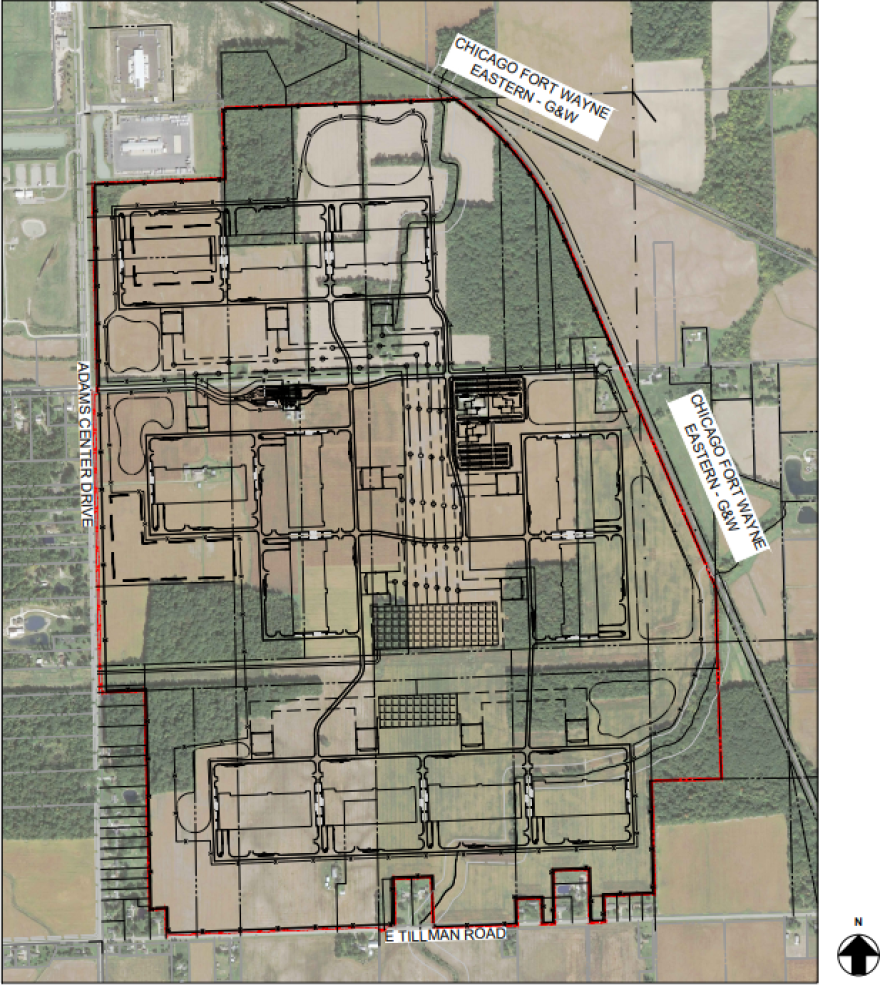
The proposal follows resident opposition to Google’s $2 billion campus, which was first advanced under the pseudonym Project Zodiac and is now operational with future phases planned. Booker emphasized the moratorium would apply only to council approvals such as rezonings, annexations, and tax abatements, not to ongoing work by city planning staff. The nine‑member commission would review projects with significant infrastructure or resource demands and report back within a year. Councilman Russ Jehl, who previously proposed a similar task force, praised Booker’s resolution as “brilliant.” The measure received unanimous support for introduction and will be discussed at a future meeting.
Rock County, Wisconsin
Rock County supervisors are weighing five resolutions on data centers, including creating a 13‑member advisory committee and adopting a nondisclosure agreement policy.
The staff committee voted 6‑3 to recommend the advisory committee and NDA framework, which would study countywide impacts of hyperscale projects and issue a report within 12 months. Supporters said the county should provide expertise on water, power, and infrastructure, while opponents argued municipalities already control zoning and warned of budget pressures. State Sen. Mark Spreitzer submitted comments supporting restrictions on NDAs, citing secrecy around a proposed project in Turtle. Economic development advocates countered that confidentiality is essential for companies to share information. The full County Board will take up the recommendations Thursday evening at the courthouse.
Lubbock, Texas
The Lubbock City Council unanimously passed a resolution pledging to hold off on large‑scale data centers until regulations are in place. Councilmember Tim Collins said the measure signals the city’s intent to pause approvals while staff drafts rules on water use, electricity demand, setbacks, screening, landscaping, and lighting.
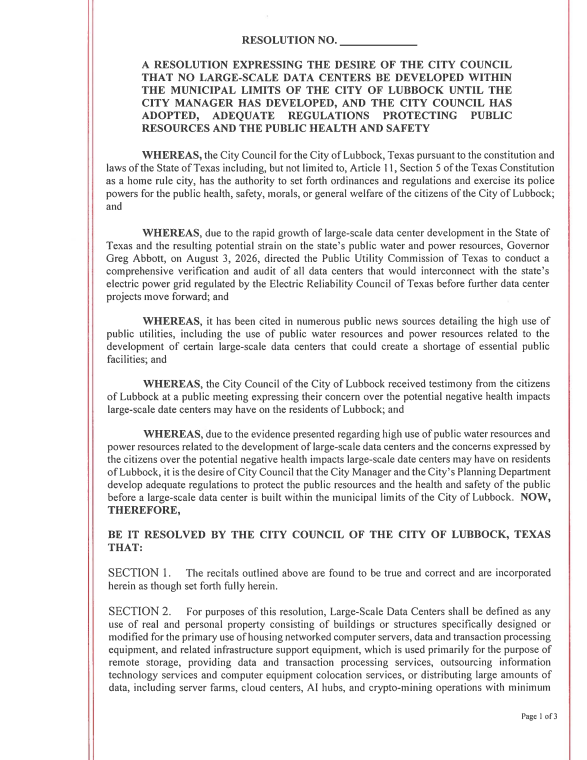
Mayor Mark McBrayer noted the resolution is not legally binding but reflects the council’s direction. Collins emphasized the pledge communicates the council’s stance to constituents during hearings where members cannot engage directly. The first reading of new ordinances is expected before the Planning and Zoning Commission next week. The council also hosted a hearing on a petition‑led 18‑month moratorium, which will be voted on later this month.
Chillicothe, Ohio
Chillicothe demands transparency as data center details emerge amid NDA scandal
Chillicothe residents voiced frustration over a lack of information about a proposed data center at the former Pixelle paper plant, raising concerns about secrecy and community impacts.
Councilman Gunner Barnes refused to sign an NDA during a site tour, saying his duty is to constituents, not companies. Alignment Engine, the developer, told residents the project is primarily an industrial redevelopment with a small data center footprint, promising self‑generated power, recycled water, and no reliance on local infrastructure. CTO David Stanfel said the facility would consume 28 million gallons of water daily but return it cleaner, and noise levels would remain below background thresholds. The company pledged 240 jobs and emphasized it had not sought tax breaks. Despite reassurances, the NDA controversy has fueled distrust, with residents questioning why confidentiality was required at all.
Strisker Calendar Tracker
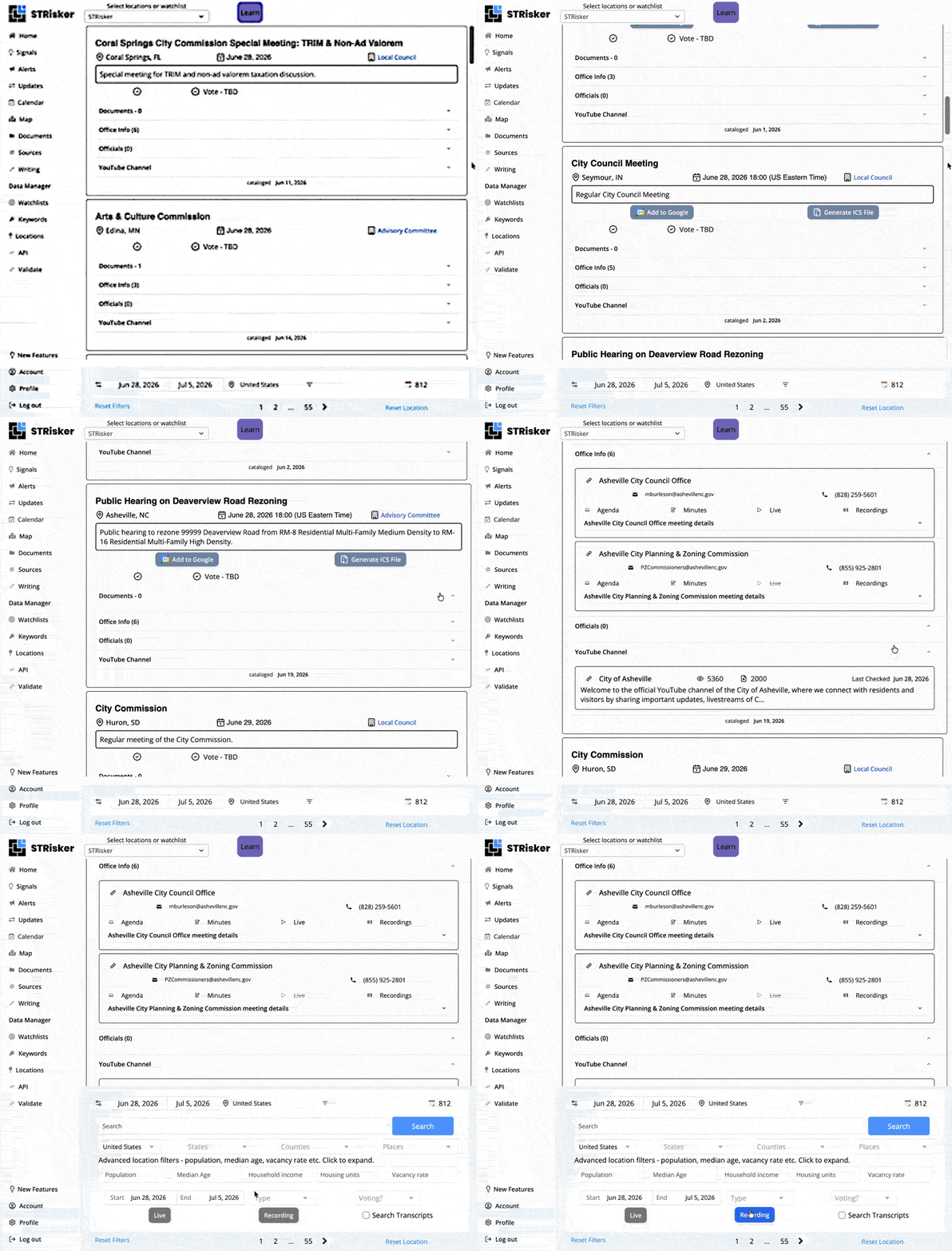
Staying ahead of STR and data center regulations isn’t just about deadlines—it’s about knowing what’s coming. Our Calendar Tracker keeps you informed on upcoming meetings, key votes, and policy changes, so you never miss a critical update.
Gallatin, Tennessee
Gallatin city leaders unanimously advanced a proposed 12‑month moratorium on new data centers Tuesday night, setting up a formal vote next week. The Planning Commission had earlier recommended the pause in a 5‑2 vote, citing the need to refine regulations as the city already hosts Meta’s massive campus.
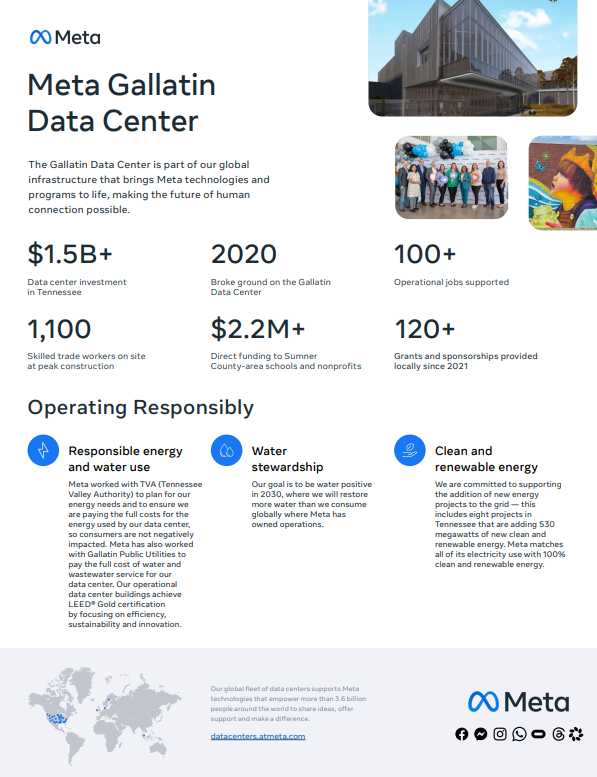
Staff explained that Gallatin’s new zoning ordinance includes protections such as noise and odor reviews, utility impact assessments, and setbacks of 200 feet from property lines and 500 feet from residences. Officials said the moratorium would allow time to distinguish between smaller edge facilities and hyperscale centers with far greater demands. Mayor Paige Brown emphasized the need to define categories clearly to avoid unintended restrictions on telecommunications infrastructure. Residents voiced support during public comment, and councilors agreed the pause would help balance growth with community protections.
Charlotte, North Carolina
Charlotte’s Transportation, Planning and Development Committee reviewed a city staff study on data centers Tuesday, following the 150‑day moratorium passed in June.
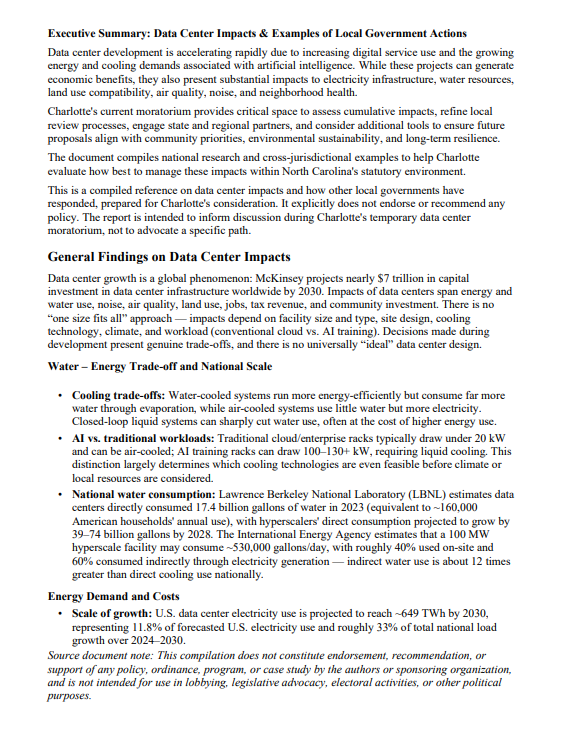
The Sept. 1 report found impacts vary widely depending on facility type, site layout, and climate, with water use, heat output, and electricity demand differing across projects. Officials noted limited data on energy consumption and said more expert consultation is needed. A Sept. 2 community forum drew strong opposition, with 78 percent of survey respondents against data centers, particularly in east and west Charlotte. Staff recommended extending the moratorium to allow further study and regulatory development. The council will likely discuss next steps at its Sept. 14 meeting, with the current moratorium set to expire Nov. 5.
Jasper County, South Carolina
Jasper County Council approved on first reading a temporary moratorium on new data centers, cryptocurrency mining, and data‑processing facilities, pausing applications, permits, rezoning requests, and incentives.
Chairman Joey Rowell described the measure as “pressing the pause button” while leaders study impacts on water, electricity, infrastructure, and the environment. The moratorium would apply only to unincorporated areas of the county, which has seen rapid growth. Officials said the pause is meant to give time to determine whether such facilities should be allowed and under what criteria. The ordinance must still clear additional readings before becoming law. Residents and leaders alike see the move as a way to balance economic opportunity with resource protection.
Grant County, New Mexico
Residents of Grant County were caught off guard when a legal notice revealed Site Layer 1 LLC’s plan to build a natural gas‑powered data center near Hachita and Playas.
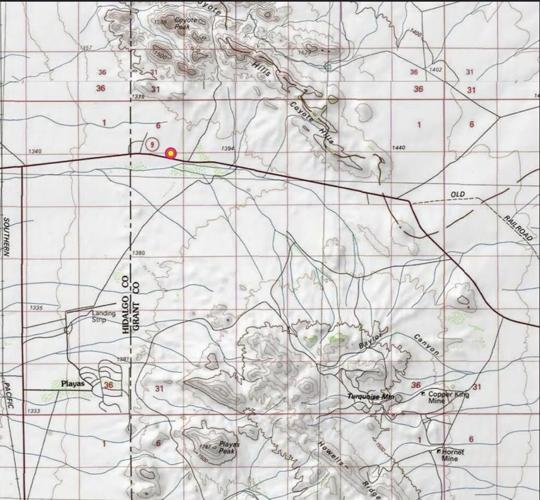
Environmental groups immediately raised alarms over secrecy, water use, and emissions, noting the facility could consume 2.3 million cubic feet of gas per hour and emit carbon equivalent to 282,600 cars annually. State Environment Secretary James Kenney criticized the company’s minimal outreach, urging stronger community engagement. County Commissioner Nancy Stephens is proposing a one‑year moratorium modeled on Socorro County’s ordinance, to be considered Sept. 24. The project’s ties to Corner Venture Capital and Granite Renewables added to concerns about transparency, as the only listed address is an empty Manhattan office floor.
Kearney City, Nebraska
The Kearney City Council unanimously approved Project Horizon, a redevelopment plan to expand an existing cryptocurrency data center into a 368‑megawatt facility using up to 5 million gallons of water annually.


Residents raised concerns about water availability, noise, and proximity to sensitive sites, prompting the city to draft ten pages of new regulations. These rules require efficient water systems, noise limits below 55 dBA, and conditional use permits with public hearings and impact studies. Developers SDV and Mara Holdings agreed to comply, including adding sound‑deafening walls to reduce current humming. City staff said the project will generate $20 million in property taxes and 59 jobs, while Mayor Jonathan Nikkila emphasized fairness and protecting quality of life. Officials credited residents for pushing the city to strengthen oversight before approving the plan.
📱 Social Buzz
Public opposition to AI data centers has surged, forcing developers to shift strategies as bans spread across states. https://t.co/RdpauE8nnE
— South Florida Business Journal (@SFBJNews) September 9, 2026
The group pursuing a statewide data center moratorium revealed new petition signature numbers on Tuesday, indicating it is still targeting the 2027 ballot. https://t.co/0tP6t22kog
— Gongwer Ohio (State Affairs Ohio) (@gongwer) September 9, 2026
U.S. House Rep. Suhas Subramanyam, a Virginia Democrat, has introduced a package of four bills that would set national requirements for data center development.https://t.co/qkaLxf8GRZ
— WTOP (@WTOP) September 9, 2026
Illinois Quick Hits: Lake County board approves data center moratorium | Illinois | https://t.co/vxTbz14P3w China loves Lake County https://t.co/zHqxxRak2J
— Steven West (@stevesportsbar) September 9, 2026
Rep. Subramanyam Unveils National Data Center Plan
— South Asian Herald (@SAHeraldNews) September 9, 2026
U.S. Representative Suhas Subramanyam (D-VA) has introduced a National Data Center Plan comprising four bills intended to guide data center development while protecting surrounding communities.
The legislative package includes… pic.twitter.com/S3XfdqDJvI
Stay Updated with Strisker!
Strisker offers tools and features to keep you updated with the Short Term Rental and Data Centers movement across the world.
👍 We’d love your feedback.
Which stories hit? Which ones missed?
We're exploring a new branch of topics centered around Data Centers and want to make it even more useful for you.
✉️ Just reply directly to this email. We read and respond to every message!
-Will McClure
🙋 P.S.
Know someone else who should be reading Daily Notes? Feel free to forward this along. We’re opening a few more spots.