
Data Centers: Weekly Briefing // May 18-21, 2026
This week on Data Centers: At least six moratoriums approved and St. Charles, MO moving to ban data centers outright, as the state-vs-local fight sharpens. Water and secrecy drove the backlash, while Ohio's tax break hit $1.6 billion and Conway, AR landed a $2 billion campus.


At A Glance 🔽
- Local pushback set the pace of the week, with at least six new moratoriums approved (Denver, Sanford, Normal, Mount Carmel Township, Logan County, and Niles) and St. Charles, MO moving to ban data centers outright.
- The state-versus-local fight sharpened: West Virginia's House moved to keep all siting authority at the state level, even as cities from Seattle to Longmont pushed bans and pauses of their own.
- The cost of tax breaks drew fresh scrutiny, with Ohio's exemption running $1.6 billion in 2025, eleven times its estimate, while Claremore, OK approved a fresh 25-year exemption for a new campus.
- Water emerged as the recurring flashpoint, from towns "out of water" in Crowell and Quanah, TX to well-field fears in St. Charles and a 300-million-gallon-a-year project in Denver.
- Secrecy became its own storyline, with Hubbard, OH residents confronting their mayor over an undisclosed NDA and Illinois advocates pushing to ban such agreements statewide.
- Developers kept pressing ahead, as Conway, AR landed a $2 billion campus that could reach $10 billion and QTS filed for 17 new buildings in Henrico County, VA.
- Regulators pushed back in equal measure, with projects denied or withdrawn in Pocatello, ID, Boulder City, NV, and Lisle, IL.
- Ratepayer protection went national, as Sen. Schiff's federal bill and North Carolina's Ratepayer Protection Act both advanced.
📋 This Week's Decisions

Just Passed
State Legislation
- West Virginia: At a two-day interim session, the Republican-led House affirmed that data center regulation will remain at the state level, stripping local governments of authority over siting decisions. A panel of delegates who attended the Data Center World conference told colleagues that growing AI demand makes expansion inevitable. Tax revenue will be collected by the state rather than host counties, and local commissions will have no power to block projects.
Bans Enacted
- St. Charles, Missouri: The City Council voted to effectively ban data centers citywide, formally defining the facilities as a distinct land use and excluding them from all permitted zoning categories. The vote follows months of opposition to Project Cumulus, a data center proposed near the city's well field. Any future proposal would now require the council to first reclassify data centers as a permitted or conditional use, then go through full public review.
Moratoriums Approved
- Denver, Colorado: The City Council voted to impose a one-year moratorium on new data center construction, with several members pushing for a permanent ban. The pause responds to a 600,000-square-foot CoreSite facility under construction in the Elyria-Swansea neighborhood, which could consume 300 million gallons of water per year. A working group will draft policy before the moratorium expires in May 2027.
- Normal, Illinois: The Town Council voted for a six-month moratorium, effective through November 30, to study infrastructure and zoning impacts before bringing any rules back for public input.
- Mount Carmel Township, Pennsylvania: Supervisors voted to enact a 180-day moratorium, drawing applause from more than 100 residents. Supervisor Aaron Domanski said officials would use the full 180 days to make zoning stricter.
- Sanford, Maine: The City Council unanimously approved a 91-day emergency moratorium, halting a proposed 1,000-acre development along the Mousam River. City Manager Steven Buck said the 91-day window likely won't be sufficient and the council will need to adopt a longer 180-day pause.
- Logan County, Illinois: The County Board approved a 12-month moratorium on large-scale data centers. Hut 8, which had been considering a project in the county, has not confirmed whether its proposal is off the table.
- Niles, Ohio: The City Council approved a 180-day moratorium on new data center permits and declared an emergency. The action follows an April presentation by Bitdeer, which plans a facility on Belmont Avenue. The council has hired consultant CodeCraft Planning Studio to draft restrictive language.
Regulations Passed
- Franklin County, Pennsylvania: Commissioners unanimously approved a new data center ordinance after months of hearings and more than 100 public comments. The amendment to the county's Subdivision and Land Development Ordinance sets standards for projects in municipalities without their own zoning. Commissioners called it a starting point and will revisit it twice a year.
Projects Approved
- Conway, Arkansas: A major technology company, not publicly named, purchased more than 700 acres on Lollie Road for a data center campus with an initial $2 billion investment and potential to scale to $10 billion. The city, Conway Corporation, and Conway Foundation boards voted unanimously last year to enter a memorandum of understanding. The facility would draw up to 1,000 megawatts from Entergy Arkansas and cool with redirected treated wastewater rather than the city's drinking water.
- Claremore, Oklahoma: The City Council approved Project Mustang, a multi-phase data center from Beale Infrastructure, after recent public debate. The agreement allows up to three air-cooled data centers, each with a 25-year ad valorem tax exemption. Beale said the facilities would contribute more than $250 million toward Rogers County schools and services over time and committed to covering 100% of power infrastructure costs.
- Madison, Indiana: Jefferson County's Board of Zoning Appeals voted to uphold a determination allowing a 7.1 million-square-foot data center on 549 acres at Jefferson Proving Grounds. The county zoning administrator had ruled the site's heavy industrial classification covered data centers; a resident appealed, and the board upheld the ruling. The Ford family, which owns the land, said the project would generate $60 million in annual tax revenue. The operator is still unknown.
Projects Denied / Withdrawn
- Lisle, Illinois: After Cloud Centers withdrew a 256,000-square-foot proposal at 711 Ogden Avenue, the village's planning and zoning commission took up an amendment to exclude data centers from its I-1 district, the only zone where they are currently permitted. If adopted, new data centers would be effectively prohibited. A January hearing on the original proposal drew hundreds of residents and had to be canceled due to overflow.
- Pocatello, Idaho: A hearing examiner denied a conditional use permit for an AI data center on the former Hoku polysilicon site, overruling city planning staff who recommended approval. Examiner Kathleen Lewis found that Lex Developments failed to meet the seven-part criteria, citing insufficient detail on water usage and building design. Developer Gus Schultz has 14 days to appeal and said he plans to return with a new application.
- Boulder City, Nevada: The planning commission voted to deny a proposed AI data center called Townsite Solar 2 after three hours of public comment. Residents said they did not welcome the project and cited concerns about preserving the character of their community.
💬 Catch Up on Discussions

- Federal: Sen. Adam Schiff introduced the Energy Cost Fairness and Reliability Act, which would require data center developers to pay for new power and transmission infrastructure rather than passing costs to ratepayers. It joins a growing list of bipartisan proposals aimed at curbing the electricity price impacts of data centers.
- Ohio: State lawmakers are launching a bipartisan joint data center committee co-chaired by Rep. Adam Holmes and Sen. Brian Chavez, which will invite companies like Google and Meta to testify starting May 27. Separately, Ohio's data center sales tax exemption cost the state $1.6 billion in 2025, eleven times the Department of Taxation's original $136 million estimate. House Speaker Matt Huffman has said he would like to override Gov. Mike DeWine's veto of a repeal but lacks the votes. A citizen-led effort also needs more than 413,000 signatures by July 1 to put a constitutional amendment banning data centers over 25 megawatts on the November ballot.
- Illinois: Environmental advocates are pressing for the POWER Act (SB4016) with less than three weeks before adjournment, but the bill has not moved beyond hearings since February. It would ban nondisclosure agreements between municipalities and developers, require public water-use reports, and mandate that new data centers build their own renewable generation. At least 27 data centers have received incentives totaling $983 million in estimated lifetime tax breaks.
- North Carolina: A House committee advanced Senate Bill 730, the Ratepayer Protection Act, which now moves to the House Rules Committee. The bill would require closed-loop water systems, prohibit ownership by governments or citizens of China, Russia, Iran, and North Korea, and bar local governments from offering incentives or using eminent domain to attract projects.
- Knox County, Tennessee: Commissioners took up a proposal from Commissioner Andy Fox to require data centers over 10 megawatts to obtain special permission from the Knoxville-Knox County Planning Commission, far below the 50-megawatt threshold in state law. No data center has been proposed in the county; Fox called the effort proactive.
- Cleveland, Ohio: Council President Blaine Griffin and Mayor Justin Bibb declared that data centers will not be permitted at The Midline, a 350-acre East Side redevelopment for high-tech manufacturing. The declaration follows the city's rejection of a $1.6 billion data center permit in Slavic Village, and Council has introduced separate legislation to block all new data centers until May 2027.
- South Whitehall Township, Pennsylvania: Parkland School District raised alarm at a May 12 board workshop over Project Atlas, a proposed 5.1 million-square-foot data center spanning more than 400 acres directly across from Parkland High School. The plan would include six buildings, a dedicated substation, and 356 diesel backup generators. The district wants a third-party sound study. The proposal is still preliminary.
- Henrico County, Virginia: QTS is preparing two campus expansions that would add 1,100 acres and 17 new data centers in Varina, nearly 8 million square feet on top of the 3 million-plus already built. The company has applied to permit 370 diesel generators, adding to 544 already permitted. The larger campus was the last major rezoning approved before Henrico began requiring provisional-use permits for all new projects.
- LaPorte, Indiana: The Common Council voted on whether to annex land for a second Microsoft data center, covering nine properties off Boyd Boulevard. The proposal has been under discussion for nearly four years, with some residents opposing another data center. Microsoft previously announced a $1 billion, 245,000-square-foot facility in the city.
- Lowell Township, Michigan: The board voted to reject a six-month data center moratorium, triggering an uproar and immediate recall threats. The moratorium responded to Microsoft's planned hyperscale campus at Covenant Business Park, which Microsoft voluntarily paused in December. The board instead authorized a committee to develop an ordinance.
- Hubbard, Ohio: Hundreds of residents packed a City Council meeting to confront Mayor Ben Kyle over a nondisclosure agreement he signed in 2024 tied to a data center known only as Project Milo. Council voted to propose a 12-month moratorium, with a final vote scheduled for June 1.
- St. Louis, Missouri: The city delayed a vote on sweeping new data center zoning rules after the Planning and Urban Design Agency recommended more time for public feedback. The framework defines three tiers, eliminates all by-right approvals, and would confine facilities of 30 megawatts or more to industrial Zone K, barred from sites within 600 feet of homes, schools, or parks.
- Cave City, Kentucky: Council members approved the first reading of a one-year moratorium on data center development. The city's current zoning ordinance does not address data centers at all. Some audience members pushed for a permanent ban rather than a temporary pause.
- Harford County, Maryland: The County Council approved amendments making the county executive's data center ban emergency legislation, scrapping a separate moratorium bill in favor of a faster path to a permanent prohibition. The packed hearing in Bel Air drew about 46 speakers. The owner of Mountain Branch Golf Course, the site developers reportedly eyed, asked the council to set strong standards instead of a ban. A public hearing is set for June 9.
- Little Rock, Arkansas: Mayor Frank Scott Jr. presented a proposed regulatory framework sorting facilities into accessory, major, and hyperscale tiers. Hyperscale facilities could only be built in heavy industrial zones with 1,000-foot setbacks from nonindustrial properties, and all data centers would be barred from using on-site wells as a primary cooling source. The board is expected to vote June 2.
- Jackson, Mississippi: The City Council tabled a proposed data center moratorium after a debate over whether it required formal zoning procedures. The 183-day measure would have banned construction, permitting, and site plan approval for data centers exceeding five megawatts.
- Lufkin, Texas: Residents clashed with city leaders after speakers were repeatedly cut off for raising data centers, which were not on the posted agenda, and one resident was removed from the chambers. Residents fear projects at the former Southland Paper Mill and Aspen Power sites could strain water and electricity, though Mayor Mark Hicks noted the proposed site sits outside city limits.
- Longmont, Colorado: The city is considering a ban on hyperscale data centers that consume 100 megawatts or more at peak, a level the city's utilities director said equals about half Longmont's peak load on a hot summer day. Council Member Matthew Popkin proposed the ban in April, citing fire risk and drought. A final decision is not expected before June 9.
- Alachua, Florida: More than a dozen residents pressed the city commission to oppose a large-scale AI data center rumored for 104 acres at Phoenix Commercial Park. The site was listed in February as a high-megawatt data center development site but has since been relabeled an industrial redevelopment opportunity. The city manager confirmed no formal application has been submitted.
- Dubuque County, Iowa: The Zoning Commission began reviewing data center regulations, using other Iowa counties' ordinances as a starting point. The county has no dedicated ordinance and no current applications. Town hall meetings are planned this summer.
- Seattle, Washington: Councilmembers introduced a one-year moratorium after reports that four companies approached Seattle City Light with proposals for five large-scale facilities, with a combined maximum demand of 369 megawatts. The city has roughly 30 small data centers but no large-scale ones yet. Both committees are expected to vote June 3.
- Mesa, Arizona: The Planning and Zoning Board voted to recommend council approval of NTT Global's 2.3 million-square-foot, seven-building campus on a 170-acre site at Pecos and Crismon roads. NTT bought the land for $300 million last year, and the project is grandfathered under Mesa's previous warehousing ordinance. Council introduction is set for June 8, with action expected July 20.
- Irondale, Alabama: City leaders said Irondale is not pursuing data centers after an Ordinance Committee meeting where community feedback ran heavily opposed. An official said 70 to 80% of communities that hold these conversations end up opposing data centers, and called the meeting a proactive step to gauge whether protective regulations are needed.
- Crowell and Quanah, Texas: Residents continue raising concerns that proposed projects could strain already-tight water supplies. Crowell Mayor Ronnie Allen said the community is currently out of water, and a Quanah council member said the region may have only one to two water years left if it keeps adding data centers and population.
📅 Upcoming Meetings

- Ohio: Bipartisan joint data center committee holds its first meetings, May 27 and 28.
- Hubbard, Ohio: Final vote on a 12-month moratorium, June 1.
- Little Rock, Arkansas: Board of Directors expected to vote on the tiered framework, June 2.
- Seattle, Washington: Land Use and Parks committees expected to vote on a one-year moratorium, June 3.
- Mesa, Arizona: Council introduction of NTT's campus, June 8.
- Harford County, Maryland: Public hearing on the data center ban, June 9.
- Longmont, Colorado: Earliest expected decision on a hyperscale ban, June 9.
- Ohio: Deadline for citizen ballot signatures, July 1.
👀 In case you missed it...
This week in the Data Center space.
Read something interesting from this weekly briefing? You can read more about it below.
 Dane Artisola
 Dane ArtisolaDane ArtisolaDane Artisola
📱 Most Clicked Link This Week
What are others watching?
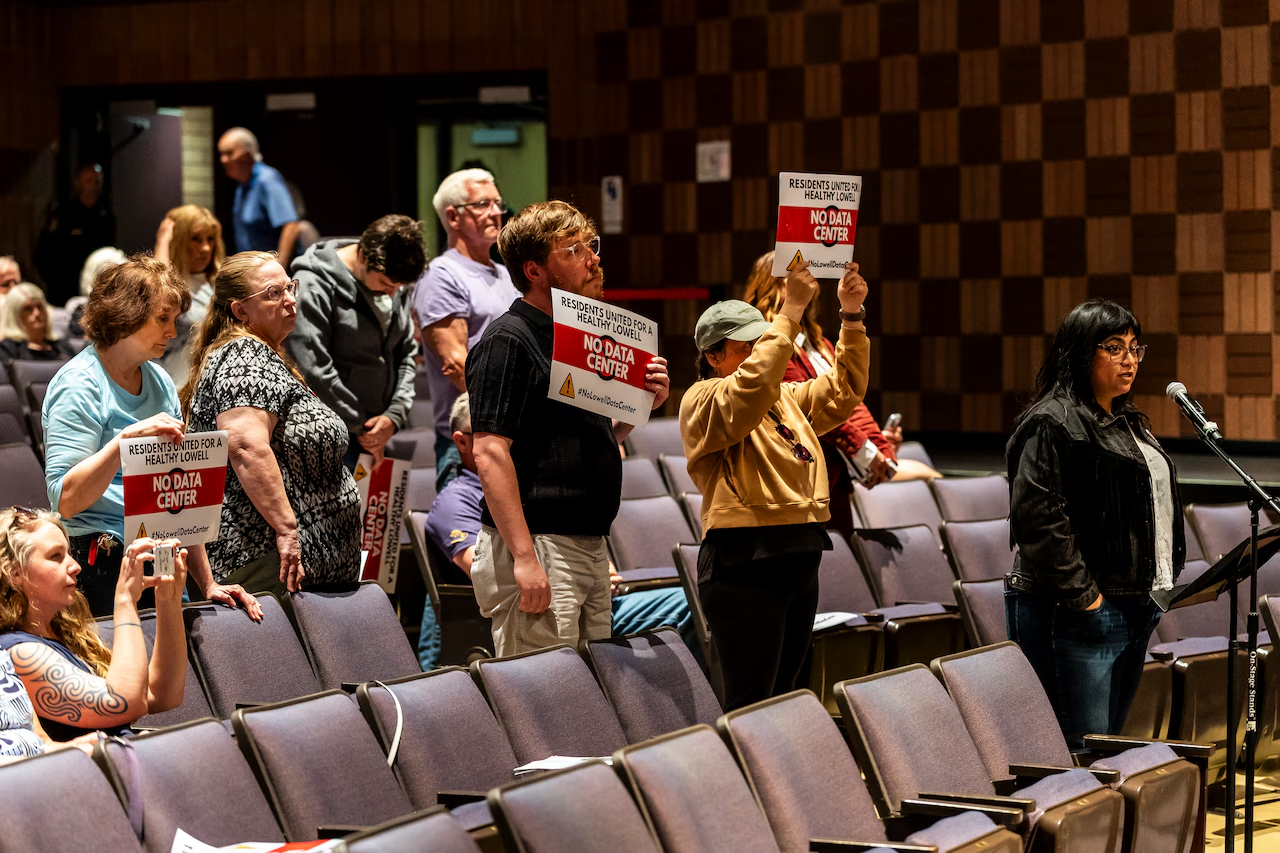
Residents threaten recall after Lowell Township rejects data center moratorium...
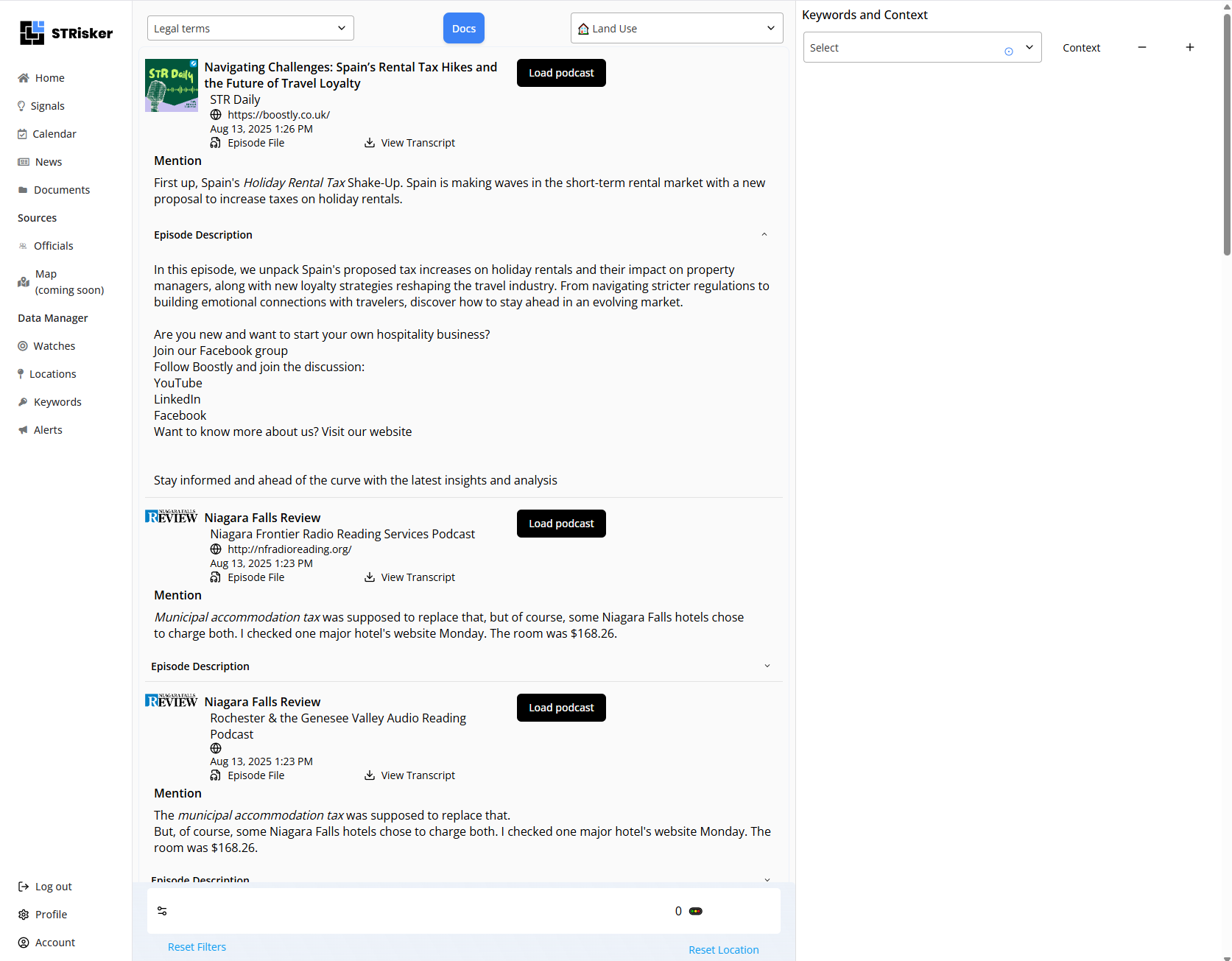
STRisker Updates Tracker
How do you keep up with the regulatory rollercoaster in your market? STRisker's Updates Tracker can be your guide - start tracking latest events as they happen and get access to essential documents as they come in. We know the struggle, which is why we built this product to capture every twist and turn in the regulatory saga so you never miss a beat.
Stay Updated with STRisker!
STRisker offers tools and features to keep you updated with the Short Term Rental movement (and now Data Centers!) movement across the world.
👍 We’d love your feedback.
Which stories hit? Which ones missed?
We're constantly refining Weekly Briefing to make it even more useful for you.
✉️ Just reply directly to this email. We read and respond to every message!
-Will McClure
🙋 P.S.
Know someone else who should be reading Weekly Briefing? Feel free to forward this along. It is the easiest way to stay ahead of regulation changes in short-term and vacation rentals.