
Key Permits, Approvals, and Processes for a Data Center Permit
Understand the importance of data center permits, the key approvals and permits required, and the process and timeline for acquiring them.

At A Glance 🔽
- A data center permit is a formal approval from a local, state, or federal authority that allows the construction, expansion, and operation of a data center.
- It is important to acquire a data center permit for legal authority, ensuring safety and code compliance, protecting the environment, maintaining grid reliability, and facilitating financing and insurance.
- Some of the key permits and approvals are zoning and land use approvals, building permits, environmental reviews and permits, utility and interconnection approvals, and other approvals.
- The common process for a data center permit application includes location screening, holding pre-application meetings, submitting a utility interconnection request, completing environmental review, zoning, and land use applications, obtaining a building permit, and passing final inspection.
Definition
A data center permit is a formal approval from a local, state, or federal authority that authorizes the construction, expansion, and operation of a data center. Obtaining a data center permit shows that a data center project has complied with regulations regarding land use, construction, grid capacity, and environmental impact.
In practice, a data center requires multiple permits and approvals from various agencies or authorities for different parts of the project. Determining the number of required permits depends on the location and size of the data center facility.
✅ Importance
A data center permit is a determining factor in whether a project can move forward and for how long the development takes. Here are some of the reasons why data centers matter:
Legal Authority to Construct and Operate
Without the required approvals, a data center project cannot proceed. Construction and operations without permits may result in fines and legal action.
Safety and Code Compliance
Data centers need extensive electrical equipment, backup generators, and fuel storage. Permit evaluations ensure that these data centers meet fire, electrical, and structural standards.
Environmental Protection
One of the concerns raised by the opposition is the environmental impact of constructing data centers on nearby communities. Some of these concerns include the large amounts of water and energy needed for cooling systems, as well as the emissions produced by generators. Acquiring permits shows the extent of these impacts and offers management strategies to address them.
Grid Reliability
A large facility can consume as much power as a small town. Utility approvals ensure that the available grid capacity can support the load without impacting other customers. Lawrence Berkeley National Laboratory's 2024 U.S. Data Center Energy Usage Report provides estimates for historical data center electricity usage and projected demands through 2028.
Financing and Insurance
Lenders, investors, and insurers usually expect proof that a project is properly permitted before they commit funds or coverage. This gives them assurance that a project can legally move forward.
📋Key Permits and Approvals
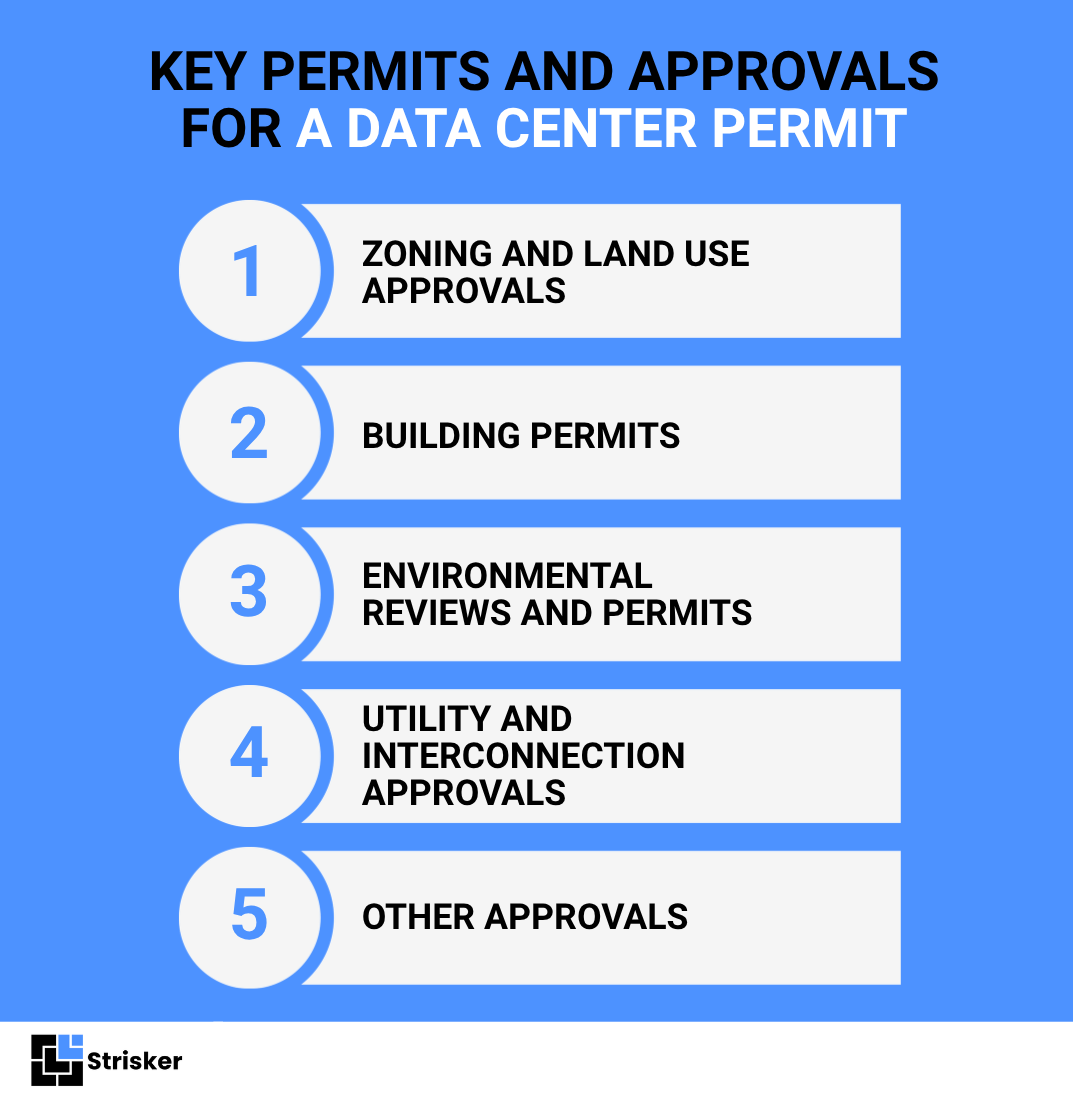
There are different requirements for key permits and approvals per jurisdiction. It is crucial to confirm the necessary requirements with the local planning office beforehand.
Zoning and Land Use Approvals
Before a data center can use its chosen parcel, zoning approval must be obtained. If zoning approval is not granted initially, a conditional use permit or a rezoning must be secured. Some zoning and land-use approvals involve public notice and a hearing.
Building Permits
A building permit authorizes the construction of the structure itself. The local building department reviews your plans for compliance with the structural, electrical, mechanical, and fire codes.
Environmental Reviews and Permits
Environmental reviews and permits provide clearance for a data center project by assessing the project's impacts on air, water, land, and surrounding communities. The environmental reviews for a data center project vary depending on the project's details. Here are some examples of environmental reviews:
- Air quality permits focus on emissions from diesel or gas backup generators. The U.S. Environmental Protection Agency (EPA) publishes Clean Air Act Resources for Data Centers, which is a webpage that guides developers to figure out which air permits apply to their project. These permits are usually issued by state or local air agencies.
- Stormwater and wastewater permits cover the stormwater runoff and discharge from cooling systems.
- Water use approvals include the withdrawals from cooling, which can be restricted in water-stressed areas.
- Environmental impact assessments may be mandatory for larger data center projects in some jurisdictions and can also lengthen review timelines. EPA explains how the National Environmental Policy Act (NEPA) review process works at the federal level. NEPA only applies when a project needs federal action such as federal land, funding, or permits. It can range from environmental assessment to full environmental impact statements.
Utility and Interconnection Approvals
Data center operators submit their applications to a local utility or grid operator. Then, the applications are placed in an interconnection queue. The operator assesses and verifies whether grid capacity is available or whether upgrades, such as new substations or transmission lines, are needed. If the proposed location has heavy demand, the approval process may take longer than for other permit submissions.
Other Approvals
- Fire and life safety approvals check the suppression systems, alarms, and emergency access.
- Fuel storage permits cover the on-site diesel tanks for generators.
- Noise and lighting approvals apply to projects planned near residential or commercial areas.
⚙️Process and Timeline
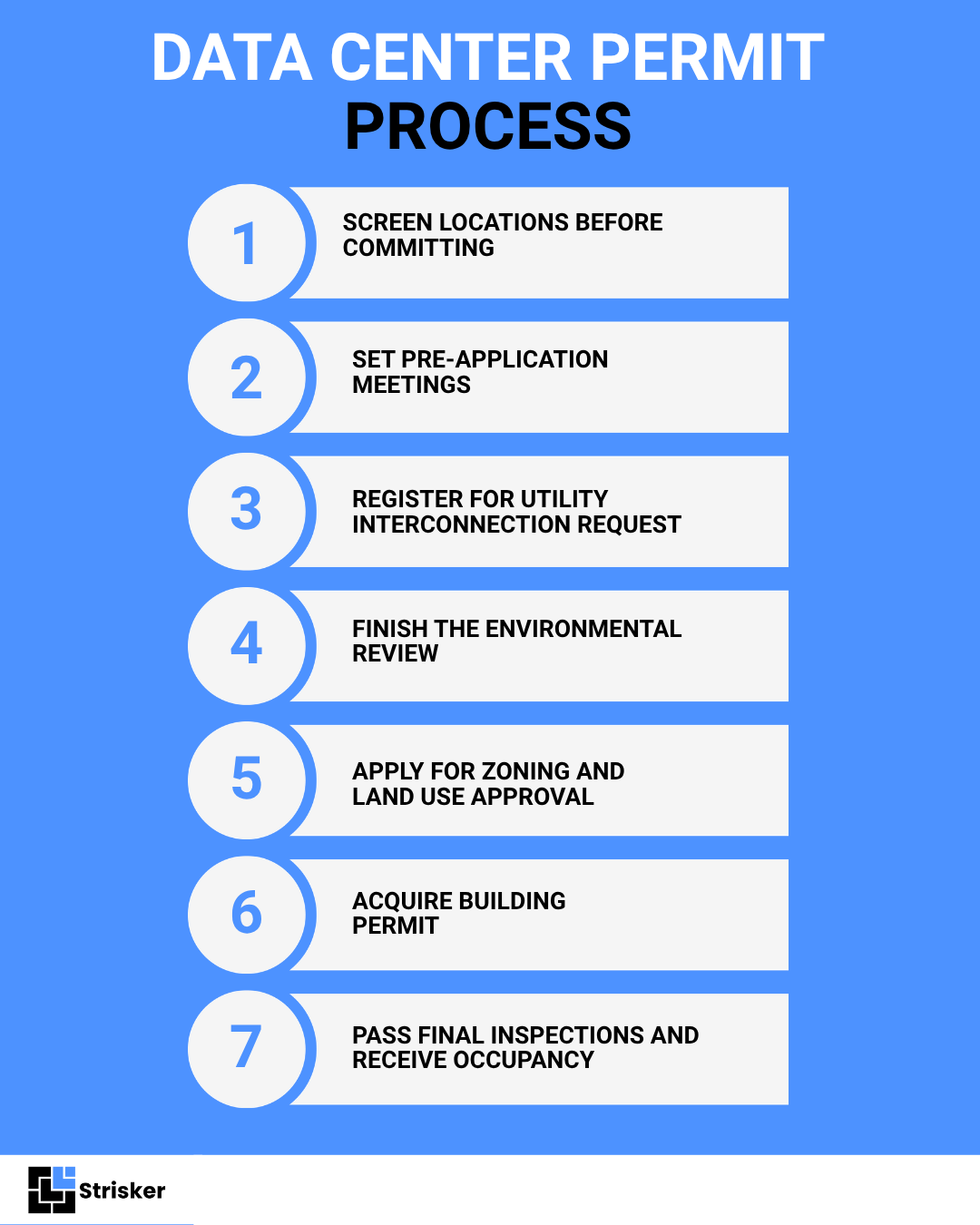
The steps below outline the common process a project must follow to obtain permits and approvals. The timeline for these submissions depends on the jurisdiction, the size of the project, and the completeness of the applications. The order of these steps can also depend by jurisdiction.
Step 1: Screen Locations Before Committing
Assess the zoning, available grid capacity, water access, and any environmental restrictions for every potential location. A good site location helps avoid potential delays. For example, a team could rule out a location if it lacks sufficient water access to sustain the data centers' cooling equipment.
Step 2: Set Pre-Application Meetings
Schedule a meeting with the planning, building, and utility departments prior to application submissions. During this meeting, inquire which permits apply to your data center projects, what documents you need to collect, and how long each review takes. These scheduled meetings sometimes include additional requirements not disclosed in the published rules.
Step 3: Register for Utility Interconnection Request
Register your power request as early as possible since the interconnection queue is usually slow. After the submission, you will need to wait for the utility to conduct load and system impact studies. Developers usually file this request before other applications because the results of these studies and reviews will influence the design of the project.
Step 4: Finish the Environmental Review
Complete the required studies and permit applications for air, water, and land impacts. If your local jurisdictions require public comment, arrange that period into your project timeline. Missing requirements may result in your applications being resubmitted.
Step 5: Apply for Zoning and Land Use Approval
Submit your land use applications with site plans and supporting documents. Some applications might require hearings, so it’s important to prepare your responses to address community concerns such as noise, power demand, and water resources.
Step 6: Acquire Building Permit
File your construction drawings with the building department. Reviewers may provide feedback that needs to be addressed before approvals are granted. Create a schedule for required inspections at each construction stage once the permit is issued.
Step 7: Pass Final Inspections and Receive Occupancy
Once the construction is complete, the facility must pass a final inspection and obtain a certificate of occupancy. The utility company should also verify the connection before the site is connected to the utility.
Common Timeline
Some of the steps may coincide rather than follow one another. For small facilities, approvals such as building permits can take a few months. In contrast, larger projects that require additional permits, such as environmental reviews, rezoning, or major grid upgrades, may take a year or longer to complete.
Conclusion
A data center permit helps determine whether a project can be built, expanded, or operated on a given site. It usually involves a set of approvals, which include zoning, construction, environmental review, and grid capacity, which are issued by different departments. The requirements are different depending on where the data center is located or how large the project is.
For developers, it is important to track the data center permit process since each agency requires different approvals and submissions. For residents, public hearings and comment periods provide an opportunity to voice concerns regarding issues such as noise, water resources, and power demands. Strisker offers tools, features, and newsletters to assist you with compliance and provide information for data center permit applications.
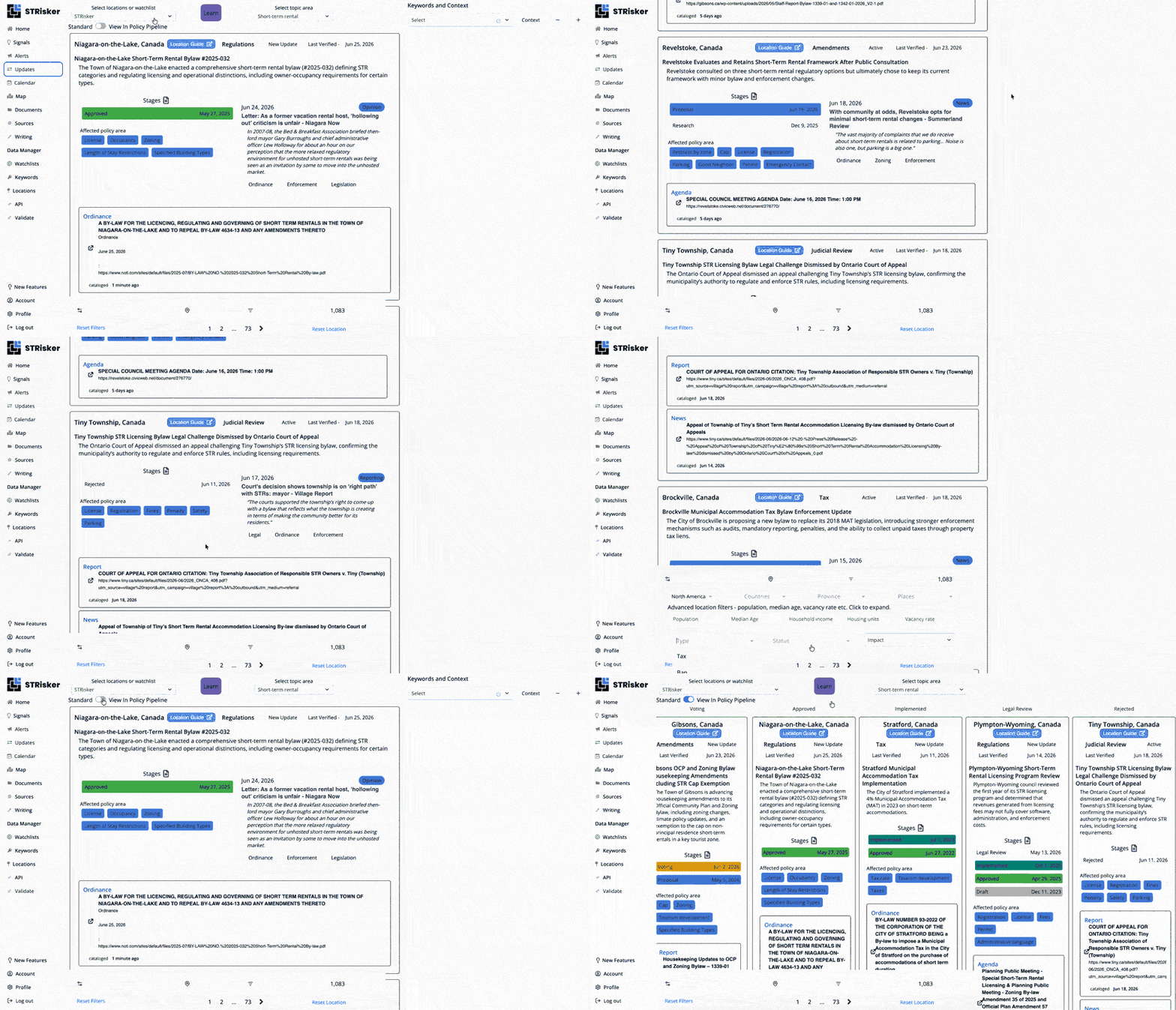
Strisker Updates Tracker
How do you keep up with the regulatory rollercoaster in your market? Strisker's Updates Tracker can be your guide - start tracking latest events as they happen and get access to essential documents as they come in. We know the struggle, which is why we built this product to capture every twist and turn in the regulatory saga so you never miss a beat.
FAQs
Do data center expansions require new permits?
Due to changes and additions to the building space, generators, cooling equipment, or electrical load, data centers must obtain new or amended permits and approvals to operate. Even small changes within the existing approved footprint may still require verification, so it is important to consult with the local building department.
Why do data center permit applications get delayed?
Here are the common causes of delays for permit applications:
- Limited grid capacity
- Long interconnection queue
- Incomplete applications
- Public oppositions at zoning hearnings
- Revision requests for plans
- Environmental review
To avoid delays, it is important to hold early meetings with agencies and ensure that all submissions are complete.
How much does a data center permit cost?
There is no fixed cost for data center permits. The cost varies depending on the jurisdiction, the size of the project, and the number of data center permits required. There may be application and review fees, inspection fees, environmental study expenses, and utility upgrade charges. You may inquire with the agencies you are applying to and check their fees as you plan your budget.
Stay Updated with Strisker!
Strisker offers tools and features to keep you updated with the Short Term Rental movement (and now Data Centers!) movement across the world.
👍 We’d love your feedback.
We're always looking for ways to improve our content.
Was this one useful to you? Other topics you'd like to see get covered?
✉️ Just reply directly to this email. We read and respond to every message!
-Will McClure
🙋 P.S.
Know someone else who might be interested in this content? Feel free to forward this along.