
🎯 STRisker: Bulletin - Carson City, NV
Carson City Adopts Sweeping Rules for Short‑Term Rentals: New ordinance raises property taxes, limits gatherings, and bans commercial activity in STRs.



Supervisors Advance Strict Short‑Term Rental Ordinance
Photo by travelnevada.com
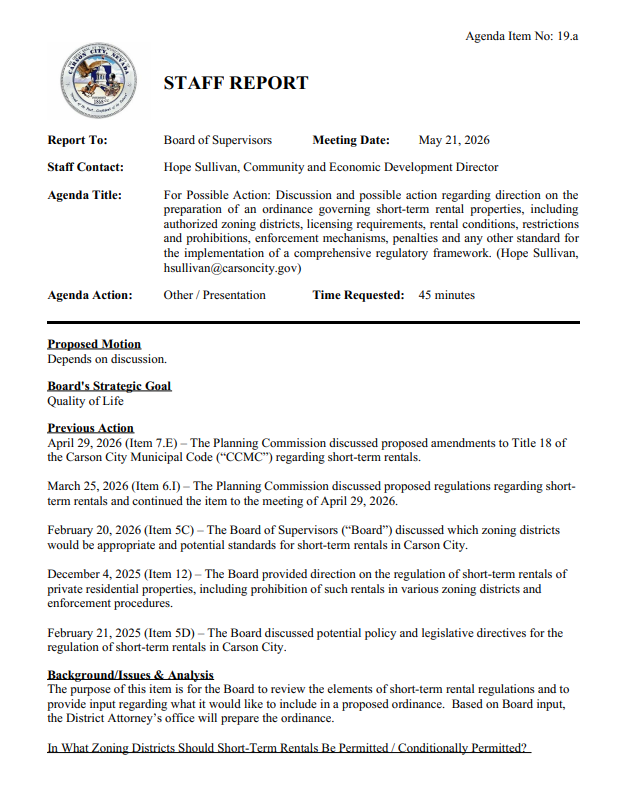
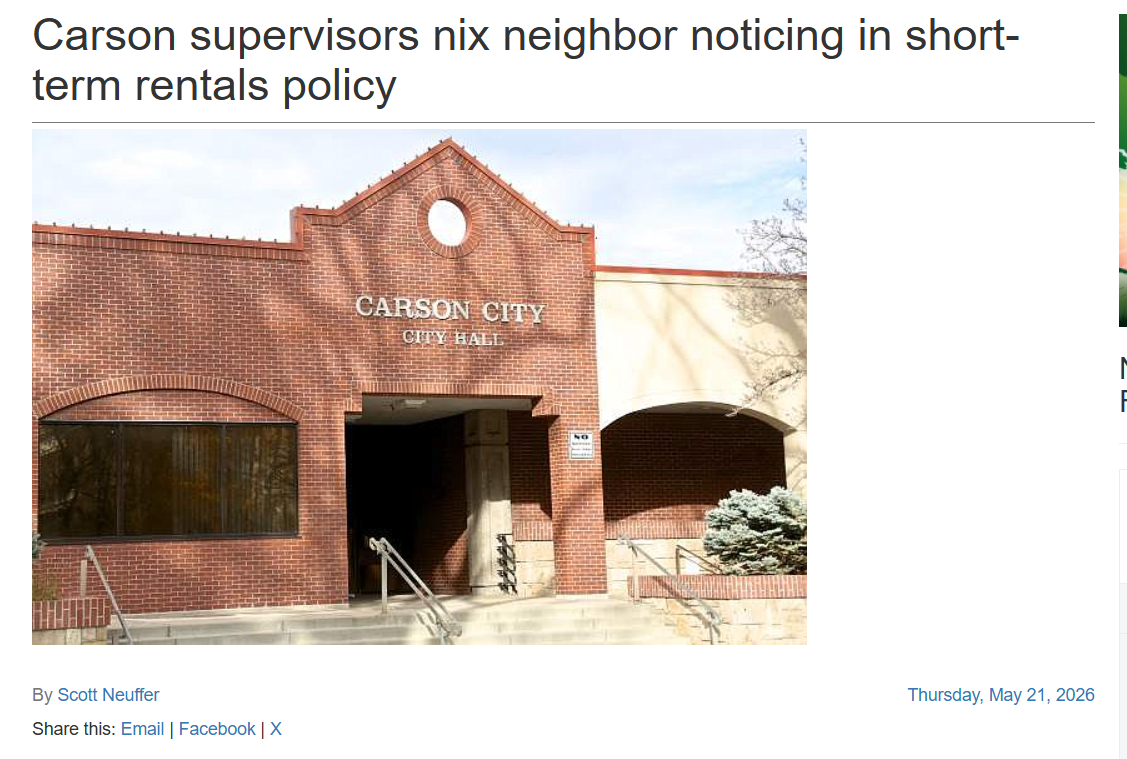
The Carson City Board of Supervisors has advanced one of Nevada’s toughest short‑term rental (STR) ordinances, setting strict rules on licensing, sanitation, occupancy, and taxation.
📖 Regulation & Policy
Mayor Lori Bagwell opened the discussion with a warning: STR operators are being reclassified for property tax purposes. “The assessor has let me know that they have been reviewing anyone with a short‑term rental in advertising, and they are then putting those property at the higher rate for property taxes. Instead of getting 3% as a residential, you move to the maximum of the 8%.”
The ordinance defines STRs as a permitted use, requiring a business license and neighbor notification, but avoids complex conditional use permits. Supervisors agreed STRs will not be allowed in apartment buildings, industrial zones, or public districts, and must be lawfully established dwellings at the time of application.
Supervisor Curt Horton pushed for simplicity:
“Let’s not complicate it, let’s keep it simple. Put it in title four, issue a business license, have the hearing officer review it, and minimize the notification area to what is reasonable, period.”
Key provisions include:
STRs must pay higher property taxes, with the assessor reclassifying them from 3% residential to 8% commercial rates.
STRs are a permitted use, requiring a business license and neighbor notification, but avoiding complex conditional use permits.
STRs are prohibited in apartment buildings, industrial zones, and public districts.
Occupancy is capped at two people per bedroom, with gatherings limited to double that number. Quiet hours begin at 9:00 p.m.
🎤 Community Impact
To prevent nuisance complaints, the ordinance caps gatherings at double the sleeping occupancy (two people per bedroom), sets quiet hours at 9:00 p.m., and bans all commercial activity.
Deputy District Attorney Dan Yu explained that even profit‑driven content creation could qualify as commercial activity: “You’ve got a lot of TikTokers these days… they do it for clicks and advertisement revenue, and that could constitute, quote‑unquote, a commercial activity.”
Supervisors debated scenarios ranging from “traveling art shows” to filming “spicy movies.” Ultimately, they agreed that any activity requiring a business license is prohibited within STRs.
🏠 Housing & Enforcement
The ordinance also addresses sanitation and safety. Pools and hot tubs became a flashpoint, with Supervisor Mo White insisting they be regulated like hotel amenities: “If I want to dump my friends and little kids of my own making in my filthy, nasty hot tub, that’s one thing, but we’re talking about a commercial open arrangement where you don’t know who jumped in there last time.”
Health and Human Services Director Jeanne Freeman offered a compromise: STR owners must follow a mandatory health protocol and keep on‑site maintenance logs proving compliance. Requirements include water testing, chemical balance checks, and regular cleaning to prevent health risks.
Supervisors agreed to monitor STRs for several years, gather data on violations, and revisit the ordinance to refine requirements as needed.
👨👩👦 Neighborhood Concerns
Rapid turnover of guests has unsettled residents, raising concerns about noise, parking, and community character. An amendment requires owners to advise renters to use off‑street parking before on‑street spaces, though City Attorney Hunter Brown clarified the city cannot legally restrict street parking.
Another amendment prohibits unlawful discrimination by STR owners, ensuring equal treatment of renters. Supervisors emphasized that STRs must coexist with long‑term residents without eroding neighborhood stability.
➡️ Looking Ahead
Supervisors emphasized that the ordinance is not the final word. They plan to revisit the rules after several years of data collection, adjusting based on enforcement outcomes and community feedback.
For now, STR owners face higher property taxes, strict occupancy limits, sanitation protocols, and bans on commercial activity.
STRisker Updates Tracker
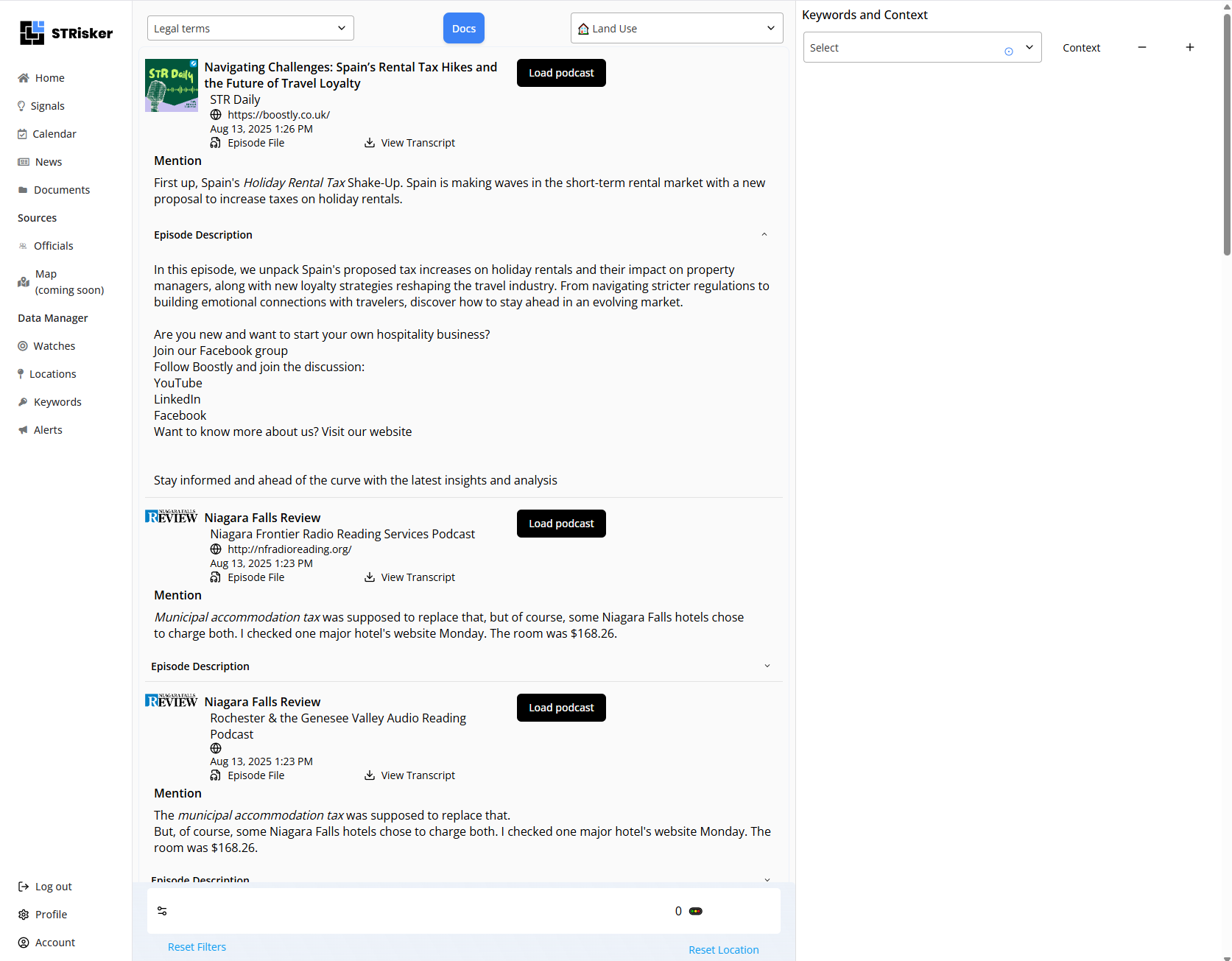
How do you keep up with the regulatory rollercoaster in your market? STRisker's Updates Tracker can be your guide - start tracking latest events as they happen and get access to essential documents as they come in. We know the struggle, which is why we built this product to capture every twist and turn in the regulatory saga so you never miss a beat.
Stay Updated with STRisker
STRisker offers tools and features to keep you updated with the Short-Term Rental movement (and now Data Centers!) across the globe.
👍 We’d love your feedback.
We're always looking for ways to improve Bulletins.
Was this one useful to you? Other topics you'd like to see get covered?
✉️ Just reply directly to this email. We read and respond to every message!
-Will McClure
🙋 P.S.
Know someone else who should be reading this Bulletin? Feel free to forward this along. We want to make sure operators and stakeholders are aware of regulatory changes in their area.