
🎯 Strisker: Bulletin - Idaho
Idaho Enacts Sweeping Short‑Term Rental Preemption Law: HB 583 bars local licensing, aligns STRs with residential housing.



Statewide Law Limits Local Control Over Short‑Term Rentals
Photo by bearfoottheory.com
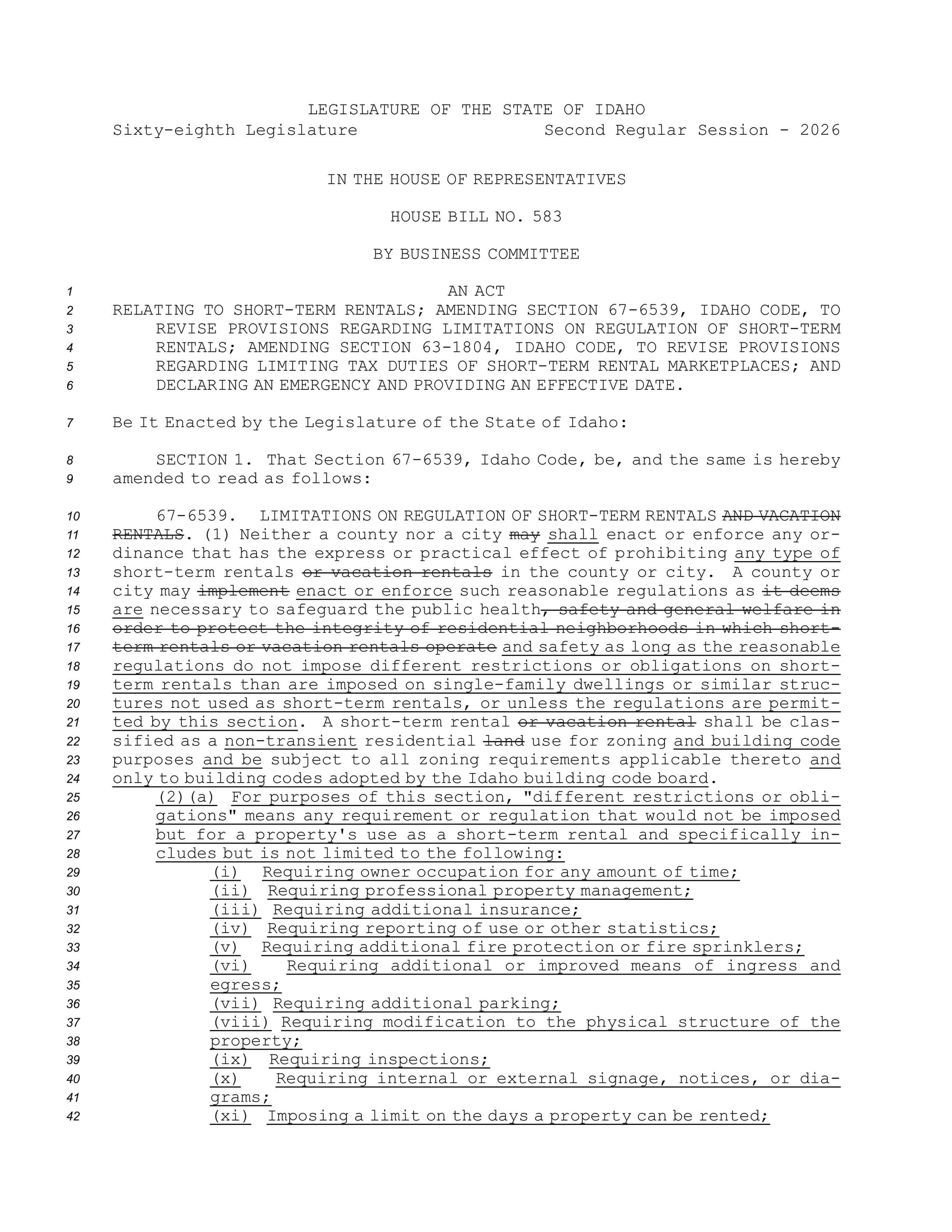
Idaho Gov. Brad Little signed House Bill 583 into law on March 16, 2026, one of the most sweeping state‑level preemption measures for short‑term rentals (STRs) in the country. The law takes effect July 1, 2026, coinciding with the new fiscal year.
HB 583 requires local governments to treat STRs the same as other residential uses. Cities and counties can no longer impose rules that single out STRs for additional requirements. The law bars local governments from requiring licenses, fees, permits, certifications, or registrations to operate STRs.
 Paris Achen
Instead, STRs are classified as “nontransient residential use” for zoning and building code purposes, aligning them more closely with long‑term housing.
🎤 Community Feedback
Supporters, including the Idaho Vacation Rental Association (IVRA), praised the law for establishing consistency. “We are grateful to Governor Little for signing House Bill 583 into law, establishing a clear and consistent standard for how Idaho treats homeowners who rent their property,” said Melissa Radford, IVRA Vice President of Advocacy.
Radford added: “This law ensures fair and consistent protections for all responsible homeowners while preserving every tool communities need to safeguard health, safety, and quality of life.”
Opponents, particularly officials in resort communities such as McCall and Bear Lake, argued that limiting local authority could make it harder to address housing affordability, workforce shortages, and neighborhood impacts.


🏘️ Housing & Enforcement
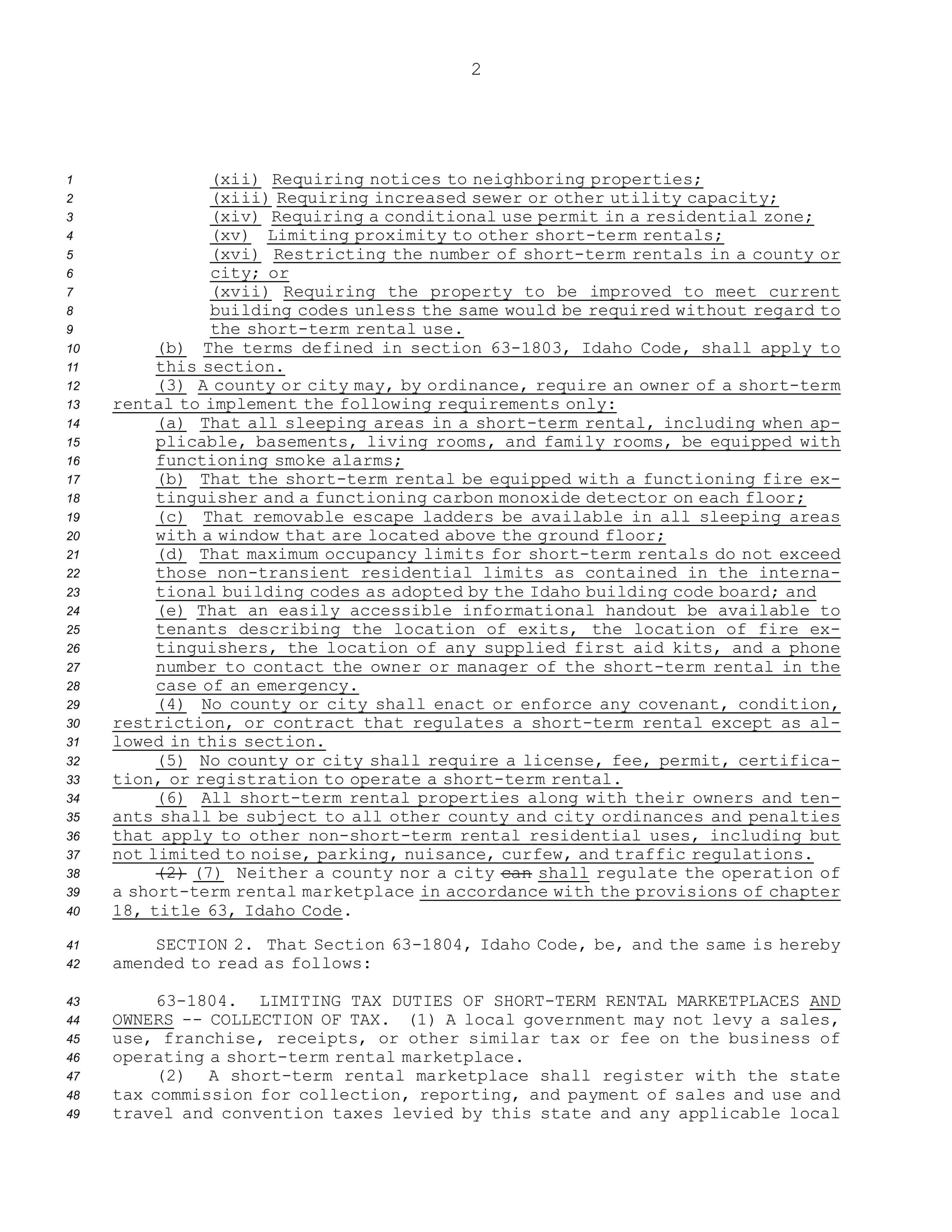
Under HB 583, local governments may still enforce health and safety requirements — but only if applied consistently to both short‑ and long‑term rentals. These include:
- Smoke alarms in sleeping areas.
- Fire extinguishers and carbon monoxide detectors on each floor.
- Escape ladders for multi‑story sleeping areas.
- Occupancy limits per state building codes.
- Emergency information for guests.
STRs and their guests must also comply with local ordinances on noise, parking, nuisance, and traffic, provided those rules apply equally to other residential uses.
Strisker Updates Tracker
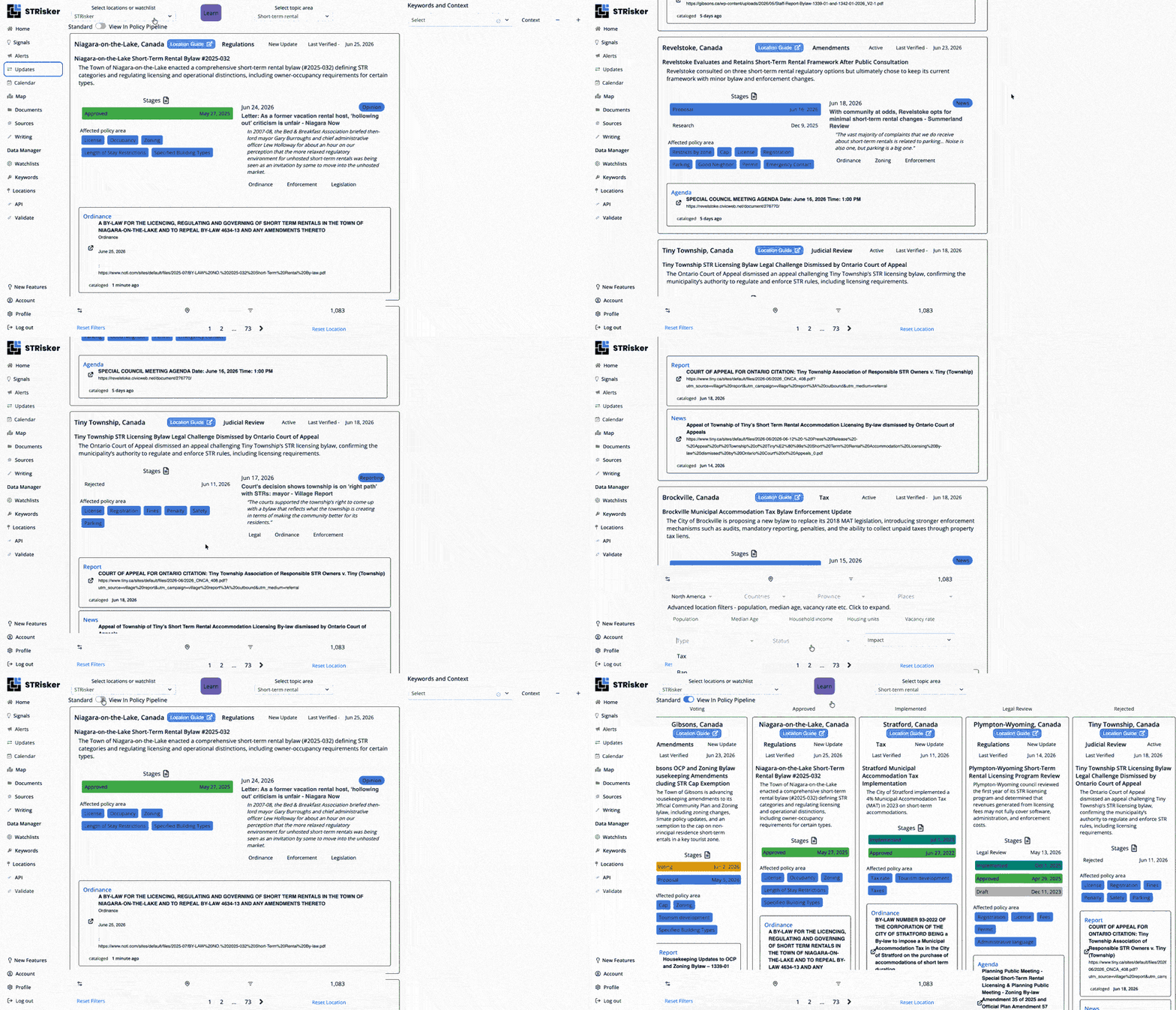
How do you keep up with the regulatory rollercoaster in your market? Strisker's Updates Tracker can be your guide - start tracking latest events as they happen and get access to essential documents as they come in. We know the struggle, which is why we built this product to capture every twist and turn in the regulatory saga so you never miss a beat.
📊 Tax Collection & Platforms
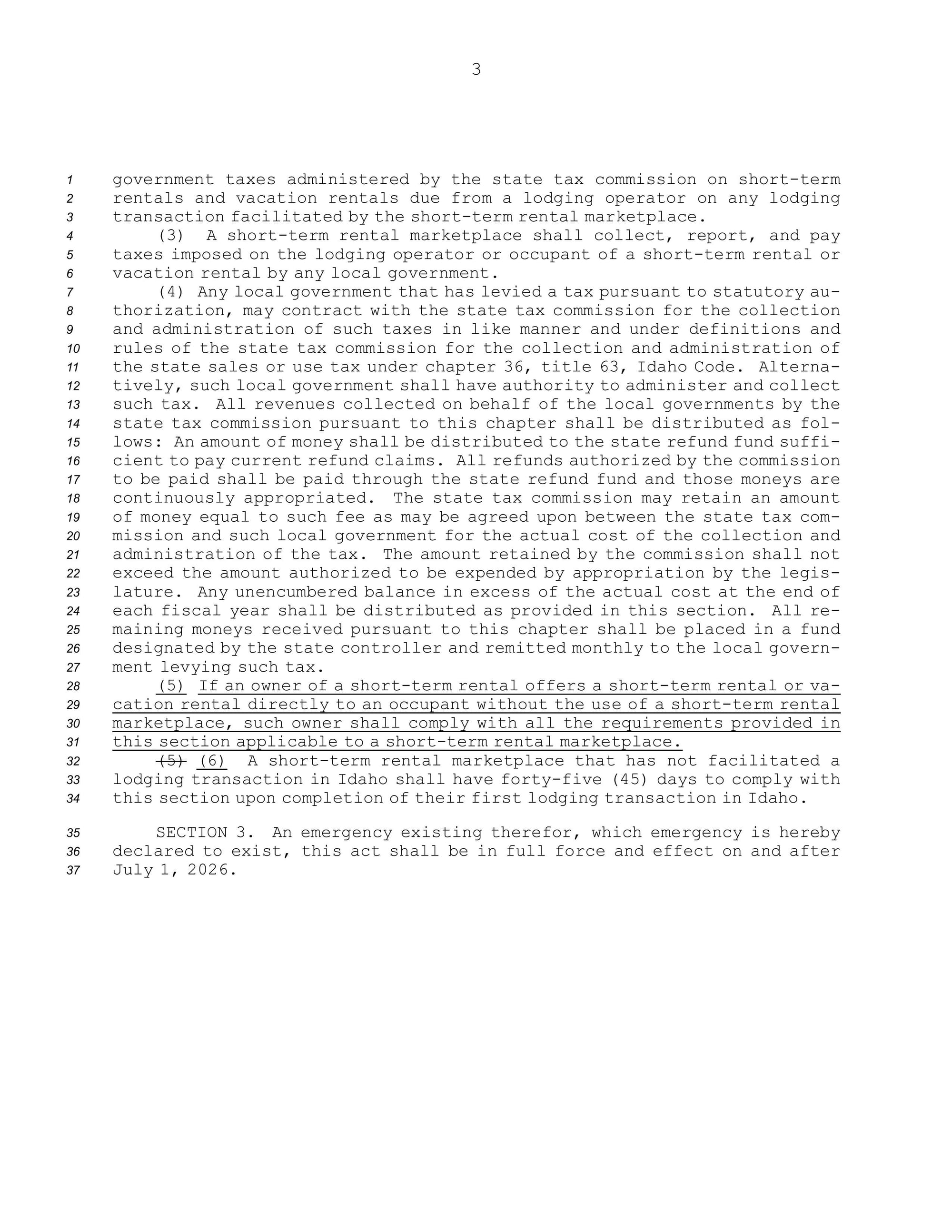
HB 583 clarifies the role of STR platforms such as Airbnb and Vrbo in tax collection. Platforms must register with the Idaho State Tax Commission and are responsible for collecting and remitting applicable state and local taxes on bookings.
At the same time, the law prohibits local governments from imposing taxes or fees specifically on STR marketplaces.
Board & Leadership Response
The bill passed the Idaho House 54‑16 and the Senate 23‑12, supported by a coalition of lawmakers and industry groups.
Rep. Jordan Rodman, R‑Coeur d’Alene, sponsored HB 583 after two previous attempts failed. He argued the law was necessary to prevent inconsistent and overly restrictive local rules.
Mayor Richard Bissen of Maui County (where similar debates have played out) testified in favor of comparable measures, underscoring the national relevance of Idaho’s decision.
➡️ Looking Ahead
Because HB 583 includes an emergency clause, it takes effect July 1, 2026. Local governments must now review existing ordinances to identify conflicts. Rules related to licensing, density caps, or owner‑occupancy will likely need to be repealed or revised.
 Genelaine Urbano
Read: 🎯 STRisker: Bulletin - Idaho 02/11/2026
Stay Updated with STRisker
STRisker offers tools and features to keep you updated with the Short-Term Rental movement (and now Data Centers!) across the globe.
👍 We’d love your feedback.
We're always looking for ways to improve Bulletins.
Was this one useful to you? Other topics you'd like to see get covered?
✉️ Just reply directly to this email. We read and respond to every message!
-Will McClure
🙋 P.S.
Know someone else who should be reading this Bulletin? Feel free to forward this along. We want to make sure operators and stakeholders are aware of regulatory changes in their area.