
Bulletin: Pitkin County, CO News Today
A consultant study presented August 18 recommends replacing the eligibility test that shrank the county's STR inventory to 73 licenses with geographic caps, a lottery, and two new permit types


Pitkin County Weighs Scrapping Its 2017-2022 Rental History Rule for a Cap-and-Lottery System
A consultant study presented August 18 recommends replacing the eligibility test that shrank the county's STR inventory to 73 licenses with geographic caps, a lottery, and two new permit types
Photo by David Syphers on Unsplash
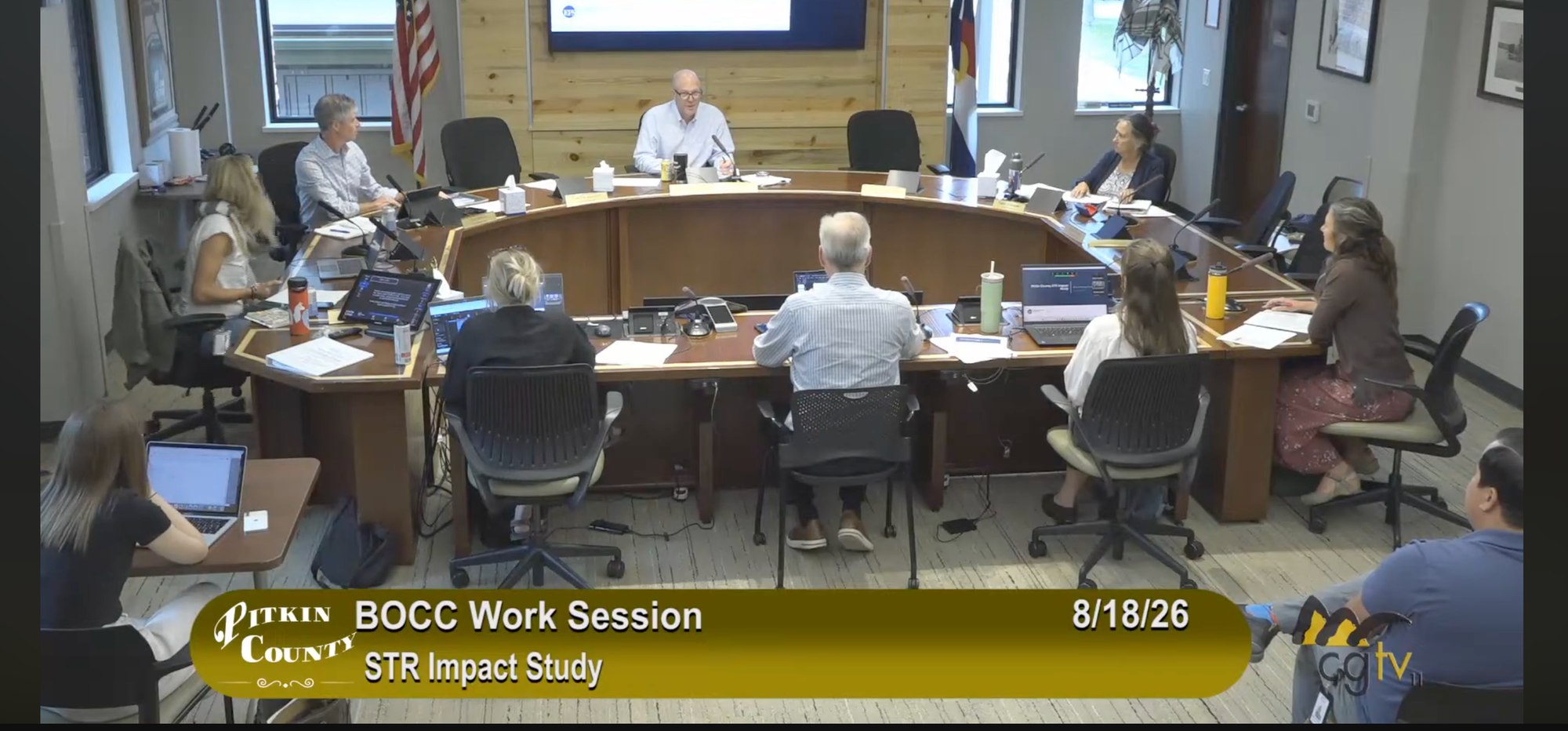
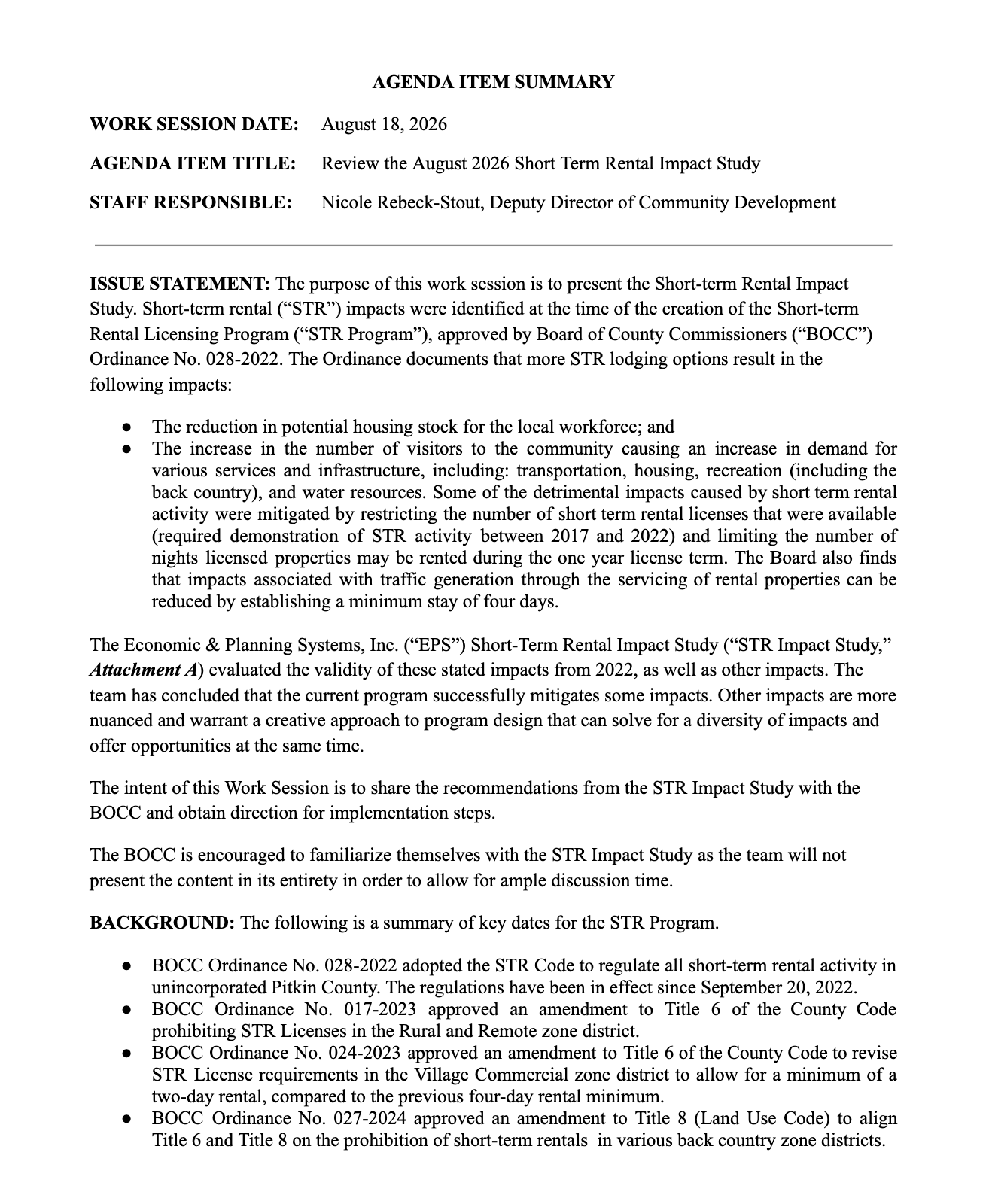
At an August 18 work session, the Board of County Commissioners reviewed a Short-Term Rental Impact Study by Economic & Planning Systems that recommends eliminating the requirement that applicants prove rental activity between May 11, 2017 and May 11, 2022, and replacing it with license caps set by geographic zone and filled through a lottery.
For property owners currently shut out of licensing entirely, the shift would open the first path to legal short-term renting since the program took effect in September 2022 while the caps would keep the total inventory close to where it stands today.
What the Study Recommends
Under the proposal, the county's current tiered system of seasonal, limited seasonal, and otherwise limited permits would give way to two license types for most of the county plus one for Redstone. A capped STR-Type 1 general license would allow up to 120 rental nights per year while an uncapped STR-Type 2 license would be limited to owner-occupied properties renting no more than 30 nights annually. Meanwhile, Redstone would keep its own STR-R license at 180 nights.
Caps would follow master plan area boundaries, ranging from 1% to 2% of residential properties in remote areas such as the Maroon and Castle creek valleys to 5% to 6% in better-served areas including Redstone, Starwood, and the Aspen urban growth boundary. Short-term rentals would stay prohibited in the Rural and Remote and Transition zone districts.
Pitkin County's Short Term Rentals Page
How the Lottery Would Work
When capacity opens in a zone which is typically after a licensed property sells, applicants would enter a lottery run quarterly or biannually with staff reviewing selected applications afterward.
Winners would skip future lotteries but still renew annually while current license holders would be grandfathered in without entering. Licenses would remain non-transferable on sale and the study suggests extending the license term from one year to two. If adopted, EPS projects the total license count would rise modestly perhaps around 10% to 20%.
Why the Change
According to a report, STRs make up about 1.8% of residential parcels countywide while the licensed inventory has fallen 29% since April 2023 from 111 to 79 against an estimated 206 properties before licensing began in September 2022. The study found the fixed 2017-2022 window will grow more outdated as properties sell and new owners cease operations, steadily shrinking the pool.
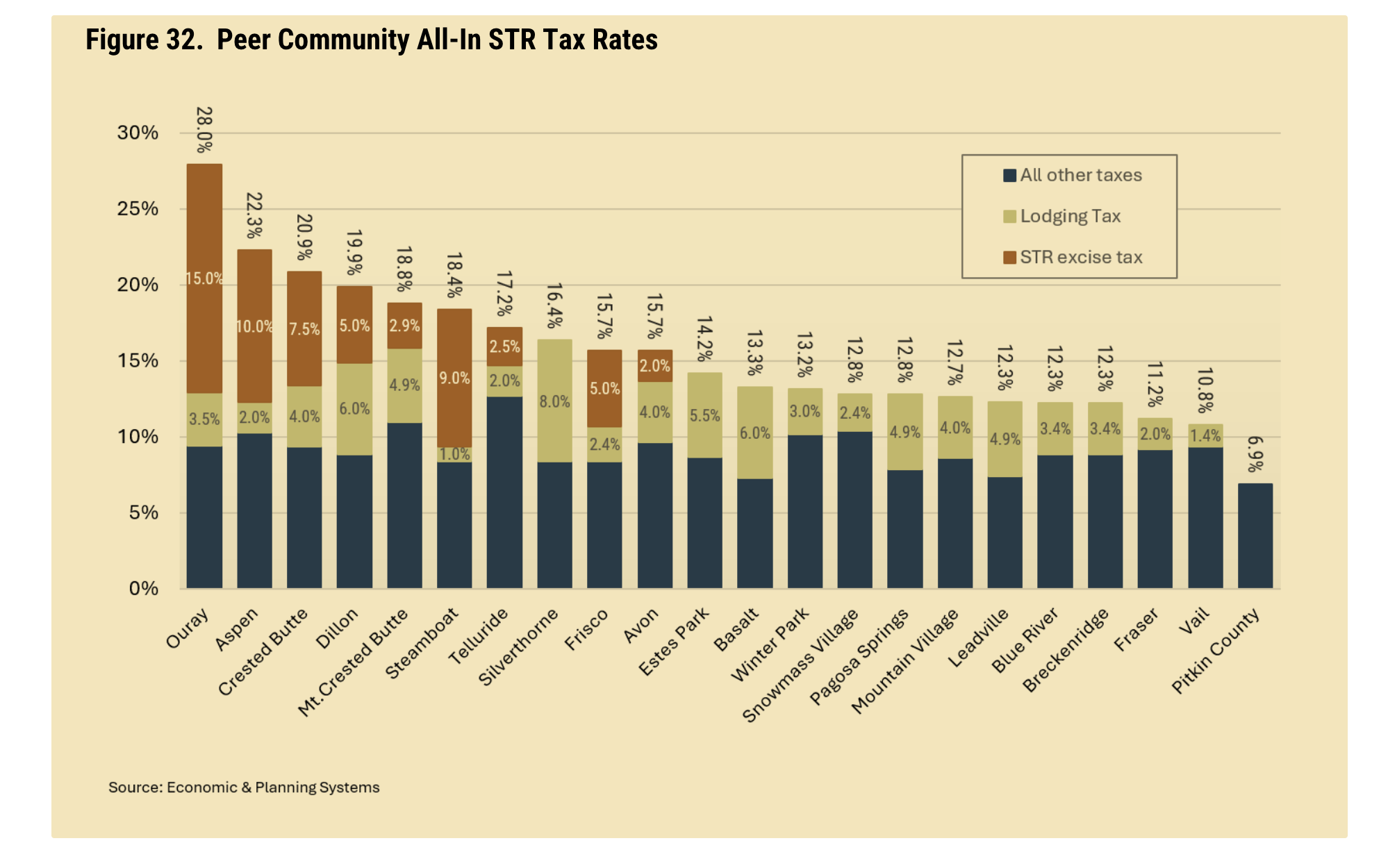
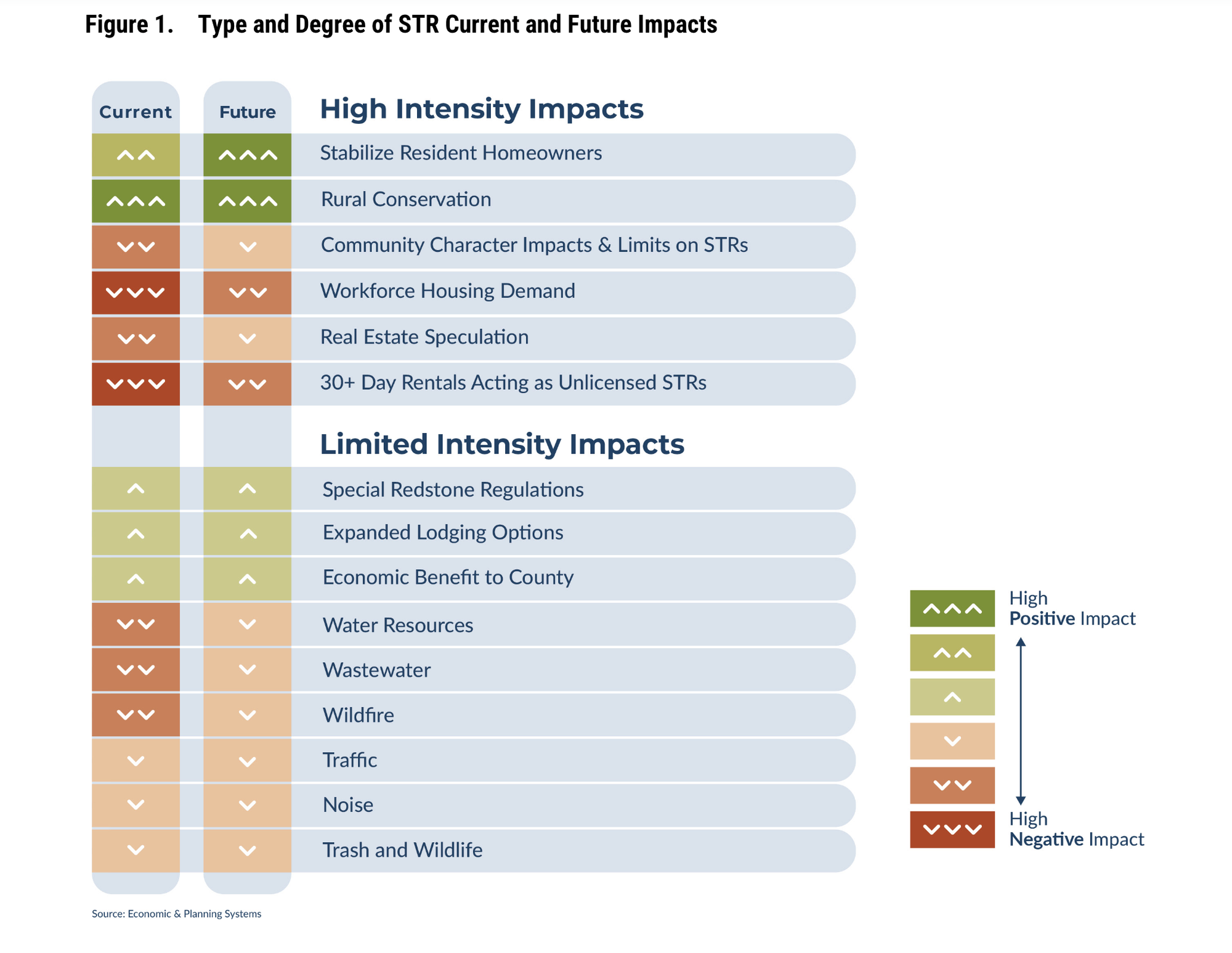
It also flagged a workaround the current rules encourage: operators ineligible for a license signing 30-plus day leases for guests who actually stay fewer than 30 days which is an activity that goes untaxed and unregulated. Commissioners asked for more detail on the lottery mechanics before staff drafts code amendments.
⦾ Status: Consultant recommendations reviewed at August 18, 2026 work session; no ordinance introduced yet
⦾ Current eligibility: Proof of at least one rental night between May 11, 2017 and May 11, 2022, recommended for elimination
⦾ Proposed license types: STR-Type 1 general (120 nights, capped), STR-Type 2 owner-occupied (30 nights, uncapped), STR-R Redstone (180 nights)
⦾ Proposed caps: 1-2% of residential properties in rural master plan areas; 5-6% in Redstone, Starwood, and the Aspen UGB
⦾ Allocation: Lottery run quarterly or biannually as capacity opens; existing licensees grandfathered
⦾ Prohibited zones: Rural and Remote, Transition 1 and 2 (unchanged)
⦾ Transferability: None; licenses die with a sale
⦾ Registration required: Yes, under the existing program adopted by Ordinance 028-2022 in effect since September 20, 2022
⦾ Platform responsibility: None; compliance obligations sit with operators listing on Airbnb, Vrbo, and other platforms
 Sage Smiley
In case you missed it:
 Jasmine Ruth Albatana
 Jasmine Ruth Albatana
 Jasmine Ruth Albatana
Strisker Document Analysis
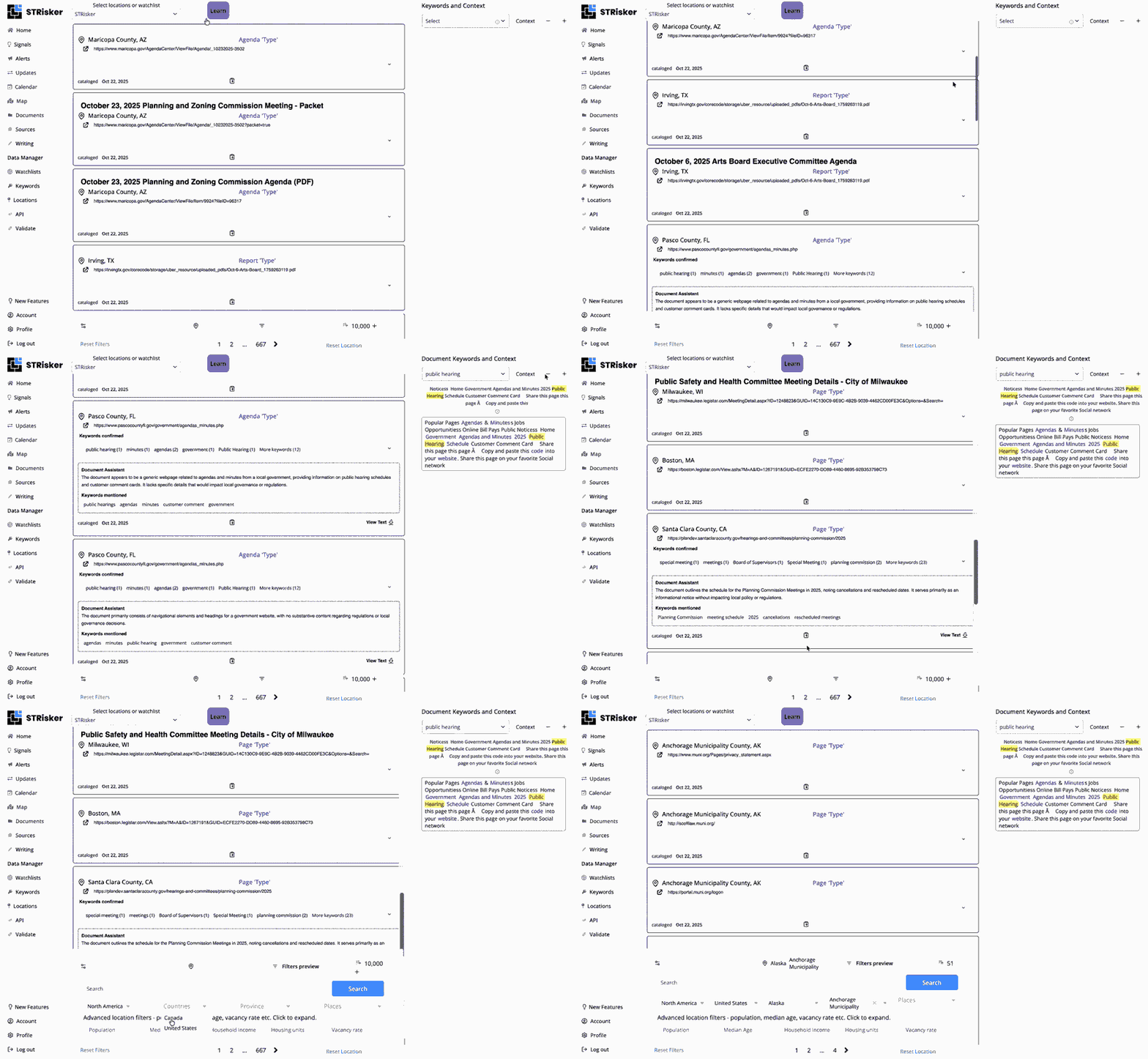
Finding the right compliance documents shouldn’t feel like searching for a needle in a haystack - Strisker’s Documents Analysis is built to simplify your life, offering instant access to hundreds of thousands of documents from thousands of cities across the world.
Stay Updated with STRisker
STRisker offers tools and features to keep you updated with Short Term Rental movement across the globe.
👍 We’d love your feedback.
We're always looking for ways to improve Bulletins.
Was this one useful to you? Other topics you'd like to see get covered?
✉️ Just reply directly to this email. We read and respond to every message!
-Will McClure
🙋 P.S.
Know someone else who should be reading this Bulletin? Feel free to forward this along. We want to make sure operators and stakeholders are aware of regulatory changes in their area.