
Bulletin: Clark County, NV News Today
Commissioners target booking platforms directly after a federal court blocked penalties against individual hosts



Clark County Votes to Fine Airbnb and Vrbo Up to $1,000 Per Unlicensed Listing
Commissioners target booking platforms directly after a federal court blocked penalties against individual hosts
Watch on Youtube: https://www.youtube.com/watch?v=fSC4xskGkZk
Clark County commissioners voted 5-0 on August 18, 2026 to approve an ordinance that fines booking platforms like Airbnb and Vrbo instead of individual hosts for carrying unlicensed short-term rental listings in the unincorporated part of the county including the Las Vegas Strip corridor. This means the penalty will be on the companies rather than the hosts still waiting on licenses.
What Changed
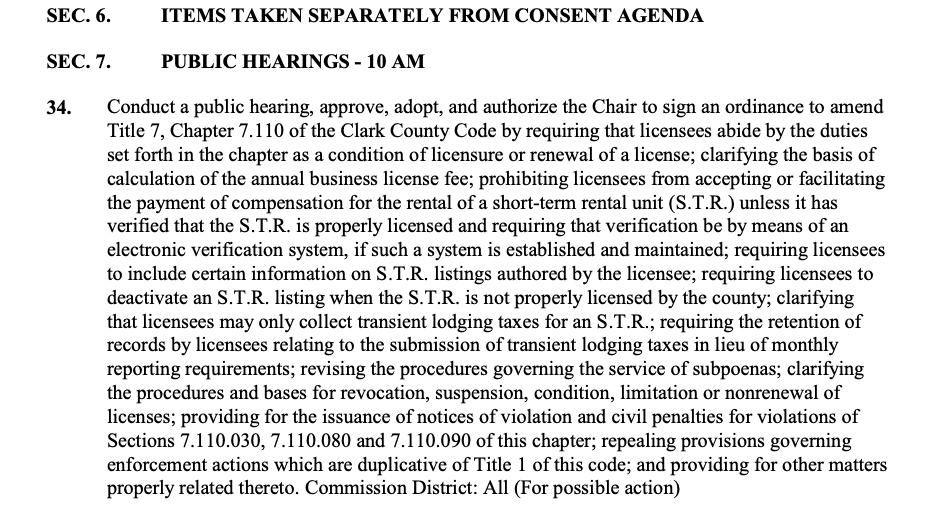
The Business License Division which is led by Director Vincent V. Queano brought the ordinance as File #26-2045 as Agenda Item 34 of the August 18 public hearing. The measure amends Title 7, Chapter 7.110, the section that governs "accommodations facilitators," or booking platforms, and leaves the host licensing rules in Chapter 7.100 untouched.
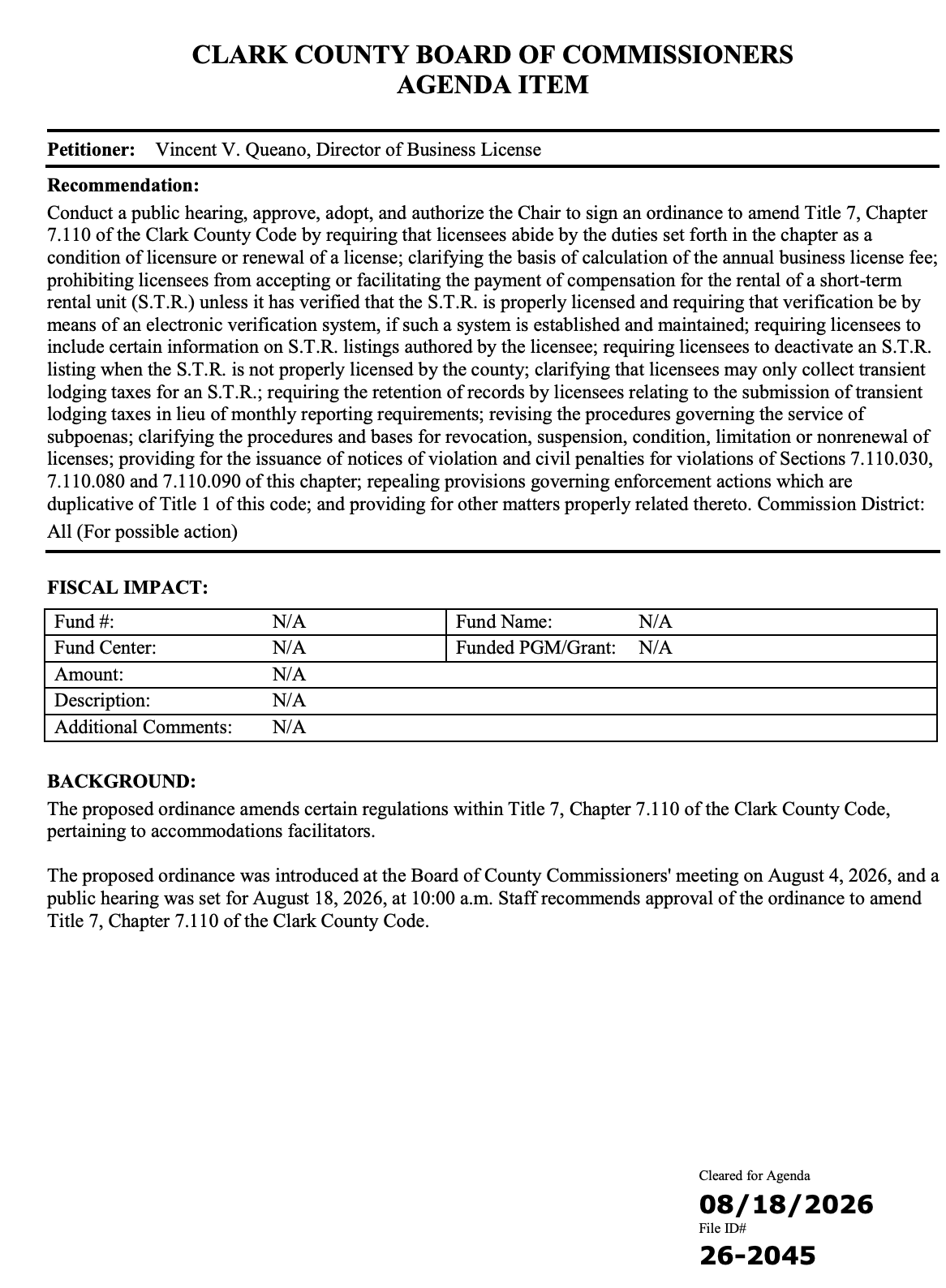
Under the new Section 7.110.080, a platform may not "accept nor facilitate the payment of consideration" for a rental unless it has verified the property holds a valid, unexpired Chapter 7.100 license. Once the county builds an electronic verification system, platforms must use it exclusively to confirm that status. If the county later notifies a platform that a listing is unlicensed, the platform has five business days to deactivate it.
Amending Clark County Code Chapter 7.100, Short-Term Rentals
Clark County is considering updates to its short-term rental regulations with new requirements for platforms that facilitate STR bookings.
Why Platforms, Not Hosts
In December 2025, U.S. District Judge Miranda Du issued a preliminary injunction halting enforcement of Clark County's stricter 2025 rules which had imposed 2,500-foot buffer zones around resort hotels, 1,000-foot spacing between licensed rentals, a 3,000-license countywide cap, and fines of $1,000 to $10,000 per day because she found Airbnb and a group of rental owners likely to win their lawsuit arguing the restrictions were unconstitutional. That case is still unresolved and the injunction continues to block the county from fining or placing liens on individual owners under those paused rules which is why the county turned to the platforms instead.
Jackie Flores, founder of the Greater Las Vegas Short-Term Rental Association, called the move a workaround: "They know that they can't go directly after property owners. So they're trying to go after the platforms." Rather than platform fines, the association wanted the county to speed up the license backlog left by its 2023 lottery system and it said the new fines make it "harder, not easier" for families including disabled veterans and seniors who rely on rental income.
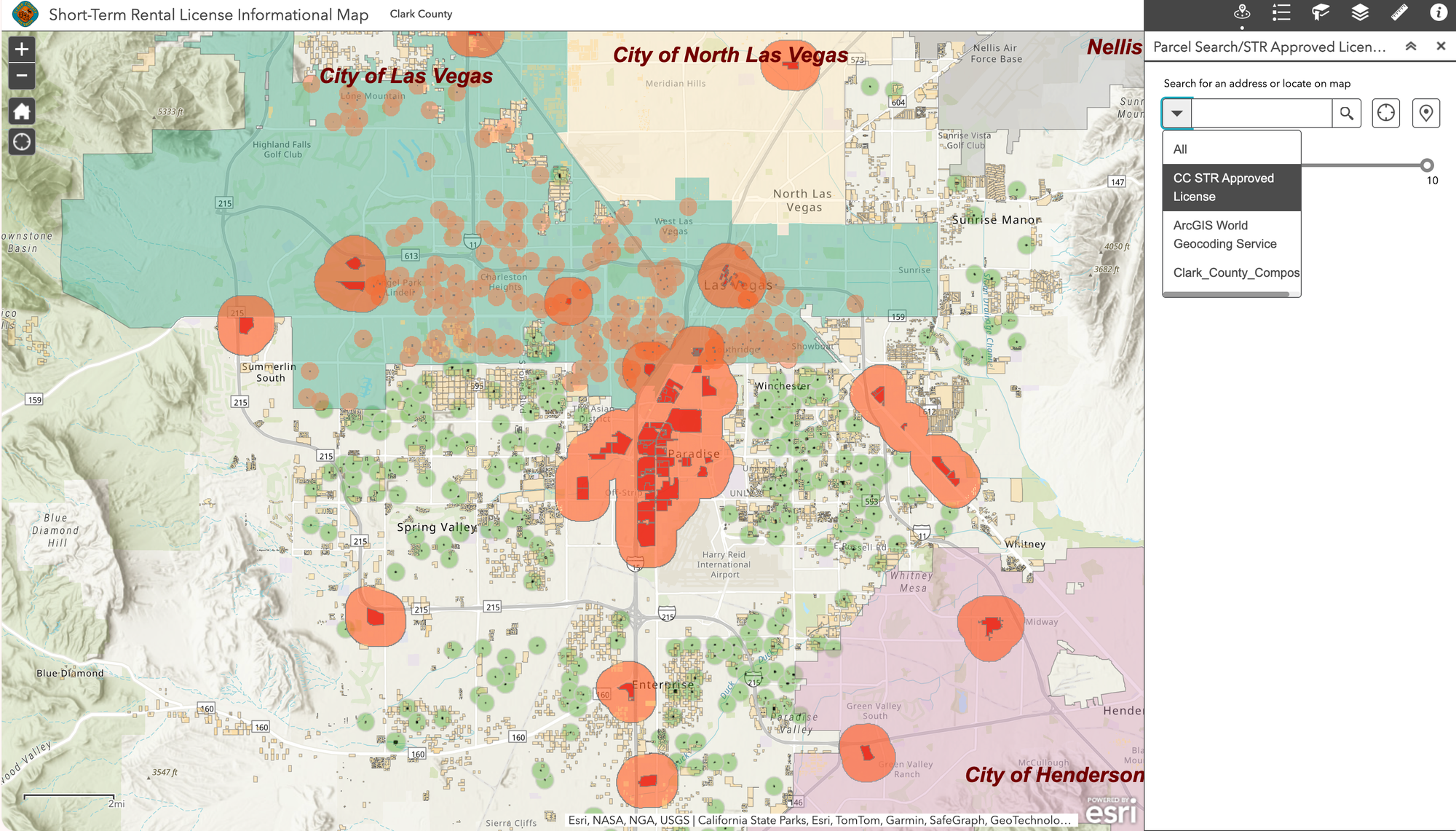
Clark County's Short Term Rental Units Page
The Numbers and Who Pays
Fines run $500 for a first violation and $1,000 for each subsequent violation, assessed per unlicensed listing and billed to the platform rather than the host. County officials framed the measure as a way to address neighbor complaints about parking, litter, and noise while protecting resort-corridor room tax revenue, and a county statement said the change "does not target the owners and operators of short-term rentals" but instead closes an enforcement gap the Nevada Legislature required under Assembly Bill 363.
Once adopted, the ordinance takes effect upon passage and publication of its title in a local paper for two consecutive weeks with the effective date roughly two to three weeks after the vote.
A proposal being considered today by the Clark County Commission calls for holding short-term rental platforms like Airbnb and VRBO financially responsible for unlicensed properties listed on their sites — a move officials hope will close a longstanding enforcement gap pic.twitter.com/RNRLhm1Gho
— Las Vegas Sun (@LasVegasSun) August 18, 2026
Today begins the 10-day public inspection period to review rebuttal arguments for and against Local Measure Q, the short-term rental measure submitted by Nevada City. The inspection period runs through Aug. 27. View documents related to Measure Q: https://t.co/HO9rhG5uh6 pic.twitter.com/tzddaYxslg
— Nevada County Elections (@NevCoElections) August 18, 2026
⦾ Effective date: Upon passage and publication of the ordinance title, roughly two to three weeks after the August 18 vote
⦾ Registration/licensing required: Yes, under existing Chapter 7.100 (license backlog remains from the 2023 application lottery)
⦾ Platform payment block: Yes, platforms may not accept or facilitate payment for a listing without a valid, unexpired county license
⦾ Listing removal required: Yes, but only after the county notifies the platform a listing is unlicensed; the platform then has five business days to deactivate it
⦾ Penalty for non-compliance: $500 for a first violation, $1,000 for each subsequent violation, charged to the platform per unlicensed listing
⦾ Penalties against individual hosts: Currently paused under a federal court injunction (Dec. 2025) tied to separate litigation over the county's 2025 buffer-zone and license-cap rules
 Ricardo Torres-Cortez
 Las Vegas Sun
In case you missed it:
 Jasmine Ruth Albatana
 Jasmine Ruth Albatana
 Jasmine Ruth Albatana
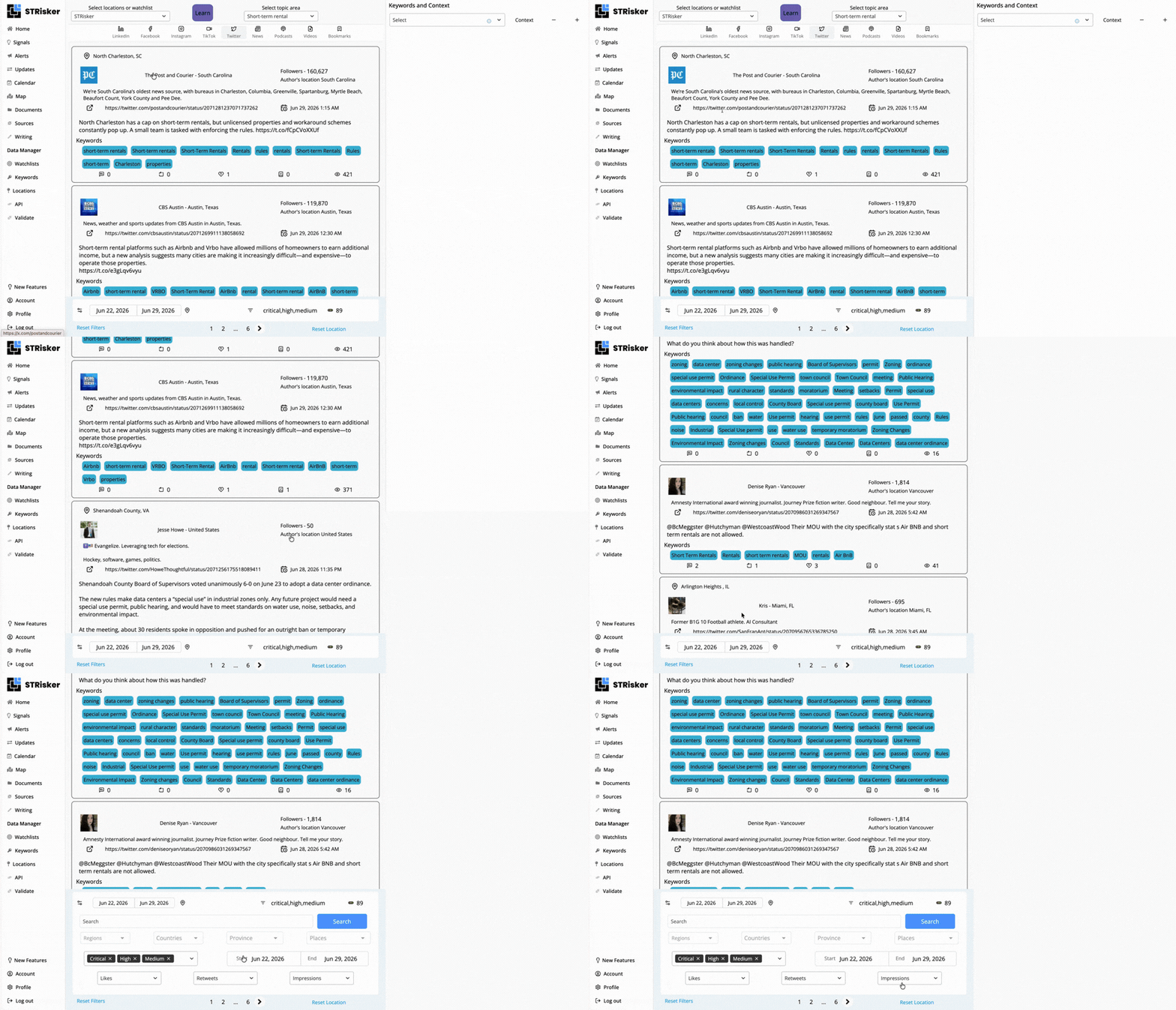
Social Listening📱: Twitter
Strisker’s Twitter Signal pulls real-time posts from officials, agencies, advocacy groups, and local influencers—so you see emerging sentiment and policy signals the moment they surface. Track conversations by place, people, and topics, then zero in on what actually matters.
Stay Updated with Strisker!
Strisker offers tools and features to keep you updated with the Short Term Rental movement (and now Data Centers!) movement across the world.
👍 We’d love your feedback.
We're always looking for ways to improve Bulletins.
Was this one useful to you? Other topics you'd like to see get covered?
✉️ Just reply directly to this email. We read and respond to every message!
-Will McClure
🙋 P.S.
Know someone else who should be reading this Bulletin? Feel free to forward this along. We want to make sure operators and stakeholders are aware of regulatory changes in their area.