
Data Centers: Daily Notes | August 13, 2026
Louisiana votes; Waxhaw approves moratorium; Dallas requests a public hearing; Elko; Bellevue; Marietta; Charlestown; Amherst County; Klickitat County; Grayslake. READ MORE.


At A Glance 🔽
- Louisiana regulators voted to let Meta keep details about its Richland Parish data center confidential, overruling a subpoena for job and energy-use data tied to a proposed $13 billion power plant buildout.
- Waxhaw, North Carolina unanimously approved a 12-month data center moratorium, acting preemptively even though no project has been proposed in the area.
- Dallas, Texas council members requested a public hearing on changes to the city's development code regulating data centers, aiming to create clearer oversight rules.
- Elko, Nevada approved a 10-year water rights agreement prioritizing effluent water for a golf course and ranch irrigation, after public concern it could otherwise be used for data center cooling.
- Bellevue, Wisconsin unanimously enacted a one-year moratorium on data center development, acting proactively despite no project currently being proposed.
- Marietta, Georgia City Council approved an 11-acre data center on Powers Ferry Place despite the city's own moratorium, since the developer's application predated the pause.
- Charlestown, Rhode Island voted to ban both data centers and battery energy storage systems, becoming the second Rhode Island town to prohibit data centers.
- Amherst County, Virginia updated its Freedom of Information Act policy after a surge in records requests tied to resident suspicions about a possible data center, despite officials insisting none is planned.
- Klickitat County, Washington is seeing tension over a proposed solar and battery storage facility that could ultimately supply power for a data center, as officials finalize renewable energy land-use rules.
- Grayslake, Illinois faces a lawsuit from residents accusing village officials of approving an $18 billion data center campus through improper private discussions in violation of open meetings law.
Louisiana
The Louisiana Public Service Commission voted 3-1 Wednesday to let Meta keep details about its planned Richland Parish data center confidential, overruling an administrative law judge who had subpoenaed the company for job and energy-use data tied to Entergy's proposed $13 billion power plant buildout for the facility.

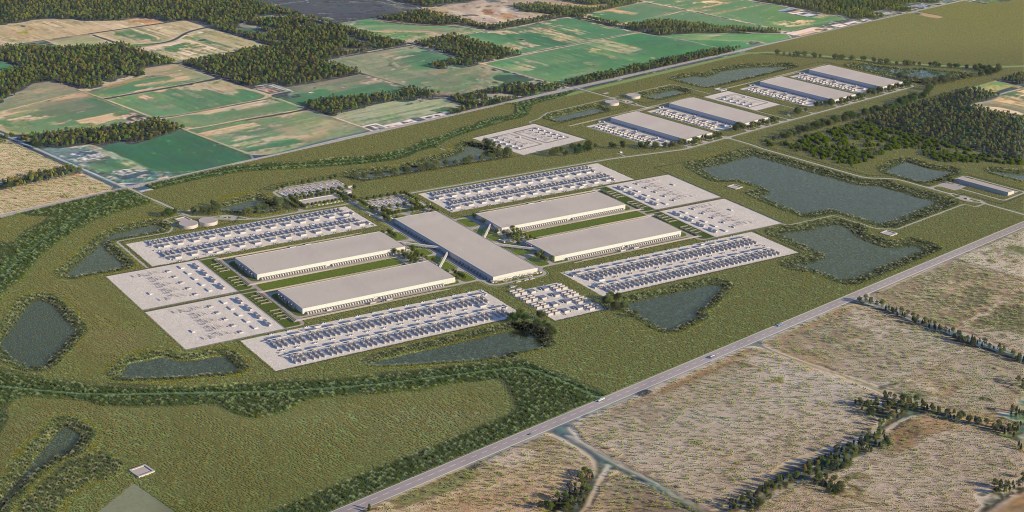
The judge's subpoena sought information Meta said was confidential and would reveal trade secrets, prompting Wednesday's hearing where commissioners quashed the request. Susan Stevens Miller, an attorney for the Alliance for Affordable Energy and the Union of Concerned Scientists, argued the missing data was essential to determining whether Entergy's infrastructure application should move forward. Commissioner Jean-Paul Coussan, who supported the decision, said the commission didn't need the specific job and power data being sought, while Commissioner Davante Lewis dissented, warning that Meta's billing agreements and Gov. Jeff Landry's related executive order only cover the first 15 to 20 years of power plants expected to operate for 30 to 40 years, leaving ratepayers exposed if Meta later reduces its footprint or leaves the state.
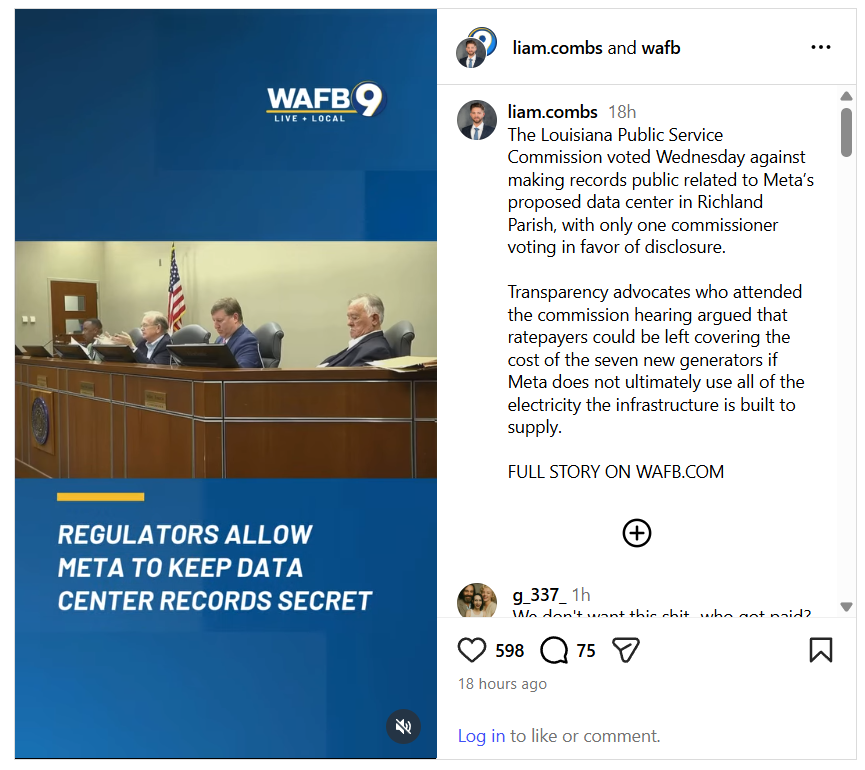
Public testimony ran heavily critical of the decision, with residents traveling from Shreveport, New Orleans, Lake Charles and Baton Rouge to question the lack of transparency around the project's economic benefits. The PSC will hold a trial in October to determine whether Entergy's proposed power plants for the Meta facility will proceed, with a decision expected by December.
Waxhaw, North Carolina
Town of Waxhaw unanimously approved 12-month moratorium on data centers
The Town of Waxhaw, North Carolina Board of Commissioners unanimously approved a 12-month moratorium on data centers Tuesday, even though no data center has been proposed in the area.
Mayor Robert Murray III said the town wanted to act immediately to avoid being caught unprepared if a proposal did come forward. The moratorium covers acceptance, processing and approval of development applications for data centers, cryptocurrency mining facilities, data storage and processing operations, and related telecommunications infrastructure within Waxhaw's zoning jurisdiction.
The pause gives the town time to research, study and potentially amend its land development code, including closing loopholes that officials say could otherwise allow a data center project to be proposed unexpectedly.
Dallas, Texas
Dallas City Council members requested Aug. 11 that the council authorize a public hearing on potential changes to the city's development code regulating data centers, with the memo, sponsored by Council Member Chad West and four colleagues, calling for the item to reach a committee and full council vote within 30 days.
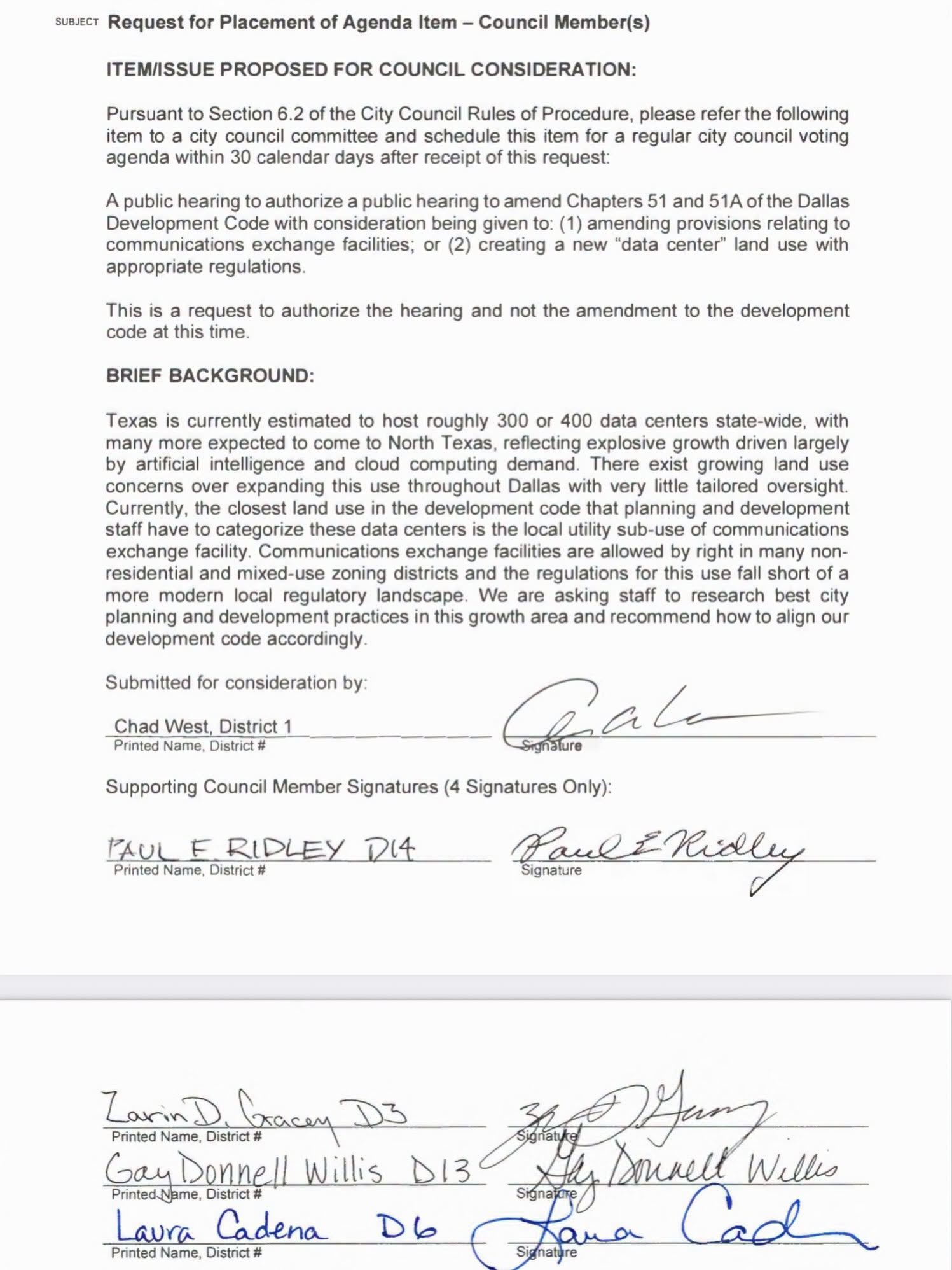
The proposed hearing would consider amending Chapters 51 and 51A of the Dallas Development Code, either updating existing regulations for communications exchange facilities or creating a separate "data center" land use category with its own rules. Dallas currently classifies data centers under the communications exchange facility use, which is allowed by-right in many non-residential and mixed-use zones with limited oversight; West said on social media he hopes to give residents and the council more say over how data centers are built in the city. The memo asks city staff to research how other cities regulate data centers and recommend potential changes, and stresses that authorizing the hearing would not itself amend the development code.
Elko, Nevada
The Elko, Nevada City Council approved a 10-year Water Rights Priority Agreement with Bar L Ranch, Inc. on Aug. 11, prioritizing city effluent water for the golf course and ranch irrigation, after public concern that the water could ultimately be used for data center cooling.
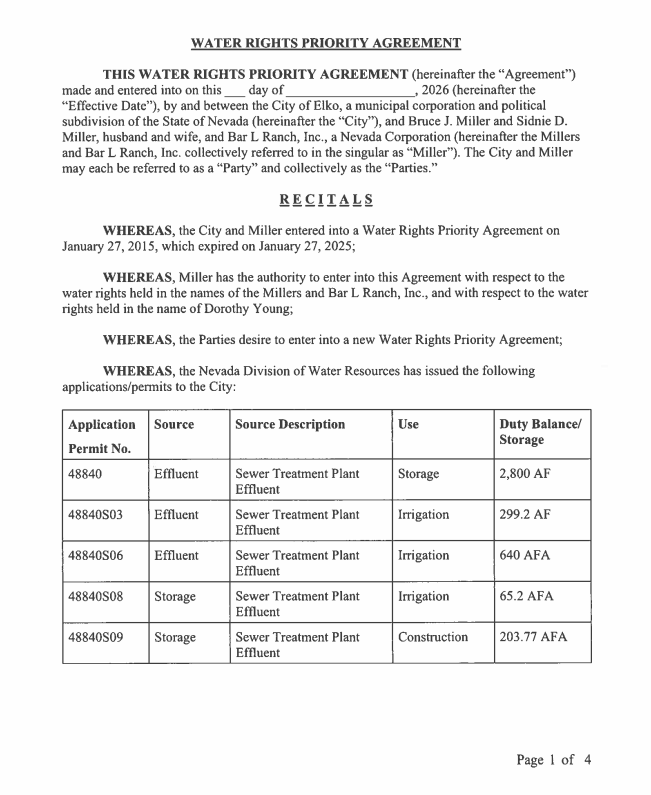
City officials said the water, classified as category B reclaimed water, is restricted to the uses specified in the agreement, and Wastewater Superintendent Scott Dancz said the city can shut off water access if it's used improperly. City Attorney David Stanton said the agreement would remain binding on any future property owner if the ranch is sold, though he acknowledged it doesn't address what would happen if a new owner later sought to change the land's use away from agriculture. Stanton and Councilor Giovanni Puccinelli said the timing relative to local data center speculation was coincidental, noting the water rights arrangement predates current concerns by decades and that they hadn't heard data centers connected to this specific property before the meeting.
Bellevue, Wisconsin
Village of Bellevue bans data center development for 12 months
The Village of Bellevue, Wisconsin voted unanimously to enact a one-year moratorium on data center development after a public hearing Wednesday night, though no data center project is currently proposed for the village.
Resident Kathy Blaney cited environmental degradation, noise pollution, fossil fuel emissions, water supply strain and rising electric bills as reasons to support the ban, while resident Anna Grunseth said she valued having the opportunity to speak on the issue publicly. Village Administrator Benjamin Krumenauer said the moratorium gives the board time to draft an ordinance that would prohibit data center construction in the village, following the lead of nearby communities including Wrightstown and Manitowoc County. He noted the board requested the pause specifically to understand the potential impact of a data center before any actual proposal arrives.
Village Trustee Tom Murphy said the board wanted to act proactively rather than wait for a project to already be underway. The moratorium runs 12 months, with the possibility of a six-month extension.
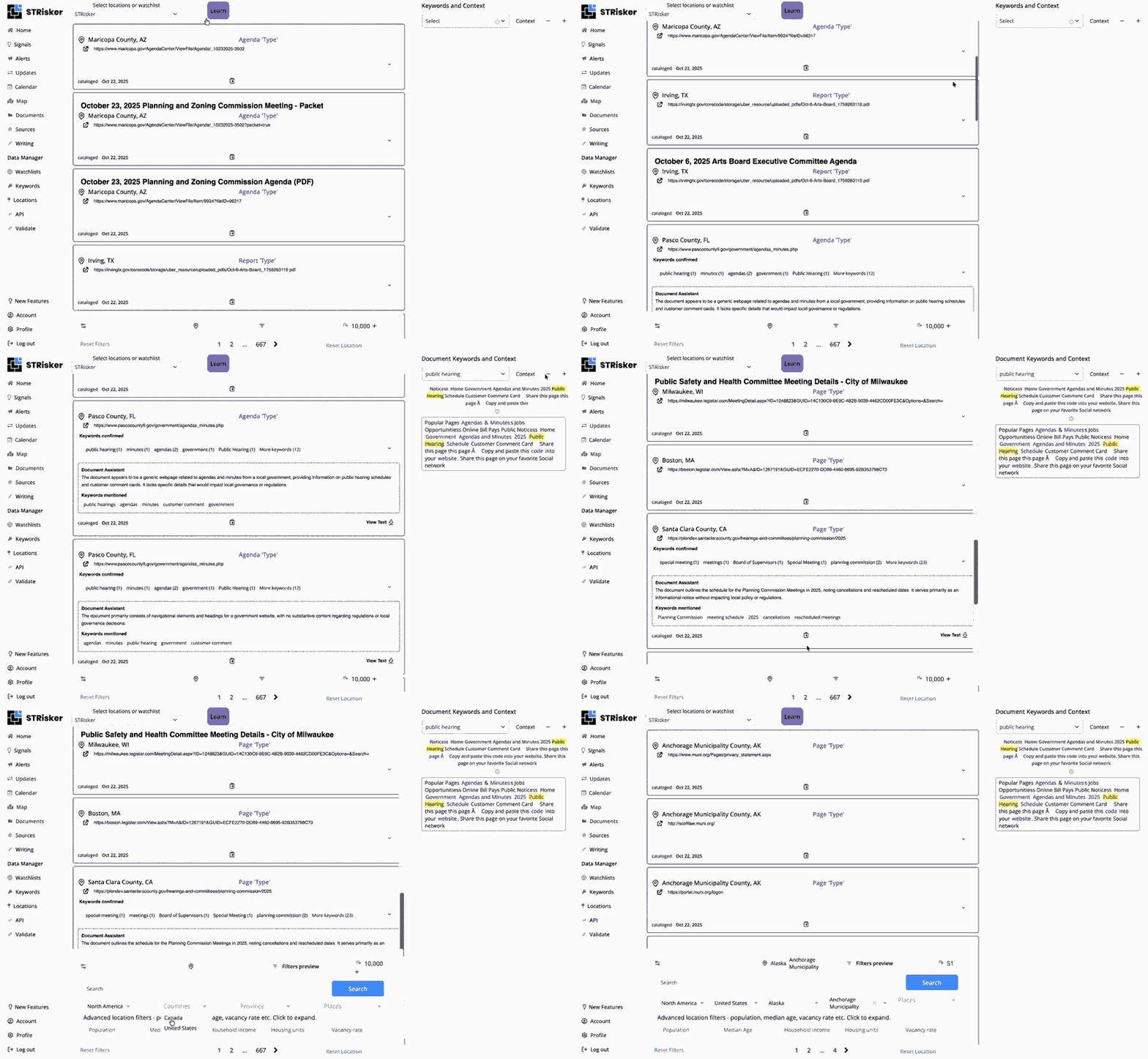
Strisker Document Analysis
Finding the right compliance documents shouldn’t feel like searching for a needle in a haystack - Strisker’s Documents Analysis is built to simplify your life, offering instant access to hundreds of thousands of documents from thousands of cities across the world.
Marietta, Georgia
Marietta, Georgia's City Council voted 5-2 to approve an 11-acre data center on Powers Ferry Place despite the city's own six-month moratorium on data centers, which didn't apply because developer Prime Group Holdings had filed its application before the pause took effect.
 Denise Dillon
The vote followed heated public debate and protests outside City Hall, with dozens chanting against the project over concerns about environmental impact, rising utility costs, falling home values and a lack of promised jobs. Joshua Carson of the Party for Socialism and Liberation argued the development would consume significant land while sending money out of the community rather than creating local jobs, while supporters said blocking new technology would hurt the city's growth. Council members raised concerns about potential noise from the facility, prompting specialists to address the issue before the final vote.
Some opponents also criticized New York City-based Prime Group Holdings directly, saying the developer doesn't care about the community. The project, located near Interstate 75 and Delk Road, does not yet have an announced construction start date.
Charlestown, Rhode Island
Charlestown, Rhode Island's Town Council voted 5-0 Tuesday to ban both data centers and battery energy storage systems, making it the second Rhode Island town to prohibit data centers after Smithfield.
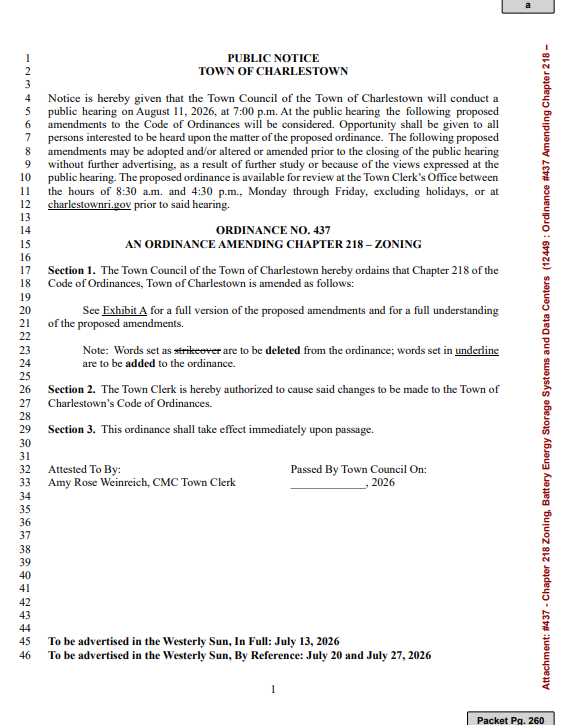
Councilor Bonnie Van Slyke, who sponsored the measure, said the ban addresses Charlestown's reliance on well water and septic systems, warning that battery storage systems risk fires and groundwater contamination while data centers consume large amounts of land, electricity and water. No data center is currently planned for the town; officials described the ordinance as a preventative step. The Planning Commission had already advised the council that the ban aligns with the town's comprehensive plan and zoning ordinance, and no residents spoke during the public hearing before the vote.
Councilor Stephen Stokes raised concerns that the ordinance's definition of battery energy storage systems could unintentionally cover residential solar battery setups; Building/Zoning Official Joseph Warner said such consumer systems would fall under the ordinance's exemptions, and the council voted to send the language back for clarification. Neighboring Hopkinton has also moved toward a ban, directing its planning board in July to study and recommend its own data center prohibition.
Amherst County, Virginia
Amherst County, Virginia has updated its Freedom of Information Act policy after a surge in records requests tied to resident suspicions about a possible data center on cleared land off Dillard Road, even as officials insist no project is planned.


Amherst Economic Development Authority Director Lori Saunders said the flood of FOIA requests concerning the Dillard Road property prompted the new policy, which sets the first hour of work free, allows charges for additional time, and requires requests be submitted in writing rather than orally to avoid confusion. Saunders reiterated there is no data center coming to the county, but residents including Barbara Pryor said they remain distrustful given what they see as significant activity happening out of public view.
Resident Teresa Almond argued the volume of records requests itself reflects a lack of transparency from the county, saying people simply want clarity on the county's plans given the impact on the community.
Klickitat County, Washington
Klickitat County, Washington is drawing tension over a proposed solar and battery storage facility that could ultimately supply power for a data center, as county officials work to finalize land use rules for renewable energy development on agricultural land.

The River Turn Energy Center, proposed by Savion Renewable Energy, a Shell Energy subsidiary, could involve up to 1,050 megawatts of solar generation alongside an 800-megawatt battery storage system on 4,700 leased acres along the county's eastern border. Planning Director Scott Edelman said the county's draft policy would discourage development on prime agricultural land and favor agrivoltaics projects that combine solar with continued farming, while also setting noise and setback rules. Savion has previously clashed with the county over an earlier, more restrictive draft of the solar ordinance, which officials have since revised.
Grayslake, Illinois
An $18 billion data center campus planned for Grayslake, Illinois is facing a lawsuit from area residents accusing village officials of approving the project through improper private discussions, the Daily Herald reported.
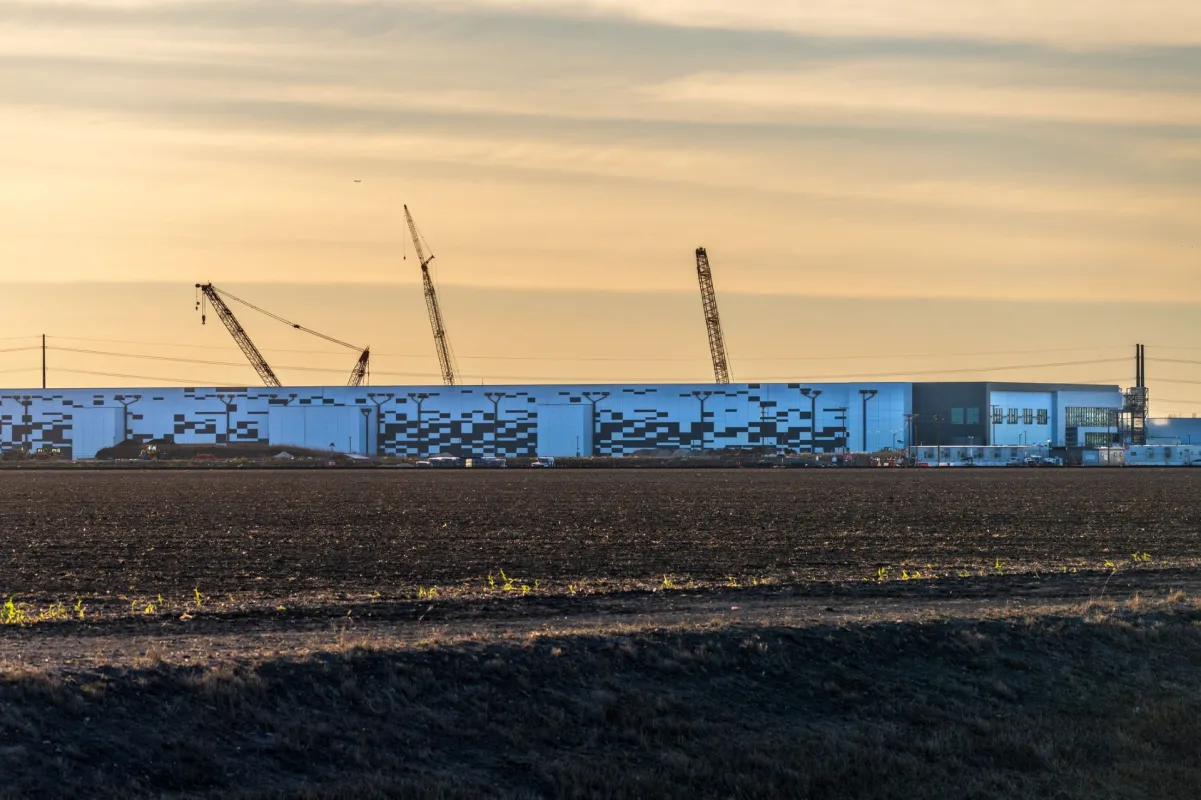
The Preservation of Community Well-Being Collective and nine Lake County residents sued Grayslake, T5 Data Centers and Alter Asset Management on July 31, arguing the village's zoning code doesn't specifically allow data centers and that officials violated the state's Open Meetings Act by handling deliberations through closed sessions and private communications. The complaint also claims 2024 and 2025 approvals failed to meet Illinois due process standards, and plaintiffs want the court to void those approvals, halt further permits, and cancel the village's development agreement with T5. The project would occupy up to 472 acres in the Cornerstone business park across 18 buildings, with early site work already begun.
The proposal has also drawn scrutiny over its environmental footprint; T5 suspended a wetland remediation permit application in July, which had sought to fill nearly 16 acres of wetland, after residents raised concerns. The Lake County Data Center Opposition Coalition has organized protests and public opposition centered on the project's projected water and electricity use, while T5 CEO Pete Marin said the company remains fully committed to its partnership with local officials.
📱 Social Buzz
Etna Township adopts zoning changes amid interest from data center https://t.co/ZR4rcUuMAS
— NewarkAdvocate.com (@NewarkAdvocate) August 13, 2026
From fundraising to petitions, here’s how Lehigh Valley communities are pushing back against data center proposals https://t.co/cBsRQIvW9w
— The Morning Call (@mcall) August 13, 2026
Two Southern New Mexico lawmakers shared their plans Tuesday to introduce legislation in January that would impose a statewide data center moratorium. Some of their colleagues pushed back on the proposal, arguing society depends on data centers. https://t.co/coQcRMV86n
— Santa Fe New Mexican (@thenewmexican) August 13, 2026
The Independence GUARD Alliance, which is opposed to the Nebius hyperscale data center, has filed a lawsuit, alleging Sunshine Law violations and City Charter violations.
— Tod Palmer (@todpalmer) August 13, 2026
It seeks a temporary restraining order to halt the project as the case, which was filed Wednesday, proceeds. pic.twitter.com/0kEP7GAuq1
A Burgin Independent School board member, who works for Kentucky's largest electric utility, wrote in a June email that a prospective developer there wants up to 1.3 gigawatts of power for a hyperscale data center. https://t.co/n5SSRY6hMg @KYLantern
— Liam Niemeyer (@liamniemeyer) August 13, 2026
Stay Updated with STRisker!
STRisker offers tools and features to keep you updated with the Short Term Rental and Data Centers movement across the world.
👍 We’d love your feedback.
Which stories hit? Which ones missed?
We're exploring a new branch of topics centered around Data Centers and want to make it even more useful for you.
✉️ Just reply directly to this email. We read and respond to every message!
-Will McClure
🙋 P.S.
Know someone else who should be reading Daily Notes? Feel free to forward this along. We’re opening a few more spots.