
How Communities Organize and How Developers Respond to Data Center Opposition
Discover more about data center opposition, the concerns raised, the process for organizing opposition, and the developers' responses.

At A Glance 🔽
- A data center opposition is an organized effort by residents, local groups, or officials to resist the planning, approval, or construction of a data center in their area.
- Concerns raised by data center opposition include health, air quality, noise, light, water, heat, electricity costs, and transparency
- The process for organizing opposition includes understanding the facts of the data center proposal, building a coalition, defining specific concerns and requests, using the public process, and maintaining consistent pressure.
- The developers will respond to the opposition through early community engagement, design and operational commitments, community benefit and ratepayer protections, and site selection and relocation.
Definition
A data center opposition is an organized effort by residents, local groups, or officials to resist the planning, approval, or construction of a data center in their area. This opposition typically occurs at the local level. It may involve raising concerns at public hearings, signing petitions, urging officials to deny zoning requests, or pushing for a moratorium on such projects. Some groups may oppose a specific data center project, while others may object to data center construction in general.
⚠️Concerns Raised
Residents often express similar concerns, even when the towns are different. The Brookings Institution notes that complaints may include electricity rates, water usage, and noise and light pollution. Here are some specific concerns raised by residents affected by data center construction:
Health and Air Quality
Many residents are concerned about how a data center might affect the air they breathe. Backup diesel generators and fossil fuel power plants that provide electricity can release pollutants into the air. According to the American Public Health Association (APHA), data centers that depend on fossil fuels can increase air pollution, which is associated with respiratory and cardiovascular diseases. As a result, some nearby residents request emissions data or air quality assessments before a project is approved.
Noise and Light
Data centers operate continuously, meaning that sounds from cooling systems, fans, and backup generators persist even at night. According to the APHA, this constant noise can disrupt the sleep of nearby residents and increase their stress levels. They also note that noise is a particular concern for children because it can affect cognition. Additionally, nighttime lighting can interfere with the sleep and daily rhythms of some residents.
Water and Heat
Data centers consume water for cooling, which impacts residents in areas where water resources are already scarce. According to the APHA, data centers can also release excess heat, causing nearby air temperatures to rise. An Arizona State University study in the Phoenix area found that downwind air temperatures averaged 1.3°F to 1.6°F higher than upwind temperatures, peaking at 4°F, with the effect detectable up to a third of a mile from the facility.
Electricity Costs and Transparency
Residents often worry that the electricity demand from a large facility will raise utility bills for everyone on the grid. The U.S. Department of Energy reports that data centers used about 4.4% of U.S. electricity in 2023 and could use 6.7% to 12% by 2028. They also express concerns about how projects are reviewed, particularly when deals are negotiated behind closed doors. Insufficient community engagement early in the process can transform specific complaints into widespread distrust of both the project and the officials approving it.
📣Organizing Oppositions
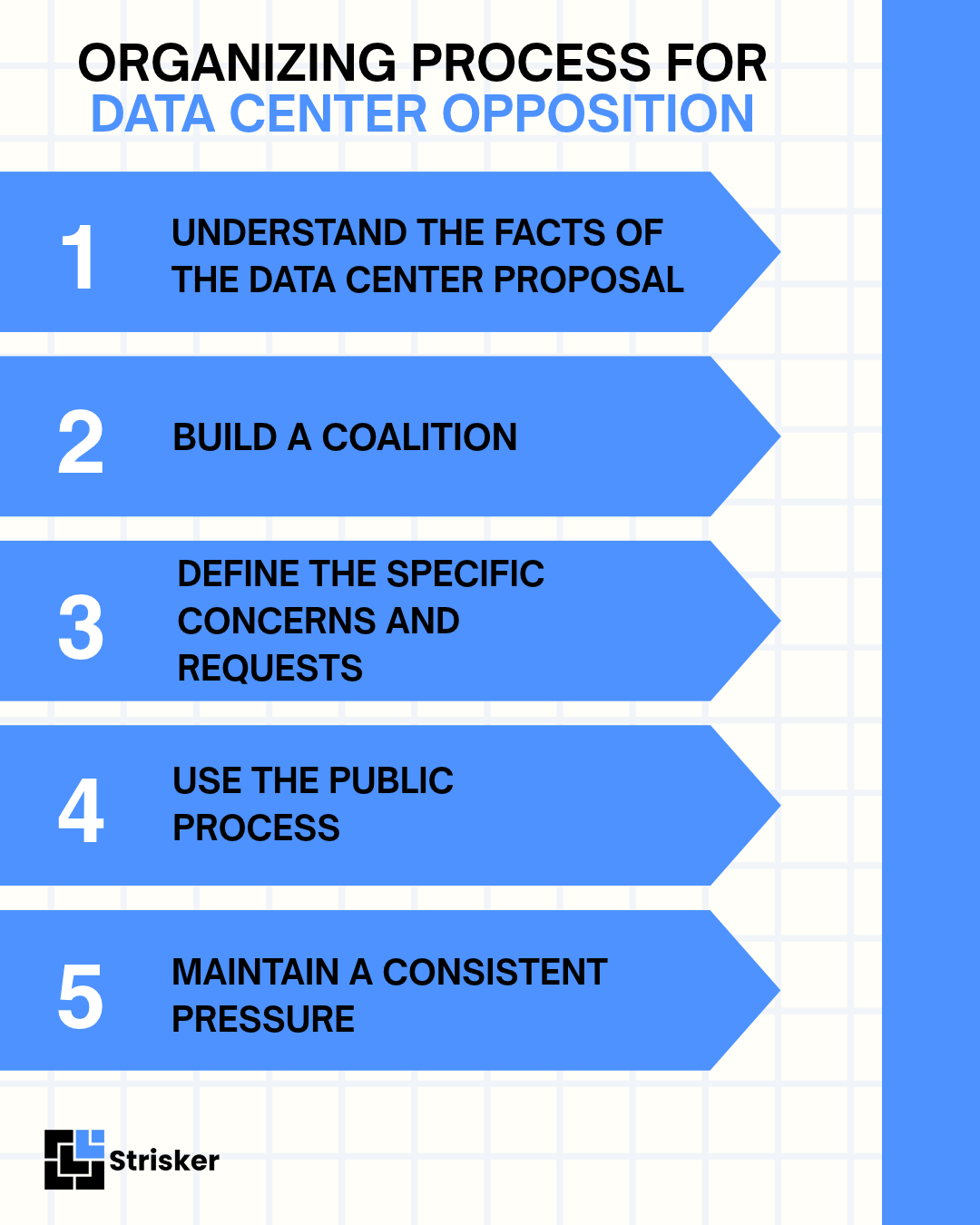
Opposition groups typically follow a similar process when organizing against a data center project, starting from gathering information to participating in voting. Here are some steps involved in organizing opposition:
Step 1: Understand the Facts of the Data Center Proposal
Review what is being proposed and where it stands in the approval process by requesting the site plan, the rezoning, or a special-use permit application, as well as any studies the developers submitted, before taking a position. Evaluate whether the planning commission and town council will accept the project. Additionally, verify whether the land is already zoned for data center construction and assess the power available for the project.
Step 2: Build a Coalition
A larger group carries more influence with officials than a collection of individual complaints. Start by engaging the neighbors and landowners nearest to the site. Then, include local farm groups, schools, churches, and any environmental or public health organizations that can contribute additional members and credibility to the coalition. Choose one or two representatives to speak on behalf of the group and ensure that notes are taken at every meeting.
Step 3: Define the Specific Concerns and Requests
If the opposition is vague, it would be easy for officials to disregard it. Therefore, it is important to have specific requests that cannot be ignored. Record the issues that the group is concerned about, such as noise levels, water sources, generator use, and traffic. Assess whether to request a zoning denial, a moratorium, or specific conditions for the development, such as setbacks or noise limits.
Step 4: Use the Public Process
Officials will respond to information recorded in the public record. To create a public record, one or two representatives should attend the public hearing to speak and submit written comments. It is important to send letters and petitions to council members and planning commissioners before the voting takes place. If possible, obtain a review from an acoustic engineer, hydrologist, or public health professional to support the claims made by the opposition.
Step 5: Maintain a Consistent Pressure
Projects typically progress through multiple meetings over several months, making it crucial to attend each meeting and monitor officials' voting processes. Keep the community informed through newsletters, social media, or a simple email list. Ensure consistent attendance at official meetings to demonstrate that the concern remains a priority.
🤝Developers’ Responses
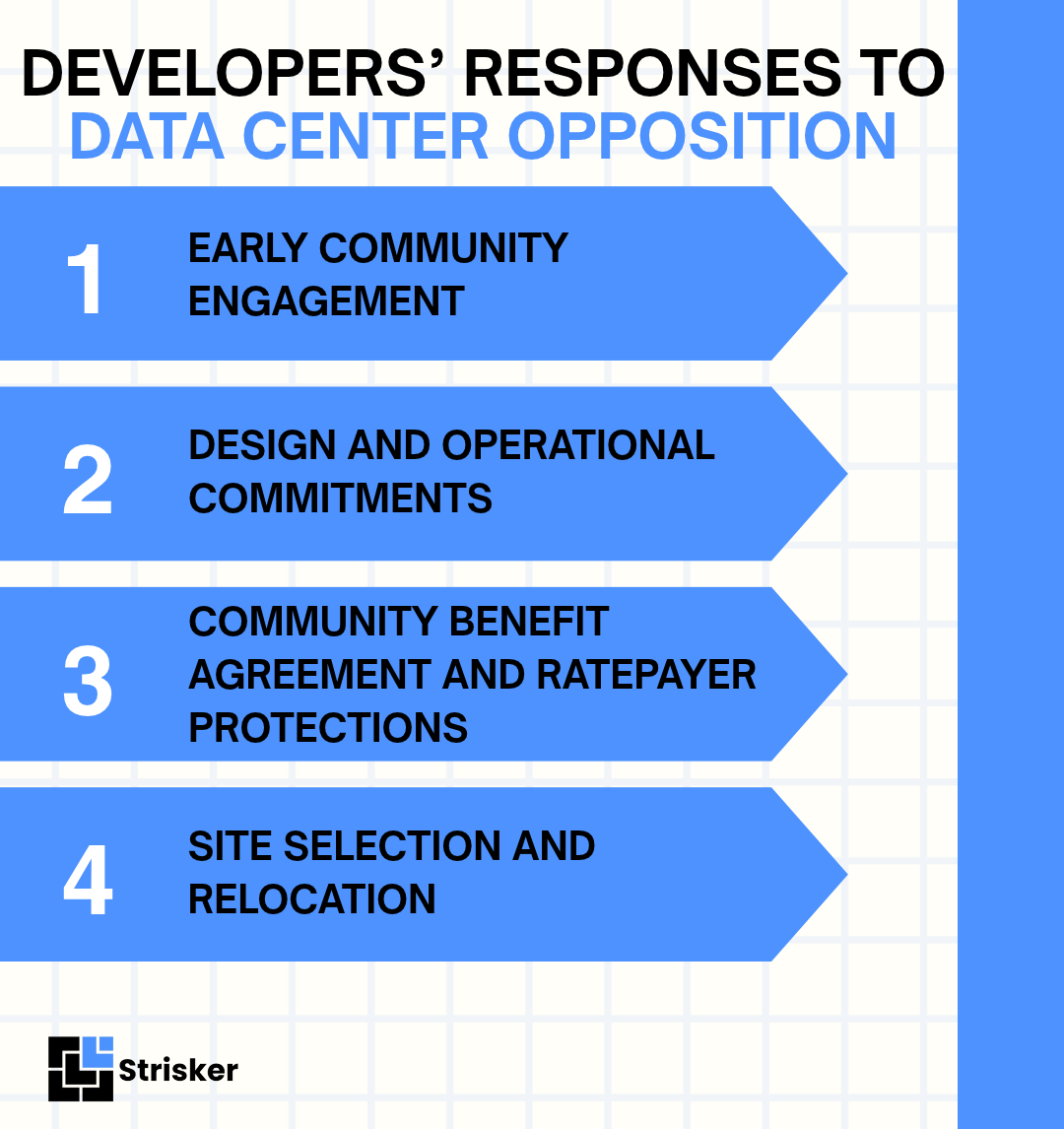
Due to ongoing delays and denials, developers are now recognizing that gaining local acceptance from officials and residents is a crucial aspect of project risk management, rather than just a secondary consideration when securing land and power. Below are some of the responses from developers aimed at addressing the concerns raised by residents:
Early Community Engagement
The most noticeable change is the shift towards earlier and more structured community engagement. Instead of waiting until a rezoning hearing, developers will now hold open houses, schedule meetings with neighborhood associations, and publish project details before submitting their applications. One of the goals of this approach is to address concerns about noise, traffic, and water issues before they can develop into organized opposition.
Design and Operational Commitments
Developers are proposing specific binding conditions to obtain approvals for their projects. These include larger setbacks, landscaped berms, and noise limit measures at property lines. They are also suggesting the use of closed-loop or air-based cooling systems to reduce water consumption, as well as limitations on generator testing hours. Additionally, some developers are committed to using cleaner backup power options, such as generators that meet higher emissions standards or battery systems that minimize reliance on diesel fuel.
Community Benefit Agreement and Ratepayer Protections
Community benefit agreements have become a growing tool for developers to commit to various community improvements, such as funding local infrastructure, schools, and workforce training programs. Separately, some developers and operators have opted either to pay for the necessary grid upgrades or to adhere to utility tariffs that require large-load customers to cover the costs of the infrastructure serving them. In Ohio, for example, state regulators approved a data center tariff for AEP Ohio in July 2025 that is designed to protect other customers from shifting costs.
Site Selection and Relocation
When opposition and moratoriums are effective, some developers simply shift their focus. Projects that are rejected in one county or area can reemerge in a neighboring jurisdiction with more favorable zoning or stronger local support. This situation has prompted developers to evaluate potential sites based on both political and technical viability, particularly those that favor industrial-zoned parcels and communities actively engaged in data center development.
Conclusion
Opposition to data centers has shifted from isolated objections by individuals to a well-organized group that now influences decisions on data center development. There are concerns that coalitions must address while also following the organizing opposition process.
Developers will address these concerns and provide guidance on ensuring their projects receive approval. Strisker offers tools, features, and newsletters to keep you informed about recent opposition to data centers in your area.
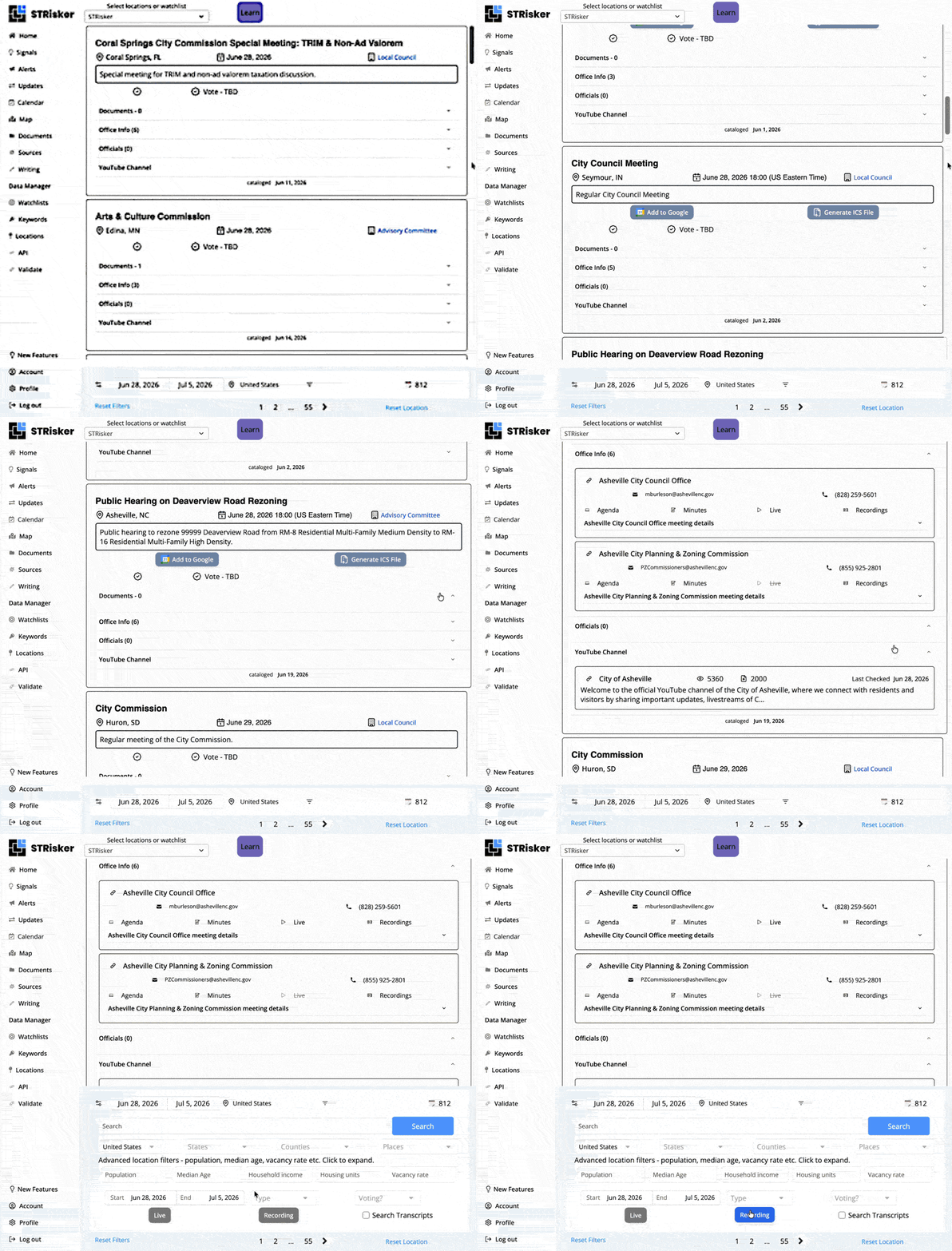
Strisker Calendar Tracker
Staying ahead of STR and data center regulations isn’t just about deadlines—it’s about knowing what’s coming. Our Calendar Tracker keeps you informed on upcoming meetings, key votes, and policy changes, so you never miss a critical update.
FAQs
Can a town stop a data center from being built?
In most cases, a town can block or influence a project through its land-use powers, such as denying a rezoning or special-use permit, imposing conditions, or even adopting a moratorium. The power of the town depends on state law and on whether the land is already zoned for the use. It is also better to consult a land-use attorney to understand the rules that apply in your area.
What health risks can data centers create for nearby residents?
The American Public Health Association (APHA) highlights several ways in which data centers can impact the health of nearby residents:
- Air pollution from fossil-fuel combustion
- Chronic noise from cooling systems and generators
- Light pollution
- Heat and land development
- Water use and quality
What happens when a community adopts a data center moratorium?
A data center moratorium temporarily freezes the approval of new data center projects for a specified period. It can last from several months to a year or more. During this time, the local government can examine the issue and revise its zoning and permitting regulations. Existing projects that have already received approval are usually handled differently, depending on the local laws.
Stay Updated with Strisker!
Strisker offers tools and features to keep you updated with the Short Term Rental movement (and now Data Centers!) movement across the world.
👍 We’d love your feedback.
We're always looking for ways to improve our content.
Was this one useful to you? Other topics you'd like to see get covered?
✉️ Just reply directly to this email. We read and respond to every message!
-Will McClure
🙋 P.S.
Know someone else who might be interested in this content? Feel free to forward this along.