
Bulletin: Edinburgh, Scotland News Today
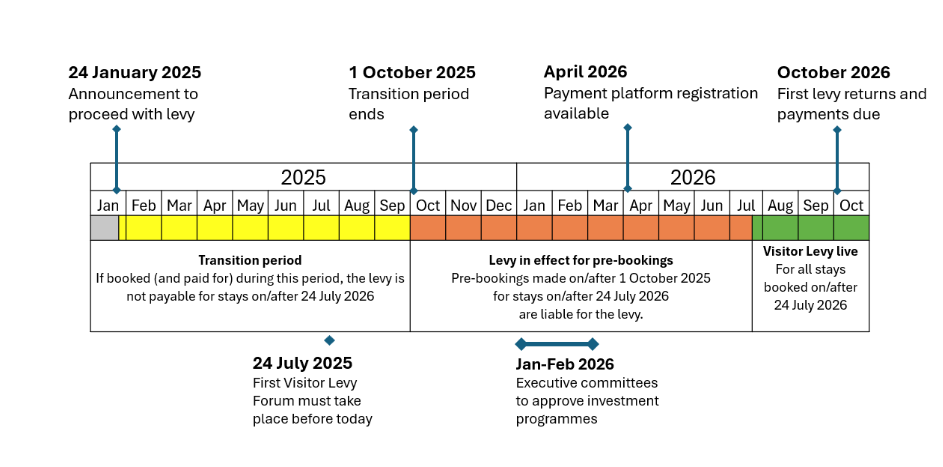
The 5% charge on the first five nights took effect 24 July with the opening return due 31 October and payment by 13 November.



Edinburgh Switches On Britain's First Statutory Visitor Levy, Putting Collection Duty on Short-Term Let Operators
The 5% charge on the first five nights took effect 24 July with the opening return due 31 October and payment by 13 November.
Photo by Jörg Angeli on Unsplash
The City of Edinburgh Council began charging a 5% visitor levy on paid overnight accommodation on 24 July 2026, the first statutory council-run tourist tax in the United Kingdom and a wider instrument than the business-district charges already operating in Manchester and Liverpool.
Short-term let operators inside the council boundary are the legally liable collectors with the opening period closing 30 September, the first return due by 31 October, and payment due by 13 November.
Edinburgh's Visitor Levy
What the Levy Charges
The rate is 5% of the accommodation-only portion of the transaction net of VAT which is applied to the first five consecutive nights and charged year-round with no end date attached. Extras such as parking, meals, and transport are billed separately and sit outside it.
Under the scheme councilors agreed in January 2025, the charge reaches hotels, guest houses, self-catering flats, licensed short-term lets, and campsites alike, and trading below the VAT threshold grants no exemption. The cap runs per consecutive stay in one property so a guest who checks out and returns pays again.
The Transitional Trap
Stays from 24 July onward escape the levy only if paid for in part or full before 1 October 2025 and the council's provider guidance narrows that further.
The reservation must specify exact dates, room count, and a stated nightly price while the payment must be tangible, attributable to the rooms, and non-refundable. A refundable deposit does not qualify so operators treating early deposits as exempting bookings are likely miscounting.
Edinburgh is the first United Kingdom destination to charge a tourist tax. Here's what travelers should know. https://t.co/0YdGGTpleM
— USA TODAY (@USATODAY) July 26, 2026
Who Collects and When
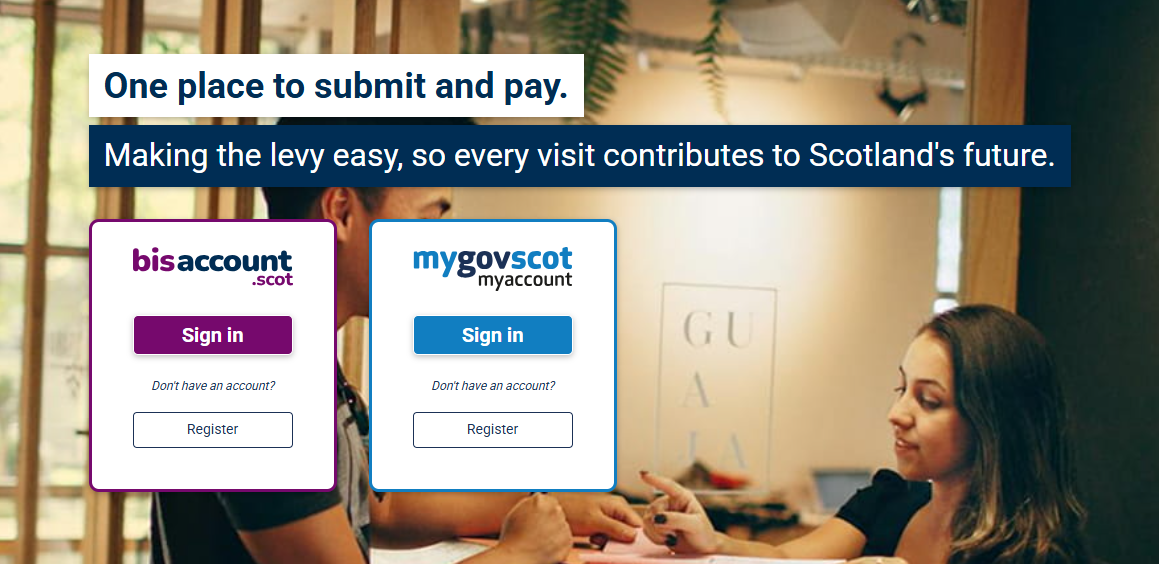
Liability rests on the accommodation provider under the Visitor Levy (Scotland) Act 2024 which fixes the duty on the occupier of the premises. Providers report and remit through visitorlevy.scot, the platform built by the Improvement Service which files quarterly in arrears within 30 days of each period closing, retains records for five years under section 28, and keeps 2% of collections against costs such as card charges.
Guests who qualify for exemption pay first and reclaim from the council so hosts assess nobody at check-in. None of this displaces the separate short-term let license and control-area planning rules already in force citywide.


 Rebecca Atkinson
Where Platforms Sit
Airbnb has told hosts it has no mechanism to pay the levy on their behalf and will instead offer a custom tax tool to leave collection and filing with the operator.
UK price transparency rules sharpen the exposure since the price shown at booking must be final and a host who did not build the levy into rates on bookings taken since October 2025 absorbs the 5% out of the payout rather than billing the guest later.
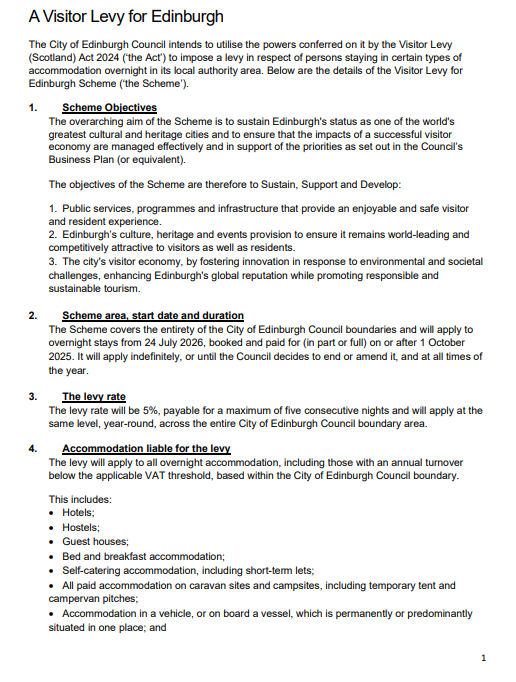
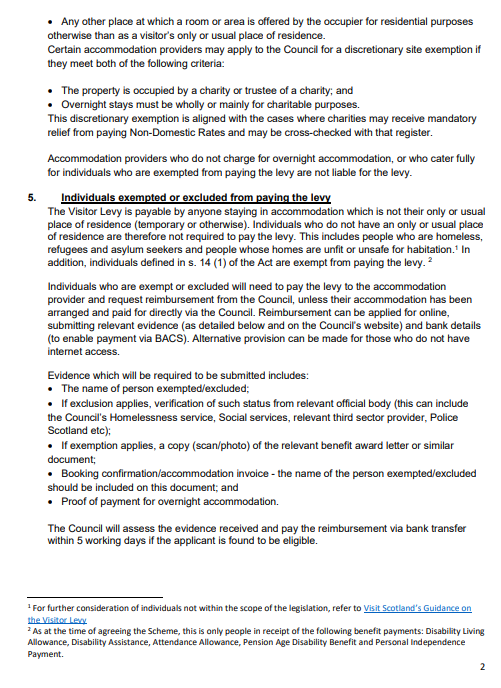
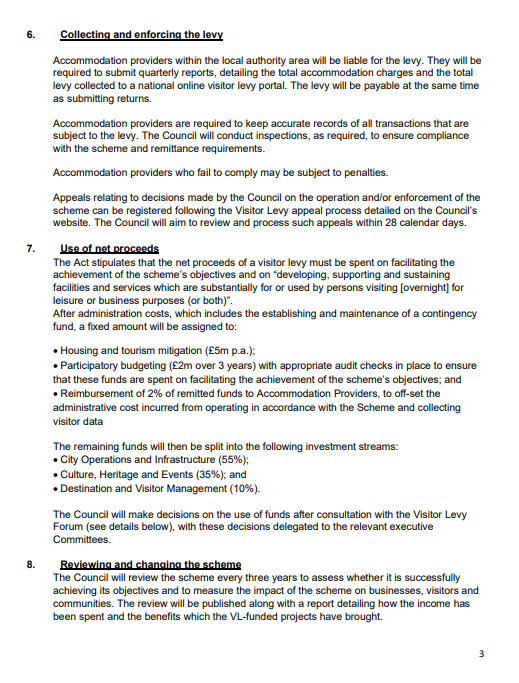
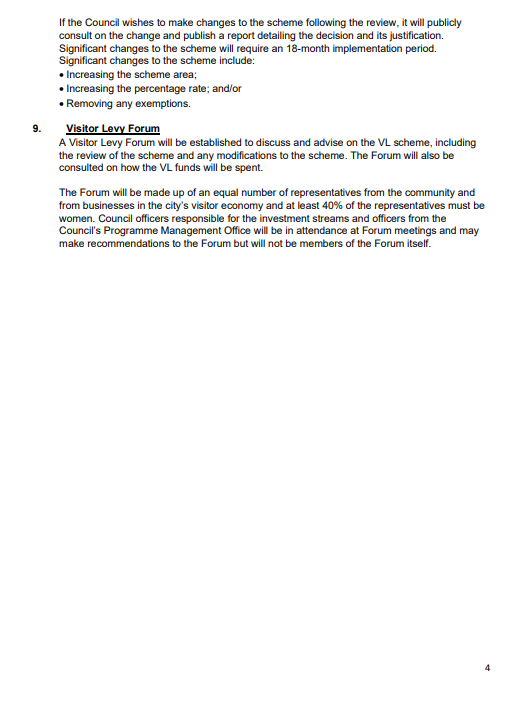
The City of Edinburgh Council's Final Visitor Levy Scheme outlines the levy's legal framework, rates, exemptions, compliance requirements, and enforcement provisions. | Source: https://www.edinburgh.gov.uk/
Penalties
Councilors approved the penalty framework in May 2026 that scales fines to property value rather than a flat figure. A short-term let that misses a return by a month faces 10% of its council tax value, stepping to 50% at six months and 100% at twelve, modelled in the committee report at roughly £1,084 to £3,893 for a year of default. Rateable-value properties start at 1%, rising to 2% then 5%, with a modelled ceiling of £49,350.
⦾ Status: In force 24 July 2026; runs indefinitely, reviewed every three years
⦾ Applies to: All paid overnight accommodation in the City of Edinburgh Council area, including licensed short-term lets
⦾ Rate: 5% of accommodation-only cost net of VAT, first five consecutive nights per stay
⦾ Booking cut-off: Exempt only if paid in part or full before 1 October 2025 with a non-refundable, room-attributable payment
⦾ Registration required: Yes; visitorlevy.scot platform, separate from STL licensing
⦾ Returns and payment: Quarterly in arrears; first period 24 July to 30 September 2026, return due 31 October 2026, payment due 13 November 2026
⦾ Record-keeping: Five years (Act, section 28)
⦾ Provider retention: 2% of levy collected
⦾ Penalty for non-compliance: Late returns from 10% of council tax value (short-term lets) or 1% of rateable value, escalating at six and twelve months
⦾ Platform responsibility: None; Airbnb will not remit, liability stays with the host
⦾ Night cap: None; the levy is capped at five nights, not the stay
Watch on Youtube: https://www.youtube.com/shorts/SGs19Lxh1BY
In case you missed it:
 Jasmine Ruth Albatana
 Jasmine Ruth Albatana
 Jasmine Ruth Albatana
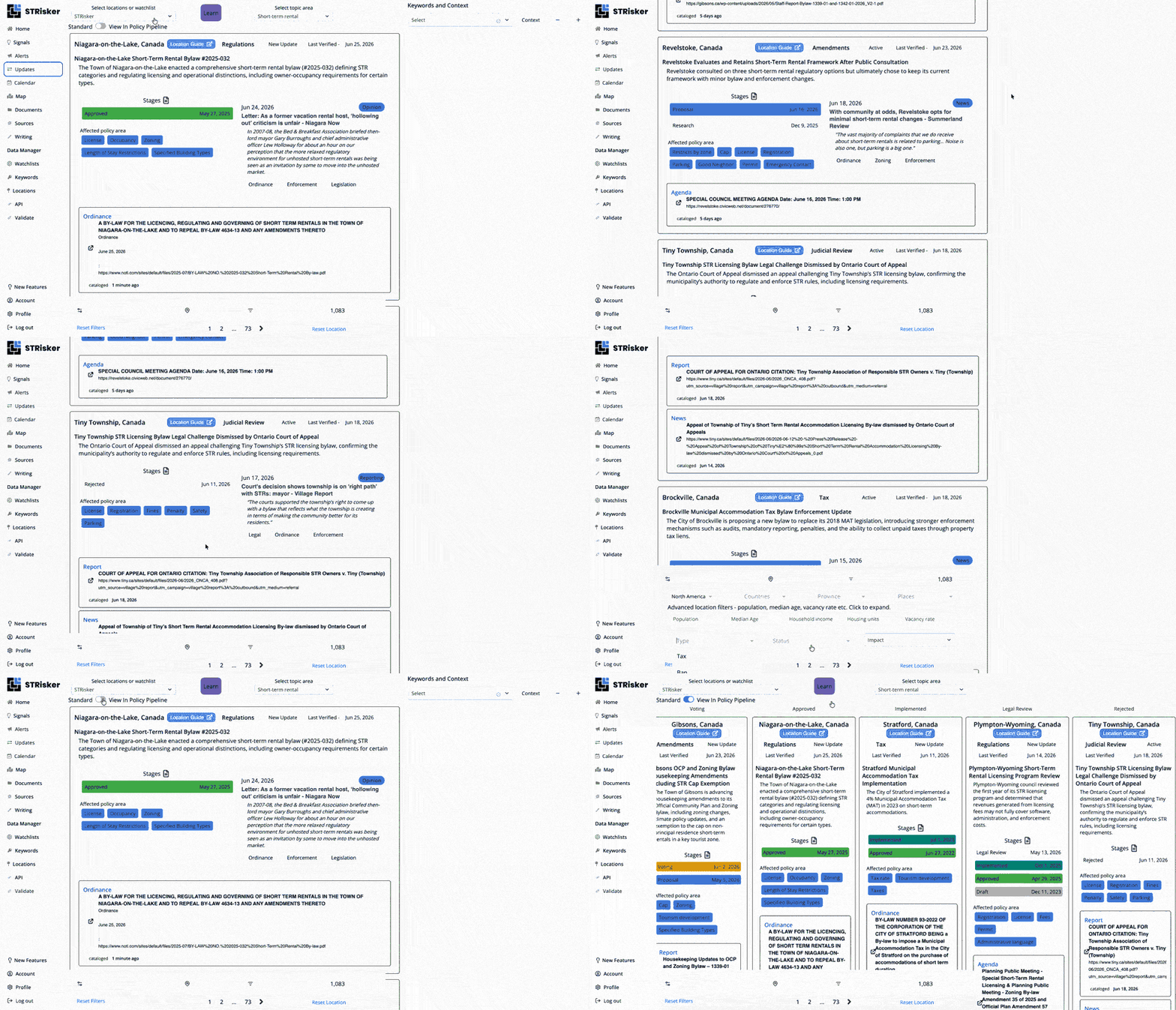
Strisker Updates Tracker
How do you keep up with the regulatory rollercoaster in your market? Strisker's Updates Tracker can be your guide - start tracking latest events as they happen and get access to essential documents as they come in. We know the struggle, which is why we built this product to capture every twist and turn in the regulatory saga so you never miss a beat.
Stay Updated with Strisker!
Strisker offers tools and features to keep you updated with the Short Term Rental movement (and now Data Centers!) movement across the world.
👍 We’d love your feedback.
We're always looking for ways to improve Bulletins.
Was this one useful to you? Other topics you'd like to see get covered?
✉️ Just reply directly to this email. We read and respond to every message!
-Will McClure
🙋 P.S.
Know someone else who should be reading this Bulletin? Feel free to forward this along. We want to make sure operators and stakeholders are aware of regulatory changes in their area.